




























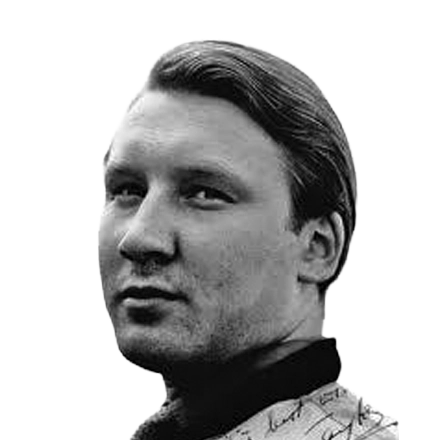
Michael John Clifford Taylor was a British racing driver whose Formula One career was brief, dramatic, and ultimately life-changing. He competed in two Formula One World Championship Grands Prix and several non-championship events during the late 1950s, but is best remembered for surviving one of the most serious accidents of his era—and later winning a landmark legal case against a manufacturer team.
Driver Bio
| Nationality | British |
| Birthplace | Westminster, England, UK |
| Born | 24 April 1934 |
| Died | 3 April 2017 |
| First Grand Prix | 1959 British Grand Prix |
| Last Grand Prix | 1960 Belgian Grand Prix |
| Current/Last Team | Privateer: Lotus |
Taylor’s story is one of promise interrupted, resilience restored, and a life rebuilt far beyond the circuit.
Born in Britain on 24 April 1934, Taylor emerged during a golden age of post-war British motorsport, when private entrants and ambitious young drivers could still rise through club racing into Grand Prix competition.
He built his reputation in junior and domestic categories before progressing into Formula One cars, where British constructors such as Lotus, Cooper, and BRM were shaping the sport.
Taylor belonged to that generation of racers willing to compete with limited budgets, immense bravery, and minimal safety protection.
Formula One career
Taylor participated in two Formula One World Championship Grands Prix, making his debut on 18 July 1959.
He also competed in several non-championship Formula One races, which at the time formed an important and highly competitive part of the racing calendar.
Though he scored no World Championship points, simply reaching Formula One in that era was a considerable achievement, given the depth of competition and the limited number of available drives.
His career, however, would soon be transformed by tragedy.
1960 Belgian Grand Prix: accident
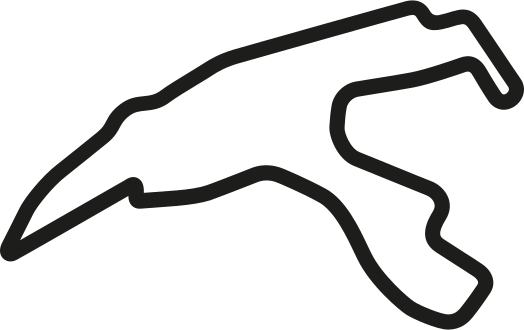
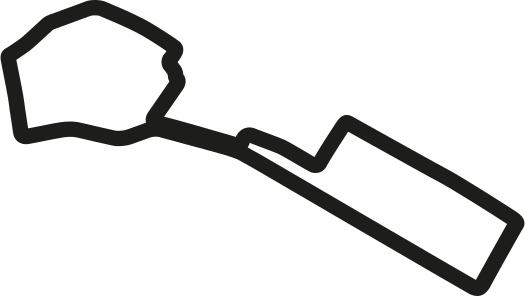
Taylor’s top-level racing career was effectively ended at the 1960 Belgian Grand Prix at the fearsome Circuit de Spa-Francorchamps.
Driving a Lotus 18 at approximately 160 mph, Taylor suffered catastrophic steering failure when a weld on the steering column broke.
With no control of the car, he crashed heavily and was thrown from the cockpit. In one of the era’s most brutal descriptions, his body struck and cut down a tree before coming to rest.
He sustained multiple fractures and paralysis.
The weekend was already one of the darkest in F1 history: Alan Stacey was killed during the race, alongside Chris Bristow, and Stirling Moss had suffered a major crash in practice, also in a Lotus 18
Taylor survived, but his racing future appeared over.
Recovery and legal victory
Initially paralysed, Taylor faced a long and difficult rehabilitation.
Through extensive therapy, determination, and persistence, he eventually regained the ability to walk—an extraordinary personal recovery considering the severity of his injuries.
He also took legal action against Lotus over the mechanical failure that caused the crash.
Taylor won the case, making it one of the few successful legal actions ever brought against a racing car manufacturer at the time. In an era when drivers were often expected simply to accept danger as part of the profession, the case was significant and ahead of its time.
Return to competition
Though Formula One was behind him, Taylor’s competitive spirit remained intact.
He later competed sporadically in long-distance rallying, proving he had no intention of abandoning motorsport entirely.
His finest later result came in 1977, when he finished third in the famous London–Sydney Marathon.
Driving a Citroën CX alongside Paddy Hopkirk and Bob Riley, Taylor achieved one of the great comeback results in motorsport.
To return from paralysis and stand on the podium of such an event was remarkable.
beyond racing
Outside motorsport, Taylor developed a successful career in property speculation
Michael Taylor died on 4 April 2017, aged 82, after a battle with cancer.
Grand Prix Stats
| Race Entries | 2 |
| Race Starts | 1 |
| Did Not Start | 1 |
| Best Race Start | 24th |
| Best Race Finish | – |
| Retirements | 1 |
| First-Lap Retirements | 0 |
| Not Classified | 0 |
| Disqualified | 0 |
| Did Not Qualify | 0 |
Qualifying
| Qualifying Sessions | 2 |
| Reached Q3 | 0 |
| Q2 Eliminations | 0 |
| Q1 Eliminations | 0 |
| Did Not Qualify | 0 |
Teammates
| 1 driver | Involvement | First Year | Last Year |
|---|---|---|---|
| Peter Ashdown | 1 | 1959 |