




























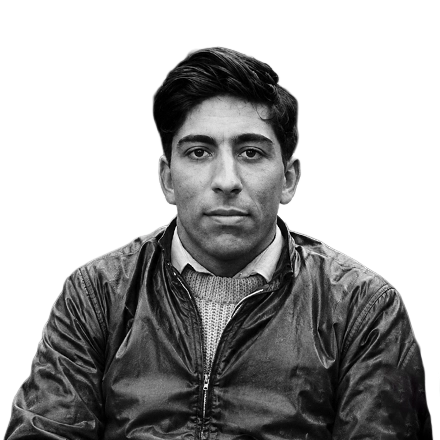
Alan Stacey was a courageous and deeply respected British racing driver whose quiet resilience made him one of the most admired figures of Lotus’ formative years.
Driver Bio
| Nationality | British |
| Birthplace | Broomfield, England, UK |
| Born | 29 August 1933 |
| Died | 19 June 1960 |
| First Grand Prix | 1958 British Grand Prix |
| Last Grand Prix | 1960 Belgian Grand Prix |
| Years Active | 1958–1960 |
| Current/Last Team | Lotus |
Born in England, Stacey’s path into motorsport was anything but ordinary. At the age of 17, he lost the lower part of his right leg in a motorcycle accident — an injury that would have ended most sporting ambitions before they even began. Instead, Stacey refused to let it define him. Using an artificial lower right leg and adapting his driving techniques to compensate, he fought his way into top-level motor racing during one of the most physically demanding and dangerous eras in the sport’s history.
Team Lotus
His connection with Team Lotus began not as a driver, but as a constructor and enthusiast. Stacey built one of the early Lotus MkVI kits offered by Colin Chapman’s rapidly growing company, then raced the car himself. His ability behind the wheel, combined with his technical intelligence quickly brought him closer to the Lotus inner circle.
After the MkVI, Stacey built and raced a Lotus Eleven, eventually competing at the legendary 24 Hours of Le Mans under the Team Lotus banner. He partnered with Peter Ashdown in a 1098cc Lotus Eleven during the 1957 Le Mans race, although the pair failed to finish. Even so, Stacey’s growing reputation as both a dependable driver and valuable development racer made him increasingly important to Lotus during its rise toward Formula One prominence.
Throughout the late 1950s, Stacey played a key role in the development of Lotus Grand Prix machinery, working extensively on the front-engined Lotus 16 and later the revolutionary Lotus 18. At a time when Formula One teams often relied heavily on driver feedback to drive engineering progress, Stacey became known as a thoughtful and technically capable behind-the-scenes contributor.
Sports Cars
Alongside his development work, he also enjoyed success in sports car racing. Initially competing as a private entrant before becoming more closely aligned with Team Lotus, Stacey scored a notable victory at Aintree in July 1959, driving a Lotus XV-Climax in a sports-car race between 1400cc and 2-litre.
He completed the race in 37 minutes and 39.4 seconds.
Formula One
Stacey made his Formula One World Championship debut for Team Lotus at the 1958 British Grand Prix and later secured a full-time Formula One seat in 1960. Across seven World Championship Grand Prix, he failed to score championship points, but his results rarely reflected the respect he commanded within the paddock.
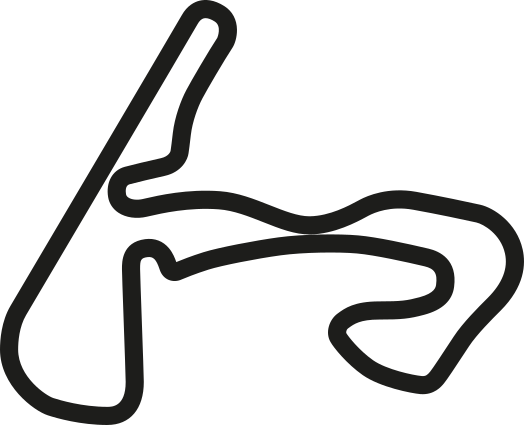
His finest Formula One performance came at the 1960 Dutch Grand Prix, where he drove superbly to run in third place for much of the race before retiring on lap 57 due to a transmission failure. The drive demonstrated that Stacey possessed both the pace and composure to compete at the front against some of the greatest drivers of the era.
Because of his disability, Stacey used a specially adapted control system in his Lotus cars. Instead of operating the throttle conventionally, he used a motorcycle-style throttle mounted on the gear lever. According to friend and journalist Jabby Crombac, this setup put Stacey at a disadvantage in Formula One, where precise throttle modulation was crucial in increasingly powerful, sensitive cars. Despite this challenge, Stacey still managed to compete at the highest level of motorsport.
Those who knew him often described his driving style as calm and conservative, qualities that perhaps reflected both his technical mindset and his understanding of the risks involved in 1950s and 1960s racing.
Death
Tragically, Stacey’s career — and life — ended during one of the darkest weekends in Formula One history.
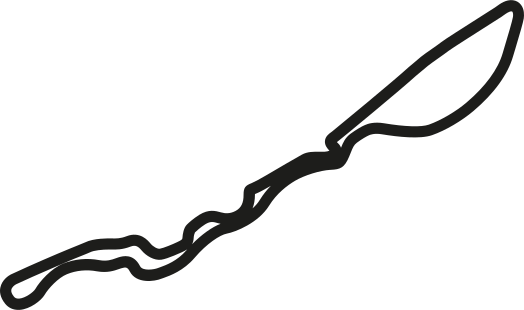
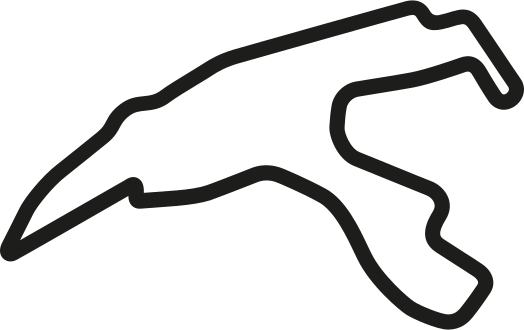
At the 1960 Belgian Grand Prix at Spa-Francorchamps, a circuit infamous for its terrifying speed and lack of safety barriers, Stacey was running sixth in his Lotus 18-Climax on lap 25 when disaster struck at the ultra-fast Burnenville corner. Travelling at approximately 120 mph (190 km/h), he was reportedly hit in the face by a bird moments before losing control of the car.
The Lotus left the road at high speed and crashed heavily. Some eyewitnesses later suggested the impact with the bird may have knocked Stacey unconscious instantly or even caused fatal injuries before the car hit anything. Teammate Innes Ireland later recalled accounts from spectators who believed the bird strike may have broken Stacey’s neck or inflicted catastrophic head injuries.
Stacey died in the crash, only minutes after fellow British driver Chris Bristow had been killed elsewhere on the same circuit during the same race. The two fatal accidents, happening within such close proximity in both time and location, cast a dark shadow over Formula One and highlighted the extreme dangers drivers routinely faced during that era.
Despite his brief Formula One career, Alan Stacey remains an important figure in Lotus history and one of motorsport’s most inspiring competitors. His determination to overcome disability, combined with his role in developing some of Lotus’ earliest Grand Prix cars, ensured he left a lasting mark on British racing.
In later years, Stacey’s original Lotus MkVI was lovingly recovered and restored by the Stacey family with the help of his schoolfriend Ian Bentall, who had helped build the car decades earlier. The restored Lotus remains in family ownership today and still appears occasionally at historic motorsport events — a fitting tribute to a driver remembered as much for his courage and character as for his racing ability.
Grand Prix Stats
| Race Entries | 7 |
| Race Starts | 7 |
| Did Not Start | 0 |
| Best Race Start | 8th |
| Best Race Finish | 8th |
| Retirements | 6 |
| First-Lap Retirements | 0 |
| Not Classified | 0 |
| Disqualified | 0 |
| Did Not Qualify | 0 |
Qualifying
| Qualifying Sessions | 7 |
| Reached Q3 | 0 |
| Q2 Eliminations | 0 |
| Q1 Eliminations | 0 |
| Did Not Qualify | 0 |
Stats by Season
| Year | Constructor | Entries | Starts | Wins | Podiums | Poles | Fastest Laps | Front Rows | DNF | Best Start | Best Result | Pts Finishes | Points | Championship |
|---|---|---|---|---|---|---|---|---|---|---|---|---|---|---|
| 1958 | Lotus | 1 | 1 | 0 | 0 | 0 | 0 | 0 | 1 | 20 | – | 0 | 0 | NC |
| 1959 | Lotus | 2 | 2 | 0 | 0 | 0 | 0 | 0 | 1 | 12 | 8 | 0 | 0 | NC |
| 1960 | Lotus | 4 | 4 | 0 | 0 | 0 | 0 | 0 | 4 | 8 | – | 0 | 0 | NC |
Stats by Constructor
| Constructor | Years | Entries | Starts | Wins | Podiums | Poles | Fastest Laps | Front Rows | DNF | Best Start | Best Result | Pts Finishes | Points |
|---|---|---|---|---|---|---|---|---|---|---|---|---|---|
| Lotus | 1958–1960 | 7 | 7 | 0 | 0 | 0 | 0 | 0 | 6 | 8 | 8 | 0 | 0 |
Teammates & Qualifying Head-to-Head
| Teammate | Years | Races | Qualifying H2H |
|---|---|---|---|
| Graham Hill | 1958, 1959 | 2 | – |
| Cliff Allison | 1958 | 1 | – |
| Innes Ireland | 1959, 1960 | 5 | – |
| Alberto Rodriguez-Larreta | 1960 | 1 | – |
| John Surtees | 1960 | 1 | – |
| Jim Clark | 1960 | 2 | – |