





































Some Formula 1 moments need no explanation. “Crashgate.” “Spygate.” “Leave me alone, I know what I’m doing.” Then there’s “Multi 21” – a word and a number that instantly transport fans back to one of the sport’s most explosive teammate rivalries.
More than a decade after the 2013 Malaysian Grand Prix, “Multi 21” remains shorthand for defiance, mistrust and the fine line between racing instinct and team discipline. It wasn’t simply a radio instruction that was ignored; it became the defining moment of the uneasy relationship between Red Bull teammates Sebastian Vettel and Mark Webber, and a snapshot of how even the most dominant teams can be torn apart from within.
Looking back today, it’s remarkable that one coded message has outlived the championship it helped define.
What did “Multi 21” actually mean?
Inside Red Bull, “Multi 21” was straightforward.
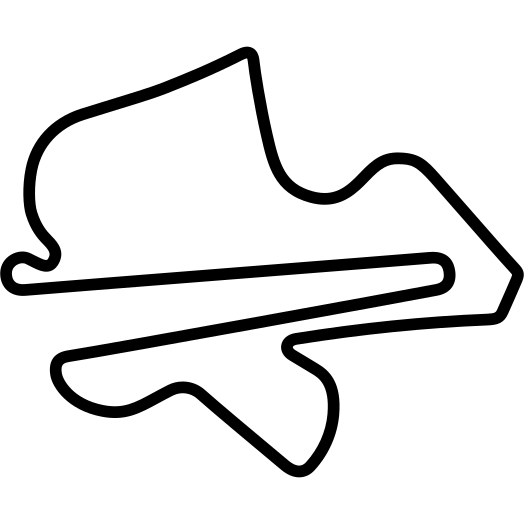
The instruction told the drivers to finish in the order they were currently running: car No.2 ahead of car No.1. In Malaysia, that meant Mark Webber would lead Sebastian Vettel home to a controlled 1-2 finish, with both drivers preserving their tyres and avoiding unnecessary risks.
On paper, it was a sensible decision.
Sepang’s heat punished tyres, cooling systems and engines, while Mercedes had shown impressive pace throughout the weekend. Red Bull had fought hard to establish control of the race and had no interest in jeopardising a maximum points haul through an internal battle.
But Formula 1 has always been populated by drivers who believe every race should be won if victory is within reach. Vettel was no exception.
The fight Red Bull never wanted
Following the final round of pit stops, Webber emerged ahead, exactly as planned.
Vettel’s race engineer, Guillaume Rocquelin, delivered the now-famous instruction: “Sebastian, multi-map 2-1, multi-map 2-1 – and look after your tyres please.”
It made little difference.
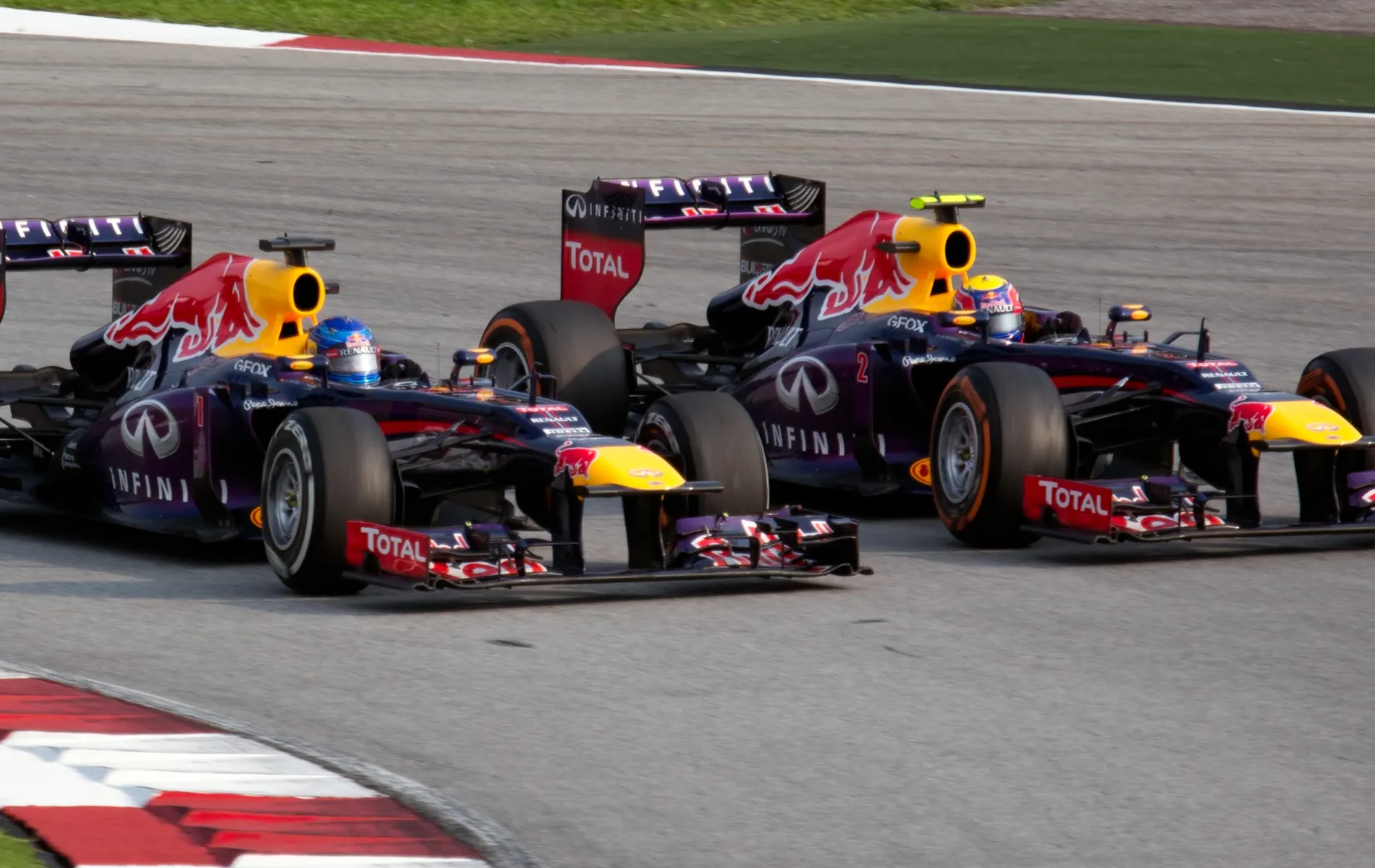
Vettel immediately attacked, drawing alongside his teammate as they raced towards Turn 1. The pair came perilously close to contact more than once, with Christian Horner eventually pleading over team radio: “C’mon Seb, this is getting silly now.”
The appeals fell on deaf ears.
After several laps of intense wheel-to-wheel racing, Vettel finally forced his way past around the outside and claimed the lead. He would go on to win the race, but the victory came at an enormous cost to the harmony inside Red Bull.
“Multi 21, Seb…”
If the battle on track was dramatic, the aftermath became legendary.
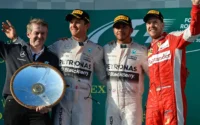
The podium was noticeably uncomfortable, while the post-race media sessions were even frostier. Yet it was in the drivers’ cooldown room that Formula 1 gained one of its most enduring catchphrases.
A furious Webber looked across at Vettel and simply said: “Multi 21, Seb. Yeah… Multi 21.”
The phrase instantly entered Formula 1 folklore.
Fans didn’t need an explanation. The frustration in Webber’s voice said everything. It encapsulated not only what had happened during those closing laps, but years of simmering tension between two teammates competing for the same prize.
Why Did Vettel ignore the order?
To understand Malaysia, it’s necessary to rewind several months.
Although Vettel was already a three-time World Champion, he carried lingering resentment from the previous season’s Brazilian Grand Prix. During the opening lap at Interlagos, Webber squeezed him towards the wall, leaving Vettel vulnerable to contact that spun him down the order before his remarkable recovery drive to secure the title.
Webber later admitted Vettel never truly forgot the incident. “He was disappointed that I couldn’t give him more room and then he felt that he got compromised into Turn 1,” Webber later reflected. “So I believe that was still on his mind this day in Malaysia.”
For Vettel, the attack at Sepang wasn’t an isolated act of rebellion. It was influenced by a relationship that had deteriorated over several seasons.
After the race, the German acknowledged as much. “I think being completely honest I never had support from his side.” He added: “I respect him a lot as a racing driver, but I think there was more than one occasion in the past where he could have helped the team, and he didn’t.”
Asked whether previous events influenced his decision, Vettel replied: “Probably you could say indirectly. I was racing, and as a racing driver I was solely focused on winning the race. I don’t apologise for winning the race.”
Those comments perfectly illustrated the divide between driver mentality and team expectations. One saw a broken agreement; the other saw an opportunity that simply couldn’t be ignored.
Webber’s sense of betrayal
For Webber, the controversy extended beyond Vettel’s overtake.
He believed the race had unfolded exactly as Red Bull had discussed beforehand. With temperatures soaring and reliability concerns mounting, the expectation was that whoever led after the final pit stop would be protected to the finish.
“We’d spoken about it in the briefing beforehand, so it was all pretty clear,” Webber later recalled. “For me, it was a shame, after we’d come so far as a team, how fractured we were.”
His frustration was also directed towards the team itself. Although Red Bull publicly criticised Vettel’s actions, Webber felt management never truly defended his position. By 2013, it was increasingly obvious who the organisation viewed as its long-term leader.
The Malaysian Grand Prix simply confirmed what many had suspected.
The beginning of Vettel’s unstoppable run
Ironically, “Multi 21” happened before the Red Bull RB9 became the dominant car most fans remember.
The opening races of 2013 were far from straightforward. Kimi Räikkönen won the season opener in Australia, Mercedes looked genuinely threatening in Malaysia, and Red Bull’s advantage was anything but overwhelming.
Yet Sepang was an important turning point. Once the RB9’s potential was unlocked, Vettel produced one of the greatest stretches of dominance in F1 history. He won nine consecutive Grands Prix to end the season, securing his fourth consecutive World Championship while Adrian Newey’s RB9 established itself as one of the finest cars of the V8 era.
The timing makes the Malaysia controversy all the more fascinating. It wasn’t the culmination of dominance; it was the moment that announced it.
The lasting legacy of “Multi 21”
Formula 1 has seen countless team orders.
Ferrari‘s infamous “Fernando is faster than you” message, Mercedes asking Valtteri Bottas to move aside for Lewis Hamilton, and more recent debates involving Red Bull have all generated headlines. Yet none have entered the sport’s vocabulary quite like “Multi 21”.
Part of the reason is its simplicity. Fans don’t need to remember every strategic detail or championship permutation. Mention “Multi 21” and they instantly picture Vettel and Webber fighting wheel-to-wheel at Sepang, ignoring radio messages, and exchanging icy glances after climbing from their cars.
The phrase has become part of Formula 1’s language because it expresses something universal within the sport: the conflict between individual ambition and collective success.
Every championship-winning team eventually faces the same question. Should drivers race freely, or should the team’s interests come first? Malaysia 2013 demonstrated just how difficult that balance can be.
More than just a radio message
In hindsight, “Multi 21” marked the point of no return.
Webber never won another Formula 1 race and retired at the end of the season to join Porsche’s World Endurance Championship programme. Vettel, meanwhile, continued his march towards a fourth straight title before Formula 1’s hybrid era shifted the balance of power towards Mercedes in 2014.
The careers of both men moved on, but the phrase remained.
Few radio calls have transcended their original context to become part of Formula 1 culture. “Multi 21” is now referenced whenever teammates ignore instructions, whenever strategy clashes with instinct, and whenever drivers decide that victory matters more than obedience.
For modern fans, it serves as a reminder that Formula 1’s greatest dramas are rarely created by cars alone. They arise when drivers refuse to suppress the instinct that brought them to the pinnacle of motorsport in the first place.
Seen in: