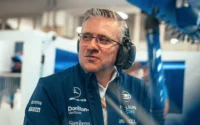


































Christian Edward Johnston Horner (born 16 November 1973) is a British former racing driver and motorsport executive best known for leading Red Bull Racing through one of the most successful periods in Formula One history. Serving as Team Principal and CEO from 2005 until 2025, Horner transformed the Milton Keynes-based outfit from a new arrival on the grid into one of the sport’s dominant forces.
Raised in Leamington Spa, Horner first developed his passion for motorsport through karting before progressing into single-seater racing. After enjoying success in British Formula Renault and climbing the junior ladder, he recognised that his greatest future lay outside the cockpit. In 1997, while still competing, he co-founded Arden International with his father, laying the foundations for what would become one of junior motorsport’s leading teams.
| Born | Christian Edward Johnston Horner 16 November 1973 Leamington Spa, England |
|---|---|
| Education | Arnold Lodge School Warwick School |
| Occupations | Motorsport executive Racing driver |
| Employers | International F3000 Arden (1997–2004) Formula One Red Bull (2005–2025) |
| Spouse | Geri Halliwell (m. 2015) |
| Children | 2 |
His management career accelerated rapidly. At just 31 years old, Horner was appointed Team Principal of the newly formed Red Bull Racing ahead of the 2005 Formula One season, making him the youngest person to lead an F1 team at the time. Strategic appointments, including the arrival of legendary designer Adrian Newey in 2005 and future World Champion Sebastian Vettel in 2009, helped establish Red Bull as Formula One’s benchmark team.
Between 2010 and 2013, Red Bull claimed four consecutive Constructors’ and Drivers’ World Championships with Vettel before entering a second golden era with Max Verstappen. That partnership delivered Drivers’ titles from 2021 to 2024 and Constructors’ Championships in 2022 and 2023, with the latter season producing one of the most dominant campaigns in Formula One history as Red Bull won 21 of 22 Grands Prix.
Across 21 seasons in charge, Horner oversaw six Constructors’ Championships, eight Drivers’ Championships and 124 Grand Prix victories, making him one of the most successful team principals the sport has ever seen. His tenure came to an end midway through the 2025 season following a combination of declining performance, internal tensions, senior staff departures and ongoing controversy surrounding allegations of inappropriate behaviour. Later that year, reports indicated that Horner and Red Bull reached a settlement worth approximately £80 million to conclude his contract.
For his contribution to British motorsport, Horner was appointed an Officer of the Order of the British Empire (OBE) in 2013 before being promoted to Commander of the Order of the British Empire (CBE) in the 2024 New Year Honours.
Early life
Christian Edward Johnston Horner was born on 16 November 1973 in Leamington Spa, Warwickshire, into a family with long-standing ties to the automotive industry.
His grandfather worked as Purchasing Manager at the Standard Motor Company in Coventry before establishing a business alongside Horner’s father, supplying components to vehicle manufacturers across the Midlands. Growing up in this environment naturally fuelled Horner’s fascination with cars and motorsport from an early age.
He attended Arnold Lodge School in Leamington Spa before continuing his education at Warwick School. Horner grew up with his two brothers, Jamie and Guy, and spent much of his childhood immersed in racing, eventually progressing from karting into competitive single-seater motorsport.
Driving career
Like many future Formula One figures, Horner’s competitive journey began in karting before he earned a Formula Renault scholarship in 1991.
The scholarship opened the door to the 1992 British Formula Renault Championship with Manor Motorsport, where he immediately impressed. He claimed a race victory during his rookie season and finished as the championship’s highest-placed newcomer, demonstrating both speed and consistency.
Promotion to British Formula Three followed in 1993 with P1 Motorsport. Horner enjoyed an impressive campaign, winning five races and securing second place in the Class B standings. Further seasons with Fortec, ADR and TOM’S allowed him to continue developing against increasingly strong competition, while he also competed in British Formula Two during 1996.
In 1997, Horner stepped up to International Formula 3000, then regarded as the final stepping stone to Formula One. At the same time, he took the bold decision to establish his own team, Arden International.
Launching a professional race team while still an active driver was an ambitious undertaking. Horner later revealed that the operation was funded through borrowed money, including financial support from his father, while P1 Motorsport founder Roly Vincini joined as race engineer. The fledgling team even acquired a second-hand transporter from Helmut Marko, who would later become one of Horner’s closest allies during their years together at Red Bull Racing.
Horner remained behind the wheel for Arden throughout the 1997 and 1998 Formula 3000 seasons. Although results proved difficult to come by, the experience of simultaneously managing and driving the team provided invaluable lessons in leadership, organisation and race operations.
A defining moment came during pre-season testing at Estoril when Horner found himself following future Formula One star Juan Pablo Montoya through one of the circuit’s fastest corners. Watching the Colombian’s commitment convinced him that, while he could compete professionally, he lacked the final margin required to reach the very highest level as a driver.
Rather than continuing to pursue a Formula One seat, Horner chose to retire from racing at just 25 years old. It was a decision that would ultimately shape the rest of his career, allowing him to devote his full attention to developing Arden into one of the strongest teams in junior single-seater racing and setting him on the path towards Formula One management.
Team management
Retiring from racing at just 25 proved to be the turning point of Horner’s career. Freed from the demands of driving, he focused entirely on building Arden International into one of the leading outfits in Formula 3000.
For the 1999 season, Horner signed Viktor Maslov and Marc Goossens to spearhead the team’s campaign. Before the championship began, Dave Richards’ Prodrive organisation acquired a 50 per cent stake in Arden on behalf of Russian oil company Lukoil, whose chairman was Viktor Maslov’s father. The partnership lasted only a single season before Horner bought back Prodrive’s share, restoring full control of the team.
Arden continued to strengthen in the years that followed. Darren Manning joined for the 2000 and 2001 campaigns, collecting pole positions and podium finishes while helping establish the team as a regular front-runner. Horner also expanded into Italian Formula 3000, where Arden won three races in 2000 and finished runner-up in the teams’ standings with Warren Hughes.
Following the end of its partnership with Lukoil, Arden assembled an exciting new line-up for 2002, pairing Tomáš Enge with Björn Wirdheim. The team enjoyed its breakthrough season, claiming five victories and securing the Formula 3000 Teams’ Championship. Although Enge crossed the line as Drivers’ Champion, he was later excluded after failing a drug test, handing the title to Sébastien Bourdais.
Arden’s momentum continued into 2003. Retaining Wirdheim and bringing in Townsend Bell, the team successfully defended the Teams’ Championship, while Wirdheim comfortably secured the Drivers’ title after finishing 35 points clear of his nearest rival.
The final Formula 3000 season in 2004 saw Arden reach the peak of its success. Led by Vitantonio Liuzzi, with Robert Doornbos in the second car, the team dominated the championship. Liuzzi claimed seven victories, Doornbos added another, and Arden won eight of the ten races on the calendar en route to both the Drivers’ and Teams’ Championships.
Liuzzi’s arrival had been facilitated by Helmut Marko, whose Red Bull Junior Team backed the young Italian. That relationship would soon prove pivotal in Horner’s own career.
Joining Red Bull Racing
By the end of 2004, Horner had firmly established Arden as one of junior motorsport’s benchmark teams. Operating from Banbury, he had already begun exploring opportunities to step into Formula One.
Talks over purchasing Eddie Jordan’s Formula One team ultimately failed because the parties could not agree on a valuation. Shortly afterwards, however, Red Bull purchased Jaguar Racing and began assembling an entirely new management structure for its Formula One operation.
In January 2005, Christian Horner was appointed Team Principal of the newly created Red Bull Racing.
At just 31 years old, he became the youngest team principal in F1 history.
Despite having only eight weeks to prepare before the opening race of the season in Australia, Horner immediately began reshaping the organisation. The early signs were encouraging. David Coulthard and Christian Klien finished fourth and seventh, respectively, at the Australian Grand Prix, while Red Bull scored 34 championship points during its debut season—an immediate improvement on Jaguar’s nine-point total from the previous year.
One of Horner’s most important early achievements came later that year when he convinced legendary designer Adrian Newey to leave McLaren and join Red Bull as Chief Technical Officer. The signing would become one of the defining moments in the team’s history.
Building a championship contender
The 2006 season represented an important transition.
Although Adrian Newey joined Red Bull early in the year, the RB2 had already been designed before his arrival. At the same time, the team switched from Cosworth to Ferrari customer engines, creating reliability and cooling challenges that limited performance throughout the campaign.
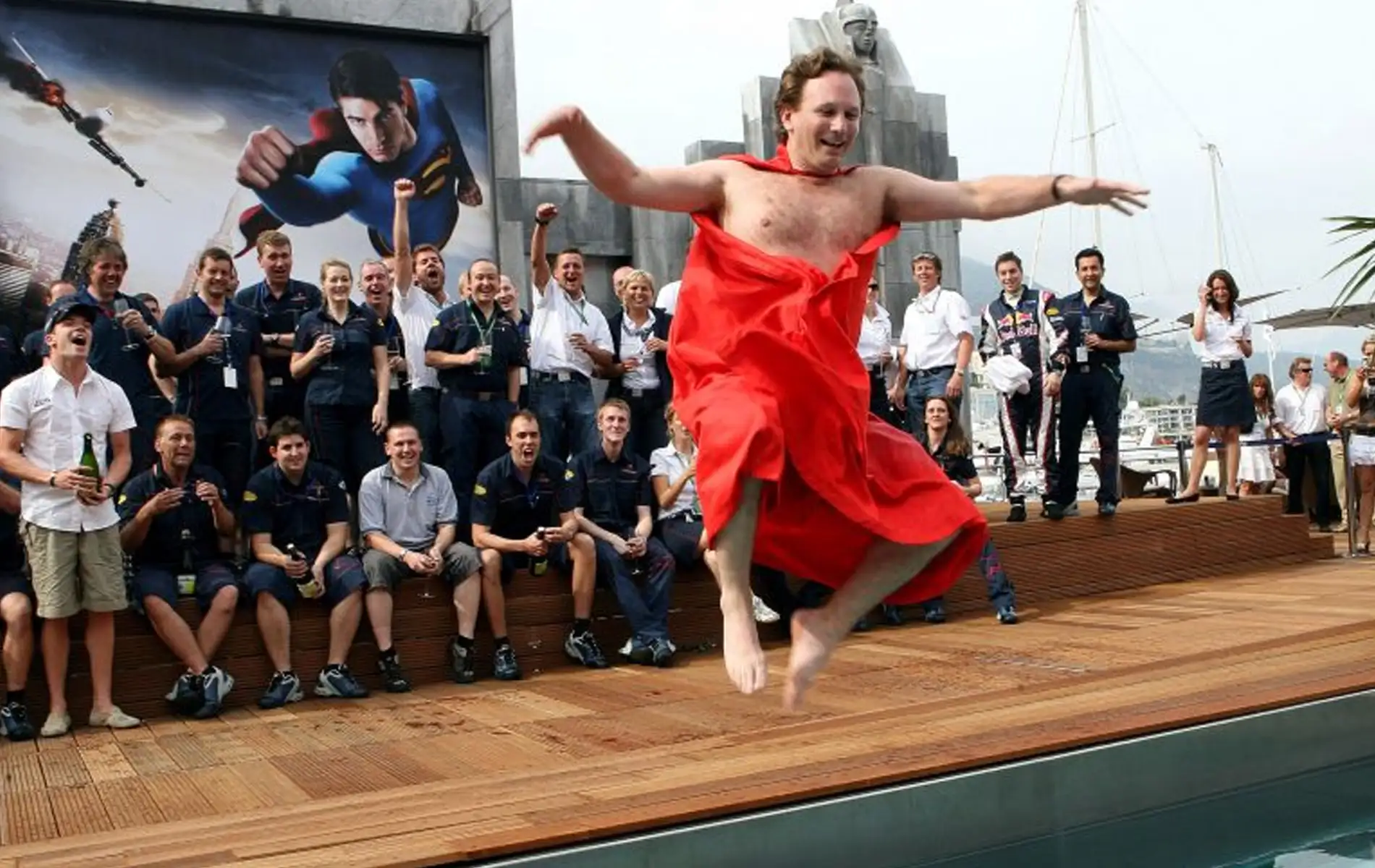
Even so, Red Bull celebrated a milestone when David Coulthard secured the team’s first Formula One podium at the Monaco Grand Prix. Horner famously celebrated by diving into the harbour swimming pool wearing only a Superman cape—a moment that quickly became part of Formula One folklore.
The first fully Newey-designed Red Bull, the RB3, arrived in 2007 alongside a new engine partnership with Renault and the signing of Mark Webber. While outright pace improved, persistent reliability problems prevented the team from consistently challenging the frontrunners. Fourteen retirements hampered the campaign, and Red Bull slipped to seventh in the Constructors’ Championship.
Although immediate success remained elusive, the foundations for future dominance were firmly taking shape.
The Vettel era
Everything changed in 2009.
Red Bull emerged as a genuine title contender thanks to the outstanding RB5, designed under Adrian Newey’s direction. Sebastian Vettel, who had joined the team after impressing with Toro Rosso, quickly established himself as one of Formula One’s brightest stars.
Together, Vettel and Webber won six Grands Prix during the season, propelling Red Bull to second place in the Constructors’ Championship. Vettel also finished runner-up in the Drivers’ standings, confirming that the team had become a genuine championship force.
The breakthrough arrived in 2010.
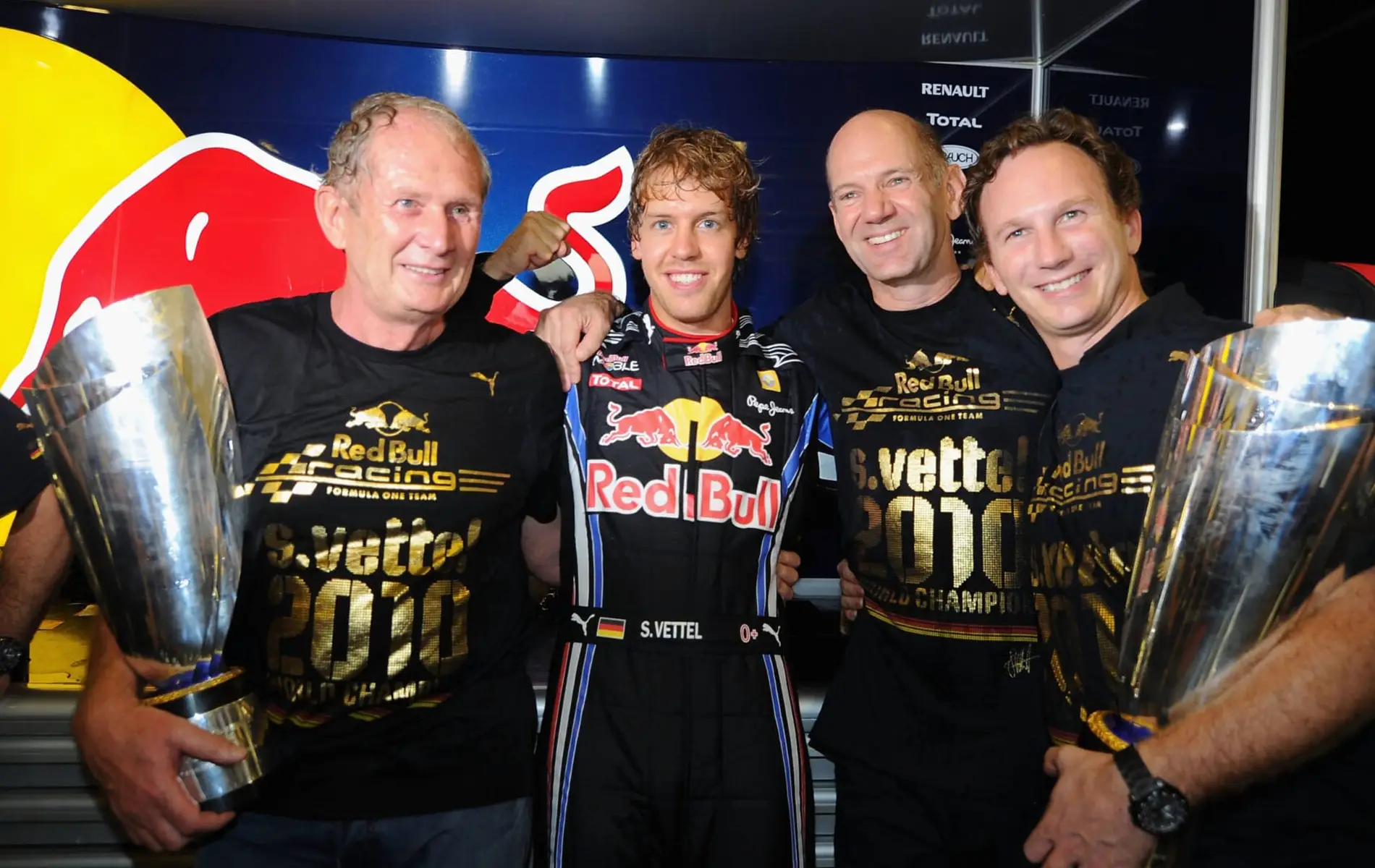
Red Bull secured its first Formula One Constructors’ Championship with one race remaining, while Vettel claimed the Drivers’ Championship at the dramatic season finale in Abu Dhabi to become the youngest Formula One World Champion in history at that time.
For Horner, still only 35 years old, it was a remarkable achievement. Only Lotus founder Colin Chapman had been younger when leading a team to the Constructors’ Championship.
Red Bull’s success proved far from a one-season wonder.
In 2011, the team retained both world titles with three races still remaining. Vettel became Formula One’s youngest double World Champion as Red Bull established itself as the benchmark team.
The dominance continued in 2012, with another Constructors’ Championship and a third consecutive Drivers’ title for Vettel.
By 2013, Red Bull had completed one of Formula One’s greatest dynasties.
The team captured its fourth consecutive Constructors’ Championship, while Vettel claimed a fourth straight Drivers’ crown after one of the most dominant individual seasons in Formula One history.
Within less than a decade, Horner had transformed Red Bull from a newly formed midfield operation into the sport’s dominant force, creating a winning culture built around technical excellence, strategic stability and exceptional driver talent.
The Verstappen era
Following the introduction of Formula One’s hybrid power unit regulations in 2014, Red Bull entered a more challenging period. Although race victories continued to come, sustained championship success proved difficult as Mercedes established one of the sport’s most dominant eras.
Throughout those years, Horner remained committed to rebuilding the team. Investment in infrastructure, continued faith in Adrian Newey’s technical leadership and Red Bull’s renowned driver development programme ensured the organisation remained firmly among Formula One’s leading contenders.
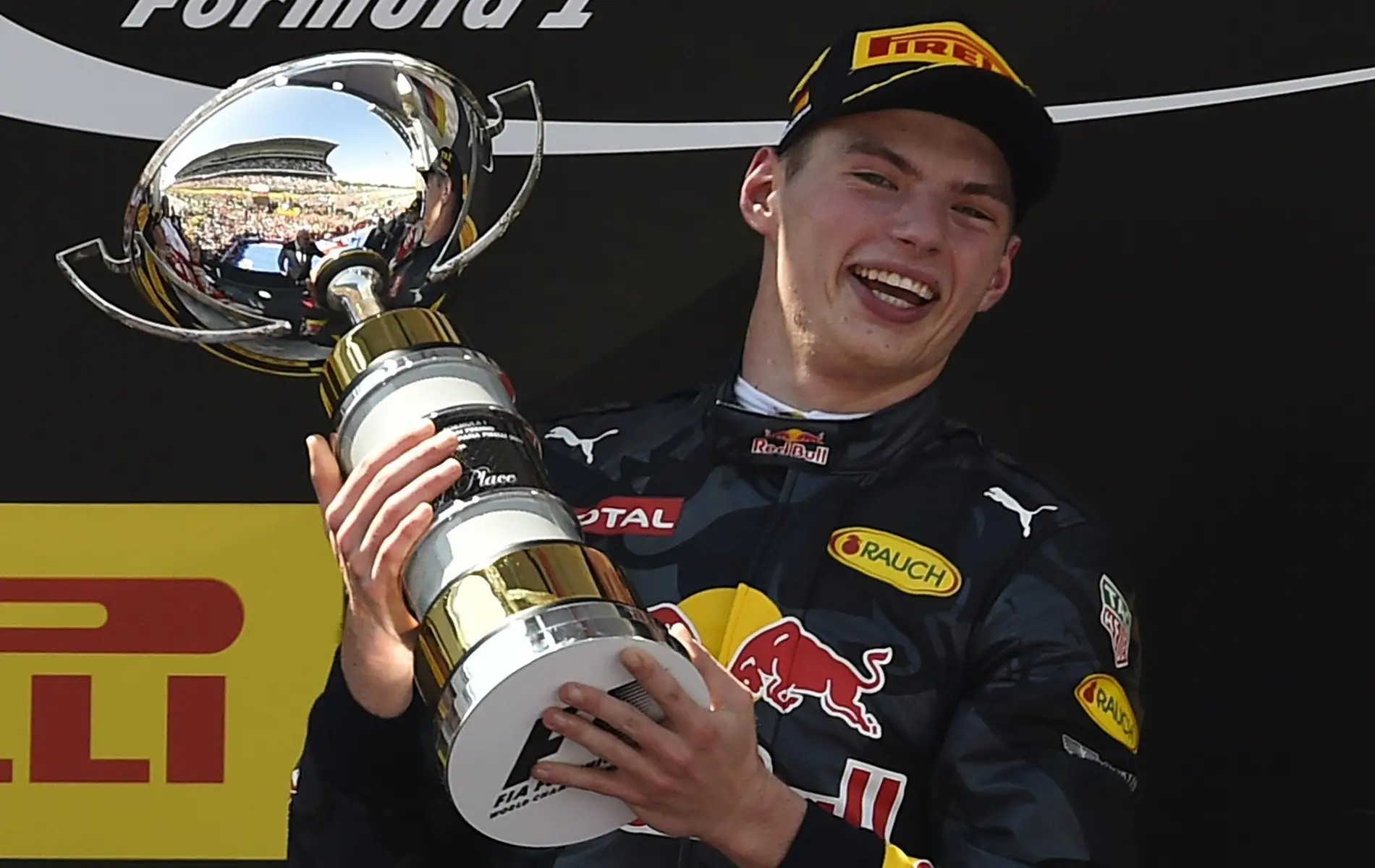
A major turning point came with the arrival of Max Verstappen. Having been promoted to Red Bull Racing in 2016 after beginning his Formula One career with Toro Rosso, Verstappen rapidly developed into the team’s focal point and one of the sport’s biggest stars.
By 2021, Red Bull was once again capable of challenging for the World Championship.
The season produced one of Formula One’s most dramatic title battles, with Verstappen and Mercedes driver Lewis Hamilton fighting for the championship until the final lap of the 2021 Abu Dhabi Grand Prix. Verstappen secured his maiden World Drivers’ Championship in the season finale, while Red Bull finished second in the Constructors’ standings with Sergio Pérez playing an important supporting role throughout the campaign.
Although the championship conclusion generated significant debate across the sport, it marked the beginning of a new period of success for Horner’s team.
Return to the top
Red Bull returned in even stronger form for 2022 following Formula One’s major technical regulation changes.
The RB18 proved to be the class of the field, with Verstappen producing a dominant championship campaign while Pérez contributed valuable points throughout the season. Together they secured Red Bull’s first Constructors’ Championship since 2013, while Verstappen comfortably retained the Drivers’ title and Pérez finished third overall.
If 2022 represented Red Bull’s return to the summit, 2023 became one of the greatest seasons ever achieved by a Formula One team.
Retaining the same driver pairing, Red Bull produced an extraordinary campaign, winning 21 of the season’s 22 Grands Prix—setting a new Formula One record for victories in a single season. Verstappen claimed his third consecutive World Championship, while Pérez secured second place in the Drivers’ standings, delivering the first one-two finish in Red Bull Racing’s history.
The team also comfortably secured its sixth Constructors’ Championship under Horner’s leadership, further cementing his reputation as one of Formula One’s most successful team principals.
Verstappen continued his remarkable run in 2024 by claiming a fourth consecutive Drivers’ Championship, extending Red Bull’s remarkable period of success even as competition across the grid intensified.
Departure from Red Bull
The momentum that had defined Red Bull for much of Horner’s leadership began to fade during the 2025 season.
Performance on track declined significantly compared to previous campaigns, while a number of influential senior figures departed the organisation over the preceding year. At the same time, speculation surrounding Max Verstappen’s long-term future intensified as reports suggested performance-related clauses within his contract were close to being activated.
Against this backdrop, Red Bull announced on 9 July 2025—shortly after the 2025 British Grand Prix—that Horner had been relieved of his duties as Team Principal and Chief Executive Officer.
His departure brought an end to more than two decades with the organisation and closed one of the longest-serving leadership tenures in modern Formula One.
Laurent Mekies, who had previously led Racing Bulls, was appointed to succeed Horner as both CEO and Team Principal.
In September 2025, reports stated that Horner and Red Bull had reached an agreement to terminate his contract, with the settlement believed to be worth approximately £80 million before tax.
By the conclusion of his tenure, Horner had overseen one of the most successful periods in Formula One history.
Across 21 seasons, Red Bull Racing amassed six Formula One Constructors’ Championships, eight Formula One Drivers’ Championships, 124 Grand Prix victories, 107 pole positions, and 287 podium finishes.
Those achievements placed Horner among the most successful team principals the sport has ever produced.
Allegations of inappropriate behaviour
In February 2024, Red Bull GmbH confirmed that Christian Horner was the subject of an internal investigation following allegations of inappropriate behaviour made by a female employee.
The company stated that the matter was being treated “extremely seriously” and appointed an independent external lawyer to conduct the investigation.
On 28 February 2024, Horner was cleared of wrongdoing following the completion of the investigation and remained in his positions as Team Principal and CEO of Red Bull Racing. Neither Red Bull nor Horner publicly disclosed the specific nature of the allegations, and the full report remained confidential.
The following day, however, an anonymous email titled Christian Horner investigation evidence was distributed to Formula One journalists and senior figures throughout the paddock. The email contained a Google Drive link with material that allegedly included WhatsApp conversations between Horner and the complainant.
The leaked documents generated extensive international media coverage, although neither their authenticity nor their contents were officially verified by Red Bull.
The matter continued beyond the internal investigation. The complainant later initiated employment proceedings, with a UK court scheduling a hearing for January 2026. Reporting restrictions were imposed by the court at the request of one of the parties, limiting what could be published while legal proceedings remained ongoing.
Legacy at Red Bull Racing
Christian Horner left Formula One as one of the defining team principals of the modern era.
When he accepted Red Bull’s offer in 2005, the team had yet to establish itself as a serious championship contender. Over the following two decades, he oversaw its transformation into one of the sport’s most formidable organisations, helping shape two distinct periods of dominance led by Sebastian Vettel and Max Verstappen.
Working alongside Adrian Newey, Helmut Marko and a succession of world-class drivers and engineers, Horner cultivated a culture that combined technical innovation with aggressive racing ambition. Under his leadership, Red Bull became renowned for its engineering excellence, strategic decision-making and ability to nurture young talent through its junior programme.
His career, however, was not without controversy. Internal disputes, leadership challenges, high-profile staff departures and the investigation into allegations of inappropriate behaviour became defining features of his final years in charge.
Even so, Horner’s record speaks for itself. Few team principals have overseen as many victories, championships or prolonged periods of success, securing his place among the most influential figures in Formula 1 history.
Seen in: