

























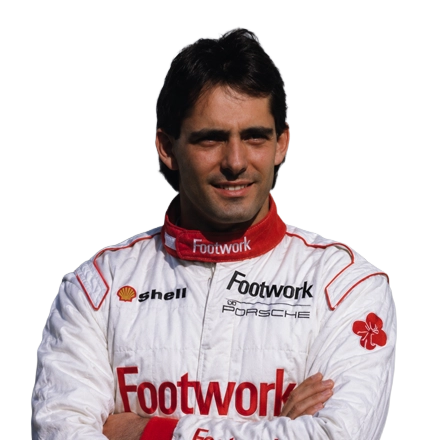
Born on 18 March 1964 in Rovato, near Brescia in northern Italy, Alessandro Giuseppe “Alex” Caffi developed his racing credentials long before reaching Formula One. Between 1984 and 1986, he competed in the fiercely competitive Italian Formula Three Championship, establishing himself as one of the country’s brightest young talents.
Driver Bio
| Nationality | Italian |
|---|---|
| Born | 18 March 1964 Rovato, Italy |
| Active years | 1986–1992 |
| Teams | Osella, Scuderia Italia, Footwork, Andrea Moda |
| Entries | 77 (56 starts) |
| Championships | 0 |
| Wins | 0 |
| Podiums | 0 |
| Career points | 6 |
| Pole positions | 0 |
| Fastest laps | 0 |
| First entry | 1986 Italian Grand Prix |
| Last entry | 1992 Mexican Grand Prix |
Caffi finished runner-up in the championship in both 1984 and 1985 before securing third place in 1986. His standout achievement during this period came in 1985 when he claimed victory in the prestigious FIA European Formula 3 Cup, a result that further enhanced his growing reputation and paved the way towards Formula One.
Formula One Career
1986: A Home Debut
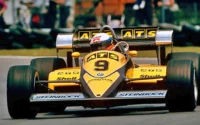
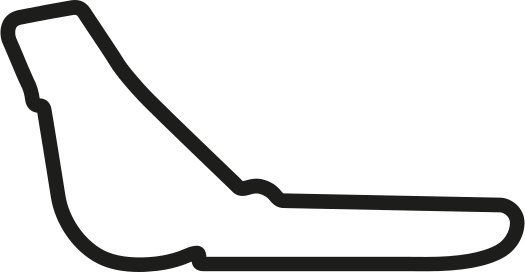
Caffi’s Formula One journey began with Osella at the 1986 Italian Grand Prix, a fitting debut at both his home race and the team’s home event. Replacing Canadian driver Allen Berg, the young Italian qualified 27th and last on the grid in the Osella FA1H.
Although the car lacked outright pace, Caffi delivered a measured and mature performance, avoiding trouble and bringing the car home as the last classified runner. Despite finishing six laps behind the leaders and remaining officially unclassified, his composed approach left a positive impression on the Osella management.
1987: A Difficult Full Season
Encouraged by his debut performance, Osella signed Caffi for a full campaign in 1987. Unfortunately, the Alfa Romeo-powered FA1I proved both slow and unreliable, making life exceptionally difficult for the rookie.
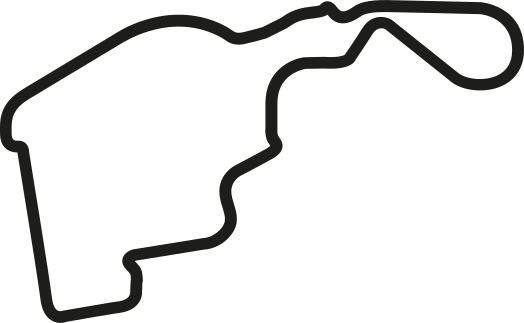
The season began in a challenging fashion when Caffi retired from the Brazilian Grand Prix after 21 laps, physically exhausted by the intense heat and the car’s demanding characteristics. Three weeks later at Imola, he achieved his only classification of the year with 12th place in the San Marino Grand Prix despite running out of fuel shortly before the finish.
What followed was a frustrating sequence of retirements. There were flashes of speed—particularly in Monaco, where he qualified an impressive 16th and climbed as high as tenth during the race, and in Detroit and Mexico, where he showed promising pace—but reliability repeatedly denied him results.
Caffi failed to qualify for the Spanish and Australian Grands Prix and ended the year without a single race finish. Despite the statistics, none of his retirements was attributed to driver error.
1988: New Team, New Opportunities
In 1988, Caffi joined the newly formed Scuderia Italia operation. The team’s debut season was far from straightforward. Their intended challenger, the Dallara F188, was not ready for the opening round in Brazil, forcing the team to enter a modified Formula 3000 chassis as a temporary solution.
Unsurprisingly, Caffi failed to pre-qualify in Brazil. The arrival of the proper F188 at Imola brought little immediate improvement, and an encouraging qualifying performance in Monaco ended prematurely when he crashed on the opening lap—his first significant driving mistake in Formula One.
The first half of the season was difficult, with retirements and qualification struggles dominating the headlines. However, momentum gradually shifted as both driver and team gained experience. Caffi recorded four consecutive race finishes in the United States, France, Great Britain and Germany, demonstrating increasing consistency.
Further progress followed later in the year. He achieved eighth place in Belgium, seventh in Portugal—his best Formula One finish to that point—and tenth in Spain. Hungary also saw him qualify inside the top ten for the first time in his Formula One career.
Although the season ended with retirements in Japan and Australia, the foundations had been laid for a breakthrough.
1989: Breakthrough Performances
The 1989 season marked the strongest campaign of Caffi’s Formula One career. Scuderia Italia expanded to a two-car operation, pairing him with fellow Italian Andrea de Cesaris.
After missing pre-qualification in Brazil, Caffi quickly bounced back at Imola, qualifying ninth and finishing seventh. Even better was to come in Monaco.
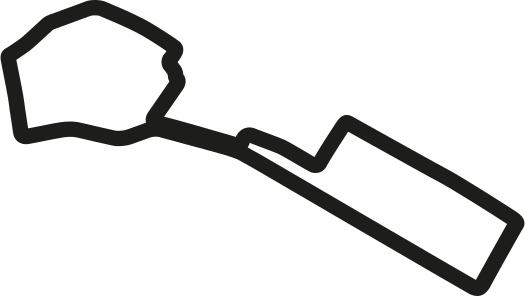
On the streets of Monte Carlo, Caffi delivered one of the standout drives of his career. Qualifying ninth, he raced superbly to fourth place, scoring the first Formula One points for both himself and Scuderia Italia. The result established him as one of the sport’s most promising emerging talents.
His speed was evident again in the United States Grand Prix, where he qualified sixth and briefly ran second behind Alain Prost. However, his race ended in unusual circumstances when he was pushed into the wall while attempting to lap teammate Andrea de Cesaris.
Another points finish followed in Canada, where sixth place added to his growing tally. The remainder of the season proved more inconsistent, though highlights included a stunning third-place qualifying effort in Hungary and a seventh-place race finish.
By season’s end, Caffi had accumulated four championship points and finished 19th in the Drivers’ Championship, comfortably the most successful year of his Formula One career.
The 1990s
1990: A Move to Arrows
With his reputation rising, Caffi attracted interest from Arrows for the 1990 season. The team was entering a new phase under investment from Japan’s Footwork Corporation and had secured a future engine partnership with Porsche.
Caffi joined experienced Italian Michele Alboreto in the Arrows line-up, but misfortune struck before the season even began. A cycling accident during pre-season testing left him injured and unable to compete in the opening race of the year.
Once back in the cockpit, results remained mixed. Early retirements and qualification difficulties were offset by an excellent fifth-place finish in Monaco, which earned two valuable championship points. He followed this with eighth place in Canada and a string of five consecutive top-ten finishes through the middle of the season, highlighting his growing consistency.
Another setback arrived at the Portuguese Grand Prix when he collided with Aguri Suzuki and suffered foot injuries that forced him to miss the following race in Spain.
Despite these interruptions, Caffi ended the year as the team’s sole points scorer. He also outperformed the vastly more experienced Alboreto over the season, finishing 16th in the Drivers’ Championship with two points.
1991: A Season to Forget
After the promise of previous years, 1991 became the most frustrating season of Caffi’s Formula One career.
The Footwork-Porsche package was fundamentally uncompetitive. The Porsche V12 engine was heavy and underpowered, while both chassis used during the season struggled badly against the competition.
For the first time in his Formula One career, Caffi failed to qualify for the opening four races of the year. Matters worsened in Monaco, where he suffered a huge practice accident at the Swimming Pool section. The impact was so severe that the car broke apart into multiple sections, although remarkably, he escaped without serious injury.
Unfortunately, he was then involved in a separate road accident shortly afterwards, forcing him to miss several Grands Prix. During his absence, Footwork drafted in Stefan Johansson and later attempted to retain the Swede permanently.
Caffi successfully fought to reclaim his seat through legal action, but the results did not improve. Qualification struggles continued throughout the remainder of the year, and he failed to reach the grid at numerous events.
The only bright moments came late in the season with finishes in Japan and Australia. Nevertheless, he ended the year without points and unclassified in the championship standings.
1992: The Final Chapter
With Footwork choosing a new driver line-up for 1992, Caffi suddenly found himself without a seat. His options were limited, and he eventually signed for the newly formed Andrea Moda Formula team alongside fellow Italian Enrico Bertaggia.
The venture quickly descended into chaos.
Andrea Moda had purchased the remnants of the Coloni team, but administrative disputes with the FIA prevented the operation from functioning properly. Registration issues meant Caffi completed only a handful of exploratory laps during the opening round in South Africa.
Ahead of the Mexican Grand Prix, the team’s new Nick Wirth-designed S921 chassis was finally ready, but freight delays prevented the cars from competing.
After just two race weekends, Caffi publicly expressed his frustration with the situation. Team owner Andrea Sassetti responded by dismissing him, bringing an abrupt end to his Formula One career.
At only 28 years old, Caffi’s time in Formula One was over, having contested 75 Grands Prix between 1986 and 1992.
Life After Formula One
Although his Formula One chapter closed early, Caffi remained deeply involved in motorsport.
Throughout the 1990s and 2000s, he competed in a wide variety of categories, including sports cars, GT racing, FIA Sportscar events and the American Le Mans Series. He also raced in Spanish and Italian Touring Car championships and even tested an Indy Racing League car at Pikes Peak Raceway in 1998.
In 2006, he returned to the spotlight as part of the Grand Prix Masters series, which brought together retired Formula One drivers. Five years later, he expanded his racing résumé again by contesting the 2011 Rallye Monte-Carlo in a Škoda Fabia S2000.
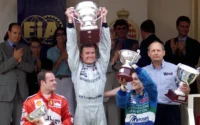
One of the most memorable victories of his post-Formula One career arrived in 2016 at the Monaco Grand Prix Historique. Twenty-five years after racing in Formula One, Caffi returned to the streets of Monte Carlo and claimed victory in the pre-1977 three-litre Formula One race aboard a Kessel Racing Ensign N176.
Team Owner and Motorsport Executive
In 2016, Caffi launched his own racing organisation, Alex Caffi Motorsport. The team entered the NASCAR Whelen Euro Series that same year, initially on a part-time basis before expanding to a full-time programme in 2017.
Over the following five seasons, the operation steadily established itself within the championship. In 2021, entrepreneur Federico Monti joined as co-owner and the team was rebranded as Academy Motorsport.
Today, Academy Motorsport remains an active presence in the NASCAR Euro Series, fielding competitive entries in both the EuroNASCAR PRO and EuroNASCAR 2 categories. Caffi continues to oversee the organisation as team owner, adding motorsport executive to a career that has already spanned Formula One, endurance racing, touring cars and historic competition.
Complete Formula One results
| Year | Entrant | Chassis | Engine | 1 | 2 | 3 | 4 | 5 | 6 | 7 | 8 | 9 | 10 | 11 | 12 | 13 | 14 | 15 | 16 | WDC | Points |
|---|---|---|---|---|---|---|---|---|---|---|---|---|---|---|---|---|---|---|---|---|---|
| 1986 | Osella Squadra Corse | Osella FA1G | Alfa Romeo V8 | BRA | ESP | SMR | MON | BEL | CAN | DET | FRA | GBR | GER | HUN | AUT | ITA NC | POR | MEX | AUS | NC | 0 |
| 1987 | Osella Squadra Corse | Osella FA1I | Alfa Romeo V8 | BRA Ret | SMR 12 | BEL Ret | MON Ret | DET Ret | GBR Ret | GER Ret | HUN Ret | AUT Ret | ITA Ret | POR Ret | ESP DNQ | MEX Ret | JPN Ret | AUS DNQ | NC | 0 | |
| Osella FA1G | FRA Ret | ||||||||||||||||||||
| 1988 | Scuderia Italia | Dallara 3087 | Cosworth V8 | BRA DNPQ | NC | 0 | |||||||||||||||
| Dallara 188 | SMR Ret | MON Ret | MEX Ret | CAN DNPQ | DET 8 | FRA 12 | GBR 11 | GER 15 | HUN Ret | BEL 8 | ITA Ret | POR 7 | ESP 10 | JPN Ret | AUS Ret | ||||||
| 1989 | Scuderia Italia | Dallara 189 | Cosworth V8 | BRA DNPQ | SMR 7 | MON 4 | MEX 13 | USA Ret | CAN 6 | FRA Ret | GBR DNPQ | GER Ret | HUN 7 | BEL Ret | ITA 11 | POR Ret | ESP Ret | JPN 9 | AUS Ret | 19th | 4 |
| 1990 | Footwork Arrows Racing | Arrows A11B | Cosworth V8 | USA | BRA Ret | SMR DNQ | MON 5 | CAN 8 | MEX DNQ | FRA Ret | GBR 7 | GER 9 | HUN 9 | BEL 10 | ITA 9 | POR 13 | ESP | JPN 9 | AUS DNQ | 16th | 2 |
| 1991 | Footwork Grand Prix International | Footwork A11C | Porsche V12 | USA DNQ | BRA DNQ | NC | 0 | ||||||||||||||
| Footwork FA12 | SMR DNQ | MON DNQ | CAN | MEX | |||||||||||||||||
| Footwork FA12C | Cosworth V8 | FRA | GBR | GER DNPQ | HUN DNPQ | BEL DNQ | ITA DNPQ | POR DNPQ | ESP DNPQ | JPN 10 | AUS 15 | ||||||||||
| 1992 | Andrea Moda Formula | Coloni C4B | Judd V10 | RSA EX | NC | 0 | |||||||||||||||
| Andrea Moda S921 | MEX DNP | BRA | ESP | SMR | MON | CAN | FRA | GBR | GER | HUN | BEL | ITA | POR | JPN | AUS | ||||||
Teammates & Qualifying Head-to-Head
| Teammate | Years | Races | Qualifying H2H |
|---|---|---|---|
| Piercarlo Ghinzani | 1986 | 1 | 0-1 |
| Gabriele Tarquini | 1987 | 1 | 1-0 |
| Franco Forini | 1987 | 3 | 3-0 |
| Andrea de Cesaris | 1989 | 16 | 10-6 |
| Michele Alboreto | 1990, 1991 | 26 | 12-14 |
| Enrico Bertaggia | 1992 | 2 | – |