




























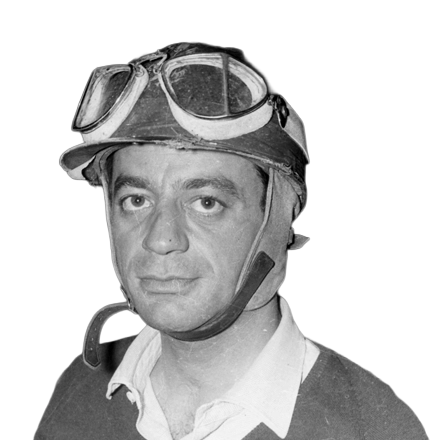
Hermano João “Nano” da Silva Ramos was a French-Brazilian racing driver whose career bridged the glamorous, dangerous early years of post-war motorsport. Elegant, cosmopolitan, and fiercely versatile, da Silva Ramos competed in Formula One, endurance racing, rallies, and grand touring events during the 1950s, becoming one of the few drivers of his era to successfully race across multiple disciplines and continents.
Driver Bio
| Nationality | Brazilian |
| Birthplace | Paris, France |
| Born | 7 December 1925 |
| Died | 4 May 2026 |
| First Grand Prix | 1955 Dutch Grand Prix |
| Last Grand Prix | 1956 Italian Grand Prix |
| Years Active | 1955–1956 |
| Current/Last Team | Gordini |
At the time of his death in 2026, he was not only the oldest surviving former Formula One driver, but also the final living Formula One World Championship points scorer from the 1950s.
Early life and introduction to racing
Born in Paris on 7 December 1925 to a French mother and Brazilian father, da Silva Ramos carried dual cultural influences throughout his life. His racing story began in Brazil in 1947, when, at just 21 years old, he entered the Interlagos Grand Prix driving an MG TC.
That first appearance launched a career that would span Formula One, endurance racing, rallies, and sports cars during one of motorsport’s most romantic and perilous eras.
Sports car and endurance racing success
By 1953, da Silva Ramos was competing extensively in Europe with an Aston Martin DB2/4. He quickly established himself as a capable and adaptable competitor.
In 1954, he finished second in the Paris Cup at Montlhéry and won the Coupe de Montlhéry. That same year, he made his debut at the 24 Hours of Le Mans alongside Jean-Paul Colas, though their race ended after 14 hours due to rear axle failure.
His 1954 season also included heartbreak and frustration:
- He ran out of fuel while leading the Tour de France Automobile
- Retired from the Rally of Morocco with engine damage
- Competed in the Salon Cup in a Gordini Type 18 before retiring
The following year brought stronger results. In 1955:
- He won the Coupe de Montlhéry again
- Claimed victory in the Rally Sablé-Solesmes
- Finished fifth in class in the Mille Miglia alongside co-driver Vidille
- Competed in the Monte Carlo Rally, where he and co-driver Lucas were controversially disqualified for speeding before eventually being classified 46th overall and fourth in class
Formula One career
Da Silva Ramos competed in seven Formula One World Championship Grands Prix, making his debut on 19 June 1955.
Though never a front-running star, he earned respect as a determined and technically skilled privateer during an era dominated by factory teams and legendary names. Across his Formula One career, he scored two World Championship points—an achievement of genuine significance in the fiercely competitive 1950s.
Motorsport elder statesman
Long after his racing career ended, da Silva Ramos became a living connection to Formula One’s earliest decades.
Following the death of Kenneth McAlpine in 2023, he became the oldest surviving driver to have competed in a Formula One Grand Prix. After the passing of Paul Goldsmith in 2024, he also became the oldest surviving driver to have taken part in any round of the Formula One World Championship, including the Indianapolis 500 years.
When Hans Herrmann died in 2026, da Silva Ramos became the final surviving Formula One World Championship points scorer from the 1950s.
He was also the last surviving participant of the tragic 1955 24 Hours of Le Mans, motorsport’s darkest event. In 2022, he appeared as an expert contributor in Emmanuel Reyé’s documentary Le Mans 55: Une tragédie française, reflecting on the catastrophe and the era in which he raced.
Death and legacy
Hermano da Silva Ramos died in Biarritz, France, on 4 May 2026 at the age of 100.
His life stretched across a full century of motorsport evolution—from open-road endurance races and front-engined Formula One cars to the modern era of global racing. Though never among the sport’s biggest stars, he remained deeply respected as one of the last authentic links to Formula One’s formative years.
Da Silva Ramos embodied a generation of racers who crossed borders, disciplines, and machinery with ease—drivers for whom racing was not a profession alone, but a way of life.
Grand Prix Stats
| Race Entries | 7 |
| Race Starts | 7 |
| Did Not Start | 0 |
| Best Race Start | 14th |
| Best Race Finish | 5th |
| Retirements | 4 |
| First-Lap Retirements | 0 |
| Not Classified | 0 |
| Disqualified | 0 |
| Did Not Qualify | 0 |
Qualifying
| Qualifying Sessions | 7 |
| Reached Q3 | – |
| Q2 Eliminations | – |
| Q1 Eliminations | – |
| Did Not Qualify | 0 |
Points
| Points Scored | 2 |
| Points Finishes | 1 |
| Most Points in a Single Season | 2 |
| Seasons with Points | 1 |
Stats by Season
| Year | Constructor | Entries | Starts | Wins | Podiums | Poles | Fastest Laps | Front Rows | DNF | Best Start | Best Result | Pts Finishes | Points | Championship |
|---|---|---|---|---|---|---|---|---|---|---|---|---|---|---|
| 1955 | Gordini | 3 | 3 | 0 | 0 | 0 | 0 | 0 | 2 | 14 | 8 | 0 | 0 | NC |
| 1956 | Gordini | 4 | 4 | 0 | 0 | 0 | 0 | 0 | 2 | 14 | 5 | 1 | 2 | 19th |
Stats by Constructor
| Constructor | Years | Entries | Starts | Wins | Podiums | Poles | Fastest Laps | Front Rows | DNF | Best Start | Best Result | Pts Finishes | Points |
|---|---|---|---|---|---|---|---|---|---|---|---|---|---|
| Gordini | 1955–1956 | 7 | 7 | 0 | 0 | 0 | 0 | 0 | 4 | 14 | 5 | 1 | 2 |
Teammates & Qualifying Head-to-Head
| Teammate | Years | Races | Qualifying H2H |
|---|---|---|---|
| Jacques Pollet | 1955 | 2 | – |
| Robert Manzon | 1955, 1956 | 6 | – |
| Mike Sparken | 1955 | 1 | – |
| Jean Lucas | 1955 | 1 | – |
| Elie Bayol | 1956 | 1 | – |
| Andre Pilette | 1956 | 2 | – |
| Andre Simon | 1956 | 1 | – |