




















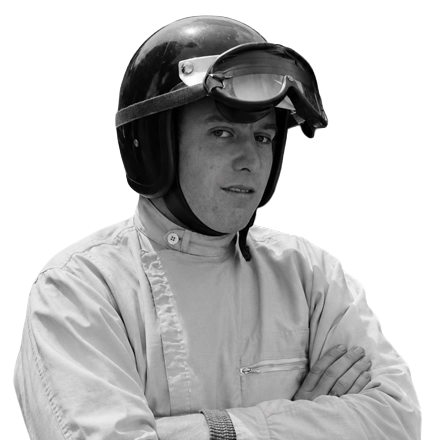
Keith Jack Oliver (born 14 August 1942) is a British former racing driver and motorsport executive whose career spanned some of the most competitive eras in international motorsport. Best known for his versatility, Oliver enjoyed success in Formula One, endurance racing and Can-Am before becoming a co-founder and team principal of the Arrows Formula One team.
Driver Bio
| Born | Keith Jack Oliver 14 August 1942 Chadwell Heath, Essex, England |
| Nationality | British |
|---|---|
| Active years | 1967–1973, 1977 |
| Teams | Lotus, BRM, McLaren, Shadow |
| Entries | 52 (50 starts) |
| Championships | 0 |
| Wins | 0 |
| Podiums | 2 |
| Career points | 13 |
| Pole positions | 0 |
| Fastest laps | 1 |
| First entry | 1967 German Grand Prix |
| Last entry | 1977 Swedish Grand Prix |
Oliver began racing in 1961 behind the wheel of a Mini in British club saloon events. He continued to build experience with Ecurie Freeze, driving a Marcos GT during the 1962 and 1963 seasons, before moving into GT competition with a Lotus Elan for D.R. Fabrications in 1964. Strong performances in sports car racing highlighted his natural speed, although his progress in Formula Three was frequently hampered by unreliable machinery rather than a lack of pace.
His breakthrough arrived in 1967 when he joined Team Lotus’ Formula Two programme. That same year he made his Formula One World Championship debut in the German Grand Prix, which was run alongside Formula Two machinery at the Nürburgring. Oliver finished fifth overall while also taking victory in the Formula Two category, underlining his potential. A year later, Colin Chapman promoted him to Team Lotus’ Formula One team following the tragic death of Jim Clark.
The 1968 Formula One season proved challenging despite flashes of brilliance. Oliver famously led his home British Grand Prix before an engine failure ended his hopes of victory, while his finest championship result came with third place at the season-ending Mexican Grand Prix. Away from Formula One, he remained competitive in Formula Two with the Herts and Essex Aero Club team, helping the outfit secure third place overall in the prestigious Argentine Temporada series.
For 1969, Oliver moved to BRM following the arrival of Jochen Rindt at Lotus. His two seasons with the Bourne-based team were marked by frustration as persistent mechanical problems limited his results. He scored championship points with sixth place in the 1969 Mexican Grand Prix and fifth in the 1970 Austrian Grand Prix, while also leading races including the Race of Champions and spending significant periods at the front of both the Dutch and British Grands Prix. Despite regularly showing impressive speed, reliability issues undermined his campaign, and he eventually lost favour within the team, bringing his time at BRM to an end.
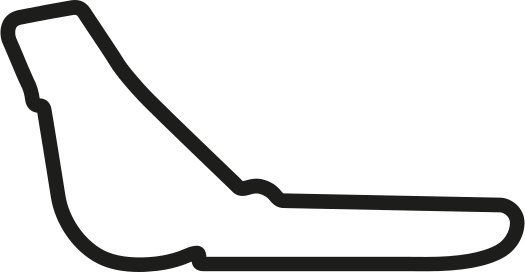
While Formula One results were difficult to come by, Oliver flourished in endurance racing. Driving John Wyer Automotive’s legendary Gulf Ford GT40, he partnered Jacky Ickx to victories in both the 12 Hours of Sebring and the 24 Hours of Le Mans in 1969. He added further major successes in 1971 by winning the 24 Hours of Daytona and the 1000 km of Monza alongside Pedro Rodríguez. These achievements established Oliver as one of the leading endurance racers of his generation and made him only the second driver to complete the informal Triple Crown of endurance racing.
Oliver also built an impressive reputation in the Canadian-American Challenge Cup. After making his Can-Am debut in 1969 with Autocoast before joining Don Nichols’ Shadow team, he increasingly focused on the series during the early 1970s. Although he made occasional Formula One appearances—including a one-off return for BRM at the 1972 British Grand Prix—his attention shifted towards Shadow‘s growing programme.
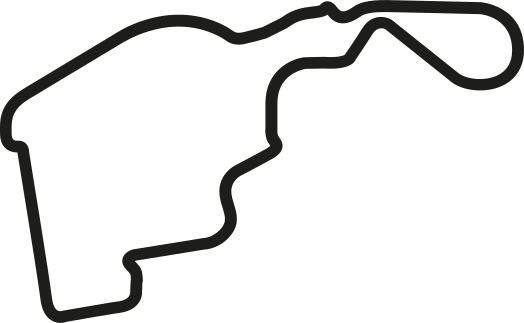
When Shadow entered Formula One as a constructor in 1973, Oliver became the team’s lead driver. The DN1 chassis proved unreliable throughout the season, but he still delivered one of the year’s most memorable performances at the Canadian Grand Prix. Confusion caused by heavy rain, multiple pit stops and an incorrectly deployed safety car left the final classification highly controversial, with many believing Oliver had done enough to win. Officially, however, he was credited with third place, earning his second Formula One podium.
In 1974, Oliver concentrated primarily on Can-Am and enjoyed his greatest single-seater success by winning the championship for Shadow. As his responsibilities within the organisation increased, he also raced in Formula 5000 for three seasons before making a brief return to Formula One in 1977. He finished fifth in the Race of Champions and later claimed ninth place in the Swedish Grand Prix, bringing his World Championship career to a close after 52 Grand Prix starts for Lotus, BRM, McLaren and Shadow.
Beyond Formula One, Oliver also sampled American stock car racing, competing in eight NASCAR Cup Series events between 1971 and 1972, most of them with Donlavey Racing. He also attempted to qualify for the 1972 Daytona 500 but narrowly missed the starting field.
Earlier in his career, Oliver also enjoyed success in the British Saloon Car Championship, recording several class victories between 1966 and 1968, demonstrating the versatility that became the hallmark of his racing career.
Arrows
At the end of the 1977 season, Oliver turned his attention fully to team management. Leaving Shadow alongside financier Franco Ambrosio, designers Tony Southgate and Alan Rees, engineer Dave Wass and driver Riccardo Patrese, he co-founded the Arrows Grand Prix team.
Under Oliver’s leadership, Arrows became one of Formula One’s most enduring independent teams, competing in a remarkable 382 World Championship Grands Prix. Although the team never secured a Grand Prix victory, it earned a reputation for resilience and for nurturing talented drivers and engineers over more than two decades in the sport.
In 1990, Oliver sold much of his ownership stake to Japan’s Footwork Corporation while remaining as a director. Financial difficulties eventually forced Footwork to withdraw at the end of 1993, allowing Oliver to regain greater control of the team. Continuing funding challenges led him to sell a majority stake once again in 1996, this time to Tom Walkinshaw’s TWR Group. He remained on the Arrows board until 1999, when he sold his remaining shares and brought to a close an extraordinary career that had seen him succeed as both a driver and one of Formula One’s leading team figures.
Complete Formula One World Championship results
| Year | Entrant | Chassis | Engine | 1 | 2 | 3 | 4 | 5 | 6 | 7 | 8 | 9 | 10 | 11 | 12 | 13 | 14 | 15 | 16 | 17 | WDC | Pts. |
|---|---|---|---|---|---|---|---|---|---|---|---|---|---|---|---|---|---|---|---|---|---|---|
| 1967 | Lotus Components Ltd. | Lotus 48 (F2) | Ford Cosworth FVA 1.6 L4 | RSA | MON | NED | BEL | FRA | GBR | GER 5* | CAN | ITA | USA | MEX | NC | 0 | ||||||
| 1968 | Gold Leaf Team Lotus | Lotus 49 | Ford Cosworth DFV 3.0 V8 | RSA | ESP | MON Ret | 15th | 6 | ||||||||||||||
| Lotus 49B | BEL 5 | NED NC | FRA DNS | GBR Ret | GER 11 | ITA Ret | CAN Ret | USA DNS | MEX 3 | |||||||||||||
| 1969 | Owen Racing Organisation | BRM P133 | BRM P101 3.0 V12 | RSA 7 | 17th | 1 | ||||||||||||||||
| BRM P142 3.0 V12 | ESP Ret | MON Ret | NED Ret | FRA | GBR Ret | |||||||||||||||||
| BRM P138 | GER Ret | |||||||||||||||||||||
| BRM P139 | ITA Ret | CAN Ret | USA Ret | MEX 6 | ||||||||||||||||||
| 1970 | Owen Racing Organisation | BRM P153 | BRM P142 3.0 V12 | RSA Ret | 20th | 2 | ||||||||||||||||
| Yardley Team BRM | ESP Ret | MON Ret | BEL Ret | NED Ret | FRA Ret | GBR Ret | GER Ret | AUT 5 | ITA Ret | CAN NC | USA Ret | MEX 7 | ||||||||||
| 1971 | Bruce McLaren Motor Racing | McLaren M14A | Ford Cosworth DFV 3.0 V8 | RSA | ESP | MON | NED | FRA | GBR Ret | GER | ITA 7 | CAN | USA | NC | 0 | |||||||
| McLaren M19A | AUT 9 | |||||||||||||||||||||
| 1972 | Marlboro BRM | BRM P160B | BRM P142 3.0 V12 | ARG | RSA | ESP | MON | BEL | FRA | GBR Ret | GER | AUT | ITA | CAN | USA | NC | 0 | |||||
| 1973 | UOP Shadow Racing Team | Shadow DN1 | Ford Cosworth DFV 3.0 V8 | ARG | BRA | RSA Ret | ESP Ret | BEL Ret | MON 10 | SWE Ret | FRA Ret | GBR Ret | NED Ret | GER 8 | AUT Ret | ITA 11 | CAN 3 | USA 15 | 14th | 4 | ||
| 1977 | Shadow Racing Team | Shadow DN8 | Ford Cosworth DFV 3.0 V8 | ARG | BRA | RSA | USW | ESP | MON | BEL | SWE 9 | FRA | GBR | GER | AUT | NED | ITA | USA | CAN | JPN | NC | 0 |
Teammates & Qualifying Head-to-Head
| Teammate | Years | Races | Qualifying H2H |
|---|---|---|---|
| Graham Hill | 1967, 1968 | 10 | – |
| Mario Andretti | 1968 | 2 | – |
| Bill Brack | 1968, 1969 | 2 | – |
| Moises Solana | 1968 | 1 | – |
| John Surtees | 1969 | 11 | – |
| George Eaton | 1969, 1970 | 12 | – |
| Pedro Rodriguez | 1970 | 13 | – |
| Peter Westbury | 1970 | 1 | – |
| Peter Gethin | 1971, 1972 | 2 | – |
| Denny Hulme | 1971 | 2 | – |
| Jean-Pierre Beltoise | 1972 | 1 | – |
| George Follmer | 1973 | 13 | – |
| Brian Redman | 1973 | 1 | – |
| Alan Jones | 1977 | 1 | – |