





























For a sport built on relentless speed, constant innovation and a calendar that now stretches across almost the entire year, it can seem surprising that Formula 1 deliberately comes to a standstill for several weeks every summer.
Fans accustomed to back-to-back races often wonder why the championship suddenly disappears just as title battles begin to intensify. Yet the annual summer break has become one of the most important traditions in modern Formula 1, balancing competitive fairness with the well-being of thousands of people working behind the scenes.
What To Know?
- Formula 1’s summer break lasts four weeks, but includes a mandatory 14-day FIA shutdown where technical development must stop.
- Teams cannot design, manufacture or develop current F1 cars during the shutdown, ensuring every competitor gets an equal opportunity to rest.
- The break in 2026 comes after the Hungarian Grand Prix, with racing resuming at the Dutch Grand Prix before the final races of the season.
- As F1’s calendar has grown to 24 races, the summer break has become essential for staff wellbeing, competitive fairness and preparing for the championship run-in.
Far more than just a holiday for drivers, the summer break is governed by strict FIA regulations that prevent teams from developing their cars for a mandatory period. It creates a rare moment when every competitor is forced to pause, ensuring that no one can gain an advantage while rivals take a well-earned rest.
With Formula 1 continuing to expand its global calendar, the importance of this annual shutdown has never been greater.
When Does Formula 1’s Summer Break Take Place?
In the 2026 Formula 1 season, the summer break begins immediately after the Hungarian Grand Prix.
Officially, the break starts on July 27, 2026 and continues until the Dutch Grand Prix weekend.
Although the championship pauses for four weeks, the calendar remains packed. After racing resumes, teams still face the final Grand Prix of the season, including demanding long-haul trip.
Rather than marking the end of the campaign, the summer break acts as the dividing line between two distinct halves of the season—the opening stretch and the decisive championship run-in.
Why Formula 1 Needs a Summer Break
Modern Formula 1 operates on an unprecedented scale.
The 2025 championship featured 24 Grands Prix, and 2026 was to be the same until the war in Iran reduced the races to 22. Every race weekend requires enormous logistical planning, with thousands of tonnes of freight travelling around the world while mechanics, engineers, strategists and support staff move almost continuously between circuits.
For team personnel, race weekends are only part of the workload.
Between events, factories remain active analysing data, manufacturing upgrades, testing components, preparing future developments and planning logistics for upcoming races. Engineers often work long hours in pursuit of tiny performance gains that could ultimately decide championships.
Without an enforced break, many employees would simply continue working throughout the summer rather than taking annual leave, concerned that competitors might gain valuable development time.
The mandatory shutdown removes that pressure.
Everyone knows rival teams are equally restricted, allowing staff across Formula 1 to step away from the sport without worrying that valuable performance is being lost elsewhere.
What Is the FIA Summer Shutdown?
The most important part of Formula 1’s summer break is the FIA’s mandatory 14-day summer shutdown.
This is not simply a recommendation for teams to take holidays. It is written into Formula 1’s Sporting Regulations and strictly limits what teams are allowed to do during a consecutive two-week period selected within the four-week summer break.
During this shutdown, teams are prohibited from carrying out activities that could improve the performance of their current Formula 1 cars.
That includes:
- Designing new components
- Manufacturing performance parts
- Carrying out development work
- Holding official engineering meetings
- Using wind tunnels for Formula 1 development
- Machining new components
Any breach of these regulations can result in penalties imposed by the FIA.
Each team chooses exactly when its 14-day shutdown begins and ends, although most schedule it during the middle of the four-week break. This approach allows teams to complete post-race analysis after the Hungarian Grand Prix, switch off completely, then return roughly one week before the Dutch Grand Prix to prepare for racing again.
Every team must notify the FIA of its chosen shutdown dates.
Are Teams Allowed to Do Any Work?
Although the regulations are strict, Formula 1 teams do not completely disappear for two weeks.
Certain activities remain permitted because they do not provide a competitive advantage.
With FIA approval, teams may repair cars that suffered serious damage in the race immediately before the shutdown begins.
Other permitted activities include:
- Running static show cars that do not use current Formula 1 components
- Wind tunnel or CFD work for projects unrelated to Formula 1
- Supporting programmes unconnected with current F1 performance
- Essential maintenance and servicing of facilities
Departments such as marketing, communications, finance, legal, and commercial operations also continue to function throughout much of the summer period, allowing teams to remain operational even while technical development pauses.
Once the mandatory shutdown ends, normal Formula 1 work resumes immediately as preparations begin for the remaining races.
What Do Drivers Do During the Summer Break?
For drivers, the summer break is one of the few opportunities to spend extended time away from Formula 1.
Throughout the season, drivers divide their schedules between race weekends, simulator sessions, sponsor commitments, media appearances and physical training. A four-week pause provides valuable time to recover both mentally and physically before the final championship battles.
While social media often highlights holidays on beaches or yachts, drivers also use the break to maintain fitness programmes, spend time with family and reset before another demanding run of races.
With several consecutive flyaway events following the summer break, recovery becomes almost as important as preparation.
What Happens Behind the Factory Gates?
One common misconception is that Formula 1 factories become completely silent.
During the mandatory shutdown, technical departments genuinely do pause development work, leaving facilities noticeably quieter than normal.
However, the wider organisation continues operating.
Commercial teams prepare hospitality plans for the remainder of the season, marketing departments create digital content, finance teams manage budgets, and logistics departments continue coordinating freight for future races.
Outside the shutdown period, engineers and mechanics return to their normal routines, analysing previous races and preparing cars for the next.
This carefully structured schedule allows teams to balance genuine rest with the practical realities of running one of the world’s most demanding sporting operations.
Why the Summer Break Can Shape the Championship
Although no development work takes place during the mandatory shutdown itself, the weeks immediately before and after it can have a major influence on the championship.
Teams spend the opening part of the break reviewing everything learned during the first half of the season before finalising priorities for the remaining races.
Once restrictions are lifted, attention quickly turns towards preparing upgrades, race strategies and operational improvements for the final phase of the campaign.
In many seasons, the championship remains finely balanced after the Hungarian Grand Prix, meaning every decision made following the shutdown can have significant consequences.
The summer break, therefore, becomes less about stopping Formula 1 entirely and more about resetting before the decisive races begin.
When Does Formula 1 Return?
The 2026 Formula 1 season resumes with the Dutch Grand Prix, beginning on 21 August.
From there, the calendar quickly accelerates.
The remaining Grands Prix take place at:
| Grand Prix | Circuit | Dates |
|---|---|---|
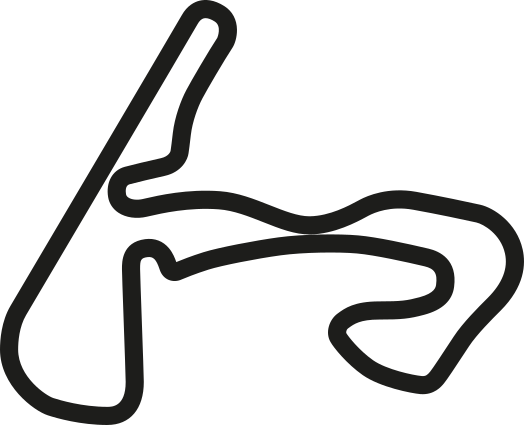
| 2026 Dutch Grand Prix | Circuit Zandvoort | 21-23 August |
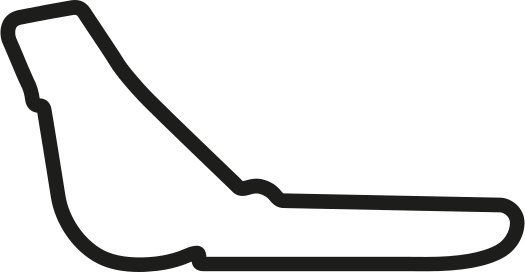
| 2026 Italian Grand Prix | Autodromo Internazionale Enzo e Dino Ferrari | 4-6 September |
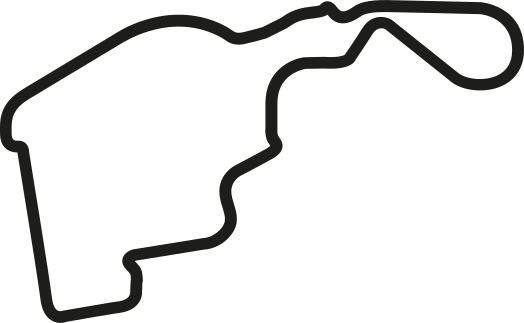
| 2026 Spanish Grand Prix | Circuito IFEMA Madrid “Madring” | 11-13 September |
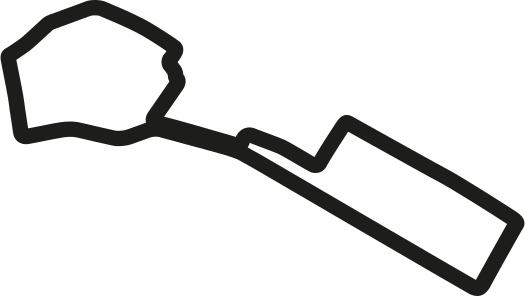
| 2026 Azerbaijan Grand Prix | Baku City Circuit | 25-27 September |
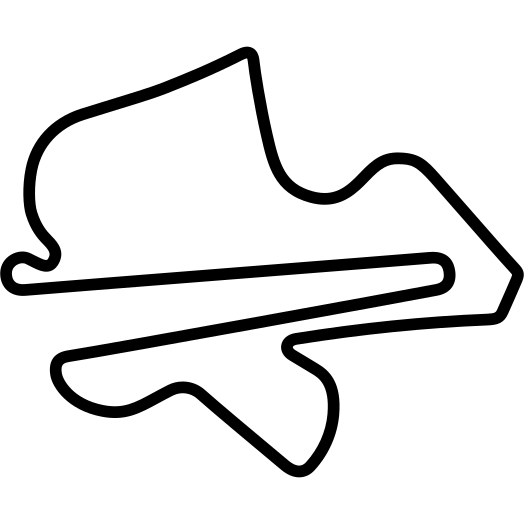
| 2026 Bahrain Grand Prix in Malaysia | Sepang International Circuit | 2-4 October |
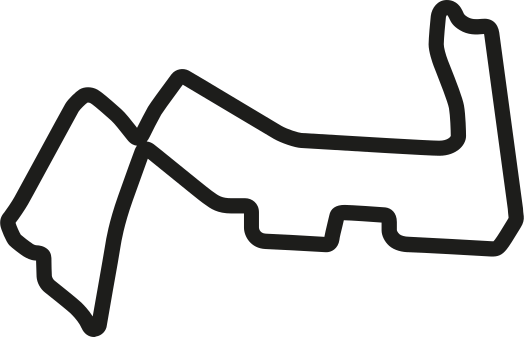
| 2026 Singapore Grand Prix | Marina Bay Street Circuit | 9-11 October |
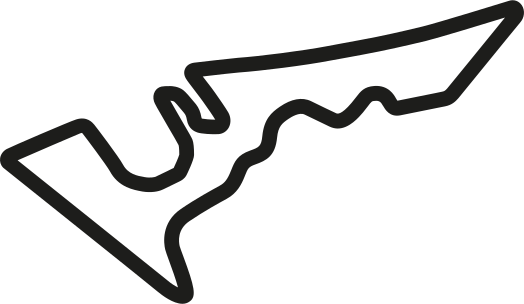
| 2026 United States Grand Prix | Circuit of The Americas | 23-25 October |
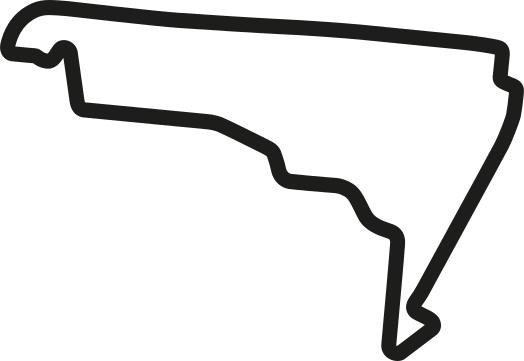
| 2026 Mexico City Grand Prix | Autódromo Hermanos Rodríguez | 30 October-1 November |
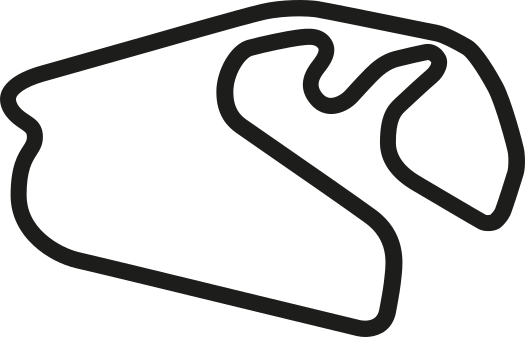
| 2026 São Paulo Grand Prix | Autodromo José Carlos Pace | 6-8 November |
| 2026 Las Vegas Grand Prix | Las Vegas Strip Circuit | 19-21 November |
| 2026 Qatar Grand Prix | Lusail International Circuit | 27-29 November |
| 2026 Abu Dhabi Grand Prix | Yas Marina Circuit | 4-6 December |
With no more pauses after August till the winter break, the championship enters its decisive phase, where every point becomes increasingly valuable.
Seen in: