



































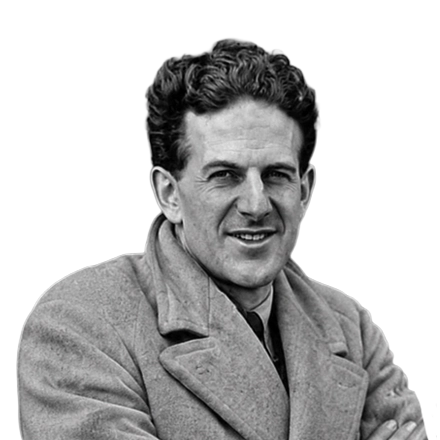
Roger Dennistoun Poore (19 August 1916 – 12 February 1987) was a British racing driver, businessman and entrepreneur whose influence extended well beyond the racetrack. Alongside a successful motorsport career, he became a major figure in British industry, most notably as chairman of Norton Villiers Triumph (NVT) during one of the most turbulent periods in the country’s motorcycle manufacturing history.
Driver Bio
| Nationality | British |
| Birthplace | Paddington, England, UK |
| Born | 19 August 1916 |
| Died | 12 February 1987 |
| First Grand Prix | 1952 British Grand Prix |
| Last Grand Prix | 1952 Italian Grand Prix |
| Years Active | 1952 |
| Current/Last Team | Connaught |
Born in Paddington, London, Poore experienced personal tragedy early in life when his father, Roger Poore, DSO, was killed in action during the First World War on 26 September 1917. On 24 March 1949, he married Peta Farley (née Coast), and the couple had one daughter, Victoria Borwick, who later became a Member of Parliament.
Racing career
A passionate competitor, Poore enjoyed success in both hill climbing and circuit racing. His breakthrough came in 1950 when he won the British Hill Climb Championship driving a supercharged 3.8-litre Alfa Romeo. Throughout the season he consistently scored strong results, finishing second at Shelsley Walsh, first at Prescott, second at Bo’ness, victorious at Rest and Be Thankful, second at Bouley Bay, first at Val des Terres and ending the championship with another win at Prescott.
Poore stepped up to Formula One in 1952, competing in two World Championship Grands Prix. He made his debut at the 1952 British Grand Prix on 19 July and produced an impressive fourth-place finish, earning three World Championship points.
After leaving Grand Prix racing, Poore turned his attention to sports car competition with Aston Martin. One of the highlights of this period came in 1955 when he partnered Peter Walker to victory in the Goodwood International Nine Hour race, driving an Aston Martin DB3S.
Away from the driver’s seat, Poore also played an important role in British motorsport journalism. In 1950, he used his personal fortune to help finance the launch of Autosport magazine, which would go on to become one of the world’s most respected motor racing publications.
NVT career
Poore’s business career was every bit as ambitious as his racing exploits. As chairman of Manganese Bronze Holdings PLC, he initially oversaw a company best known for manufacturing marine propellers. After selling that division, he redirected the proceeds into acquiring a collection of struggling British motorcycle manufacturers, including Associated Motor Cycles, Norton, AJS, James, Francis-Barnett, Matchless and engine producer Villiers.
The British motorcycle industry entered a new chapter in 1972 following the collapse of BSA. Its motorcycle operations were merged with Manganese Bronze’s interests to form Norton Villiers Triumph Ltd. (NVT), with Poore appointed chairman. He quickly began selling BSA’s non-motorcycle businesses while overseeing a major restructuring programme, supported by substantial UK government funding intended to prevent the industry’s collapse.
His plans dramatically reduced the workforce, with around 3,000 of NVT’s 4,500 employees made redundant. The controversial decision ultimately led to the formation of the Meriden Cooperative, which continued producing Triumph motorcycles for the next decade before eventually becoming insolvent. Production of BSA motorcycles came to an end, while Triumph’s departure left the Norton Commando as NVT’s principal model. Although the Commando collected multiple Motor Cycle News “Bike of the Year” awards, it struggled against increasingly modern overseas competition. In later years, NVT’s motorcycle production declined to assembling a small-capacity Asian-built trail bike, although Norton also continued development of innovative rotary-powered motorcycles based on David Garside’s pioneering Wankel engine research.
Poore’s leadership divided opinion. Many initially viewed him as the businessman capable of rescuing Britain’s struggling motorcycle industry, thanks to his engineering knowledge and racing background. Others criticised his aggressive restructuring strategy, arguing that his cost-cutting measures came at too great a price for both the workforce and the industry as a whole.
London cabs
The acquisition of BSA also brought Carbodies into the Manganese Bronze group, the company responsible for building the iconic FX4 London taxi. After stepping away from large-scale motorcycle manufacturing, Poore continued leading Manganese Bronze as a producer of London taxis and engineering components, remaining at the helm until his death in 1987.
Grand Prix Stats
| Race Entries | 2 |
| Race Starts | 2 |
| Did Not Start | 0 |
| Best Race Start | 8th |
| Best Race Finish | 4th |
| Retirements | 0 |
| First-Lap Retirements | 0 |
| Not Classified | 0 |
| Disqualified | 0 |
| Did Not Qualify | 0 |
Qualifying
| Qualifying Sessions | 2 |
| Reached Q3 | 0 |
| Q2 Eliminations | 0 |
| Q1 Eliminations | 0 |
| Did Not Qualify | 0 |
Points
| Points Scored | 3 |
| Points Finishes | 1 |
| Most Points in a Single Season | 3 |
| Seasons with Points | 1 |
Stats by Season
| Year | Constructor | Entries | Starts | Wins | Podiums | Poles | Fastest Laps | Front Rows | DNF | Best Start | Best Result | Pts Finishes | Points | Championship |
|---|---|---|---|---|---|---|---|---|---|---|---|---|---|---|
| 1952 | Connaught | 2 | 2 | 0 | 0 | 0 | 0 | 0 | 0 | 8 | 4 | 1 | 3 | 13th |
Stats by Constructor
| Constructor | Years | Entries | Starts | Wins | Podiums | Poles | Fastest Laps | Front Rows | DNF | Best Start | Best Result | Pts Finishes | Points |
|---|---|---|---|---|---|---|---|---|---|---|---|---|---|
| Connaught | 1952 | 2 | 2 | 0 | 0 | 0 | 0 | 0 | 0 | 8 | 4 | 1 | 3 |
Teammates & Qualifying Head-to-Head
| Teammate | Years | Races | Qualifying H2H |
|---|---|---|---|
| Eric Thompson | 1952 | 1 | – |
| Ken McAlpine | 1952 | 2 | – |
| Ken Downing | 1952 | 1 | – |
| Stirling Moss | 1952 | 1 | – |