A first Grand Prix can pass in a blur of unfamiliar routines, crowded mirrors and the sheer effort of getting to the finish. Some drivers make rather more of an entrance. From Giancarlo Baghetti winning at the first attempt to Mark Webber sending his home crowd into celebration, scoring points on debut has produced some of Formula 1’s most memorable introductions.
The list brings together future World Champions, inspired stand-ins and drivers whose first appearance remained a career highlight. Lewis Hamilton, Alain Prost and Sebastian Vettel all began with points. So did plenty of names who never enjoyed their machinery, opportunities or longevity. A debut result can announce a star, but it can also be a wonderful afternoon worth remembering in its own right.
Which drivers scored points on their F1 debut?
The table below follows World Championship results, including the Indianapolis 500 during its championship years. Positions are the final official classifications, so they reflect subsequent penalties and disqualifications. A previous qualifying attempt or non-start does not count as a race debut; neither does an earlier non-championship race.
Shared drives are included where a driver earned points on their first championship race participation, even if they took over a car rather than starting it. The marked Jacky Ickx entry uses his first race in an eligible Formula 1 car; his earlier Formula 2 appearances are explained below.
Points shown are the actual championship points awarded to each driver at that race, including any fastest-lap point and each driver’s individual share for a shared drive.
† Shared drive. Points were divided between the drivers sharing the car. This includes Manny Ayulo, who drove in relief at the 1951 Indianapolis 500; his first championship participation therefore came before his first Indianapolis start from the grid.
‡ Jacky Ickx. Sixth at the 1967 Italian Grand Prix was his first result in an eligible Formula 1 car. He had previously raced a Formula 2 car in Germans Grand Prix, where that category was not eligible for World Championship points. That’s why lists based on any start in the same event can treat his debut differently. We did not.
Why the early championship years need context
The 1950 F1 World Championship began with a clean slate. Every starter at the 1950 British Grand Prix was making a championship debut, even if their Grand Prix career already stretched back years. Giuseppe Farina led Alfa Romeo teammates Luigi Fagioli and Reg Parnell home, while Yves Giraud-Cabantous and Louis Rosier also scored.
Indianapolis belongs in the story too. The 500 counted towards the World Drivers’ Championship from 1950 to 1960, despite its different cars and regulations. That makes Johnnie Parsons a winner on his championship debut, with the other first-time points scorers from the 1950 Indianapolis 500 also earning their place here.
It was also an era when teammates could share a car and its points. Dorino Serafini shared second place with Alberto Ascari at the 1950 Italian Grand Prix. The result belongs in a debut-points list, but it needs that explanation alongside it: two drivers could be credited with the same finishing position.
Giancarlo Baghetti’s extraordinary first impression
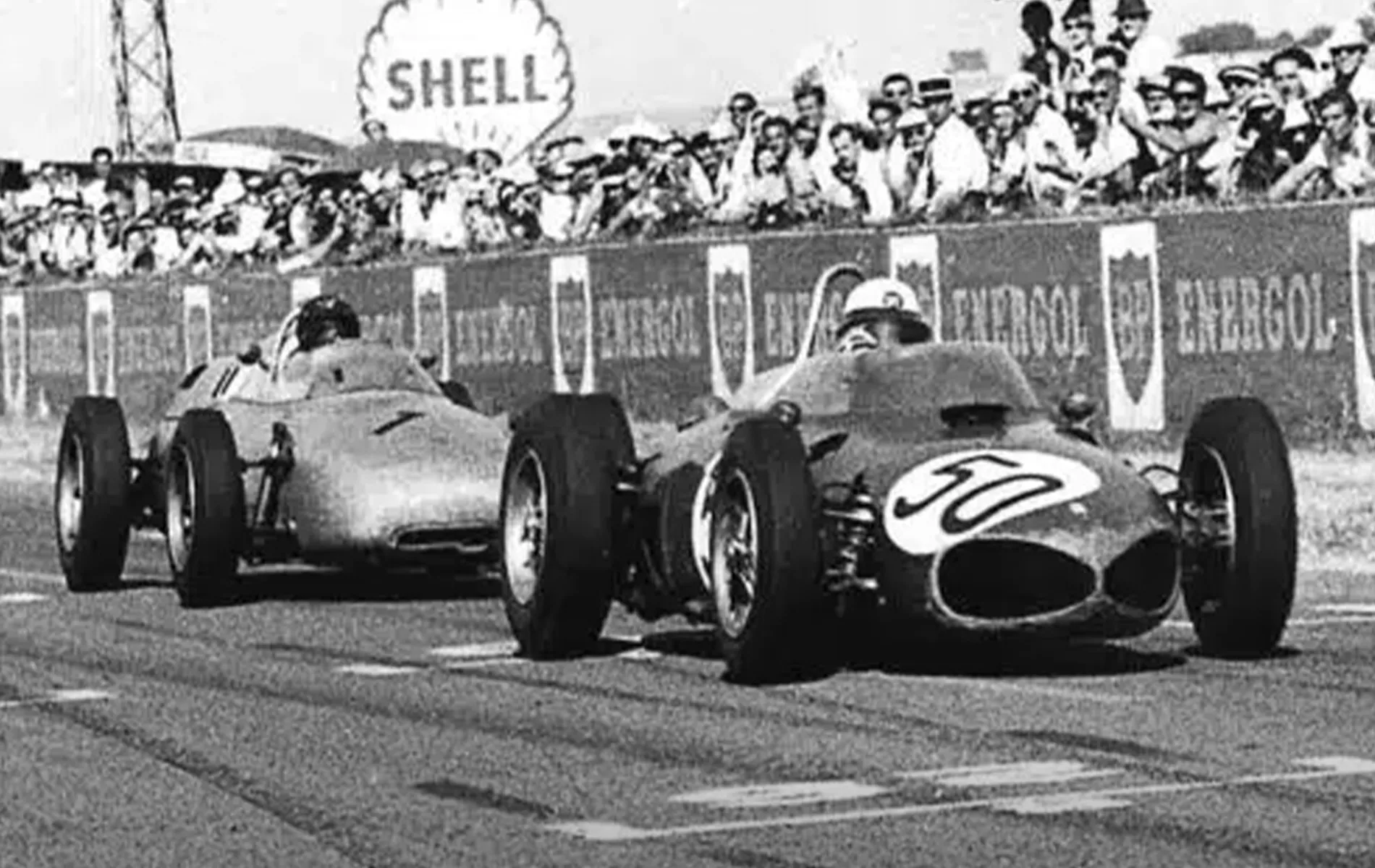
By the 1961 French Grand Prix, the championship was long established. That is what makes Giancarlo Baghetti’s victory so special. Driving a privately entered Ferrari, he beat Dan Gurney’s Porsche by just a tenth of a second at Reims. This was no quiet points finish while the favourites disappeared into the distance: the win was decided in a fight to the line.
Baghetti joined Farina and Parsons as a winner on championship debut, but his circumstances were very different from those opening championship events. He arrived with the series already in full swing and won immediately. It would remain his only World Championship victory, giving that first afternoon an even more remarkable place in the F1 history books.
Podiums, home heroes and instant headlines
Jacques Villeneuve came close to a debut victory at the 1996 Australian Grand Prix, taking pole and eventually finishing second for Williams. Eleven years later, Lewis Hamilton began his McLaren career with third at the 2007 Australian Grand Prix. Both stepped into competitive machinery and immediately showed they could use it.
For Mark Webber, fifth at the 2002 Australian Grand Prix felt like something much bigger than the position suggested. Points were precious for Minardi, and delivering them in front of a home crowd gave his first Grand Prix a reception normally reserved for the podium. Different cars create different expectations; that result remains one of the clearest examples.
Other debuts stand out for the circumstances surrounding them. Johnny Herbert finished fourth at the 1989 Brazilian Grand Prix after the severe leg injuries he had suffered the previous year. Jean Alesi matched that position at the 1989 French Grand Prix, giving Tyrrell a debut to savour. Neither needed a trophy to make people take notice.
When a late call-up becomes an opportunity
A full winter of preparation is no guarantee of points, and some drivers on this list had much less warning. Stoffel Vandoorne scored tenth for McLaren at the 2016 Bahrain Grand Prix. Nyck de Vries took ninth for Williams at the 2022 Italian Grand Prix. Both turned a stand-in appearance into an immediate World Championship score.
Oliver Bearman produced another memorable example at the 2024 Saudi Arabian Grand Prix. Called into Ferrari to replace the unwell Carlos Sainz, he finished seventh on a demanding street circuit. The points were impressive; handling the sudden promotion and completing the race so convincingly made the performance stand out further.
The list has continued to grow. Kimi Antonelli finished fourth at the 2025 Australian Grand Prix, followed by Arvid Lindblad in eighth on his debut at the 2026 Australian Grand Prix. Ryo Hirakawa joined them at the 2026 Mexico City Grand Prix, where post-race penalties promoted him to tenth for Haas.
Why the final result matters
Comparing these performances also means allowing for the points system of the day. In the early championship, only the first five places scored finishing-position points. Sixth became a scoring position in 1960, the top eight were rewarded from 2003, and the top ten from 2010. A seventh place could therefore mean points in one era and nothing in another.
The order at the chequered flag is not always the final answer either. Kevin Magnussen’s official debut result at the 2014 Australian Grand Prix is second after Daniel Ricciardo’s disqualification. Sébastien Bourdais was classified seventh at the 2008 Australian Grand Prix despite retiring late in the race. The table uses those official outcomes, rather than treating every points scorer as a driver who crossed the finish line under power.
That variety is part of the appeal. A debut points finish can be a victory, a podium, a hard-earned tenth or a result confirmed after the paddock has packed away. Whatever followed in their careers, these drivers left their first eligible championship appearance with something on the board.
Seen in: