
































Formula 1 is built around speed, competition, and the simple objective of getting ahead of the car in front. Yet on a handful of extraordinary occasions, an entire Grand Prix has passed without a single recorded on-track overtake.
The reasons are far more interesting than the statistic suggests.
Sometimes the circuit made passing almost impossible. Sometimes pit strategy became the only realistic way to gain a position. And twice, circumstances were so unusual that conventional racing barely happened at all.
There is also an important statistical qualification. Overtaking databases generally exclude opening-lap position changes, pit-stop changes and passes involving cars with obvious mechanical problems. That matters particularly for the 2009 European and 2021 Monaco Grands Prix, where different counting methods can produce different totals.
Using the convention behind our five-race list, these are the Formula 1 Grands Prix recorded with zero on-track overtakes.
What to know
- Five F1 races feature on the zero-overtake list: Monaco 2003, United States 2005, Europe 2009, Monaco 2021 and Belgium 2021.
- Monaco is the only circuit represented twice, highlighting the overtaking limitations created by its narrow streets and lack of conventional passing zones.
- Two races need major context: only six cars started at Indianapolis in 2005, while Belgium 2021 never produced a green-flag racing lap.
- Overtake statistics depend on methodology. Opening-lap moves and pit-stop position changes are generally excluded, which is especially relevant to the 2009 and 2021 entries.
| Grand Prix | Circuit | Winner | Recorded on-track overtakes | Why it happened |
|---|---|---|---|---|
| 2003 Monaco Grand Prix | Circuit de Monaco | Juan Pablo Montoya | 0 | Extremely limited passing opportunities |
| 2005 United States Grand Prix | Indianapolis | Michael Schumacher | 0 | Only six cars started after Michelin withdrawals |
| 2009 European Grand Prix | Valencia Street Circuit | Rubens Barrichello | 0 | Passing proved extremely difficult; gains came through strategy |
| 2021 Monaco Grand Prix | Circuit de Monaco | Max Verstappen | 0* | Modern F1 cars struggled to pass on Monaco’s narrow layout |
| 2021 Belgian Grand Prix | Spa-Francorchamps | Max Verstappen | 0 | No green-flag racing because of extreme rain |
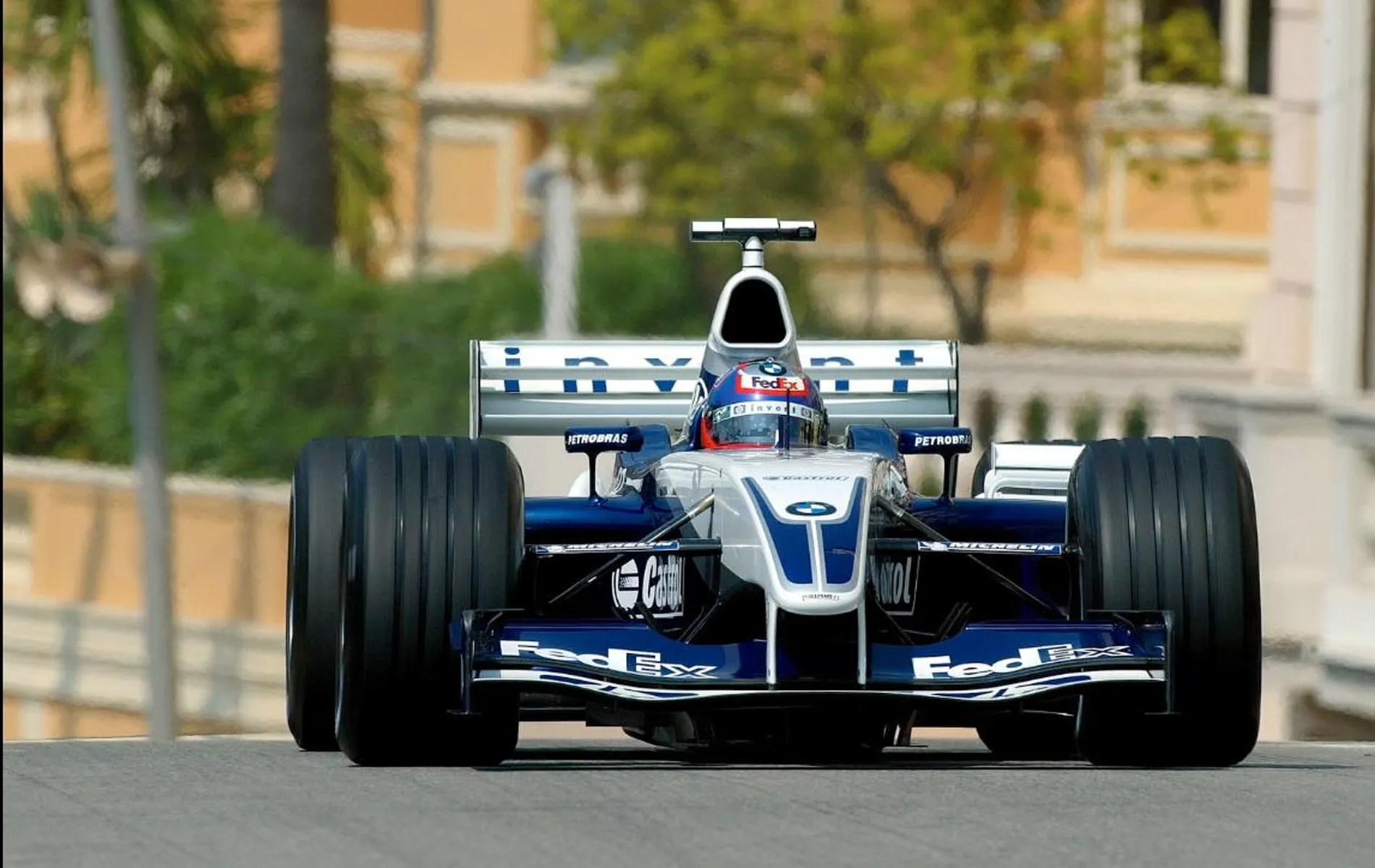
1. 2003 Monaco Grand Prix
Monaco and overtaking have never been natural partners, but the 2003 Monaco Grand Prix took that relationship to its logical extreme.
Ralf Schumacher put his Williams on pole, ahead of Kimi Räikkönen and Juan Pablo Montoya. Come Sunday, however, Montoya used the pit-stop sequence to move ahead and ultimately claimed victory from Räikkönen and Michael Schumacher.
What nobody managed was a conventional racing pass.
Across 78 laps and more than 260 kilometres, the race produced no recorded on-track overtakes.
That did not mean nothing changed. The refuelling era made the pit window a major strategic weapon, and Montoya’s victory demonstrated how track position could effectively be transferred through fuel loads, lap times and pit-stop timing rather than wheel-to-wheel racing.
For a modern fan, Monaco 2003 is a reminder that an overtake count does not necessarily tell the complete story of a Grand Prix. Montoya still had to execute his race perfectly, eventually delivering Williams its first Monaco victory since Keke Rosberg in 1983.
But if you wanted to see one F1 car physically pass another for position, Sunday afternoon was a long wait.
2. 2005 United States Grand Prix
The 2005 United States Grand Prix belongs on this list with the biggest possible asterisk.
This was not a conventional race with 20 cars circulating but unable to pass. It was one of the most controversial weekends in Formula 1 history.
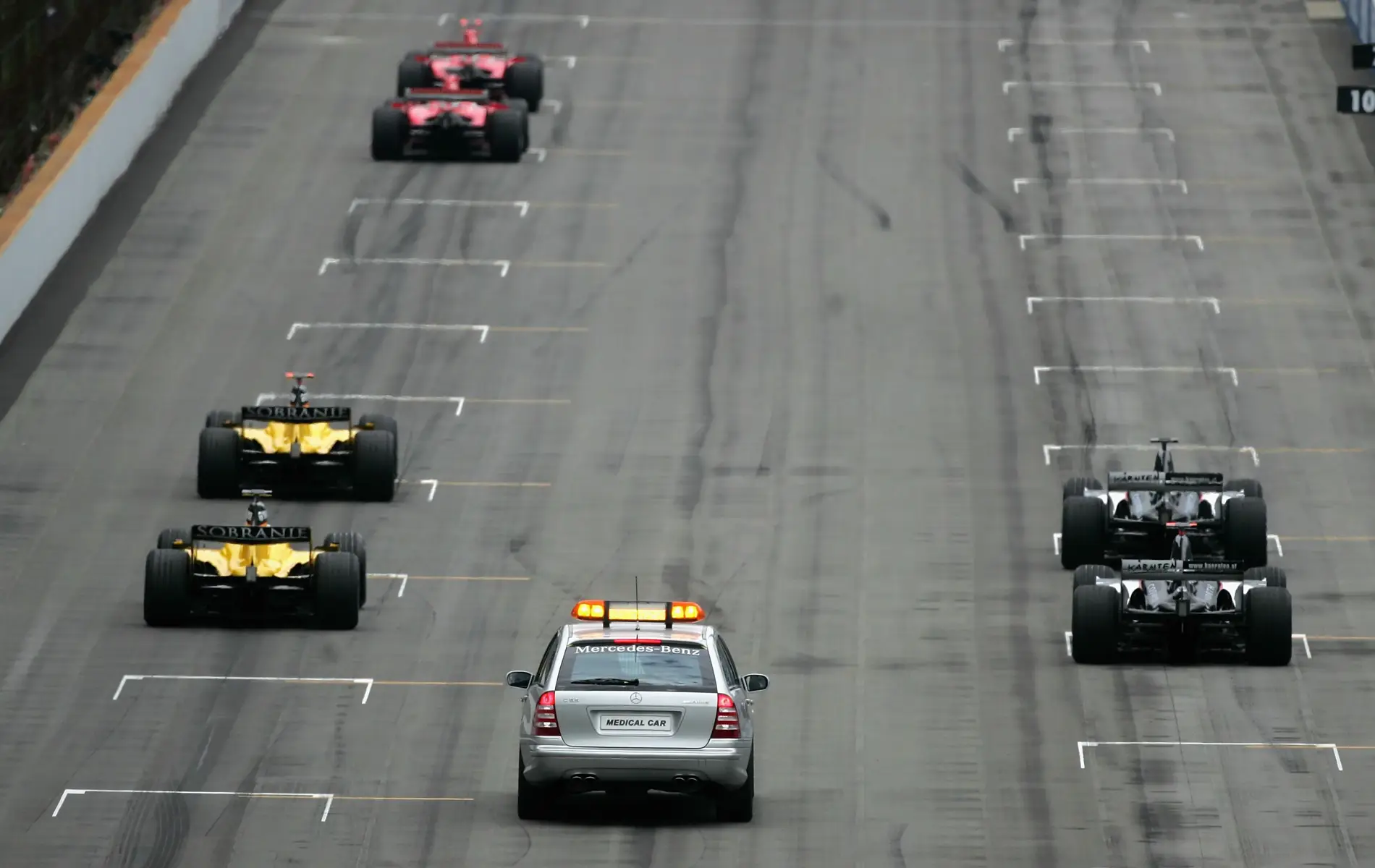
Concerns over Michelin’s tyres at Indianapolis resulted in all seven Michelin-equipped teams withdrawing after the formation lap. That left just six Bridgestone runners: the Ferraris of Michael Schumacher and Rubens Barrichello, two Jordans and two Minardis. Formula 1’s official results consequently list 14 drivers as completing zero racing laps.
Schumacher won from Barrichello, with Tiago Monteiro third for Jordan. Only the two Ferraris finished on the lead lap.
Unsurprisingly, there were no recorded overtakes.
The zero matters statistically, but the context matters far more. Comparing Indianapolis 2005 directly with Monaco 2003 would be misleading: one was a full-grid race in which passing proved virtually impossible; the other began with only six cars.
It remains perhaps the strangest zero in F1’s overtaking record.
3. 2009 European Grand Prix
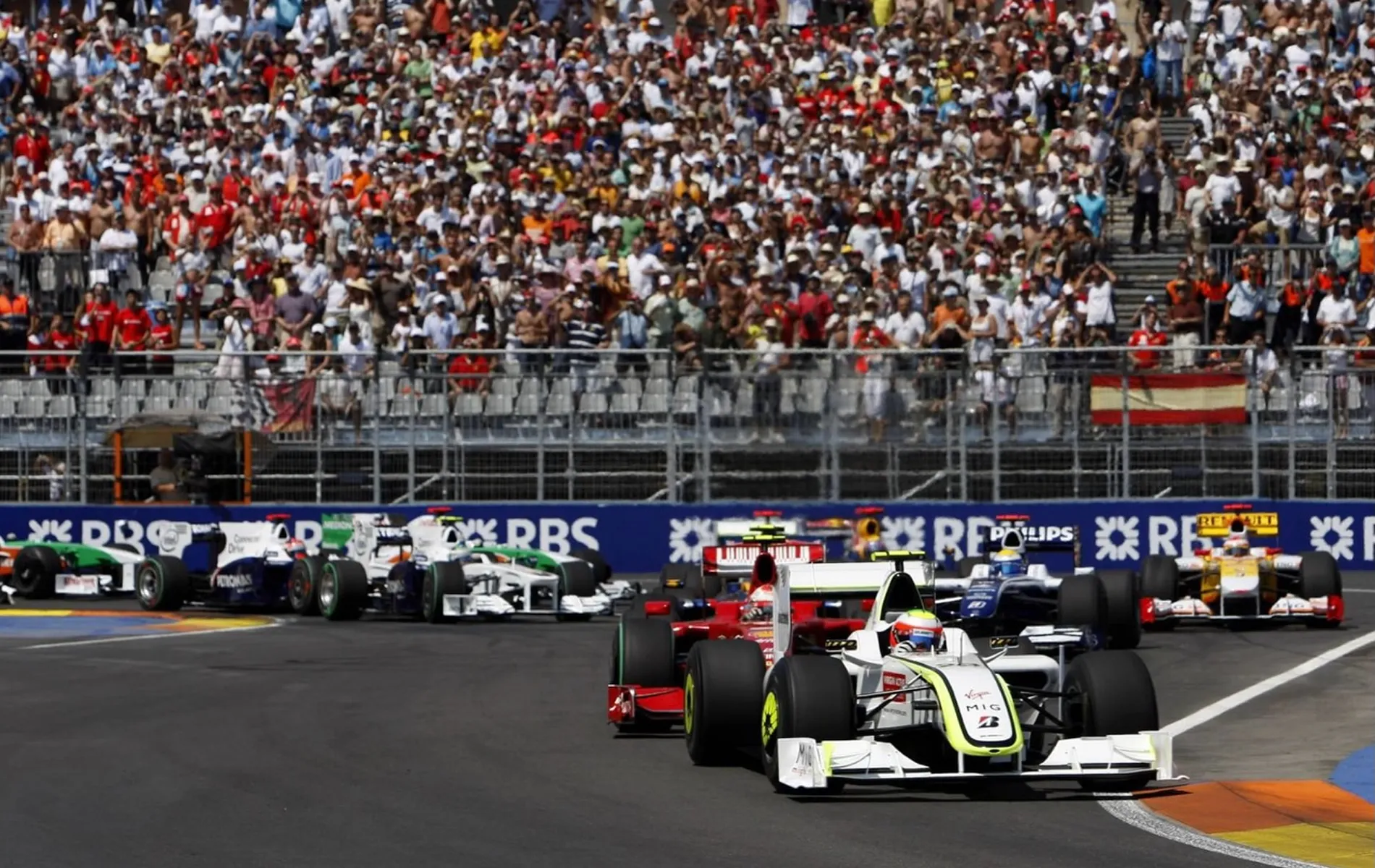
If you want the purest example of a modern Formula 1 race simply failing to generate passing, the 2009 European Grand Prix at Valencia has a strong claim.
The Valencia Street Circuit looked spectacular, winding around the city’s harbour, but its walls, corner combinations and braking zones did not necessarily produce the wheel-to-wheel action expected from a street race.
Lewis Hamilton started from pole for McLaren, but Rubens Barrichello’s Brawn ultimately won through pace and strategy. It was the Brazilian’s first Grand Prix victory since China in 2004, ending an 85-race wait.
Yet, excluding opening-lap changes under the convention used for these statistics, the race recorded no on-track overtakes.
That makes Valencia particularly interesting alongside the other races here. There was no six-car field, no biblical Spa rain and no Monaco-specific explanation. It was a normal Grand Prix on a dry circuit in which passing simply proved exceptionally difficult.
Barrichello nevertheless produced an important victory during Brawn GP’s extraordinary one-season existence, with Hamilton second and Kimi Räikkönen third.
Sometimes a race can be strategically significant without generating a single recorded pass.
4. 2021 Monaco Grand Prix
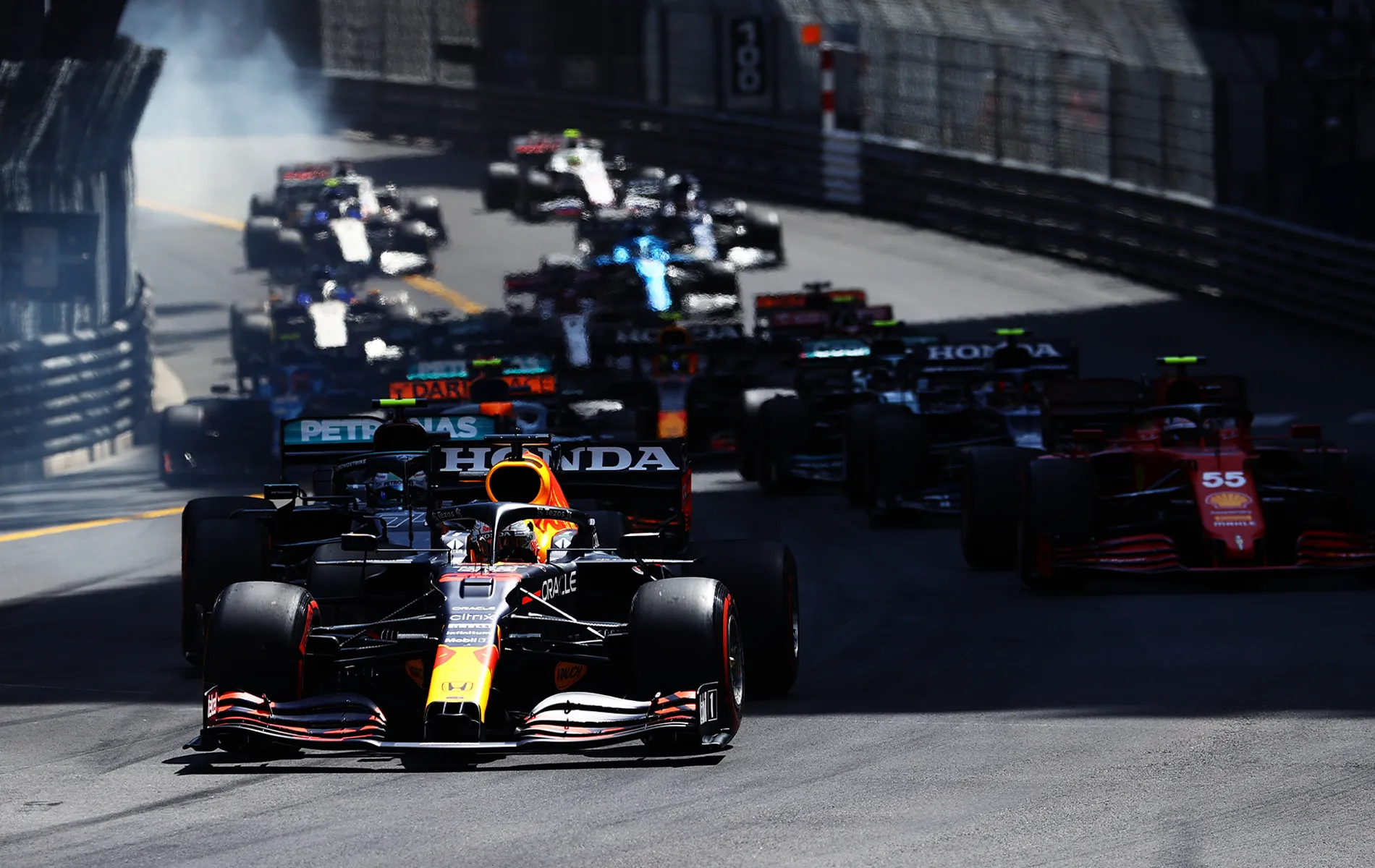
Eighteen years after Montoya’s victory, Formula 1 returned another statistical zero at Monaco — although this one requires some explanation.
Charles Leclerc had taken pole but was unable to start after damage sustained during qualifying. That effectively left Max Verstappen at the front, and the Red Bull driver controlled the race to take his first Monaco victory.
Behind him, Carlos Sainz finished second for Ferrari and Lando Norris completed the podium for McLaren.
In terms of conventional overtaking statistics, however, there was effectively nothing.
Some sources record the race as having zero overtakes, while others include a first-lap pass and therefore give it one. The disagreement comes from how an “overtake” is defined and whether opening-lap changes are included.
There were position changes through strategy, too, but that is different from one driver completing an on-track pass under the methodology behind this list.
For modern fans, Monaco 2021 became another case study in the circuit’s central contradiction. Monaco remains one of Formula 1’s most famous and demanding venues, particularly in qualifying, but increasingly large F1 cars have made wheel-to-wheel racing extraordinarily difficult on streets whose basic dimensions cannot simply expand with them.
The race still had major championship consequences: Verstappen left Monaco leading the Drivers’ Championship for the first time in his F1 career.
5. 2021 Belgian Grand Prix
And then there is Spa 2021.
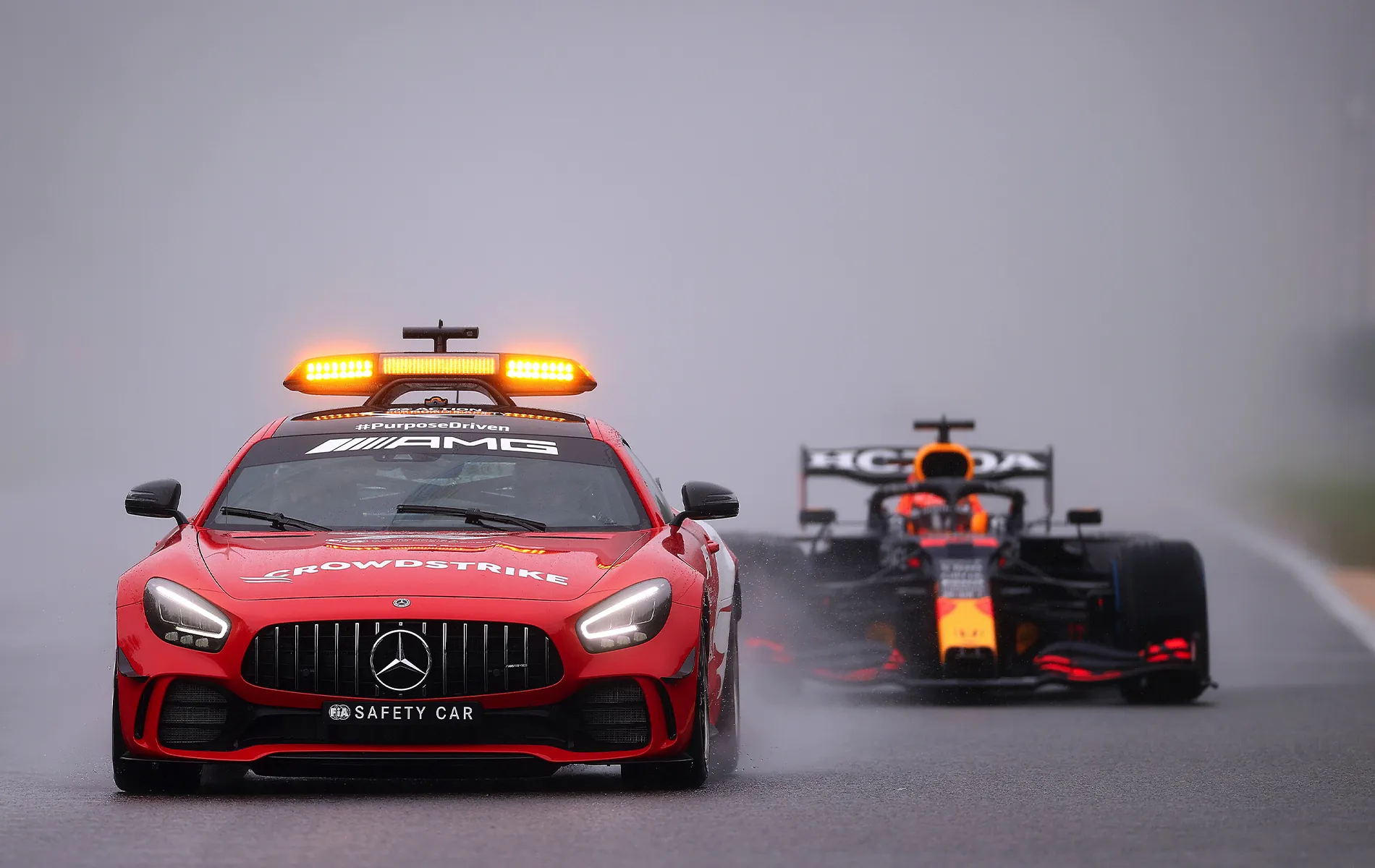
Technically, the 2021 Belgian Grand Prix had zero overtakes. In reality, it barely had a race.
Persistent heavy rain and dangerously poor visibility delayed the start for hours. Eventually, the field was sent out behind the Safety Car, but conditions remained unsuitable for racing.
No green-flag racing took place.
Max Verstappen was declared the winner ahead of George Russell and Lewis Hamilton, with half points awarded under the regulations then in force. Formula 1 described it as the shortest Grand Prix in F1 history.
So, yes, the overtaking total was zero — but nobody was ever given the opportunity to attempt one.
The episode subsequently had a lasting effect on F1. For 2022, the sport changed its rules governing shortened races, including introducing the requirement that racing laps must take place without the Safety Car or Virtual Safety Car before points can be awarded.
That makes Belgium 2021 very different from every other race here. Its zero-overtake statistic tells us nothing about Spa’s ability to produce passing. Few circuits have provided more memorable overtakes over F1 history.
Instead, the zero tells the story of a race that weather never allowed to begin properly.
What zero overtakes actually tells us
Put these five Grands Prix together and an interesting pattern emerges: zero overtakes does not always mean the same thing.
Monaco 2003 and 2021 illustrate the limitations of racing increasingly sophisticated Formula 1 machinery through exceptionally narrow streets. Valencia 2009 demonstrates that even a purpose-built modern street circuit can struggle to create workable passing opportunities.
Indianapolis 2005 and Spa 2021 are different again. Their statistics were products of exceptional circumstances rather than normal racing.
That distinction is worth remembering whenever overtaking figures are used to judge a Grand Prix.
Modern F1 has also changed significantly since four of these five races were held. DRS arrived in 2011, the 2022 technical regulations were designed partly to help cars follow more closely, and subsequent generations of regulations have continued to put raceability at the centre of the aerodynamic debate.
Yet there is something fascinating about Formula 1’s five zeroes.
A Grand Prix is supposed to be about beating the car ahead. On five extraordinary Sundays, the record books tell us that nobody did.
Seen in: