





























For most Formula 1 fans, Sunday means one thing: race day. Saturday is for qualifying, Grand Prix predictions and seeing whether that promising practice pace actually meant anything. Except Formula 1 has never been quite that tidy.
The very first World Championship race took place on a Saturday. So did British home victories, championship deciders and one of the sport’s most outrageous engineering experiments. Long before the Las Vegas Strip became a floodlit racetrack, Saturday already had a substantial place in F1 history. And that doesn’t even cover F1 races held outside the Countries they were named after; yep, that’s a thing in F1.
As of the end of the 2026 season, there will have been 64 World Championship races on Saturdays, including the two Indianapolis 500s that counted towards the championship. Baku is the latest addition. The story behind that number stretches from Silverstone’s former airfield to the streets of modern Azerbaijan.
Our count covers completed championship rounds, using the local date on which each race began. Non-championship events, qualifying sessions and Sprints are strictly excluded. That keeps a historic Saturday Grand Prix comparable with a modern one, rather than mixing different kinds of competition simply because they happened on the same weekday.
What to know
- As of the end of the 2026 season, there will have been 64 World Championship races held on Saturdays. This is based on the circuits’ location and the day they were held in that country or time zone.
- The first was the 1950 British Grand Prix on 13 May. Britain hosted 30 Saturday rounds, and South Africa hosted 18.
- The total includes the 1953 and 1959 Indianapolis 500s because they counted towards the World Championship. Excluding them leaves 61 Grands Prix.
- The 2023 Las Vegas Grand Prix ended a 38-year gap; Azerbaijan became the 63rd Saturday round on 26 September 2026. November’s Las Vegas race will become the 64th.
Every Saturday World Championship race: the complete list
Dates are local to the circuit. This table contains all 64 completed rounds through 2026. Indianapolis entries are championship rounds held under American regulations.
F1 Began On A Saturday
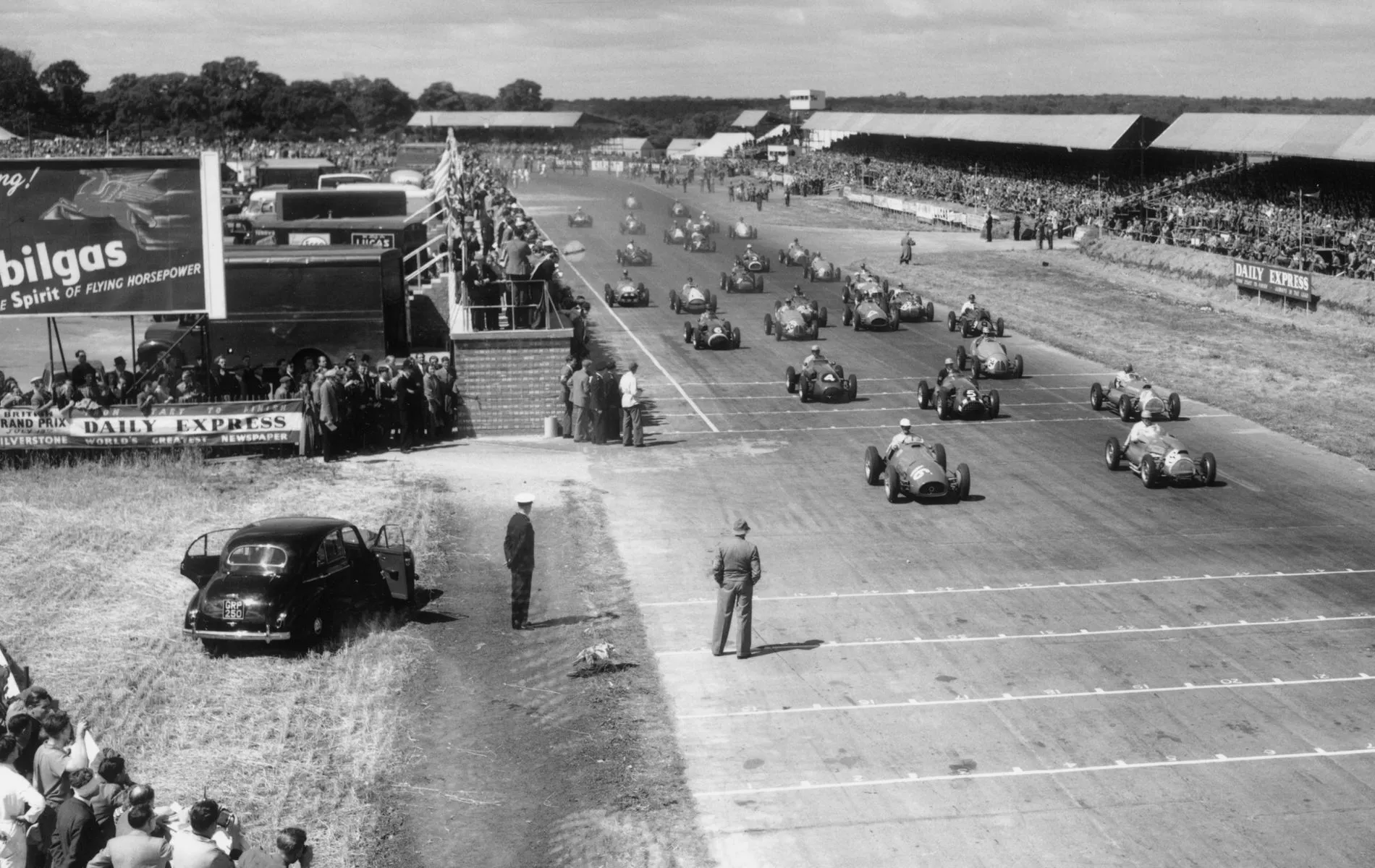
On 13 May 1950, Giuseppe “Nino” Farina won the 1950 British Grand Prix at Silverstone for Alfa Romeo. King George VI attended, and the World Championship had its first winner. It also had its first Saturday race.
Today, that date feels like a historical curiosity. At the time, a Saturday British Grand Prix became an established part of the calendar. Every championship edition from 1950 through 1975 took place on Saturday, across Silverstone, Aintree and Brands Hatch.
Some of British motorsport’s defining moments belong to that sequence. Stirling Moss won at Aintree in 1955. Two years later, Moss and Tony Brooks shared victory there in a Vanwall, delivering a landmark British success with British drivers and machinery.
Different cars, different circuits, the same day of the week.
Britain and South Africa carried the tradition
Britain accounts for 30 Saturday championship races, more than any other event. Its move to Sunday happened gradually rather than overnight.
Brands Hatch switched in 1976. Its subsequent British Grands Prix in 1978, 1980 and 1982 also took place on Sundays, while Silverstone retained Saturday for its alternating editions. Alain Prost’s victory on 16 July 1983 was the final Saturday British Grand Prix.
South Africa contributes another 18 Saturday rounds. The earliest were held at East London’s Prince George Circuit in 1962 and 1963; the later entries came at Kyalami.
But “South Africa always raced on Saturday” would be an oversimplification. The 1965 championship race fell on a Friday, and the 1967 and 1968 editions were Mondays. Those races belong in a different calendar curiosity.
Together, Britain and South Africa held 48 of the 63 entries here. Saturday racing was concentrated in particular traditions, rather than spread evenly across the championship.
The Saturday races you might have forgotten
The list also contains some wonderfully unexpected names.
The 1953 and 1959 Indianapolis 500s qualify because Indianapolis formed part of the World Drivers’ Championship from 1950 to 1960. They were run under American regulations, however, so calling them conventional Formula 1 Grands Prix would be misleading.
Our total follows championship history. Excluding those two Indy races leaves 61 Grands Prix.
Sebring hosted the Saturday 1959 United States Grand Prix, where Jack Brabham famously pushed his fuel-starved Cooper across the line to finish fourth and secure his first world title. A championship decided with the driver supplying the final horsepower is difficult to forget.
There were also Saturday Dutch Grand Prix in 1969 and 1982, Canada at Mosport in 1969, and Sweden at Anderstorp in 1978.
That Swedish race gave Niki Lauda victory in Brabham’s extraordinary BT46B fan car. Its enormous rear fan helped generate downforce, and the resulting controversy remains part of F1 folklore. The calendar detail tends to disappear behind the engineering story.
The 38-year disappearance
Las Vegas had already joined the Saturday club through the 1981 and 1982 Caesars Palace Grands Prix. Both were championship finales, with Nelson Piquet and Keke Rosberg securing their respective titles.
The setting was very different from today’s Strip circuit: a temporary course in the Caesars Palace car park.
Then came Kyalami on 19 October 1985. Nigel Mansell won for Williams, ahead of team mate Keke Rosberg. It was the last Saturday World Championship race for 38 years.
Between 1986 and 2022, every championship Grand Prix took place on Sunday. Generations of fans grew up with that rhythm, making Saturday racing feel more revolutionary when it returned than its history really warranted.
Las Vegas brought Saturday back
On 18 November 2023, Formula 1 returned to Saturday racing with the 2023 Las Vegas Grand Prix. Max Verstappen won an event that placed modern F1 machinery against one of the world’s most recognisable skylines.
The Saturday night identity became part of the attraction. Vegas returned on Saturday in 2024 and 2025, establishing a recurring exception to the familiar weekend.
There is a useful catch for television viewers: Saturday means Saturday at the circuit. A late evening start in Nevada falls on Sunday morning in Britain and Europe, where the home of F1 belongs. Your alarm clock and the historical record can therefore describe the same race differently without either being wrong.
Ramadan, remembrance and modern F1
Bahrain and Saudi Arabia both raced on Saturdays in 2024 to accommodate Ramadan. Saudi Arabia’s race moved ahead of the holy month’s beginning, while Bahrain’s opener also shifted to preserve the gap between consecutive events.
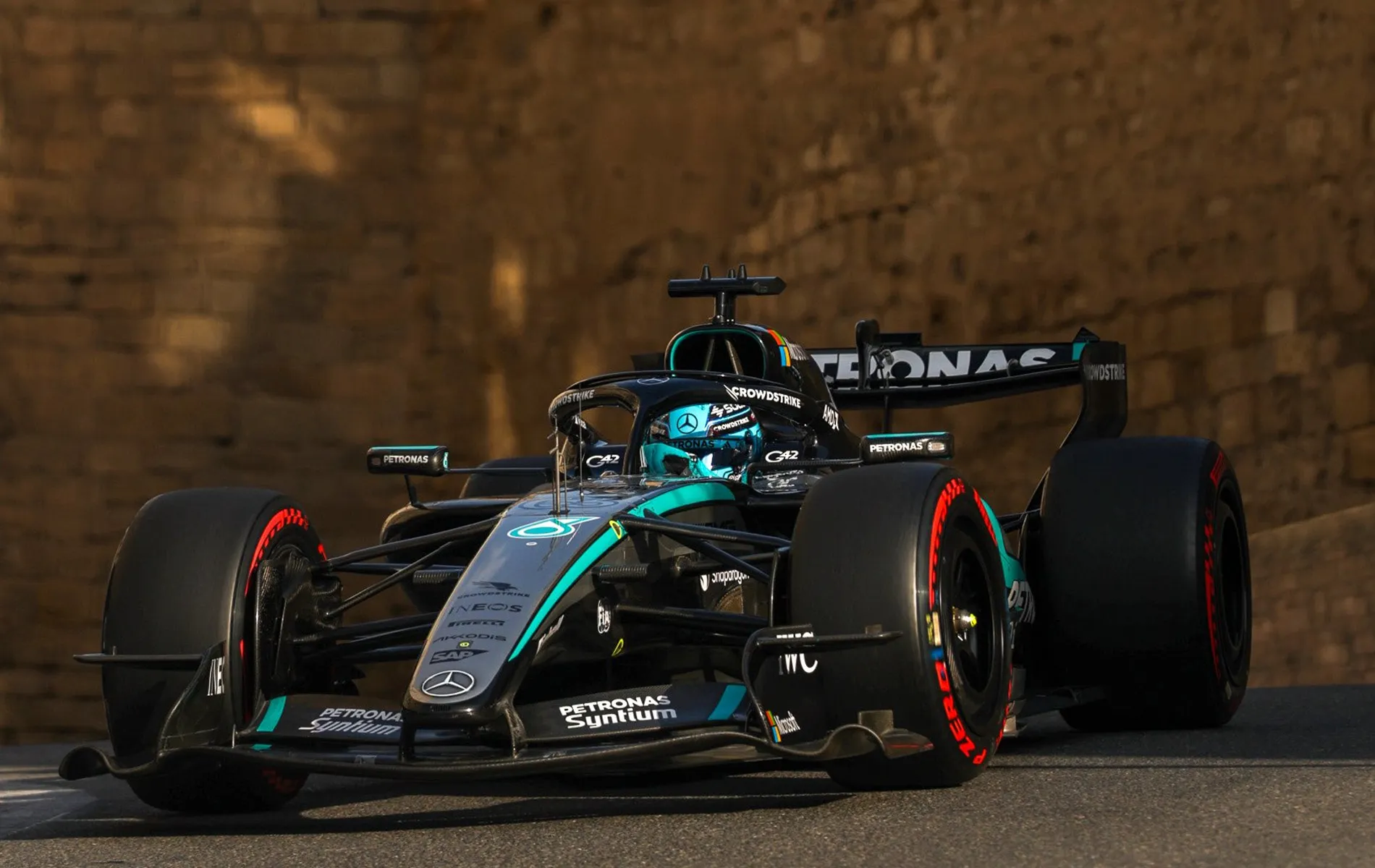
Baku added a different reason in 2026. The Azerbaijan Grand Prix moved to Saturday 26 September to avoid the country’s Remembrance Day on 27 September. Practice ran on Thursday and qualifying on Friday.
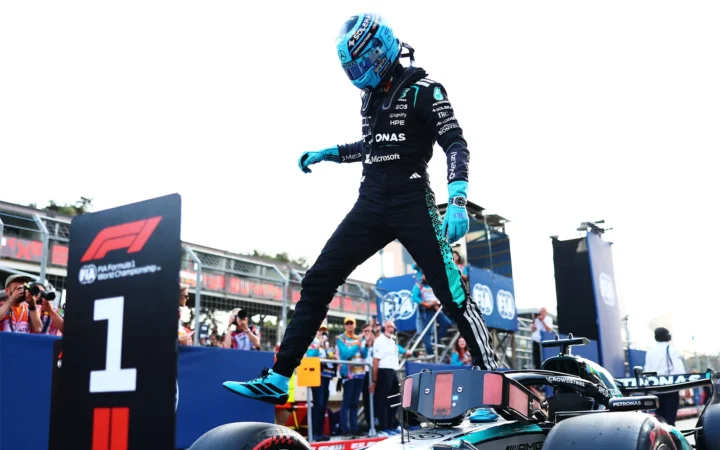
George Russell won, holding off Max Verstappen by 0.196 seconds, and the completed Saturday total reached 63.
Las Vegas in 2026 was held on Saturday 21 November 2026, local time.
For modern fans, the practical lesson is simple: check the whole weekend timetable. A Saturday Grand Prix shifts more than race day, and it should never be confused with a Sprint, the separate short race introduced in 2021.
Saturday’s return connects F1’s newest spectacles with its earliest habits. The cars have changed beyond recognition. But the calendar still has room for a surprise.
Seen in: