





























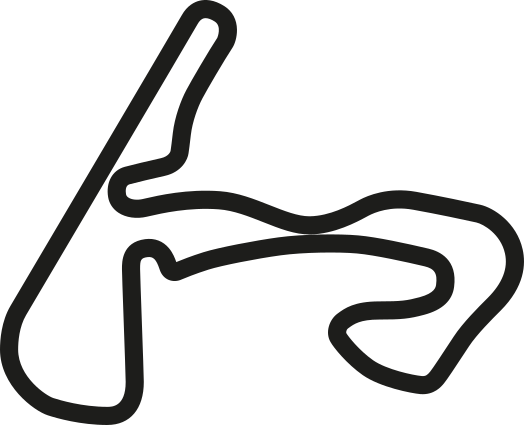

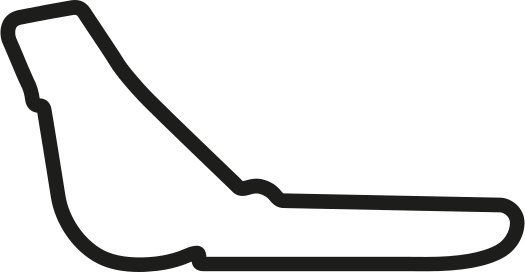
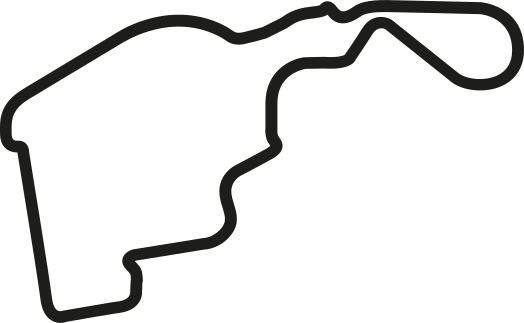

Formula 1 circuits are usually defined by braking zones, high-speed sweepers, and unforgiving street-circuit walls. But throughout F1 history, a handful of corners have asked drivers to tackle something very different: banking.
Instead of the track remaining relatively level through a corner, a banked turn slopes towards the inside. The effect can be dramatic. Banking helps support a car through the corner, allowing higher speeds and changing the loads passing through the tyres, suspension and driver.
And some of the banking Formula 1 has encountered has been extraordinary.
The 43-degree North Curve at AVUS makes even Zandvoort look relatively tame. Monza once sent F1 cars onto banking approaching 38 degrees. Indianapolis added an American oval flavour to the championship, while Karussell at the Nürburgring remains one of motorsport’s most recognisable corners.
Banking isn’t an F1 relic, either. Zandvoort brought heavily banked corners back to modern Formula 1 in 2021, and Madrid’s new Madring has continued the theme with La Monumental — a vast 13.5-degree banked corner that became one of the defining features of F1’s newest circuit in 2026.
Here are six banked corners that show just how dramatically Formula 1 circuit design has changed.
What to know
- The steepest banking used in an F1 World Championship race was at AVUS, where the North Curve reached approximately 43 degrees during the 1959 German Grand Prix.
- Monza’s historic high-speed oval featured banking of roughly 38 degrees and formed part of the Italian Grand Prix layout in the 1950s and early 1960s.
- Zandvoort brought extreme banking into modern F1, with Hugenholtzbocht reaching 19 degrees and the final Arie Luyendykbocht approximately 18 degrees.
- Madrid’s La Monumental joined F1 in 2026 with 13.5 degrees of banking, showing that banked corners are again becoming a tool for creating distinctive modern circuits.
| Circuit | Banked corner | Banking | F1 era |
|---|---|---|---|
| Indianapolis Motor Speedway | Turn 13 | 9° | 2000–2007 |
| Madring | La Monumental | 13.5° | 2026– |
| Zandvoort | Hugenholtzbocht | 19° | 2021–2026 |
| Nürburgring Nordschleife | Karussell | 20°* | 1950s–1970s F1 era |
| Monza | Pista di Alta Velocità | ~38°** | 1950s–1960s |
| AVUS | North Curve | 43° | 1959 |
**Contemporary sources commonly describe Monza at approximately 38 degrees.
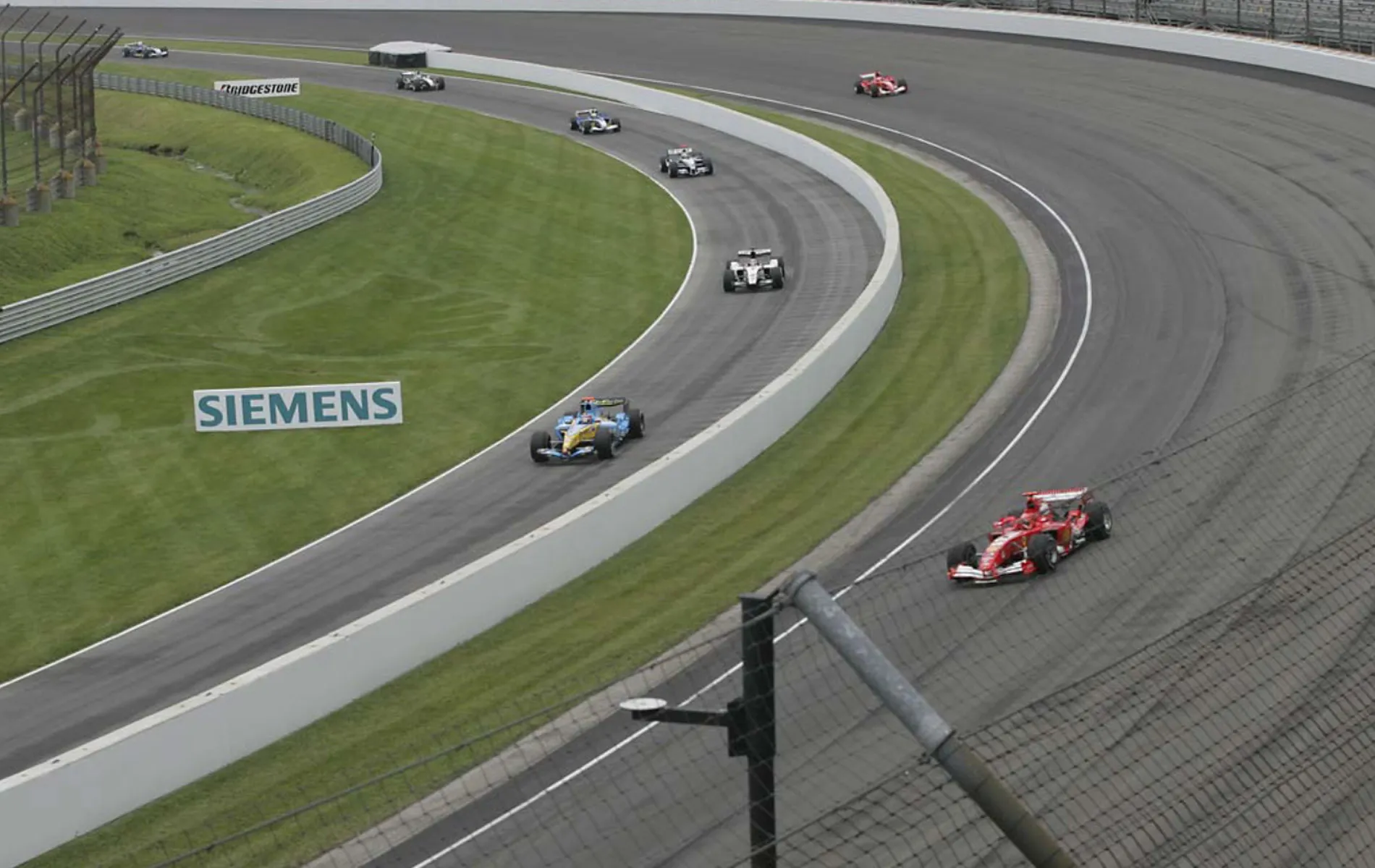
1. Indianapolis Turn 13 – 9 degrees
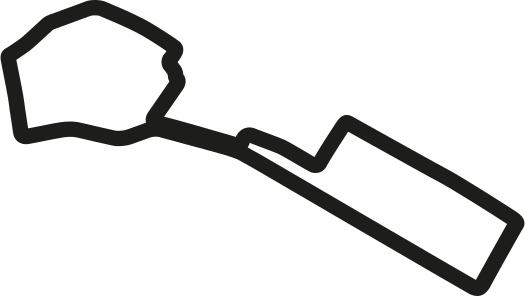
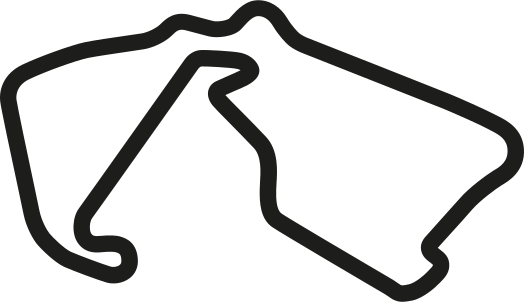
Indianapolis gave Formula 1 something genuinely unusual when the United States Grand Prix arrived there in 2000.
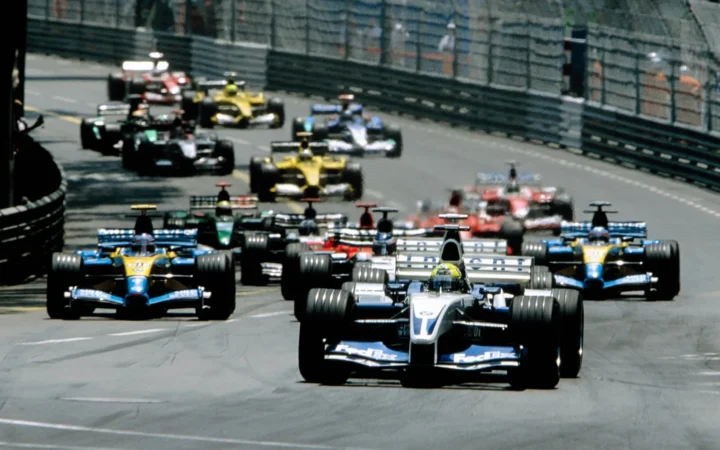
Rather than use the complete oval, F1 raced on an infield road course before joining part of the Indianapolis Motor Speedway oval. The final corner — Turn 13 — therefore sent Grand Prix cars through approximately 9 degrees of banking before they charged across the famous Yard of Bricks.
The angle sounds relatively modest compared with the other corners on this list. At F1 speeds, it was anything but insignificant.
The corner became central to the disastrous 2005 United States Grand Prix, when Michelin suffered tyre failures during the weekend and concluded it could not guarantee its tyres would safely complete the race without changes. Only the six Bridgestone-equipped cars ultimately started. Indianapolis’ banking was 9 degrees 12 minutes, and the forces generated through the high-speed corner placed unusual demands on the tyres.
For an entire generation of fans, Turn 13 became F1’s most recognisable banked corner — although not always for the reasons Indianapolis would have wanted.
United States Grand Prix
Indianapolis Motor Speedway

Laps 73
First Grand Prix 2000
Circuit Length 4.192 km
Race Distance 306.016 km
2. Madring La Monumental – 13.5 degrees
The newest corner on this list demonstrates that banking isn’t confined to grainy archive footage.
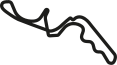
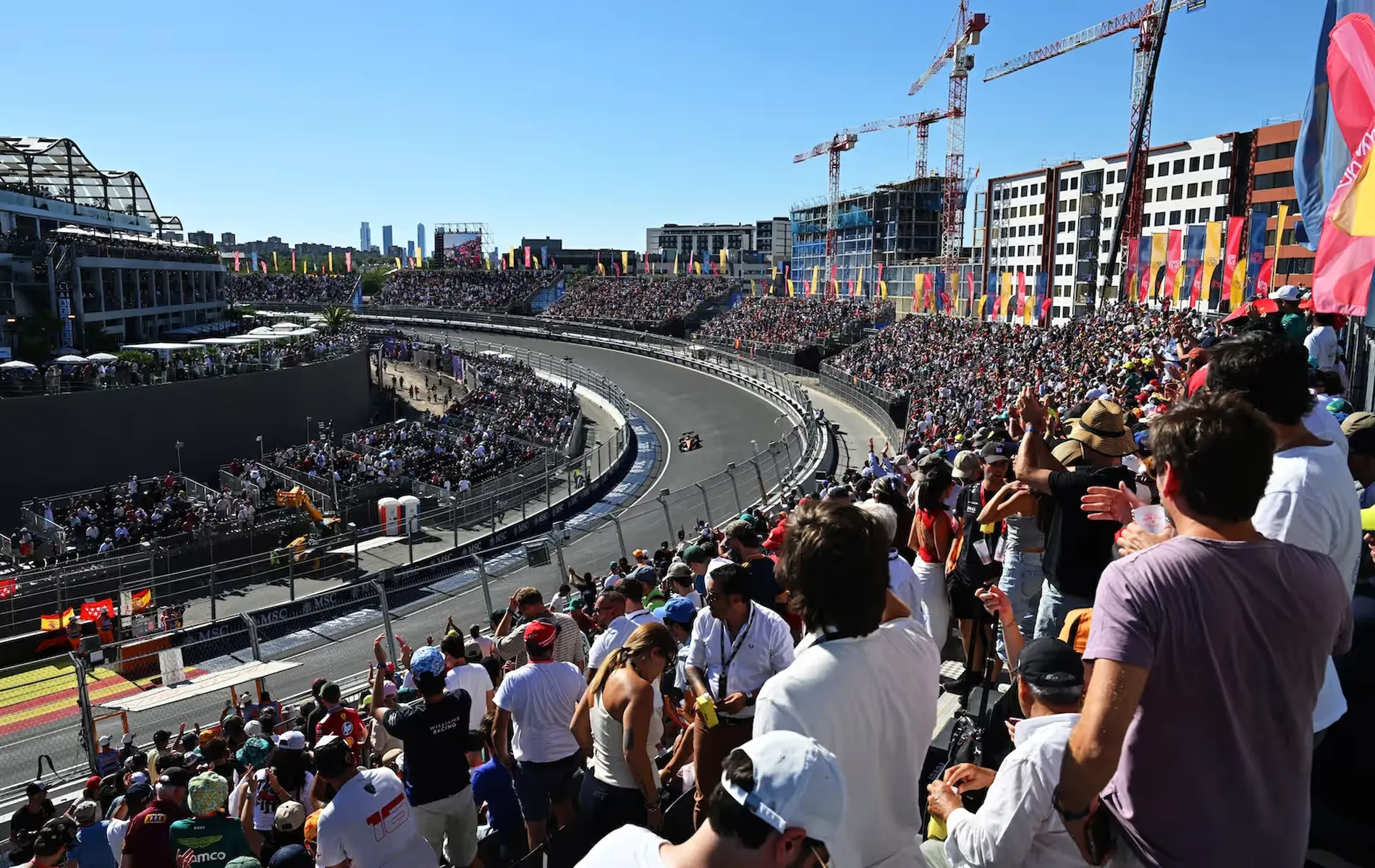
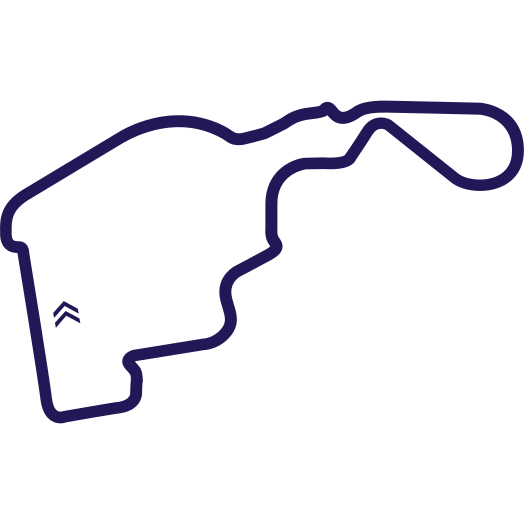
Madrid’s Madring made its Formula 1 debut in 2026, with La Monumental at Turn 12 immediately becoming its signature feature.
The numbers explain why. The corner stretches for more than half a kilometre, loops through roughly 270 degrees and reaches a maximum 24% gradient, equivalent to approximately 13.5 degrees of banking.
That is less steep than Zandvoort, but La Monumental’s challenge comes from its duration as well as its angle. Ahead of the inaugural race, Pirelli described it as particularly demanding for the tyres because of the sustained energy involved.
For modern fans, Madrid offers an interesting glimpse into F1 circuit design coming full circle. The banking is nowhere near as extreme as AVUS or old Monza, but designers are once again using elevation and camber to create a corner with a distinct identity rather than another conventional 90-degree bend.
Spanish Grand Prix
Circuito de Madring
Laps 57
First Grand Prix 2026
Circuit Length 5.416 km (3.365 mi)
Race Distance 308.524km (191.708 miles)
3. Zandvoort Hugenholtzbocht – 19 degrees
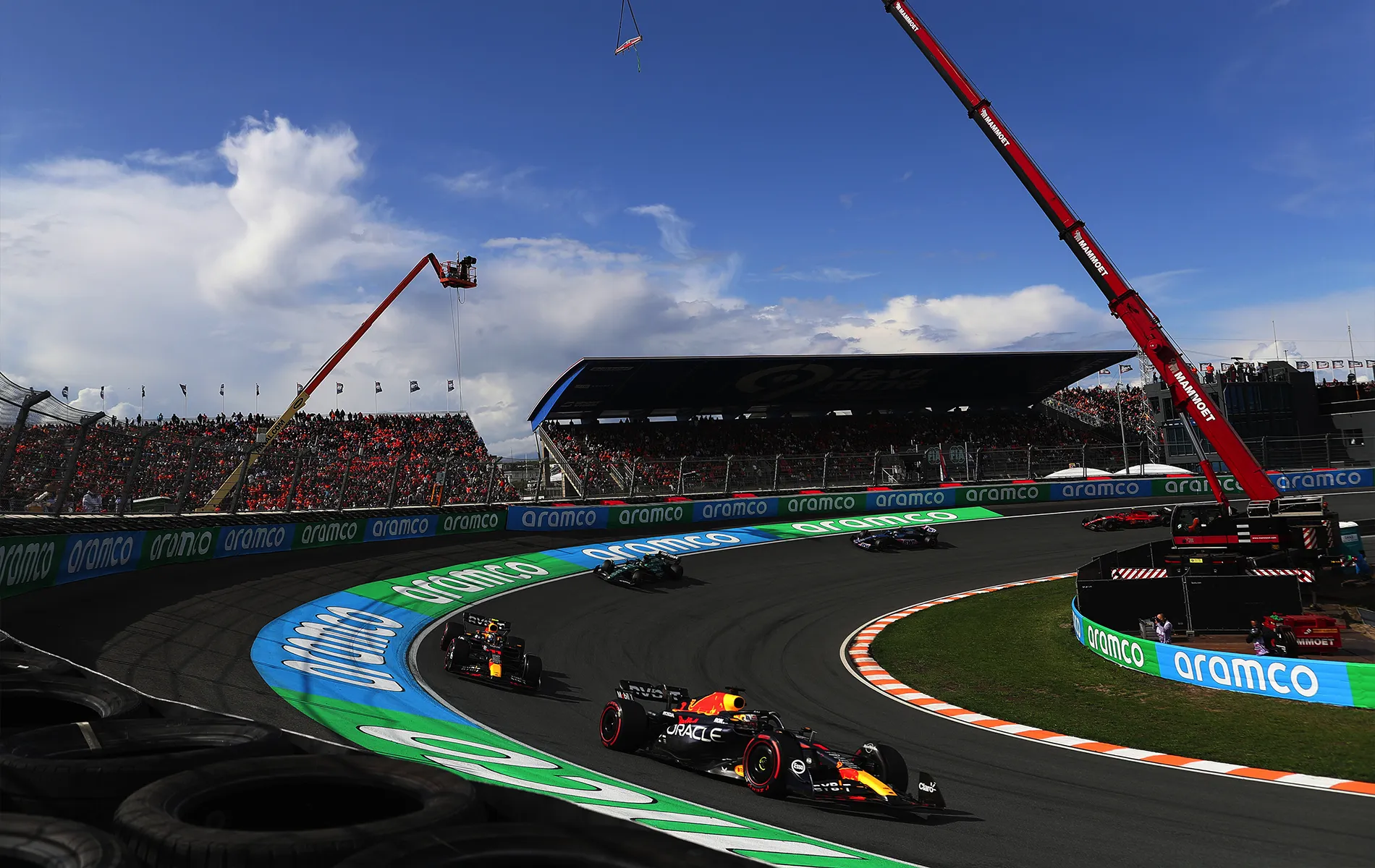
When Zandvoort returned to the Formula 1 calendar in 2021, its banking instantly distinguished it from almost every other contemporary circuit.
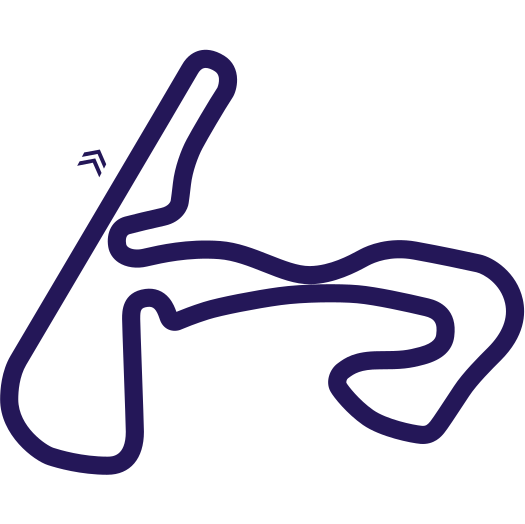
Turn 3, Hugenholtzbocht, reaches approximately 19 degrees, while the final Arie Luyendykbocht is banked at around 18 degrees.
The intention was not simply visual drama. Hugenholtzbocht’s shape creates different possible lines through the corner, with drivers able to run low or sweep higher around the banking.
That made Zandvoort feel different from the largely flat-cambered circuits modern F1 had become accustomed to.
There is also a neat historical comparison: Formula 1 itself notes that the final corner’s 18-degree banking is almost twice that encountered by F1 cars at Indianapolis.
In other words, one of F1’s most unusual features from the early 2000s suddenly looked fairly conservative.
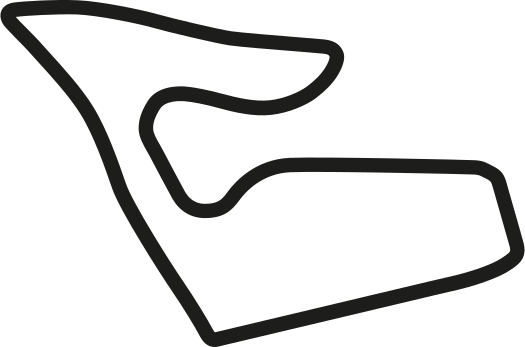
Dutch Grand Prix
Circuit Zandvoort
Laps 1952
First Grand Prix 1952
Circuit Length 4.259km
Race Distance 306.587 km
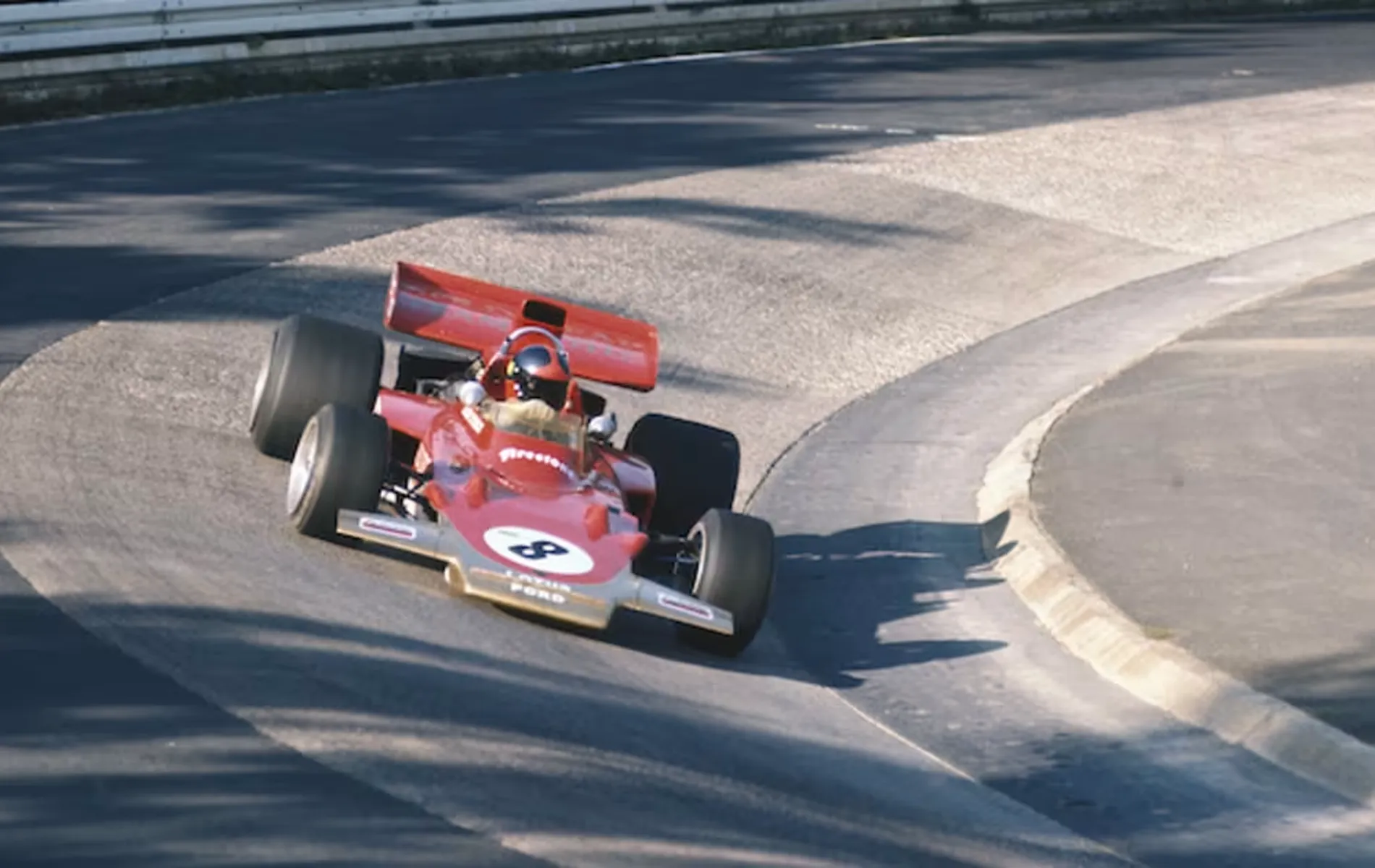
4. Nürburgring Karussell – around 20 degrees
Few corners in motorsport are as instantly recognisable as the Karussell.
Deep in the Nürburgring Nordschleife, cars effectively drop into a concrete bowl before being fired back onto the circuit. Unlike the huge sweeping banking of Monza or AVUS, the Karussell is relatively slow, narrow, rough and intensely physical.
Its origins are part of Nürburgring folklore. Rudolf Caracciola is associated with exploiting what was originally a drainage ditch on the inside of the corner; as drivers copied the technique, the section eventually developed into the concrete-banked corner that became synonymous with the Nordschleife.
Formula 1 raced on the Nordschleife for decades before leaving after the 1976 German Grand Prix.
The Karussell therefore survives as a physical connection to an F1 world that has disappeared: enormously long circuits, minimal runoff and corners whose character came from the landscape rather than computer modelling.
AVUS, the North Curve, a brick-faced wall of banking reaching approximately 43 degrees at its steepest point.
German Grand Prix
Nurburgring

Laps 60
First Grand Prix 1951
Circuit Length 5.148 km (current GP-Strecke)
Race Distance 308.617 km
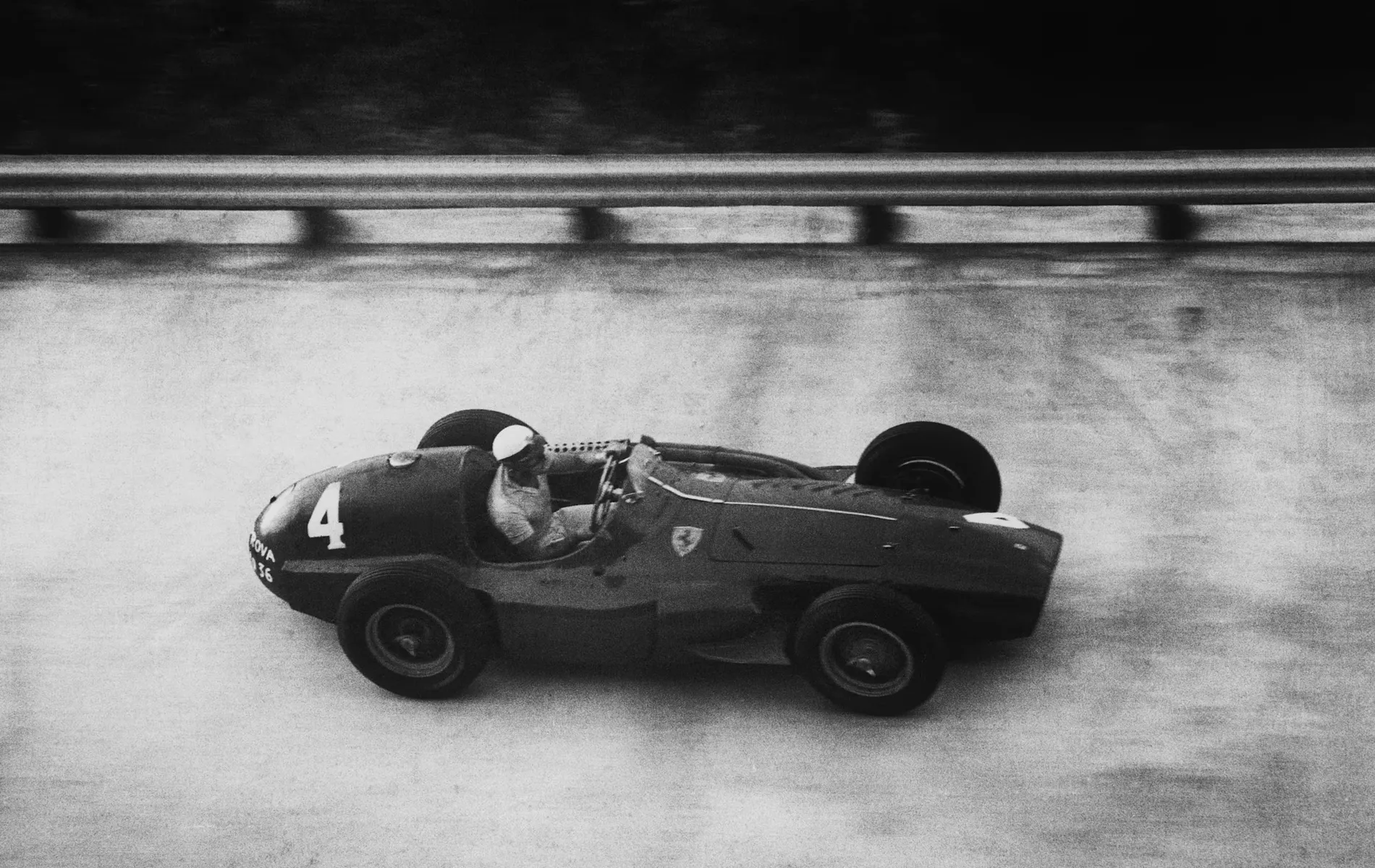
5. Monza Pista di Alta Velocità – around 38 degrees
Modern Monza is the Temple of Speed. Historic Monza was something even more extreme.
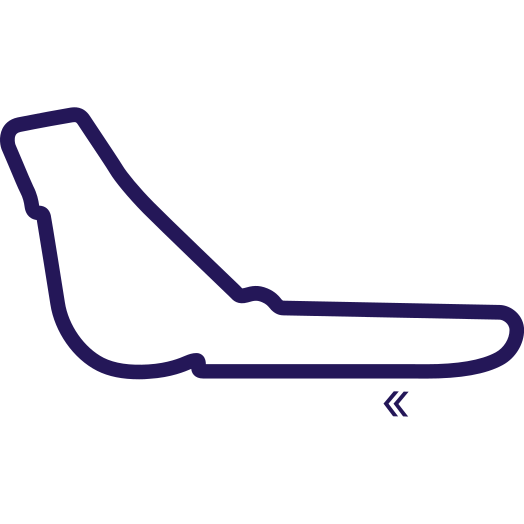
A redevelopment completed in 1955 created a high-speed oval that could be combined with the conventional road course. Its enormous concrete banking reached gradients approaching 80%, equivalent to roughly 38 degrees.
F1 cars raced on the combined configuration during the 1950s and again in 1960 and 1961.
It was spectacular, but controversial. The banking was extremely rough, placing enormous stresses on cars and tyres. British teams even boycotted the 1960 Italian Grand Prix after objecting to the use of the combined circuit.
Today the banking remains standing inside the Monza complex. Look beyond the modern circuit and those vast concrete curves provide one of the most dramatic reminders of how different Grand Prix racing once was.
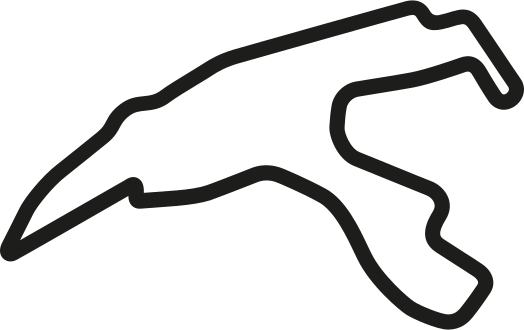
Italian Grand Prix
Autodromo Nazionale di Monza
Laps 53
First Grand Prix 1950
Circuit Length 5.793km
Race Distance 306.72 km
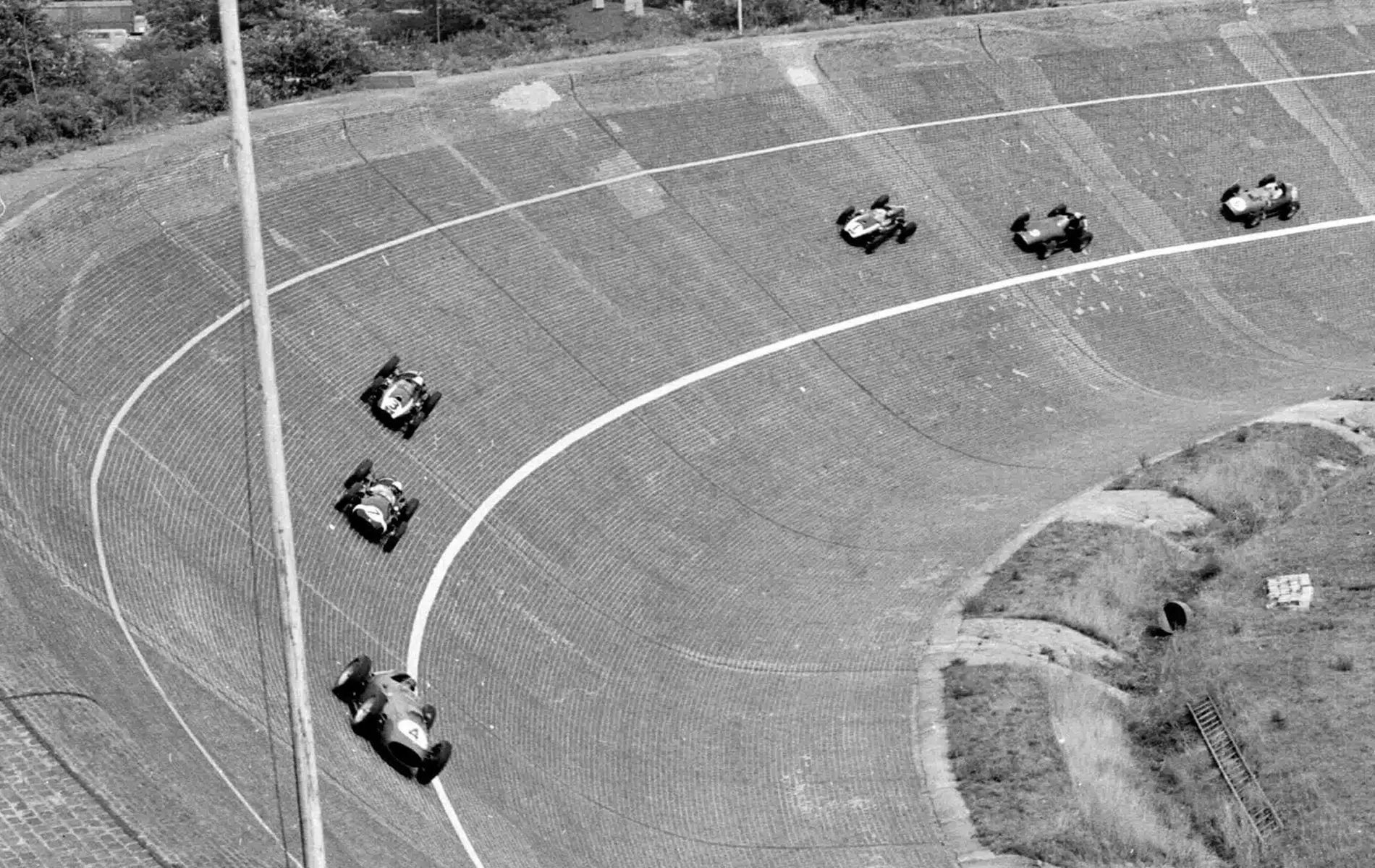
6. AVUS North Curve – 43 degrees
And then there was AVUS.
Berlin’s extraordinary circuit essentially consisted of two huge straights joined at either end. Its defining feature was the North Curve, a brick-faced wall of banking reaching approximately 43 degrees at its steepest point.
Formula 1 visited AVUS for the 1959 German Grand Prix, meaning the championship’s drivers had to race across banking that looks almost unbelievable by modern standards.
The combination of huge speed, steep banking and limited protection belonged to an era with a radically different attitude towards circuit safety.
AVUS therefore represents the extreme end of this story. Madrid and Zandvoort use banking to create speed, alternative lines and spectacle. AVUS used it because the objective was essentially to build an exceptionally fast racetrack.
At 43 degrees, nobody has needed to go further in an F1 World Championship race.
German Grand Prix
AVUS

Laps 60
First Grand Prix 1959
Circuit Length 8.300 km
Race Distance 498.000 km
Why banked corners are returning to modern F1
The interesting story isn’t simply that old Formula 1 circuits were more extreme.
It is that banking has found its way back into modern F1.
Zandvoort demonstrated how a banked corner could give a circuit a visual and technical identity without recreating the enormous risks of AVUS or old Monza. Madrid has taken that concept in another direction, building La Monumental as an arena-like centrepiece for a new generation of fans.
The physics haven’t changed. Banking allows part of the forces acting on the car to be supported through the inclined surface, helping cars carry speed while creating unusual tyre and suspension loads.
What has changed enormously is how those forces are understood and managed.
Modern F1 has simulation, sophisticated tyre modelling, advanced barriers and FIA circuit standards. The engineers designing La Monumental could study loads before an F1 car ever completed a racing lap.
Compare that with drivers attacking rough concrete banking at Monza or a brick-faced 43-degree wall at AVUS, and you get a striking snapshot of Formula 1’s evolution.
The old banking was about chasing speed almost regardless of the consequences. The new generation is about using the same basic idea to create spectacle, racing possibilities and a recognisable corner within modern safety requirements.
From Indianapolis to Madrid, Zandvoort to Monza and ultimately the extraordinary AVUS North Curve, F1’s banked corners tell a story stretching across the championship’s history — and, unexpectedly, it is a story that is still being written.
Seen in: