

























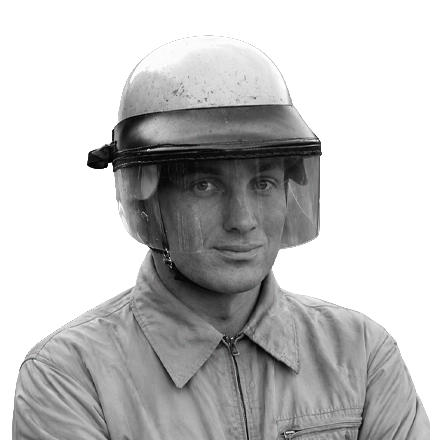
Michael Johnson “Mike” Parkes (24 September 1931 – 28 August 1977) was a British racing driver, engineer and automotive designer who competed in Formula One between 1966 and 1967. Although his Grand Prix career was cut short by injury, Parkes established himself as one of Ferrari’s leading sports car drivers, winning the 1964 12 Hours of Sebring and becoming one of the most respected engineer-drivers of his generation.
Away from the circuit, Parkes made significant contributions to the automotive industry, helping develop the Hillman Imp at Rootes before later playing a major role in the evolution of Ferrari road cars and the legendary Lancia Stratos.
Driver Bio
| Nationality | British |
| Birthplace | Richmond, England, UK |
| Born | 24 September 1931 |
| Died | 28 August 1977 |
| First Grand Prix | 1959 British Grand Prix |
| Last Grand Prix | 1967 Belgian Grand Prix |
| Years Active | 1959, 1966–1967 |
| Current/Last Team | Ferrari |
Early Life
Born on 24 September 1931 in Richmond, Surrey, Parkes was the eldest son of John Parkes, chairman and managing director of the Alvis Group. Growing up in a family deeply connected to the motor industry, he developed both a passion for racing and a natural aptitude for engineering.
He was educated at Haileybury College in Hertfordshire before beginning a career in automotive engineering that would run alongside his success in motorsport.
Early Racing Career
Parkes began racing during the mid-1950s in an MG before progressing to a Frazer Nash. His pace soon attracted the attention of Lotus founder Colin Chapman, who invited him to join the works team as reserve driver for the 24 Hours of Le Mans.
He later became involved with the Fry Formula Two project during 1958 and 1959 before concentrating once again on sports car racing. By the early 1960s he was competing for Sir Gawaine Baillie, Tommy Sopwith’s Equipe Endeavour and Maranello Concessionaires, Ferrari’s British importer, establishing himself as one of Britain’s most accomplished endurance racers.
At the 1961 24 Hours of Le Mans, Parkes partnered Willy Mairesse in a Ferrari Testa Rossa and finished second overall, signalling his arrival among the world’s leading sports car drivers.
Sports Car Success
Parkes enjoyed enormous success with Ferrari throughout the 1960s, becoming one of the Scuderia’s most dependable endurance specialists.
In 1962, he and Willy Mairesse finished second in the 1,000 km Nürburgring, while the following year Parkes narrowly missed victory in the RAC Tourist Trophy after an intense battle with Graham Hill.
His breakthrough came in 1964 when he teamed up with Umberto Maglioli to win the 12 Hours of Sebring. The pair not only secured victory but also set a new distance record for the event, with Parkes contributing one of the fastest performances of the race.
Further major victories followed in 1965 and 1966. Alongside Jean Guichet, he won the 1,000 km of Monza in 1965 before finishing runner-up at the Nürburgring. In 1966 he returned to Monza, this time partnering John Surtees to claim another prestigious endurance victory for Ferrari.
Parkes remained a front-running Ferrari sports car driver into 1967, finishing second at both the Monza 1,000 km and the 24 Hours of Le Mans alongside Ludovico Scarfiotti in the iconic Ferrari 330 P4.
Following the end of his Formula One career, he continued racing sports prototypes during the early 1970s. Highlights included fourth place at the 1970 Daytona 24 Hours, sixth at Sebring, strong finishes in the Targa Florio and Nürburgring 1000 km, and further appearances with Scuderia Filipinetti. He also helped develop the Ferrari 512F, a modified version of the 512M that combined his engineering expertise with his driving experience.
Formula One Career
Parkes first attempted to enter the Formula One World Championship at the 1959 British Grand Prix in a Fry Formula Two car but failed to qualify. Aside from occasional Formula Two outings, he focused primarily on sports car racing until Ferrari promoted him to its Grand Prix team in 1966 following John Surtees’ departure.
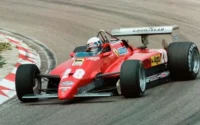
Standing 6 ft 4 in (1.93 m), Parkes required a specially lengthened Ferrari chassis to accommodate his height. The adaptation proved worthwhile, as he immediately impressed on his championship debut by finishing second at the 1966 French Grand Prix at Reims.
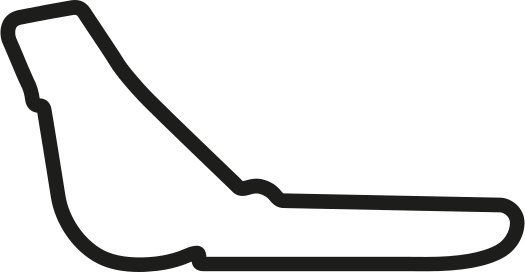
His rookie Formula One season continued with another runner-up finish at the Italian Grand Prix at Monza, where he also secured the only World Championship pole position of his career. Across just five championship starts for Ferrari, Parkes scored two podium finishes and accumulated 14 World Championship points.
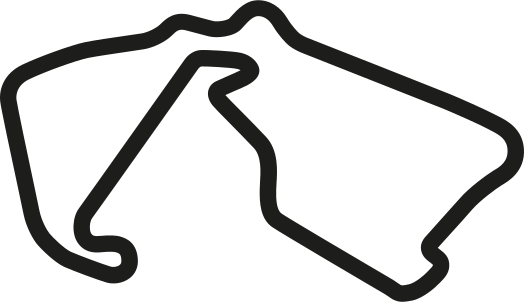
In 1967, he added victory in the prestigious non-championship BRDC International Trophy at Silverstone before sharing victory with Ludovico Scarfiotti in the Syracuse Grand Prix, where Ferrari honoured the recently deceased Lorenzo Bandini by allowing both drivers to cross the finish line together.
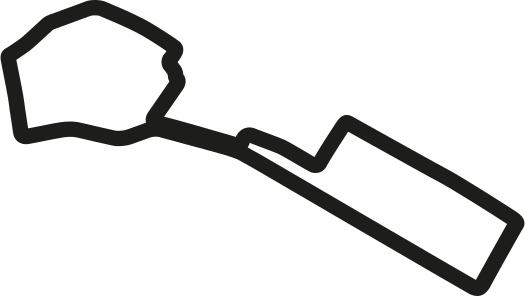
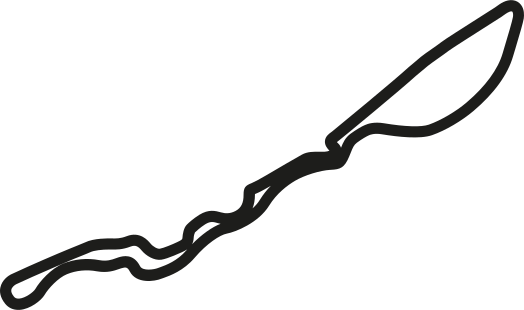
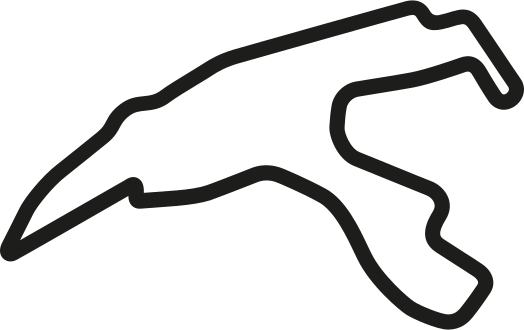
His final Formula One season was tragically interrupted at the Belgian Grand Prix at Spa-Francorchamps. On the opening lap, Parkes lost control after encountering oil sprayed from Jackie Stewart‘s BRM and crashed heavily, suffering multiple leg fractures. Although he recovered sufficiently to continue sports car racing, the injuries effectively ended his Grand Prix career.
Engineering Career
Alongside his racing achievements, Parkes enjoyed an outstanding career as an automotive engineer.
He joined the Rootes Group in 1950 as an apprentice and eventually became a project engineer on the development of the Hillman Imp, one of Britain’s most significant small cars of the era.
In 1963, Ferrari recruited him as both a development engineer and factory racing driver. Parkes played an important role in developing Ferrari road cars, including the Ferrari 330 GTC, while continuing to race for the Scuderia.
After returning from his Formula One injuries, Parkes found Ferrari under partial Fiat ownership and eventually left the company. Enzo Ferrari reportedly refused to let him resume Formula One competition, believing his engineering talents were too valuable to risk in Grand Prix racing.
Parkes later joined Scuderia Filipinetti, combining engineering work with sports car competition, before accepting the role of principal development engineer for the Lancia Stratos in 1974. His work helped refine one of the most successful rally cars ever produced.
Legacy
Mike Parkes was killed in a road traffic accident near Turin, Italy, on 28 August 1977, aged 45. He was driving home from Modena in wet conditions when his Lancia Beta collided with a heavy goods vehicle.
Although his Formula One career lasted only six World Championship Grands Prix, Parkes left an exceptional legacy in international motorsport. Equally respected as a driver and engineer, he combined technical brilliance with outstanding speed, helping Ferrari achieve success in endurance racing while contributing to the development of some of Europe’s most celebrated performance cars. Today, he is remembered as one of the finest engineer-drivers of his era.
Grand Prix Stats
| Race Entries | 7 |
| Race Starts | 6 |
| Did Not Start | 0 |
| Best Race Start | 1st |
| Best Race Finish | 2nd |
| Retirements | 3 |
| First-Lap Retirements | 0 |
| Not Classified | 0 |
| Disqualified | 0 |
| Did Not Qualify | 1 |
Podiums
| Podiums | 2 |
| First Podium | 1966 French Grand Prix |
| Last Podium | 1966 Italian Grand Prix |
| 1st Place | 0 |
| 2nd Place | 2 |
| 3rd Place | 0 |
| Most Consecutive Podiums | 0 |
| Most Podiums in a Single Season | 2 (1966) |
| Seasons with Podiums | 1 |
Pole Positions
| Pole Positions | 1 |
| First Pole | 1966 Italian Grand Prix |
| Last Pole | 1966 Italian Grand Prix |
| Most Consecutive Poles | 0 |
| Most Poles in a Single Season | 1 |
| Seasons with Poles | 1 |
Qualifying
| Qualifying Sessions | 6 |
| Reached Q3 | – |
| Q2 Eliminations | – |
| Q1 Eliminations | – |
| Did Not Qualify | 1 |
Points
| Points Scored | 14 |
| Points Finishes | 3 |
| Most Points in a Single Season | 12 (1966) |
| Seasons with Points | 2 |
Front Row Starts
| Front Row Starts | 2 |
| Poles | 1 |
| 2nd on Grid | 1 |
| Most Front Row Starts in a Season | 2 |
| Seasons with Front Row Starts | 1 |
Stats by Season
| Year | Constructor | Entries | Starts | Wins | Podiums | Poles | Fastest Laps | Front Rows | DNF | Best Start | Best Result | Pts Finishes | Points | Championship |
|---|---|---|---|---|---|---|---|---|---|---|---|---|---|---|
| 1959 | Fry | 1 | 0 | 0 | 0 | 0 | 0 | 0 | 0 | – | – | 0 | 0 | NC |
| 1966 | Ferrari | 4 | 4 | 0 | 2 | 1 | 0 | 2 | 2 | 1 | 2 | 2 | 12 | 8th |
| 1967 | Ferrari | 2 | 2 | 0 | 0 | 0 | 0 | 0 | 1 | 8 | 5 | 1 | 2 | 16th |
Stats by Constructor
| Constructor | Years | Entries | Starts | Wins | Podiums | Poles | Fastest Laps | Front Rows | DNF | Best Start | Best Result | Pts Finishes | Points |
|---|---|---|---|---|---|---|---|---|---|---|---|---|---|
| Fry | 1959 | 1 | 0 | 0 | 0 | 0 | 0 | 0 | 0 | – | – | 0 | 0 |
| Ferrari | 1966–1967 | 6 | 6 | 0 | 2 | 1 | 0 | 2 | 3 | 1 | 2 | 3 | 14 |
Teammates & Qualifying Head-to-Head
| Teammate | Years | Races | Qualifying H2H |
|---|---|---|---|
| Lorenzo Bandini | 1966 | 4 | – |
| Ludovico Scarfiotti | 1966, 1967 | 4 | – |
| Chris Amon | 1967 | 2 | – |