




















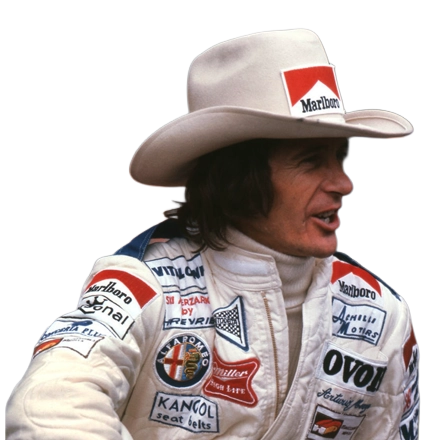
Arturo Francesco “Art” Merzario (born 11 March 1943) is an Italian racing driver, team owner and motorsport executive who competed in Formula One between 1972 and 1979. Instantly recognisable thanks to the cowboy hat that became his trademark, Merzario was far more than an F1 personality: he was a formidable sports car racer, a Targa Florio winner, a works Ferrari driver and, eventually, the man behind his own Grand Prix team.
| Born | Arturo Francesco Merzario 11 March 1943 Civenna, Como, Kingdom of Italy |
|---|---|
| Nationality | Italian |
| Active years | 1972–1979 |
| Teams | Ferrari, Frank Williams, Fittipaldi, March, Wolf–Williams, Merzario, Shadow |
| Entries | 85 (57 starts) |
| Championships | 0 |
| Wins | 0 |
| Podiums | 0 |
| Career points | 11 |
| Pole positions | 0 |
| Fastest laps | 0 |
| First entry | 1972 British Grand Prix |
| Last entry | 1979 United States Grand Prix |
Across his Formula One career, Merzario competed for Ferrari, Frank Williams, Fittipaldi, March, Wolf–Williams, and Shadow, before taking the ambitious step of establishing his own Merzario team in 1977. He entered 85 Grands Prix (making 57 starts) and scored 11 World Championship points.
His career also contains one of Formula One’s most important acts of bravery. At the 1976 German Grand Prix, Merzario was among the drivers who stopped following Niki Lauda‘s fiery accident at the Nurburgring, helping to pull the badly injured Austrian from his burning Ferrari.
Racing career
Merzario’s route to Formula One began with Abarth, initially working as a test driver with the factory’s Fiat-Abarth machinery. From there he progressed into GT competition and European hill climbs, building a reputation for being quick in just about anything he was given.
A major breakthrough came in 1969, when Merzario won the Mugello Grand Prix in a two-litre Abarth. It was no soft victory, either: the opposition included established names such as Nino Vaccarella and Andrea de Adamich. The performance helped earn Merzario a place with Ferrari’s sports car team for 1970, opening the door to some of the biggest races in international endurance competition.
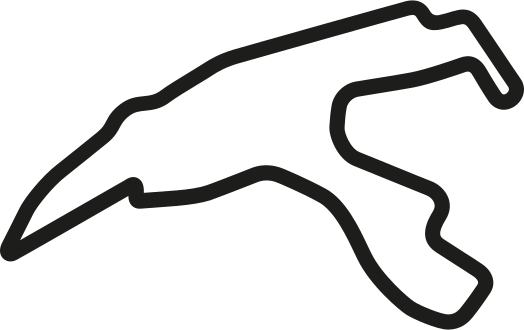
By 1972, Merzario was enjoying one of the finest seasons of his career. He won the 1000 Kilometres of Spa, the Targa Florio and the Rand 9 Hour, while also becoming European two-litre champion for Abarth.
And, as if that wasn’t enough for one year, Formula One came calling.
Formula One
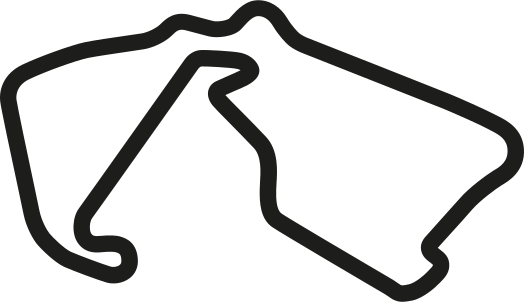
Merzario made his Formula One World Championship debut with Ferrari in 1972, immediately putting a point on the board by finishing sixth in the British Grand Prix at Brands Hatch. Scoring on debut placed him in a relatively exclusive club, and his arrival with Ferrari carried another distinction: he would remain the last driver to make his Formula One debut for the Scuderia for more than half a century, until Oliver Bearman did so at the 2024 Saudi Arabian Grand Prix.
Ferrari retained Merzario for the full 1973 season, pairing him with Jacky Ickx. The year initially looked encouraging. Driving the older Ferrari 312B2, Merzario finished fourth in both the Brazilian and South African Grands Prix.
Unfortunately, Ferrari’s newer 312B3 proved far less successful than hoped. Merzario and Ickx struggled as the season progressed, and the team’s competitiveness fell away dramatically. Enzo Ferrari responded with sweeping changes ahead of 1974, leaving Merzario looking elsewhere for his next opportunity.
That opportunity came with Frank Williams Racing Cars.
Before the World Championship campaign got properly underway, Merzario finished third in a non-championship race in Brazil. During the championship season he managed points-paying finishes in South Africa and at Monza, but the Williams machinery was generally unable to compete consistently with the leading cars.
His Formula One programme became more fragmented in 1975. Merzario made a one-off appearance for Copersucar-Fittipaldi at Monza, finishing 11th, but much of his attention returned to sports cars. Back with Alfa Romeo, he enjoyed considerably more success, winning four races as well as adding another Targa Florio victory to his collection.
Merzario returned to Formula One on a full-time basis in 1976, initially joining the works March operation. Results proved disappointing, however, and an increasingly unhappy Merzario decided to move on.
His next destination was Wolf-Williams, created after Walter Wolf became involved with Frank Williams Racing Cars. Merzario replaced his former Ferrari team-mate Jacky Ickx, but the change of scenery did little to improve his fortunes and strong results remained elusive.
Then came the 1976 German Grand Prix at the Nürburgring – and the moment for which Merzario would become famous far beyond his race results.
Niki Lauda suffered a horrific accident during the race, his Ferrari crashing and bursting into flames. Rather than simply continuing, Merzario stopped at the scene. Together with Guy Edwards, Brett Lunger and Harald Ertl, he became part of the desperate effort to rescue Lauda from the burning wreckage.
Merzario played a particularly important role in getting Lauda out of the car. Decades later, while discussing the incident around the release of the film Rush, Lauda credited Merzario’s actions with saving his life, explaining that the Italian had entered the fire and helped pull him from the wreck when every second mattered.
Remarkably, Lauda was back in a Formula One car only six weeks later, returning at the Italian Grand Prix. In gratitude for Merzario’s actions at the Nürburgring, Lauda presented him with his gold Rolex wristwatch.
For all the frustrations of Merzario’s Formula One career, what happened at the Nürburgring ensured his place in Grand Prix history for reasons far more important than points or podiums.
In 1977, Merzario took an even more ambitious route. Having secured sufficient sponsorship, he founded his own Formula One operation: Team Merzario.
Initially, the team competed with March 761B machinery, but surviving in late-1970s Formula One as a small independent constructor was an enormous challenge. Merzario wasn’t merely the driver; he was attempting to build an organisation capable of taking on increasingly sophisticated and well-funded rivals.
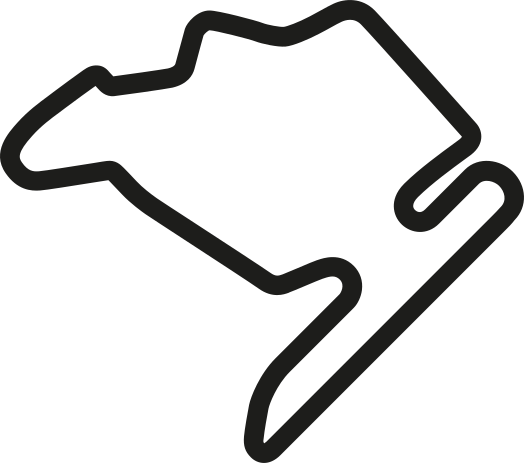
The team’s only classified Formula One finish across its three seasons came at the 1977 Belgian Grand Prix at Circuit Zolder, where Merzario was officially classified 14th.
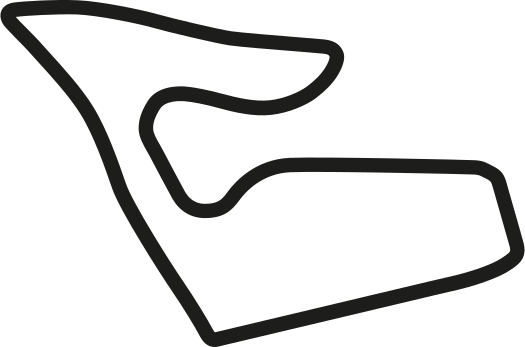
That same year he briefly stepped away from his own operation to make a one-off appearance for Shadow at the 1977 Austrian Grand Prix, held at the Österreichring. Merzario drove well but once again failed to see the chequered flag, retiring from the race.
From 1978, Merzario went a step further and began producing cars bearing his own name. It was an admirable old-school attempt at Formula One independence, but results were difficult to find. The cars frequently failed to qualify and, when Merzario did make the starting grid, reliability often prevented him from reaching the finish.
He continued campaigning his own chassis for two seasons before the team’s attention eventually shifted towards Formula Two.
The Merzario M1-BMW was introduced for Formula Two in 1980, but changing championships brought little improvement in results. Merzario’s frontline Formula One adventure was effectively over.
His enthusiasm for racing, however, most certainly wasn’t.
Throughout his Formula One years, Merzario had also developed one of the paddock’s most recognisable looks. He regularly appeared wearing a cowboy hat decorated with Marlboro sponsorship patches, an accessory that became so closely associated with him that it effectively turned into his personal trademark.
Long after his Formula One career ended, Merzario continued wearing the hat – proof that some pieces of racing kit never really need updating.
Sports cars and other competitions
If Merzario’s Formula One record tells the story of a determined driver frequently battling difficult machinery, his sports car career shows just how competitive he could be when given the right equipment.
His early years with Abarth encompassed GT racing, hill climbs and an assortment of machinery. He also demonstrated his versatility in rallying, winning the Sardinia Rally in 1963 at the wheel of an Alfa Romeo Giulietta.
Throughout the 1960s he collected a number of class victories, with his 1969 Mugello triumph ultimately proving instrumental in securing his place within Ferrari’s sports car programme.
Driving a Ferrari 512 S in 1970, Merzario finished third at the 24 Hours of Daytona and fourth in the 1000 Kilometres of Monza. Further victories followed during 1971, including successes at Imola for Ferrari and Vallelunga for Abarth.
Then came his outstanding 1972 campaign.
Sharing a Ferrari 312 PB with Brian Redman, Merzario won the 1000 Kilometres of Spa. He also partnered legendary rally driver Sandro Munari to victory in the Targa Florio, conquering one of motorsport’s most demanding and spectacular road races.
Those successes came in the very same year that Merzario made his Formula One World Championship debut, underlining just how busy – and versatile – his racing programme had become.
His international sports car form continued in 1973. Merzario finished second in the 1000 Kilometres of Nürburgring and also took second place at the 24 Hours of Le Mans, adding two more major endurance results to an already impressive CV.
After his Formula One opportunities became less rewarding, sports cars again provided Merzario with a platform to fight at the front. Racing an Alfa Romeo T33, he won the Targa Florio for a second time in 1975.
And unlike many of his Formula One contemporaries, Merzario showed remarkably little interest in retiring from competition.
He continued racing sports cars and GT machinery long after his regular Grand Prix career had ended. In 1985, he won the Italian Prototype Championship, demonstrating that his speed had survived well beyond his Formula One years.
His racing activities stretched into the 1990s, including successful appearances with the Centenari M1. In 1997, he could still be found competing in international sports car machinery, racing an SR2-class Centenari M1-Alfa Romeo at Donington.
Even as he moved into his sixties, Merzario remained an active competitor, particularly in Italian prototype racing.
It made for an extraordinary motorsport career: from Abarths and mountain climbs to Ferrari sports cars, Formula One, Le Mans, the Targa Florio and eventually cars carrying his own name. Add two Targa Florio victories, a Le Mans podium, 85 Formula One Grand Prix appearances and one of the bravest rescue efforts in the sport’s history, and Merzario’s familiar cowboy hat sits atop a genuinely remarkable racing résumé.
Arturo Merzario Complete Formula One World Championship results
| Year | Entrant | Chassis | Engine | 1 | 2 | 3 | 4 | 5 | 6 | 7 | 8 | 9 | 10 | 11 | 12 | 13 | 14 | 15 | 16 | 17 | WDC | Pts |
|---|---|---|---|---|---|---|---|---|---|---|---|---|---|---|---|---|---|---|---|---|---|---|
| 1972 | Scuderia Ferrari SpA SEFAC | Ferrari 312B2 | Ferrari 001/1 3.0 F12 | ARG | RSA | ESP | MON | BEL | FRA | GBR 6 | GER 12 | AUT | ITA | CAN | USA | 20th | 1 | |||||
| 1973 | Scuderia Ferrari SpA SEFAC | Ferrari 312B2 | Ferrari 001/1 3.0 F12 | ARG 9 | BRA 4 | RSA 4 | ESP | BEL | 12th | 6 | ||||||||||||
| Ferrari 312B3 | Ferrari 001/11 3.0 F12 | MON Ret | SWE | FRA 7 | GBR | NED | GER | AUT 7 | ITA Ret | CAN 15 | USA 16 | |||||||||||
| 1974 | Frank Williams Racing Cars | Iso–Marlboro FW | Ford Cosworth DFV 3.0 V8 | ARG Ret | BRA Ret | RSA 6 | ESP Ret | BEL Ret | MON Ret | SWE DNS | NED Ret | FRA 9 | GBR Ret | GER Ret | AUT Ret | ITA 4 | CAN Ret | USA Ret | 17th | 4 | ||
| 1975 | Frank Williams Racing Cars | Williams FW03 | Ford Cosworth DFV 3.0 V8 | ARG NC | BRA Ret | RSA Ret | MON DNQ | BEL Ret | SWE | NED | FRA | GBR | GER | AUT | NC | 0 | ||||||
| Williams FW04 | ESP Ret | |||||||||||||||||||||
| Copersucar-Fittipaldi | Fittipaldi FD03 | ITA 11 | USA | |||||||||||||||||||
| 1976 | Ovoro Team March | March 761 | Ford Cosworth DFV 3.0 V8 | BRA | RSA | USW DNQ | ESP Ret | BEL Ret | MON DNQ | SWE 14 | FRA 9 | GBR Ret | NC | 0 | ||||||||
| Walter Wolf Racing | Wolf–Williams FW05 | GER Ret | AUT Ret | NED Ret | ITA DNS | CAN Ret | USA Ret | JPN Ret | ||||||||||||||
| 1977 | Team Merzario | March 761B | Ford Cosworth DFV 3.0 V8 | ARG | BRA | RSA | USW | ESP Ret | MON DNQ | BEL 14 | SWE | FRA Ret | GBR Ret | GER DNQ | NED DNQ | ITA | USA | CAN | JPN | NC | 0 | |
| Shadow Racing Team | Shadow DN8 | AUT Ret | ||||||||||||||||||||
| 1978 | Team Merzario | Merzario A1 | Ford Cosworth DFV 3.0 V8 | ARG Ret | BRA DNQ | RSA Ret | USW Ret | MON DNPQ | BEL DNPQ | ESP DNQ | SWE NC | FRA DNQ | GBR Ret | GER DNQ | AUT DNQ | NED Ret | ITA Ret | USA Ret | CAN DNQ | NC | 0 | |
| 1979 | Team Merzario | Merzario A1B | Ford Cosworth DFV 3.0 V8 | ARG Ret | BRA DNQ | RSA DNQ | USW Ret | NC | 0 | |||||||||||||
| Merzario A2 | ESP DNQ | BEL DNQ | MON | FRA DNQ | AUT DNQ | |||||||||||||||||
| Merzario A4 | GBR DNQ | GER DNQ | NED DNQ | ITA DNQ | CAN DNQ | USA DNQ | ||||||||||||||||
Formula One Non-Championship results
| Year | Entrant | Chassis | Engine | 1 | 2 | 3 |
|---|---|---|---|---|---|---|
| 1974 | Frank Williams Racing Cars | Iso–Marlboro FW | Ford Cosworth DFV 3.0 V8 | PRE 3 | ROC | INT |
| 1975 | Frank Williams Racing Cars | Iso–Marlboro FW03 | Ford Cosworth DFV 3.0 V8 | ROC 7 | INT DNS | SUI |
| 1979 | Team Merzario | Merzario A4 | Ford Cosworth DFV 3.0 V8 | ROC | GNM | DIN 11 |
Teammates & Qualifying Head-to-Head
| Teammate | Years | Races | Qualifying H2H |
|---|---|---|---|
| Jacky Ickx | 1972, 1973 | 8 | – |
| Clay Regazzoni | 1972 | 1 | – |
| Tom Belso | 1974 | 4 | – |
| Gijs van Lennep | 1974 | 2 | – |
| Richard Robarts | 1974 | 1 | – |
| Jean-Pierre Jabouille | 1974 | 1 | – |
| Jacques Laffite | 1974, 1975 | 10 | – |
| Tony Brise | 1975 | 1 | – |
| Chris Amon | 1976 | 1 | – |
| Warwick Brown | 1976 | 1 | – |
| Masami Kuwashima | 1976 | 1 | – |
| Hans Binder | 1976 | 1 | – |
| Alan Jones | 1977 | 1 | – |
| Alberto Colombo | 1978 | 1 | – |