























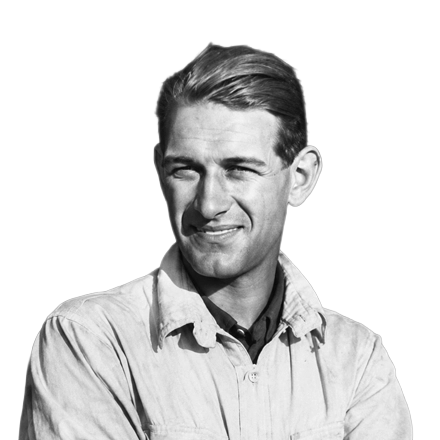
Pierre Raymond Sommer (31 August 1906 – 10 September 1950) was a French racing driver whose career spanned both the pre-war and post-war eras of international motorsport. Famous for his exceptional endurance racing ability, Sommer claimed back-to-back victories at the 24 Hours of Le Mans in 1932 and 1933 and remained one of the event’s dominant figures throughout the 1930s. He also enjoyed considerable success in Grand Prix racing and competed in Formula One’s inaugural World Championship season.
Driver Bio
| Nationality | French |
| Birthplace | Mouzon, France |
| Born | 31 August 1906 |
| Died | 10 September 1950 |
| First Grand Prix | 1950 Monaco Grand Prix |
| Last Grand Prix | 1950 Italian Grand Prix |
| Years Active | 1950 |
| Current/Last Team | Talbot-Lago |
Early Life
Born in Mouzon, France, on 31 August 1906, Sommer came from a wealthy family involved in the carpet manufacturing industry. Aviation also formed part of his family’s history, with his father, Roger Sommer, becoming one of France’s pioneering aviators and setting a world endurance flying record in 1909.
Despite this adventurous family background, Raymond did not begin his own motorsport career until 1931, when he entered races as a privateer driving a Chrysler Imperial.
Le Mans Success
Sommer quickly established himself as one of endurance racing’s finest competitors.
His breakthrough came at the 1932 24 Hours of Le Mans, where he shared an Alfa Romeo with Luigi Chinetti. After Chinetti was forced to retire through illness, Sommer drove for more than 20 hours almost single-handedly to secure an extraordinary overall victory.
He successfully defended the title the following year, partnering the legendary Tazio Nuvolari in another Alfa Romeo to claim a second consecutive Le Mans triumph.
Throughout the remainder of the decade, Sommer was one of the dominant forces at Le Mans. He led every edition of the race until 1938 but was repeatedly denied further victories by mechanical failures, including one occasion when he lost the lead after establishing a commanding advantage.
Grand Prix Career Before the War
Alongside his endurance racing achievements, Sommer became a regular competitor in Europe’s premier Grand Prix events.
Although he frequently challenged the leading teams, outright victories proved difficult to secure during an era dominated by the factory Mercedes-Benz, Auto Union and Bugatti teams.
His most notable Grand Prix success came in 1936 when he won the French Grand Prix alongside Jean-Pierre Wimille. That year’s event was held to sports car regulations rather than the traditional Grand Prix formula.
Sommer also claimed victory in the 1936 Spa 24 Hours with Francesco Severi before adding further successes at the Three Hours of Marseille, the Grand Prix of Tunisia and the prestigious La Turbie hill climb in 1938 and 1939 driving Alfa Romeo machinery.
In 1936, he also travelled to the United States to contest the Vanderbilt Cup on Long Island, finishing an impressive fourth behind race winner Tazio Nuvolari.
With the outbreak of the Second World War, Sommer’s racing career was interrupted as he became an active member of the French Resistance.
Return to Racing
Following the end of the war, Sommer quickly returned to competition and immediately resumed winning races.
He claimed victory in the 1946 René Le Bègue Cup at Saint-Cloud before achieving another historic success the following season by winning the 1947 Turin Grand Prix at Valentino Park. The victory marked the first-ever Grand Prix win for Enzo Ferrari as an independent constructor, making Sommer an important figure in Ferrari’s early racing history.
Later, he switched to a privately entered Talbot-Lago while continuing to compete at the highest level of European motorsport.
Formula One Career
Sommer became one of the competitors in Formula One’s inaugural World Championship season in 1950.
Driving both Ferrari and his privately entered Talbot-Lago, he contested five World Championship Grands Prix. Although reliability problems affected much of his campaign, he produced an outstanding performance at the Monaco Grand Prix, finishing fourth in only the second World Championship race ever held.
Later that season, he also won the Circuit du Lac Grand Prix at Aix-les-Bains driving a Ferrari 166, further demonstrating that he remained one of Europe’s leading racing drivers despite being in the final year of his career.
Death and Legacy
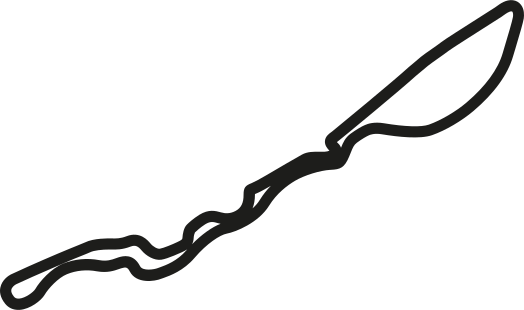
On 10 September 1950, Sommer competed in the Grand Prix de la Haute-Garonne at the Circuit de Cadours in France, driving a British Racing Motors-backed 1.1-litre Cooper.
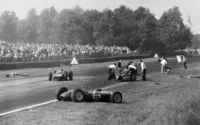
While leading the race, he attempted to overtake a slower competitor when a rear wheel reportedly began to fail. As he looked towards the problem, he lost control of the car, which overturned several times before being thrown into a tree beside the circuit.
Although he survived the initial impact, Sommer suffered a fatal skull fracture and died shortly afterwards at the scene. He was 44 years old.
Grand Prix Stats
| Race Entries | 5 |
| Race Starts | 5 |
| Did Not Start | 0 |
| Best Race Start | 5th |
| Best Race Finish | 4th |
| Retirements | 4 |
| First-Lap Retirements | 0 |
| Not Classified | 0 |
| Disqualified | 0 |
| Did Not Qualify | 0 |
Qualifying
| Qualifying Sessions | – |
| Reached Q3 | – |
| Q2 Eliminations | – |
| Q1 Eliminations | – |
| Did Not Qualify | 0 |
Points
| Points Scored | 3 |
| Points Finishes | 1 |
| Most Points in a Single Season | 3 (1950) |
| Seasons with Points | 1 |
FIA World Drivers’ Championship results
| Year | Entrant | Chassis | Engine | 1 | 2 | 3 | 4 | 5 | 6 | 7 | WDC | Pts |
|---|---|---|---|---|---|---|---|---|---|---|---|---|
| 1950 | Scuderia Ferrari | Ferrari 125 | Ferrari 125 1.5 V12s | GBR | MON 4 | 500 | 16th | 3 | ||||
| Ferrari 166 F2 | Ferrari 166 2.0 V12 | SUI Ret | ||||||||||
| Raymond Sommer | Talbot-Lago T26C | Talbot 23CV 4.5 L6 | BEL Ret | ITA Ret | ||||||||
| Automobiles Talbot-Darracq SA | Talbot-Lago T26C-GS | FRA Ret |
Teammates & Qualifying Head-to-Head
| Teammate | Years | Races | Qualifying H2H |
|---|---|---|---|
| Luigi Villoresi | 1950 | 2 | – |
| Alberto Ascari | 1950 | 2 | – |
| Peter Whitehead | 1950 | 1 | – |
| Louis Rosier | 1950 | 1 | – |
| Yves Giraud-Cabantous | 1950 | 1 | – |