
































Connaught Engineering, usually known simply as Connaught, was one of Britain’s most important early racing constructors, competing in Formula One, Formula Two and sports car racing during motorsport’s formative post-war years. Built in the United Kingdom, Connaught cars entered 52 races across 18 Grand Prix with their A, B and C Type machines, achieving one podium finish and scoring 17 World Championship points. For a proudly independent British manufacturer operating before the nation fully became Formula One’s industrial powerhouse, those numbers carried real weight.
| First entry | 1952 British Grand Prix |
|---|---|
| Races entered | 18 |
| Constructors’ Championships | 0 |
| Drivers’ Championships | 0 |
| Race victories | 0 |
| Pole positions | 0 |
| Fastest laps | 0 |
| Final entry | 1959 United States Grand Prix |
The name Connaught is widely believed to have come from an abbreviation of Continental Autos, the Send, Surrey garage where the cars were built. That business specialised in the sale and repair of European sports cars such as Bugatti. Given the spelling, however, the name may also have nodded toward the Irish province of Connaught. Either way, it became attached to one of Britain’s most admired early specialist racing marques.
Origins in Surrey
Connaught emerged from the practical world of engineering rather than the glamour of grand factories. Based in Send, Surrey, Continental Autos was already known for servicing and selling continental performance machinery. That environment provided the perfect breeding ground for a racing constructor: skilled mechanics, access to advanced European engineering ideas, and customers who appreciated speed.
In the immediate post-war era, British motorsport was beginning to rebuild and redefine itself. Before names like Lotus, McLaren and Williams would dominate future decades, smaller pioneers like Connaught helped lay the technical and competitive foundations of Britain’s rise in Grand Prix racing.
The A Type and Formula Two beginnings
In 1950, Connaught produced its first single-seater racers: the Formula Two A Type. These cars used an engine developed extensively from the Lea-Francis unit already seen in Connaught’s L Type sports cars. The reworking was so comprehensive that it was effectively a true Connaught powerplant rather than a simple borrowed engine.
The chassis followed conventional engineering principles of the day, using a preselector gearbox driving through to a de Dion rear axle. It may sound old-fashioned now, but at the time it was robust, practical and competitive enough to place Connaught firmly in the serious-racing category.
When the World Championship switched to Formula Two regulations in 1952 and 1953, Connaught’s A Type cars suddenly found themselves eligible for Grand Prix events counting toward the Formula One World Championship. That gave the British marque a valuable chance to test itself against Europe’s finest on the biggest stage.
Formula One and the B Type
Connaught approached the new 2.5-litre Formula One regulations for 1954 with ambitious ideas. The original plan was to use a rear-mounted Coventry Climax V8 engine known as the “Godiva”, a remarkably forward-thinking concept in an era when front-engined layouts still ruled. Had it happened, Connaught might have been years ahead of its time.
When the Godiva project failed to materialise, Connaught adapted quickly. The team designed a more conventional front-engined machine, the B Type, powered by an Alta engine enlarged to 2.5 litres. Early versions featured sleek, enveloping aerodynamic bodywork before later cars adopted a more traditional open-wheel appearance.
The B Type became the most famous Connaught of all, combining handsome engineering with genuine competitiveness. It represented a determined British constructor refusing to be outclassed by better-funded continental opposition.
The Syracuse victory
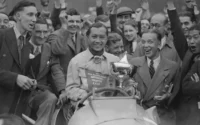
Connaught’s greatest moment arrived in 1955. Driving a B Type Connaught, Tony Brooks won the Syracuse Grand Prix in Sicily, a major non-championship Formula One event.
The significance of that victory reached far beyond one race result. It marked the first Grand Prix win by a British driver in a British car since 1923. At a time when Italian and continental manufacturers were still viewed as the benchmark, Connaught had delivered a landmark British breakthrough.
From then on, the B Type was affectionately known as the Syracuse Connaught. It became the defining symbol of the marque’s finest hour and one of the proudest moments in early British Grand Prix history.
World Championship record
Across its Formula One campaigns, Connaught cars entered 18 Grands Prix and a total of 52 races with the A, B and C Type machines. The team scored 17 championship points and claimed one podium finish, impressive returns for an independent constructor competing against names such as Ferrari, Maserati and other better-resourced rivals.
Connaught’s importance cannot be measured only in points. It helped prove that British constructors could build fast, sophisticated Grand Prix cars capable of beating established continental powers—a belief that would soon reshape Formula One entirely.
Indianapolis attempt
Even after its main Formula One years had passed, the Connaught name still appeared in ambitious places. In 1962, Jack Fairman attempted to qualify a Connaught race car for the Indianapolis 500.
The effort ultimately fell short, with the car unable to find the pace required to make the field. But the attempt itself reflected the adventurous spirit of the marque—never afraid to chase a challenge, even across the Atlantic at one of the world’s most demanding races.
Sports cars and road-going machines
Before becoming known for single-seaters, Connaught also built a small number of road-going sports cars based on the Lea-Francis Sports Chassis. These machines enjoyed considerable success in competition and showed the company’s broader engineering talent.
The line-up included the L2 and L3 models, along with three examples of the stark and purposeful Cycle Winged L3/SR Sports Racer. Two further competition sports cars, based on the A Type Formula Two chassis and known as the ALSR, were also produced.
These projects underlined Connaught’s versatility. It was not merely a Grand Prix specialist—it was a complete sporting manufacturer in miniature, able to turn its hand to road cars, racers and hybrids of the two.
Revival of the name
In 2004, the Connaught name returned through the Connaught Motor Company. The revived brand introduced the Type D Syracuse, honouring the famous 1955 victory, and later the Type D-H hybrid sports car.
Though separate from the original racing concern, the revival demonstrated how much affection still surrounded the Connaught story decades after the team’s competitive peak.
Legacy
Connaught Engineering occupies a special place in British motorsport history. It arrived before Britain became Formula One’s dominant engineering nation and helped show the way. Small, clever and fiercely independent, it proved that British constructors could challenge Europe’s best with ingenuity rather than enormous budgets.
Its Syracuse triumph with Tony Brooks remains one of the key stepping stones toward Britain’s later Grand Prix dominance. Connaught may not have become a long-term giant, but it was a pioneer—and pioneers are remembered long after the numbers fade.
Complete Drivers’ World Championship results
| Year | Chassis | Engine | Driver | Entrant | 1 | 2 | 3 | 4 | 5 | 6 | 7 | 8 | 9 | 10 | 11 | WCC | Points |
|---|---|---|---|---|---|---|---|---|---|---|---|---|---|---|---|---|---|
| 1952 | SUI | 500 | BEL | FRA | GBR | GER | NED | ITA | -* | -* | |||||||
| Connaught Type A | Lea-Francis Straight-4 | Ken Downing | Ken Downing | Ret | |||||||||||||
| Connaught Engineering | 9 | ||||||||||||||||
| Eric Thompson | 5 | ||||||||||||||||
| Kenneth McAlpine | 16 | Ret | |||||||||||||||
| Stirling Moss | Ret | ||||||||||||||||
| Dennis Poore | 4 | ||||||||||||||||
| Connaught Racing Syndicate | 12 | ||||||||||||||||
| 1953 | ARG | 500 | NED | BEL | FRA | GBR | GER | SUI | ITA | -* | -* | ||||||
| Connaught Type A | Lea-Francis Straight-4 | Kenneth McAlpine | Connaught Engineering | Ret | Ret | 13 | NC | ||||||||||
| Stirling Moss | 9 | ||||||||||||||||
| Roy Salvadori | Ret | Ret | Ret | Ret | Ret | ||||||||||||
| Prince Bira | Ret | 7 | Ret | ||||||||||||||
| Jack Fairman | NC | ||||||||||||||||
| Johnny Claes | Ecurie Belge | Ret | 12 | Ret | Ret | ||||||||||||
| André Pilette | NC | ||||||||||||||||
| Ian Stewart | Ecurie Ecosse | Ret | |||||||||||||||
| Tony Rolt | Rob Walker Racing Team | Ret | |||||||||||||||
| 1954 | ARG | 500 | BEL | FRA | GBR | GER | SUI | ITA | ESP | -* | -* | ||||||
| Connaught Type A | Lea-Francis Straight-4 | Leslie Marr | 13 | ||||||||||||||
| Bill Whitehouse | Ret | ||||||||||||||||
| Don Beauman | Sir Jeremy Boles | 11 | |||||||||||||||
| Leslie Thorne | Ecurie Ecosse | 14 | |||||||||||||||
| John Riseley-Prichard | Rob Walker Racing Team | Ret | |||||||||||||||
| 1955 | ARG | MON | 500 | BEL | NED | GBR | ITA | -* | -* | ||||||||
| Connaught Type B | Alta Straight-4 | Kenneth McAlpine | Connaught Engineering | Ret | |||||||||||||
| Jack Fairman | DNS | ||||||||||||||||
| Tony Rolt | Ret± | ||||||||||||||||
| Peter Walker | Ret± | ||||||||||||||||
| Leslie Marr | Ret | ||||||||||||||||
| 1956 | ARG | MON | 500 | BEL | FRA | GBR | GER | ITA | -* | -* | |||||||
| Connaught Type B | Alta Straight-4 | Archie Scott Brown | Connaught Engineering | Ret | |||||||||||||
| Desmond Titterington | Ret | ||||||||||||||||
| Jack Fairman | 4 | 5 | |||||||||||||||
| Ron Flockhart | 3 | ||||||||||||||||
| Les Leston | Ret | ||||||||||||||||
| Piero Scotti | Ret | ||||||||||||||||
| 1957 | ARG | MON | 500 | FRA | GBR | GER | PSC | ITA | -* | -* | |||||||
| Connaught Type B | Alta Straight-4 | Stuart Lewis-Evans | Connaught Engineering | 4 | |||||||||||||
| Ivor Bueb | Ret | ||||||||||||||||
| 1958 | ARG | MON | NED | 500 | BEL | FRA | GBR | GER | POR | ITA | MOR | NC | 0 | ||||
| Connaught Type B | Alta Straight-4 | Ivor Bueb | Bernie Ecclestone | Ret | |||||||||||||
| Bruce Kessler | DNQ | ||||||||||||||||
| Paul Emery | DNQ | ||||||||||||||||
| Jack Fairman | Ret | ||||||||||||||||
| Bernie Ecclestone | DNQ | DNP | |||||||||||||||
| 1959 | MON | 500 | NED | FRA | GBR | GER | POR | ITA | USA | NC | 0 | ||||||
| Connaught Type C | Alta Straight-4 | Bob Said | Connaught Cars / Paul Emery | Ret | |||||||||||||
± = Indicates a shared drive