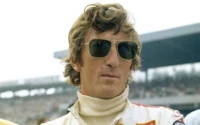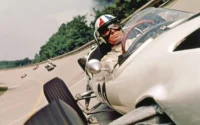




















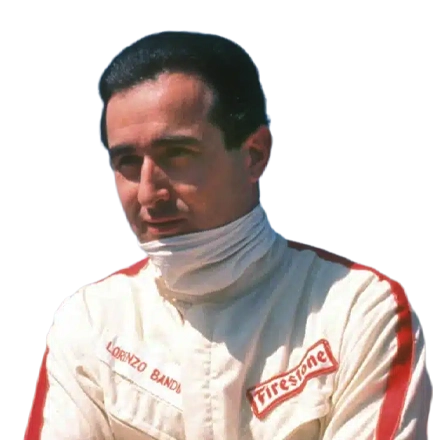
Lorenzo Bandini was one of Italy’s most gifted and tragic racing drivers, a Ferrari stalwart whose career combined speed and loyalty to the Scuderia. Competing in Formula One from 1961 to 1967, Bandini claimed his sole Grand Prix victory at the 1964 Austrian Grand Prix and emerged as a consistent front-runner during one of the sport’s most competitive eras.
| Nationality | Italian |
|---|---|
| Born | 21 December 1935 Barce, Italian Libya |
| Died | 10 May 1967 (aged 31) Monte Carlo, Monaco |
Beyond Formula One, Bandini was a formidable endurance racer. He won the 24 Hours of Le Mans in 1963 and the 24 Hours of Daytona in 1967, both driving for Ferrari. His career was cut short at just 31 years of age following a fatal accident at the 1967 Monaco Grand Prix. In his memory, the Lorenzo Bandini Trophy was established in 1992 to honour individuals and teams for outstanding achievements in Formula One.
Early Life
Bandini was born in Barce, in Cyrenaica, Libya—then an Italian colony—on 21 December 1935. His family returned to Italy in 1939, settling near Florence. Tragedy struck early: Bandini’s father died when Lorenzo was just 15 years old.
Forced to become independent at a young age, Bandini left home and found work as an apprentice mechanic at the Freddi workshop in Milan. This grounding in mechanical work would later become one of his defining strengths as a driver, giving him a deep understanding of car behaviour and development that set him apart from many of his contemporaries.
From Motorcycles to Cars
Bandini’s route into car racing was unconventional but revealing of his natural talent. He began competing on motorcycles before turning to four wheels in 1957, racing a borrowed Fiat 1100. Recognising Bandini’s ability, garage owner Goliardo Freddi became his early supporter.
Bandini would later marry Freddi’s daughter, Margherita, in 1963, and remained closely connected to the family garage in Milan throughout his career.
Success came quickly. In 1958, Bandini scored a class victory at the Mille Miglia driving a Lancia Appia Zagato, followed by another class win in the 12-hour race at Monza in a 500cc Berkeley. He then stepped into Formula Junior, purchasing a Volpini and finishing third in his first race in Sicily. Over the next two seasons, he raced Formula Junior Stanguellinis, finishing fourth in the 1960 Formula Junior World Championship.
Breaking into Formula One
By 1961, Bandini’s performances had placed him firmly on Ferrari’s radar. Alongside Giancarlo Baghetti, he was considered for a Formula One seat at Scuderia Ferrari. Ferrari chose Baghetti, and Bandini instead joined Guglielmo “Mimmo” Dei’s Scuderia Centro Sud.
He impressed immediately, finishing third at the non-championship Pau Grand Prix and making his World Championship debut later that year at Spa-Francorchamps, where he retired with engine failure. During the winter of 1961–62, Bandini gained valuable experience racing in the Tasman Series in Australia and New Zealand.
Ferrari Years
Ferrari signed Bandini for the 1962 and 1963 seasons, prompting his move to Maranello near the team’s headquarters. His debut in a works Ferrari came at the Monaco Grand Prix in 1962, where he finished a superb third—announcing himself as a serious contender on the world stage.
For much of 1963, Bandini was initially retained by Ferrari primarily for sports car racing. Partnered with Ludovico Scarfiotti, he won the 24 Hours of Le Mans in the Ferrari 250 P and finished second at the Targa Florio. He continued to make occasional Formula One appearances for Centro Sud, including a strong fifth-place finish at the British Grand Prix.
Those results convinced Ferrari to restore him fully to its Formula One lineup for the remainder of the season.
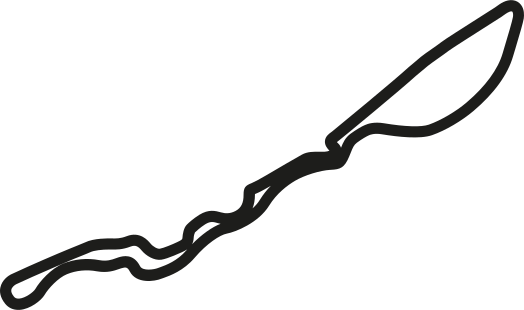
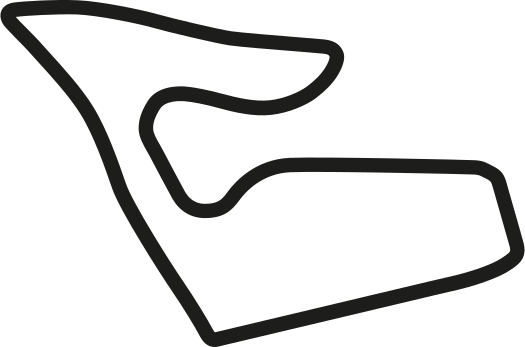
The 1964 season marked the high point of Bandini’s Formula One career. He won the inaugural Austrian Grand Prix at Zeltweg and added podium finishes in Germany and Italy, ultimately finishing fourth in the World Drivers’ Championship.
At the season-ending Mexican Grand Prix, Bandini was running second when he deliberately allowed teammate John Surtees to pass, ensuring Surtees scored the points needed to secure the World Championship. The moment cemented Bandini’s reputation as a loyal Ferrari driver and consummate team player.
In 1965, Bandini added another major success to his résumé by winning the Targa Florio.
Team Leader and Near Misses
In 1966, Ferrari’s season was disrupted when John Surtees left the team mid-year. Bandini was promoted to team leader and shouldered the responsibility with maturity and speed. He dominated both the French and United States Grands Prix, only to lose near-certain victories due to mechanical failures while holding commanding leads.
His best Formula One result that year was second place at the Monaco Grand Prix, finishing behind Jackie Stewart’s BRM in his 2.4-litre V6 Ferrari.
That same season, Bandini played an important role behind the scenes in John Frankenheimer’s film Grand Prix. He advised on realism and suggested the harbour chicane as the location for a dramatic crash scene. In a tragic coincidence later noted by actress Eva Marie Saint, that very corner would become the site of Bandini’s fatal accident one year later. Grand Prix went on to win three Academy Awards and remains celebrated for its authenticity—an authenticity to which Bandini significantly contributed.
Final Triumphs
In early 1967, Bandini returned to winning form in endurance racing. Partnered with Chris Amon, he won the 24 Hours of Daytona and the 1000 km of Monza, reaffirming his status as one of Ferrari’s most complete drivers.
Accident and Death
On 7 May 1967, during the Monaco Grand Prix, Bandini was running second behind Denny Hulme when disaster struck on lap 82. Entering the harbour chicane, his Ferrari 312 lost control after its left rear wheel struck the guard rail. The car skidded violently, hit a light pole, overturned, and slammed into the straw bales lining the circuit, trapping Bandini beneath it.
Fuel—either from a ruptured tank or leaking onto hot components—ignited, and the car burst into flames. Bandini was pulled from the wreck unconscious. A second fire erupted shortly afterwards when the fuel reignited.
Despite having suffered only one minor accident earlier in his career, Bandini sustained catastrophic injuries: third-degree burns over more than 70% of his body, severe chest trauma, and multiple fractures. He died three days later on 10 May 1967 at the Princess Grace Polyclinic Hospital in Monte Carlo. He was 31 years old.
Investigators later ruled that the rescue operation had functioned appropriately, though concerns were raised at the time. Straw bales were immediately banned from Formula One circuits, and at Monaco they were replaced by extended guard rails for the following year.
Funeral
Bandini’s funeral was held on 13 May 1967 in Reggiolo and drew an estimated crowd of 100,000 mourners. He was later laid to rest in Milan’s Lambrate Cemetery.
Lorenzo Bandini Formula One World Championship career
| F1 Career | 1961–1967 |
|---|---|
| Teams | Centro Sud, Ferrari |
| Entries | 42 |
| Championships | 0 |
| Wins | 1 |
| Podiums | 8 |
| Career points | 58 |
| Pole positions | 1 |
| Fastest laps | 2 |
| First entry | 1961 Belgian Grand Prix |
| First win | 1964 Austrian Grand Prix |
| Last win | 1964 Austrian Grand Prix |
| Last entry | 1967 Monaco Grand Prix |
Lorenzo Bandini Teammates
| 12 drivers | Involvement | First Year | Last Year |
|---|---|---|---|
| Massimo Natili | 2 | 1961 | |
| Ricardo Rodriguez | 4 | 1962 | |
| Willy Mairesse | 3 | 1962 | |
| Phil Hill | 4 | 1962 | |
| Giancarlo Baghetti | 3 | 1962 | |
| Mario de Araujo Cabral | 1 | 1963 | |
| John Surtees | 26 | 1963 | 1966 |
| Ludovico Scarfiotti | 6 | 1964 | 1967 |
| Pedro Rodriguez | 1 | 1964 | |
| Nino Vaccarella | 1 | 1965 | |
| Mike Parkes | 5 | 1966 | |
| Chris Amon | 1 | 1967 |
Lorenzo Bandini Wins
| Win No. | Grand Prix |
|---|---|
| 1 | 1964 Austrian Grand Prix |
Lorenzo Bandini Complete Formula One Results
| Year | Entrant | Chassis | Engine | 1 | 2 | 3 | 4 | 5 | 6 | 7 | 8 | 9 | 10 | 11 | WDC | Pts |
|---|---|---|---|---|---|---|---|---|---|---|---|---|---|---|---|---|
| 1961 | Scuderia Centro Sud | Cooper T53 | Maserati 6-1500 1.5 L4 | MON | NED | BEL Ret | FRA | GBR 12 | GER Ret | ITA 8 | USA | NC | 0 | |||
| 1962 | Scuderia Ferrari SpA SEFAC | Ferrari 156 | Ferrari 178 1.5 V6 | NED | MON 3 | BEL | FRA | GBR | GER Ret | ITA 8 | USA | RSA | 12th | 4 | ||
| 1963 | Scuderia Centro Sud | BRM P57 | BRM P56 1.5 V8 | MON | BEL | NED | FRA 10 | GBR 5 | GER Ret | 10th | 6 | |||||
| Scuderia Ferrari SpA SEFAC | Ferrari 156 | Ferrari 178 1.5 V6 | ITA Ret | USA 5 | MEX Ret | RSA 5 | ||||||||||
| 1964 | Scuderia Ferrari SpA SEFAC | Ferrari 156 | Ferrari 178 1.5 V6 | MON 10 | GBR 5 | GER 3 | AUT 1 | 4th | 23 | |||||||
| Ferrari 158 | Ferrari 205B 1.5 V8 | NED Ret | BEL Ret | FRA 9 | ITA 3 | |||||||||||
| North American Racing Team | Ferrari 1512 | Ferrari 207 1.5 F12 | USA Ret | MEX 3 | ||||||||||||
| 1965 | Scuderia Ferrari SpA SEFAC | Ferrari 1512 | Ferrari 207 1.5 F12 | RSA 15 | MON 2 | BEL 9 | FRA 8 | ITA 4 | USA 4 | MEX 8 | 6th | 13 | ||||
| Ferrari 158 | Ferrari 205B 1.5 V8 | GBR Ret | NED 9 | GER 6 | ||||||||||||
| 1966 | Scuderia Ferrari SpA SEFAC | Ferrari 246 | Ferrari 228 2.4 V6 | MON 2 | BEL 3 | 9th | 12 | |||||||||
| Scuderia Ferrari SpA SEFAC | Ferrari 312/66 | Ferrari 218 3.0 V12 | FRA NC | GBR | NED 6 | GER 6 | ITA Ret | USA Ret | MEX | |||||||
| 1967 | Scuderia Ferrari SpA SEFAC | Ferrari 312/67 | Ferrari 242 3.0 V12 | RSA | MON Ret | NED | BEL | FRA | GBR | GER | CAN | ITA | USA | MEX | NC | 0 |