




























The Bugesera Circuit is a new purpose-built Formula 1 racing venue being developed in Rwanda, approximately 40 kilometres south of the capital, Kigali. The circuit is expected to host the inaugural Formula 1 African Grand Prix in the early 2030s, marking the sport’s return to Africa for the first time since the 1993 South African Grand Prix at Kyalami.
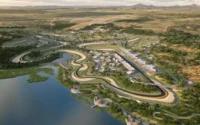
Located in Bugesera, in Rwanda’s Eastern Province, the circuit will be constructed next to the new Kigali International Airport and developed to FIA Grade 1 standards, the highest safety and infrastructure classification for international motor racing. The track is being designed to incorporate the natural elevation changes of the surrounding landscape, reflecting Rwanda’s reputation as the Land of a Thousand Hills.
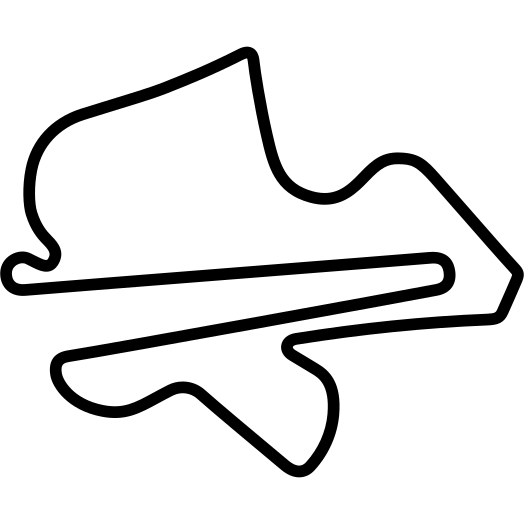
The circuit’s design is a collaboration between WurzDesign, headed by former Formula 1 driver Alex Wurz, and Tilke Engineers and Architects, the German company responsible for numerous modern Formula 1 venues, including Malaysia’s Sepang International Circuit. Although the final layout, circuit length and number of corners have yet to be confirmed, the project aims to create a challenging permanent racing facility capable of hosting international motorsport throughout the year.
On 13 October 2026, Formula 1 announced a landmark 10-year agreement for the Formula 1 African Grand Prix, presented by Visit Rwanda. The announcement followed Rwanda’s formal expression of interest in hosting a Grand Prix in December 2024, when the country welcomed the FIA Awards Ceremony in Kigali.
Formula 1 President and CEO Stefano Domenicali welcomed the agreement, explaining that the championship had been working towards a long-term return to Africa with a partner capable of delivering a sustainable event and lasting benefits for the region.
Rwandan President Paul Kagame described the announcement as a historic moment for Africa, highlighting the opportunities the new circuit could create for tourism, employment, infrastructure and motorsport development across the continent.
The new venue will form part of a wider development programme led by the Rwanda Development Board, with plans for international motorsport events, conferences and other commercial activities beyond the annual Formula 1 race weekend.
Bugesera Circuit
| First Grand Prix | African Grand Prix (early 2030s, TBC) |
| Number of Laps | TBC |
| Circuit Length | 5.302km (final design, TBC) |
| Race Distance | TBC |
| Lap Record | Not yet established |
Circuit
When was the Bugesera Circuit built?
Plans for a new Formula 1 circuit in Rwanda emerged as part of the country’s wider ambitions to establish itself as a major destination for international sport. Discussions about bringing the championship back to Africa had been ongoing for several years, with potential hosts across the continent expressing interest in staging a Grand Prix.
Rwanda formally announced its intention to host a Formula 1 race in December 2024, when Kigali staged the FIA Awards Ceremony. The event brought leading figures from international motorsport to the country, including four-time World Champion Max Verstappen, who received his championship trophy following the 2024 F1 World Championship.
Following further negotiations between Formula 1, the Rwandan government and the Rwanda Development Board, a 10-year agreement was officially announced on 13 October 2026. The deal confirmed that the country would host the African Grand Prix once its new purpose-built circuit was completed, with the first race expected in the early 2030s.
The site selected for the project is in Bugesera, approximately 40 kilometres south of Kigali and adjacent to the new Kigali International Airport. Its location has been chosen as part of a broader infrastructure and commercial development strategy, with improved international access intended to support the arrival of Formula 1 teams, personnel and spectators.
The circuit is being designed jointly by WurzDesign and Tilke Engineers and Architects. Former Formula 1 driver Alex Wurz heads WurzDesign, bringing his experience of competing at the highest level of motorsport to the project. Tilke’s previous Formula 1 circuit projects include Sepang in Malaysia, Bahrain International Circuit and Shanghai International Circuit.
One of the defining features of the proposed Bugesera Circuit is its integration with the natural topography. Rather than building an entirely flat racing surface, the designers intend to use the surrounding elevation changes to create an undulating layout with a combination of challenging corners and changes in gradient.
The track will be constructed to FIA Grade 1 standards, allowing it to host Formula 1 and other major international racing championships. The final circuit length, number of corners, direction of travel and detailed track configuration had not been publicly confirmed when the agreement was announced in October 2026.
Beyond Formula 1, the permanent venue is intended to operate throughout the year, accommodating international motorsport competitions, major events and conferences. An exact construction timetable and opening date have yet to be announced.
Is the Bugesera Circuit environmentally sustainable?
Environmental sustainability has been identified as an important part of the Bugesera Circuit project, reflecting Formula 1’s wider commitment to achieving net-zero carbon emissions by 2030. The agreement was presented as a long-term investment intended to deliver benefits beyond the Grand Prix itself.
The circuit forms part of a wider sports, tourism, infrastructure and commercial development programme led by the Rwanda Development Board. Rather than serving exclusively as a Formula 1 venue, the facility is intended to remain active throughout the year, hosting other motorsport championships, conferences and international events.
The planned location next to the new Kigali International Airport is expected to provide convenient access for international visitors and Formula 1’s extensive freight and logistical operations. The circuit’s proximity to Kigali, approximately 40 kilometres away, also places it within reach of the country’s main hospitality and tourism facilities.
Designers are working with the natural landscape to incorporate the area’s existing elevation changes into the layout. The intention is to create a distinctive circuit that takes advantage of its surroundings while meeting modern Formula 1 safety and infrastructure requirements.
However, specific environmental measures, including renewable energy provision, water management, sustainable construction materials and spectator transport arrangements, had not been publicly detailed as of October 2026. The project’s overall environmental performance will depend on the final design, construction process and long-term operation of the venue.
When was the first African Grand Prix?
Although Rwanda is set to host the first Formula 1 event carrying the African Grand Prix name, the continent has a long history of Grand Prix racing. South Africa previously hosted World Championship races between 1962 and 1993, initially at East London’s Prince George Circuit before the event moved to the famous Kyalami Circuit.
The first Formula 1 World Championship race in Africa was the 1962 South African Grand Prix, held at the East London-Prince George Circuit on 29 December 1962. The race was won by Graham Hill driving for BRM, securing the British driver’s first World Championship title.
The South African Grand Prix moved to Kyalami in 1967, beginning an association with Formula 1 that lasted across several decades. The circuit became renowned for its fast, sweeping corners, dramatic elevation changes and demanding layout, hosting some of the sport’s most memorable races.
Among the highlights was the 1975 South African Grand Prix, when local hero Jody Scheckter claimed victory driving for Tyrrell. The race remains one of the most celebrated moments in South African motorsport history, with Scheckter becoming the first South African driver to win his home World Championship Grand Prix.
Formula 1’s presence in South Africa was interrupted after the 1985 race, amid international sporting boycotts associated with the country’s apartheid system. The championship eventually returned to Kyalami in 1992, when Nigel Mansell dominated the race for Williams.
The final Formula 1 World Championship race on African soil took place on 14 March 1993. Four-time World Champion Alain Prost won the 1993 South African Grand Prix for Williams, finishing ahead of Ayrton Senna in his McLaren and Mark Blundell in the Ligier.
Despite numerous discussions about returning Formula 1 to Africa in subsequent decades, the championship remained absent from the continent. Kyalami was repeatedly mentioned as a potential host, but negotiations failed to produce a confirmed return.
Seven-time World Champion Lewis Hamilton became one of the most prominent advocates for bringing Formula 1 back to Africa, repeatedly encouraging the sport’s leadership to prioritise the continent. Max Verstappen and George Russell also publicly supported the prospect of an African Grand Prix.
With Rwanda securing a 10-year hosting agreement in October 2026, the Bugesera Circuit is set to become the first venue in Rwanda to stage a Formula 1 World Championship race. Its anticipated debut in the early 2030s will end an absence of nearly four decades and make Rwanda the second African country to host a Formula 1 World Championship Grand Prix.
Bugesera Circuit lap record
As of October 2026, the Bugesera Circuit has not established an official Formula 1 lap record, as the venue remains in the design and development stages ahead of its planned debut in the early 2030s.
The circuit’s final layout, length and number of corners have yet to be confirmed, meaning projected qualifying and race lap times are not currently available. An official Formula 1 race lap record will only be established once the circuit hosts its first World Championship Grand Prix.
Until then, the final Formula 1 race held in Africa remains the 1993 South African Grand Prix at Kyalami, won by Alain Prost for Williams.