
































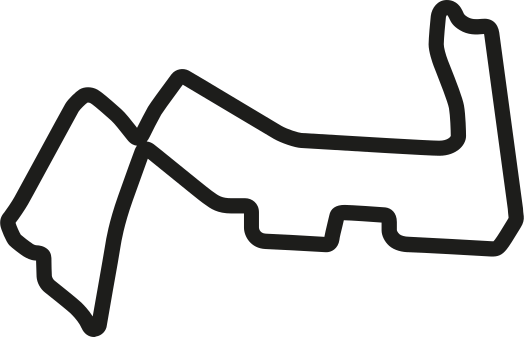

Formula 1 has officially confirmed its long-awaited return to the African continent, with Rwanda set to join the World Championship calendar in the early 2030s.
The historic agreement will see the East African nation host the Formula 1 African Grand Prix, presented by Visit Rwanda, under a 10-year contract.
It marks a significant milestone for the sport, which has not staged a World Championship race in Africa since the 1993 South African Grand Prix at Kyalami.
The announcement was made on Tuesday, 13 October 2026, during a ceremony in Rwanda’s capital, Kigali, attended by President Paul Kagame.
African Grand Prix
Bugesera Circuit

Laps TBC
First Grand Prix 2030s
Circuit Length 5.302km (final design, TBC)
Race Distance TBC
A Brand-New Circuit Near Kigali
The African Grand Prix will take place at a purpose-built circuit in Bugesera, approximately 40 kilometres south of Kigali.
The new facility will be developed specifically to accommodate Formula 1, with the inaugural race expected to take place in the early 2030s once construction has been completed and the venue is ready to host the championship.
Although an exact debut date has yet to be announced, Formula 1 has released an initial digital rendering showcasing the proposed circuit.
Further information regarding the track’s development, construction timetable and race weekend arrangements will be revealed in the coming years.
The project represents a major long-term investment in Rwanda’s sporting infrastructure and the country’s ambitions to establish itself as a destination for international sporting events.
Rwanda Celebrates a Landmark Moment for African Motorsport
Rwandan President Paul Kagame welcomed the announcement as a defining moment for both his country and the wider African continent.
“Today belongs to Africa. For more than three decades, the world’s premier motorsport championship has raced without this continent,” Kagame said.
“Rwanda is proud to host the Formula 1 African Grand Prix, and to share this moment with more than 100 million fans across Africa.”
Rwanda first publicly announced its intention to bring Formula 1 to the country in December 2024, coinciding with its hosting of a major FIA gathering.
Nearly two years later, those ambitions have resulted in a formal agreement to bring the world’s premier single-seater racing championship back to African soil.
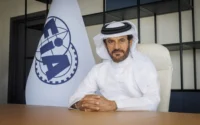
FIA President Mohammed Ben Sulayem described the agreement as a historic development for motorsport, highlighting the opportunities it could create for future generations of African racing talent.
Beyond staging a Grand Prix, the project is intended to support motorsport development, encourage participation and create opportunities across the continent.
Formula 1 President and CEO Stefano Domenicali also welcomed the agreement, emphasising the importance of securing a long-term partnership capable of delivering a sustainable future for the event.
Lewis Hamilton’s Campaign for an African Grand Prix
One of the most prominent supporters of Formula 1’s return to Africa has been seven-time World Champion Lewis Hamilton.
For several years, Hamilton has publicly called for the championship to restore an African race to its calendar, repeatedly highlighting the continent’s absence from the sport’s global expansion.
Speaking ahead of the 2026 Singapore Grand Prix, Hamilton again expressed his enthusiasm for a potential African event.
“It is, for me, the most important continent, to be honest, the most beautiful continent. We’re on all the other continents but that one and there should be no reason for it,” Hamilton said.
The British driver also revealed that he had been discussing the possibility of an African Grand Prix with Stefano Domenicali behind the scenes.
Hamilton praised the Formula 1 chief executive for travelling to Africa and holding discussions with potential partners in an effort to make the championship’s return a reality.
With Rwanda now confirmed as a future host, one of Hamilton’s longest-standing ambitions for the sport is finally moving towards reality.
Formula 1’s Long History in Africa
For F1 History books, the return of an African Grand Prix is particularly significant given the continent’s established place in the championship’s past.
Africa has previously hosted numerous World Championship races, most famously in South Africa.
The South African Grand Prix first counted towards the Formula 1 World Championship in 1962, when East London hosted the event.
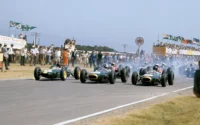
Kyalami subsequently became synonymous with Formula 1 racing in Africa, hosting many memorable Grands Prix between 1967 and 1993.
The circuit witnessed some of the sport’s most important historical moments, including championship battles, dramatic victories and significant developments in Formula 1’s safety history.
The final African round of the World Championship took place at Kyalami on 14 March 1993.
Alain Prost won the race for Williams, ahead of Ayrton Senna‘s McLaren, with Mark Blundell completing the podium for Ligier.
Despite repeated discussions and proposals to restore the South African Grand Prix in the decades that followed, Formula 1 never secured a lasting agreement to return.
Rwanda’s successful bid now offers the prospect of ending that absence after almost 40 years.
How Will Rwanda Fit Into the Formula 1 Calendar?
Formula 1 already has a substantial international schedule, with 24 races confirmed for the 2027 season.
However, several existing Grand Prix contracts are due to expire before the end of the decade, potentially creating opportunities for new venues to enter the championship.
Portugal is scheduled to return to the calendar in 2027 under a two-year agreement, while the current contracts for Mexico City and Singapore run through 2028.
Japan’s existing agreement extends through 2029.
With Rwanda not expected to stage its first Grand Prix until the early 2030s, Formula 1 has time to determine how the new event will fit into its evolving calendar.
Once the African Grand Prix makes its debut, Formula 1 will have races across all six inhabited continents, strengthening the championship’s worldwide presence.
Rwanda’s Sporting Partnerships and Wider Scrutiny
Rwanda has become increasingly involved in international sport through its Visit Rwanda tourism initiative, establishing commercial relationships with several major European football clubs.
These partnerships have included Arsenal, Paris Saint-Germain, Bayern Munich and Aston Villa.
However, the country’s sports sponsorship strategy has also attracted criticism from human rights organisations.
Amnesty International has raised concerns about Rwanda’s human rights record and the use of high-profile sporting partnerships to promote the country’s international image.
The Democratic Republic of Congo has also accused Rwanda of supporting armed rebel groups and has previously called on football clubs to reconsider their commercial relationships with the country.
Rwanda has faced international scrutiny over these allegations, which form part of the wider political context surrounding its growing involvement in global sport.
The announcement of a Formula 1 Grand Prix is therefore likely to bring increased attention not only to Rwanda’s sporting ambitions but also to the broader issues associated with hosting major international events.
A New Chapter in Formula 1 History
The confirmation of a Rwandan Grand Prix marks one of the most significant geographical developments in Formula 1’s modern era.
From East London in the 1960s to the famous Kyalami circuit, Africa has played an important role in the championship’s history, producing memorable races and moments that remain part of the sport’s legacy.
Now, more than three decades after Alain Prost claimed victory at the continent’s last World Championship race, Formula 1 is preparing to write another chapter in its African history.
There are still questions to be answered about the Bugesera circuit, the exact date of the inaugural Grand Prix and how Rwanda will integrate into the championship’s increasingly competitive calendar.
Nevertheless, the signing of a 10-year agreement represents a major step towards restoring Africa’s place on the Formula 1 calendar.
For the first time since 1993, the prospect of a Formula 1 World Championship race in Africa has moved from ambition to an officially confirmed long-term agreement.
Formula One History will continue to follow the development of the Rwanda Grand Prix as further details emerge.
Seen in: