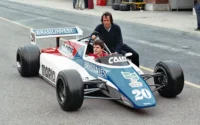






















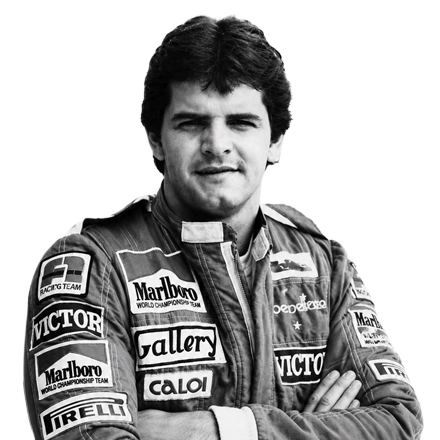
Francisco Adolpho “Chico” Serra (born 3 February 1957) is a Brazilian racing driver who graduated from the European junior ranks to Formula One before building a hugely successful second career in Brazilian stock cars.
Driver Bio
| Nationality | Brazilian |
| Birthplace | Sao Paulo, Brazil |
| Born | 3 February 1957 |
| First Grand Prix | 1981 United States Grand Prix West |
| Last Grand Prix | 1983 Monaco Grand Prix |
| Years Active | 1981–1983 |
| Current/Last Team | Arrows |
Racing career
Serra announced himself on the international stage by winning the 1977 Formula Ford Festival, one of junior racing’s most fiercely contested events. Two years later he captured the 1979 British Formula 3 Championship, following fellow Brazilian Nelson Piquet, who had taken the crown the previous season.
Those performances attracted the attention of two-time Formula One World Champion Emerson Fittipaldi, himself a former British F3 champion. Fittipaldi signed Serra to his family’s Formula One operation, giving the young Brazilian his opportunity at the top level.
Serra made his Grand Prix debut alongside Keke Rosberg at Long Beach on 15 March 1981. He finished seventh – agonisingly close to the points and, tellingly, the best result Fittipaldi would achieve for the remainder of the season.
When Rosberg departed for Williams in 1982, the struggling Fittipaldi team scaled back to a single-car operation centred on Serra. At the Belgian Grand Prix he finished sixth, earning the first and only World Championship point of his Formula One career.
The season wasn’t without fireworks. During qualifying for the Canadian Grand Prix, Serra became furious with fellow Brazilian Raul Boesel, believing Boesel had deliberately obstructed his final flying lap after allowing Rosberg through. The disagreement turned into a brief scuffle, although Boesel insisted there had been nothing intentional about the incident.
Fittipaldi’s lack of competitiveness also meant simply making the grid could be a battle. At the Swiss Grand Prix, Serra was the fastest driver not to qualify and appeared to have a route back into the race when Ferrari withdrew Patrick Tambay, who was unwell. Serra requested the vacant place, but the FIA ruled that Ferrari had notified officials of Tambay’s withdrawal too late for him to be admitted.
For 1983, Serra switched to Arrows. He recorded three top-ten finishes from his opening four appearances with the team, but his stay proved short-lived. Following the Monaco Grand Prix he was released and replaced by Thierry Boutsen. It brought Serra’s Formula One adventure to an end after 33 World Championship Grand Prix appearances.
There was a brief taste of American single-seater racing in 1985 when Serra made his only CART start at Portland International Raceway with Ensign Racing. His race was cut short by engine failure.
Stock car success
If Formula One had offered only flashes of success, racing back home proved considerably more rewarding. Serra competed in Brazilian stock car racing from the 1980s and established himself as one of the country’s leading drivers.
He won the Mil Milhas Brasil in 1981 and, much later in his career, enjoyed a remarkable run in Stock Car Brasil. Serra claimed three consecutive championships in 1999, 2000 and 2001 – more than two decades after his breakthrough victories in European junior racing.
Senna friendship
Serra was also a close friend of Ayrton Senna, with the pair progressing through motorsport at around the same time. Serra played a small but important role in Senna’s early career, recommending him to Ralph Firman for a place in his Formula Ford 1600 team in 1981.
Their friendship made Serra’s decision not to attend Senna’s funeral in 1994 particularly striking. Serra later explained that he was deeply uncomfortable with what he regarded as the hypocrisy surrounding the occasion, believing some attendees were presenting themselves as closer to Senna than they really had been and using the tragedy for their own benefit.
Motorsport continued into another generation of the Serra family. Chico is the father of racing driver Daniel Serra, ensuring that one of Brazil’s enduring racing names remained firmly attached to the track.
Grand Prix Stats
| Race Entries | 33 |
| Race Starts | 18 |
| Did Not Start | 1 |
| Best Race Start | 15th |
| Best Race Finish | 6th |
| Retirements | 7 |
| First-Lap Retirements | 1 |
| Not Classified | 0 |
| Disqualified | 0 |
| Did Not Qualify | 13 |
Qualifying
| Qualifying Sessions | 33 |
| Reached Q3 | 0 |
| Q2 Eliminations | 0 |
| Q1 Eliminations | 0 |
| Did Not Qualify | 13 |
Points
| Points Scored | 1 |
| Points Finishes | 1 |
| Most Points in a Single Season | 1 |
| Seasons with Points | 1 |
Stats by Season
| Year | Constructor | Entries | Starts | Wins | Podiums | Poles | Fastest Laps | Front Rows | DNF | Best Start | Best Result | Pts Finishes | Points | Championship |
|---|---|---|---|---|---|---|---|---|---|---|---|---|---|---|
| 1981 | Fittipaldi | 14 | 5 | 0 | 0 | 0 | 0 | 0 | 3 | 18 | 7 | 0 | 0 | NC |
| 1982 | Fittipaldi | 15 | 9 | 0 | 0 | 0 | 0 | 0 | 3 | 19 | 6 | 1 | 1 | 26th |
| 1983 | Arrows | 4 | 4 | 0 | 0 | 0 | 0 | 0 | 1 | 15 | 7 | 0 | 0 | NC |
Stats by Constructor
| Constructor | Years | Entries | Starts | Wins | Podiums | Poles | Fastest Laps | Front Rows | DNF | Best Start | Best Result | Pts Finishes | Points |
|---|---|---|---|---|---|---|---|---|---|---|---|---|---|
| Fittipaldi | 1981–1982 | 29 | 14 | 0 | 0 | 0 | 0 | 0 | 6 | 18 | 6 | 1 | 1 |
| Arrows | 1983 | 4 | 4 | 0 | 0 | 0 | 0 | 0 | 1 | 15 | 7 | 0 | 0 |
Teammates & Qualifying Head-to-Head
| Teammate | Years | Races | Qualifying H2H |
|---|---|---|---|
| Keke Rosberg | 1981 | 14 | 0–14 |
| Marc Surer | 1983 | 4 | 0–4 |