
































Sponsored by

Formula 1 teams have changed names, colours and sponsors countless times, but some of those logos have survived almost everything the sport has thrown at them. Ferrari’s Prancing Horse, the Lotus roundel and McLaren’s evolving badge are now instantly recognisable far beyond the paddock.
For fans, those logos are about more than identifying the car on track. They become attached to drivers, victories, championships and particular eras of Formula 1 history. The same goes for famous racing numbers, helmet designs and the badges and pins fans have collected along the way.
That connection between motorsport identity and memorabilia has existed for decades. Today, everything from vintage badges to modern custom enamel pins gives fans a small, physical reminder of the teams and drivers they followed.
How F1 team logos became part of motorsport history
Some Formula 1 logos were created by marketing departments. Others have roots stretching back to a time before the Formula 1 World Championship even existed.
Ferrari, Lotus and McLaren are three good examples. Their badges developed for very different reasons, but each eventually became closely associated with the identity of the team itself.
Ferrari and the Prancing Horse
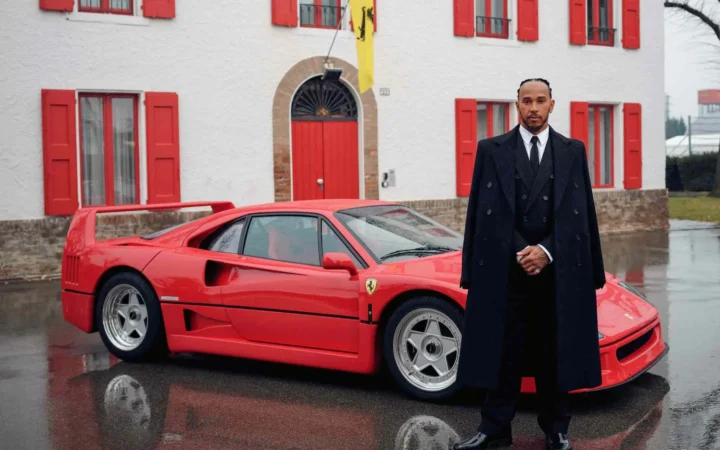
Few logos in motorsport carry as much history as Ferrari’s Cavallino Rampante.
The black Prancing Horse had originally been used by Italian First World War flying ace Francesco Baracca on his aircraft. Enzo Ferrari later recalled meeting Baracca’s parents after winning at the Savio Circuit in Ravenna in 1923. Baracca’s mother, Countess Paolina, suggested that Ferrari use her son’s horse on his cars for good luck.
Ferrari added a yellow background, representing his home city of Modena, and the emblem first appeared on Scuderia Ferrari racing cars in the early 1930s.
What followed turned a personal emblem into one of racing’s most famous symbols. Ferrari entered the inaugural Formula 1 World Championship in 1950 and has remained part of it ever since. Generations of drivers, from Alberto Ascari and Niki Lauda to Michael Schumacher and the modern team, have raced beneath the same horse.
For the Tifosi, it became inseparable from Ferrari itself.
Lotus and Colin Chapman’s monogram
The Team Lotus badge took a more personal route.
At the top of the familiar green and yellow roundel are the intertwined letters ACBC, representing the initials of Lotus founder Anthony Colin Bruce Chapman.
Chapman’s approach to racing was built around making cars lighter, simpler and more innovative than the opposition. Under his leadership, Lotus became one of the defining Formula 1 teams of the 1960s and 1970s, winning championships with drivers including Jim Clark, Graham Hill, Jochen Rindt, Emerson Fittipaldi and Mario Andretti.
The colours associated with Lotus changed as commercial sponsorship became increasingly important. British Racing Green and yellow gave way to liveries such as the famous red, white and gold Gold Leaf cars and later the black and gold John Player Special machines.
The ACBC monogram remained.
That continuity helped turn the Lotus badge into a reminder of an entire philosophy of Formula 1 design rather than simply a team logo.
McLaren: from the Kiwi to the Speedmark
McLaren’s identity has changed far more visibly.
Bruce McLaren founded Bruce McLaren Motor Racing in 1963, and the team’s early imagery naturally reflected his New Zealand roots. The Kiwi became one of its first recognisable symbols before artist Michael Turner created the more dynamic “Speedy Kiwi” design later in the decade.
As McLaren developed from a small racing operation into one of Formula 1’s biggest teams, its visual identity changed with it. The familiar red-and-white period arrived during the team’s long association with Marlboro, while later designs became increasingly minimalist.
By the late 1990s, the Kiwi had long disappeared from the main badge. McLaren instead adopted the curved mark that developed into the modern Speedmark used today.
Look through McLaren memorabilia from different decades and the changing logos almost provide a timeline of the team by themselves.
When F1 badges became part of being a fan
Formula 1 merchandise looks very different today. Team shops sell replica clothing, caps, scale models and almost every other branded product imaginable.
Earlier generations of supporters had fewer choices.
Badges, patches, programmes and stickers were relatively simple ways to show support for a driver or constructor, and they also made ideal souvenirs from a Grand Prix weekend. Small enough to wear on a jacket or keep in a collection, they could survive long after the ticket stub and race programme had been put away.
That helped make metal badges particularly well suited to motorsport. A Ferrari shield, Lotus roundel or driver’s number was instantly identifiable without needing much space.
The same principle is behind modern custom enamel pins. While manufacturing methods have improved, the basic attraction has hardly changed: take an image associated with racing and turn it into something small enough to wear or collect.
Why driver numbers can matter as much as team logos
Team badges are only part of Formula 1’s visual history.
Certain numbers have become closely associated with individual drivers, particularly when they were used during memorable periods of their careers.
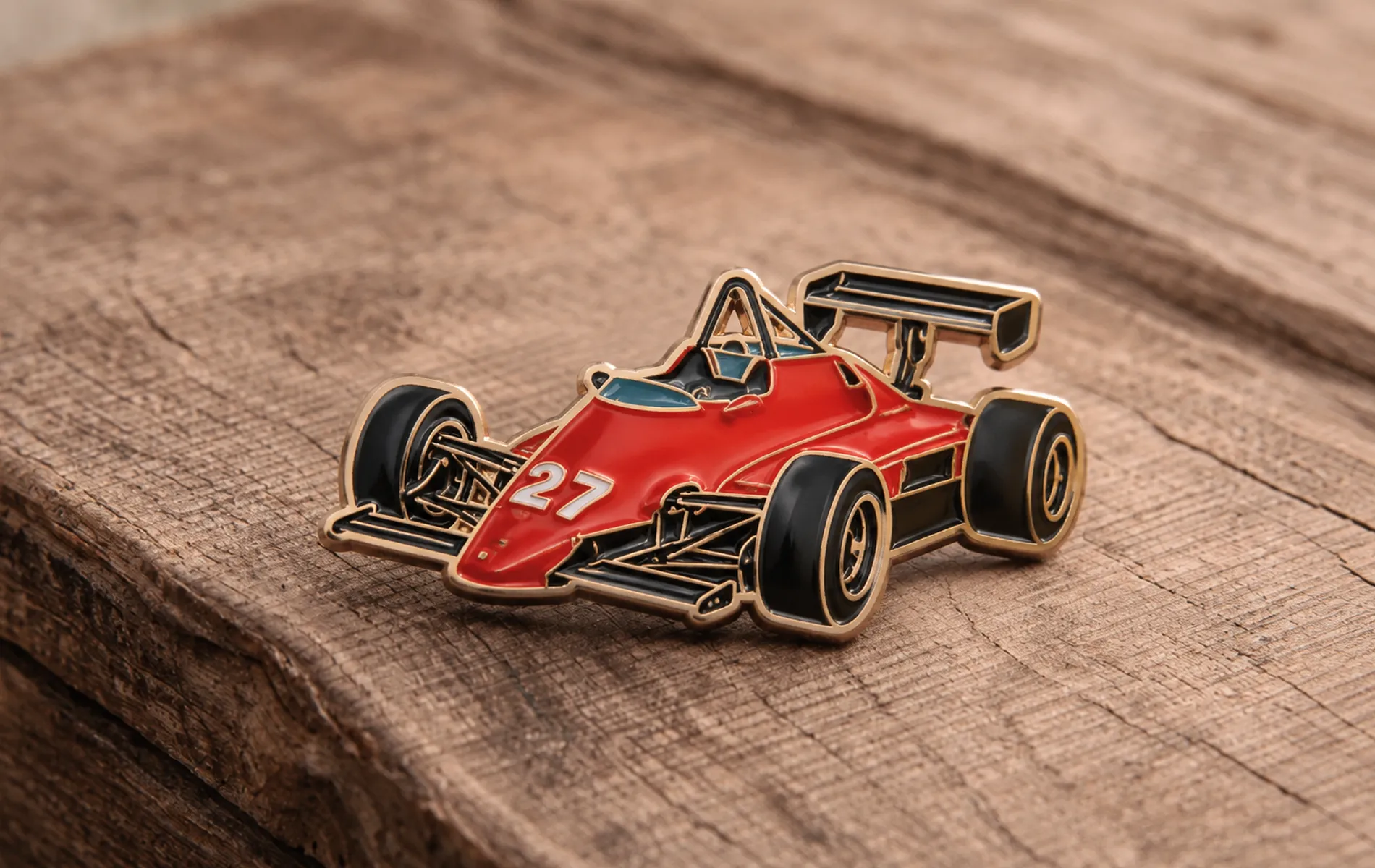
Gilles Villeneuve and Ferrari number 27 are perhaps the clearest example.
Villeneuve did not use 27 throughout his entire Formula 1 career, but the number became attached to him during his final seasons with Ferrari. His spectacular driving style, combined with his death during qualifying for the 1982 Belgian Grand Prix, gave the number an importance among Ferrari supporters that lasted long after his career ended.
Ayrton Senna provides another example. Number 12 is particularly associated with his Lotus years and the beginning of his McLaren career, while his yellow helmet became an even more recognisable part of his identity.
Modern Formula 1 has strengthened that connection.
Since drivers were allowed to select permanent racing numbers from the 2014 season, numbers such as Lewis Hamilton’s 44, Max Verstappen’s 33 and Lando Norris’s 4 have become part of each driver’s personal branding in a way that was less common under the old numbering systems.
It means fans don’t necessarily need a full team crest to make the connection. Sometimes one or two numbers are enough.
Why motorsport pins remain popular with collectors
There is no shortage of Formula 1 merchandise in the modern era, but pins occupy a slightly different part of the market.
A shirt or cap tends to belong to a particular season. Sponsors change, colour schemes are updated and new ranges replace the old ones. A small metal badge can be much less tied to the current championship.
That makes the format particularly useful for historic motorsport designs.
A badge based around an old racing number, a classic car silhouette or an original design inspired by a particular era can work as both something to wear and something to display. Collectors can keep them on boards and in cases, while fan clubs and motorsport groups can produce their own designs for events and anniversaries.
There is also considerably more freedom over quantity and design than there once was. Companies producing custom enamel pins can manufacture relatively small batches, making them practical for clubs, collectors, events and specialist souvenir sellers rather than only major teams.
There is an important distinction, though. Historic Formula 1 team logos and other commercial marks remain protected intellectual property. Anyone producing merchandise for sale needs to consider the relevant trademark and licensing rights rather than assuming an older logo is automatically free to reproduce.
Which types of lapel pin work best for motorsport?
Not every pin is made in the same way, and the manufacturing method affects both its appearance and its likely price.
For motorsport designs, the choice usually comes down to how much detail is required and whether the finished item is intended as an inexpensive souvenir or a more substantial collectible.
| Pin type | Typical retail range | Works well for | Typical buyer |
|---|---|---|---|
| Hard enamel | $15–$25+ | Detailed badges, heritage-inspired designs and premium collectibles | Collectors and gift buyers |
| Soft enamel | $5–$12 | Driver numbers, colourful graphics and event souvenirs | General fans and impulse buyers |
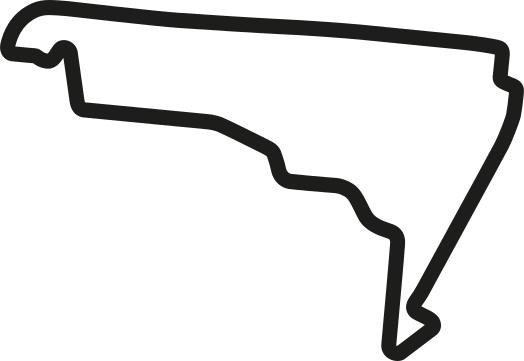
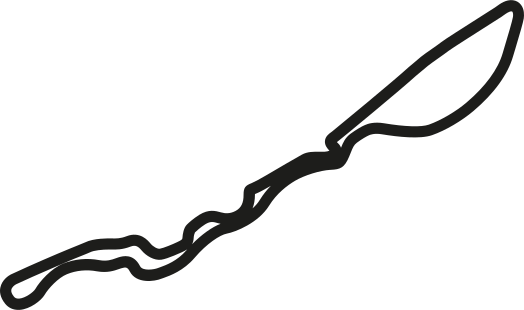
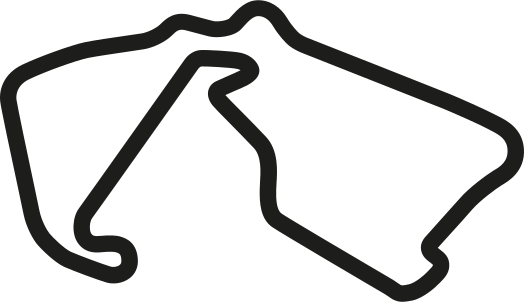
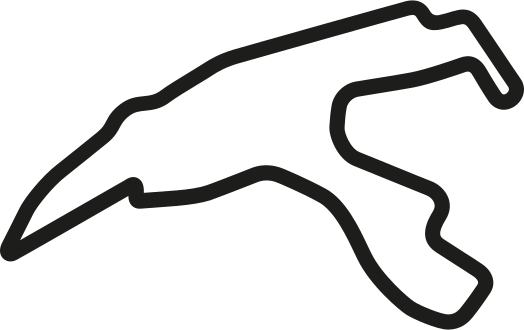
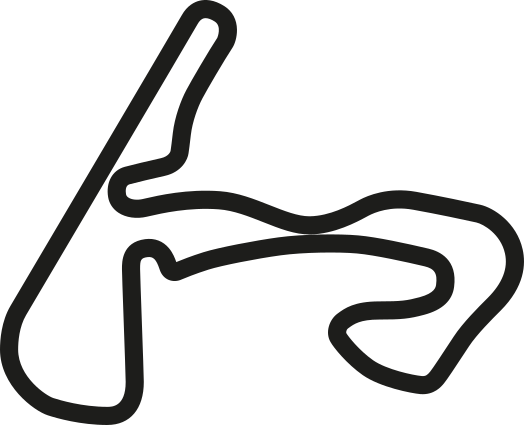
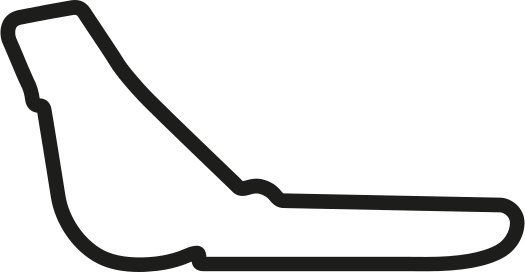
| Die-struck metal | $3–$8 | Car silhouettes, circuit outlines and simple monochrome designs | Fans looking for a traditional metal finish |
Hard enamel usually produces the smoother, more polished finish associated with premium pins. Soft enamel leaves the metal outlines slightly raised, which can suit colourful designs and is often more economical to produce.
Die-struck pins take another approach altogether. Rather than relying on colour, the design is pressed into the metal itself, making the method a good fit for circuit maps, racing-car profiles and other relatively simple artwork.
For souvenir shops, there is no single format that will always sell best. Price, location and the audience matter. A low-cost number badge at a race meeting serves a very different buyer from a limited-run heritage design aimed at an established collector.
How to collect and look after vintage F1 pins
Older Formula 1 badges can be surprisingly difficult to identify.
Unlike modern licensed merchandise, many historic pieces were produced by different manufacturers and sold through circuits, clubs or independent retailers. Documentation can therefore be limited.
When assessing an older badge, collectors generally look at the construction, fastening, manufacturer’s markings, materials and overall ageing. Genuine wear and patina can support a piece’s history, although condition alone is not proof of age.
Provenance is particularly useful. Original packaging, dated photographs, event programmes or information about where a badge was purchased can be more convincing than relying on appearance alone.
Once collected, pins are relatively easy to preserve. Keeping them dry and away from prolonged direct sunlight will help protect both the metal and enamel. Shadow boxes, display boards and dedicated cases also allow a collection to be displayed without leaving loose pins vulnerable to scratches or lost fasteners.
Why these small pieces of F1 history last
Formula 1 never stands still. Cars change, sponsors disappear, and even famous teams can come and go. The logos associated with them tend to last much longer.
A Prancing Horse, an old Lotus badge, or a famous racing number can bring an entire period of the sport back from memory. That’s why these designs continue to appear on collections, jackets and display boards decades after the cars themselves stopped racing.
The format might be small. The history behind it usually isn’t.
Seen in: