










































The Safety Car can erase a lead, change pit-stop calculations and transform a race. The vehicle at the front has a history as varied as the cars behind it. From Porsche to Fiat, Lamborghini to Renault, F1 has sent an extraordinary collection of road cars into the path of a Grand Prix field. Some were local choices; others were purpose-prepared.
What to know
- F1’s first race deployment of a safety car came at the wet 1973 Canadian Grand Prix, when Eppie Wietzes drove a Porsche 914.
- The Safety Car became a regular fixture at all race weekends in 1993; local organisers initially supplied different models.
- Mercedes began its official supplier era in 1996, shared duties with Aston Martin from 2021 to 2025, and has supplied every race again in 2026.
- The 2026 Mercedes-AMG GT 63 PRO 4MATIC+ debuted at Hungary as the 14th Mercedes F1 Safety Car model.
Safety Cars in F1 Ranked
| Rank | Safety car | F1 appearance | Why it stands out |
|---|---|---|---|
| 11 | Honda Prelude | 1994 Japanese Grand Prix | A road coupe amid Suzuka’s torrential rain |
| 10 | Ford Escort RS Cosworth | 1992–1993 British Grand Prix | Rally-bred character at Silverstone |
| 9 | Renault Clio | 1995–1996 | A tiny hatchback with a notorious Monaco incident |
| 8 | Lamborghini Diablo | 1995 Canadian Grand Prix | A supercar linked to Jean Alesi and his only win |
| 7 | Porsche 993 GT2 | 1995 Belgian Grand Prix | A wild 911 in a changeable Spa weekend |
| 6 | Aston Martin Vantage | 2021–2025 | British Racing Green and a five-season stint |
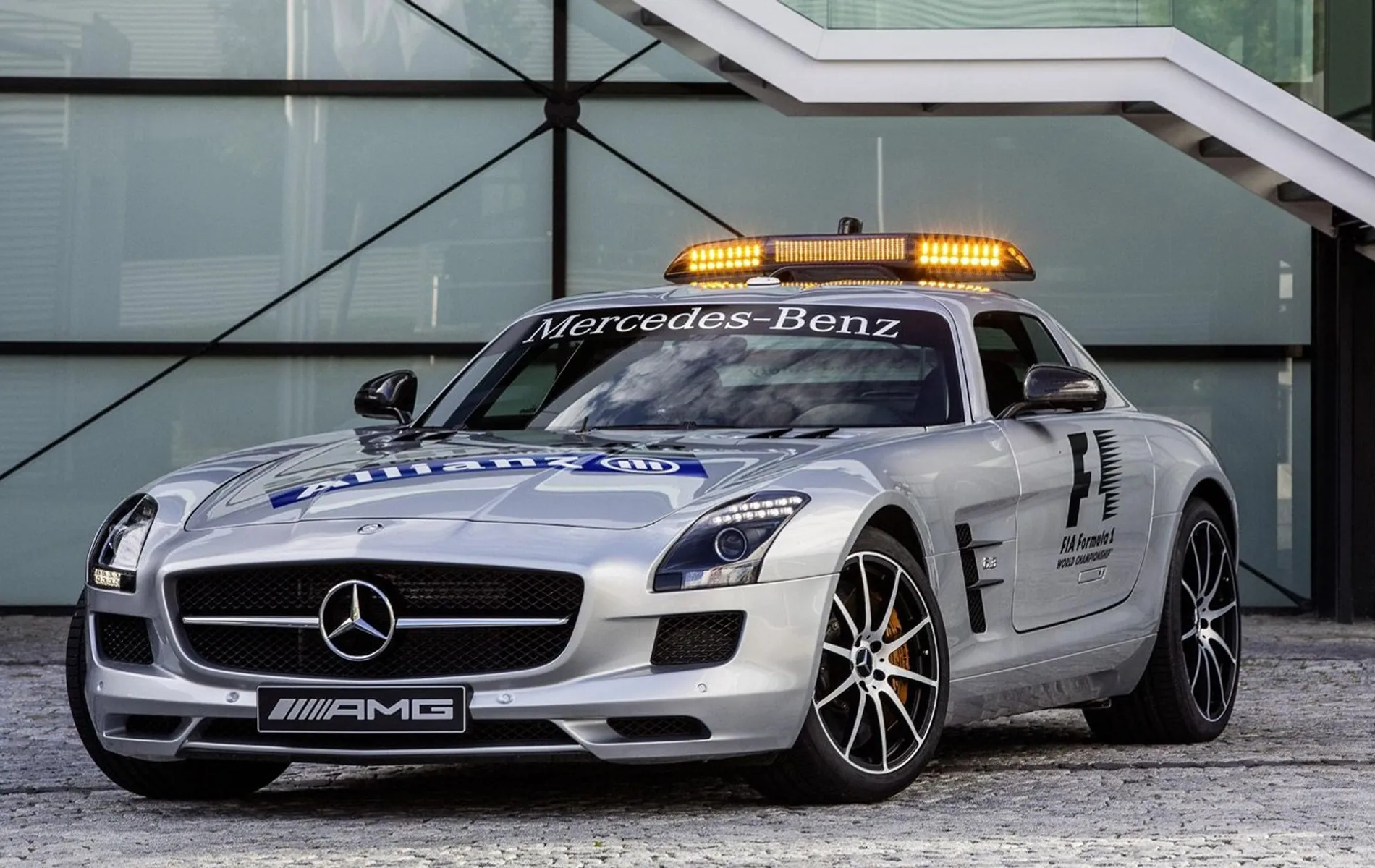
| 5 | Mercedes-Benz SLS AMG | 2010–2014 | Gullwing doors and the start of a new AMG look |
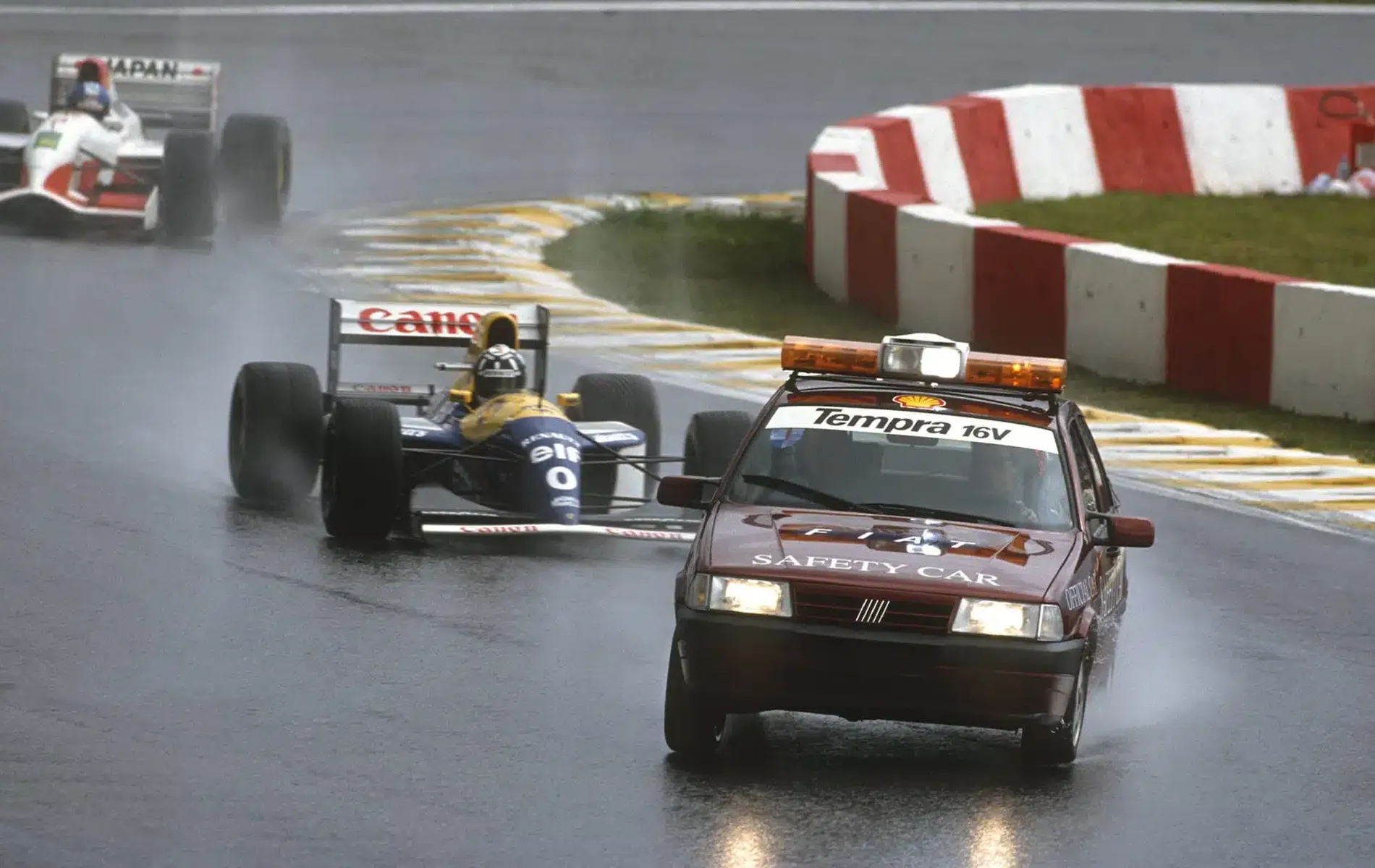
| 4 | Fiat Tempra | 1993 Brazilian Grand Prix | The unlikely car ahead of Senna at Interlagos |
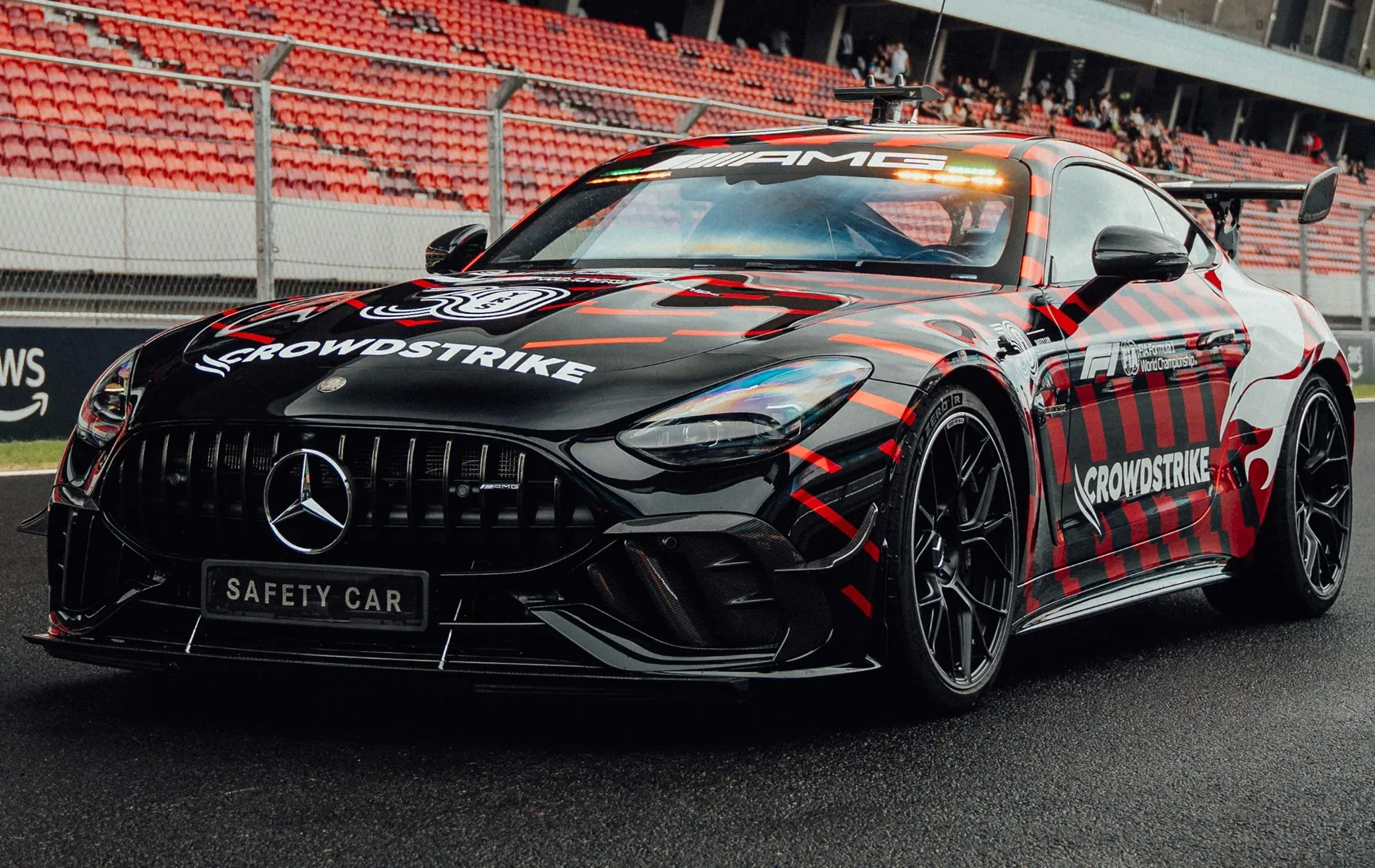
| 3 | Mercedes-AMG GT 63 PRO 4MATIC+ | From the 2026 Hungarian Grand Prix | The newest chapter, with all-wheel drive |
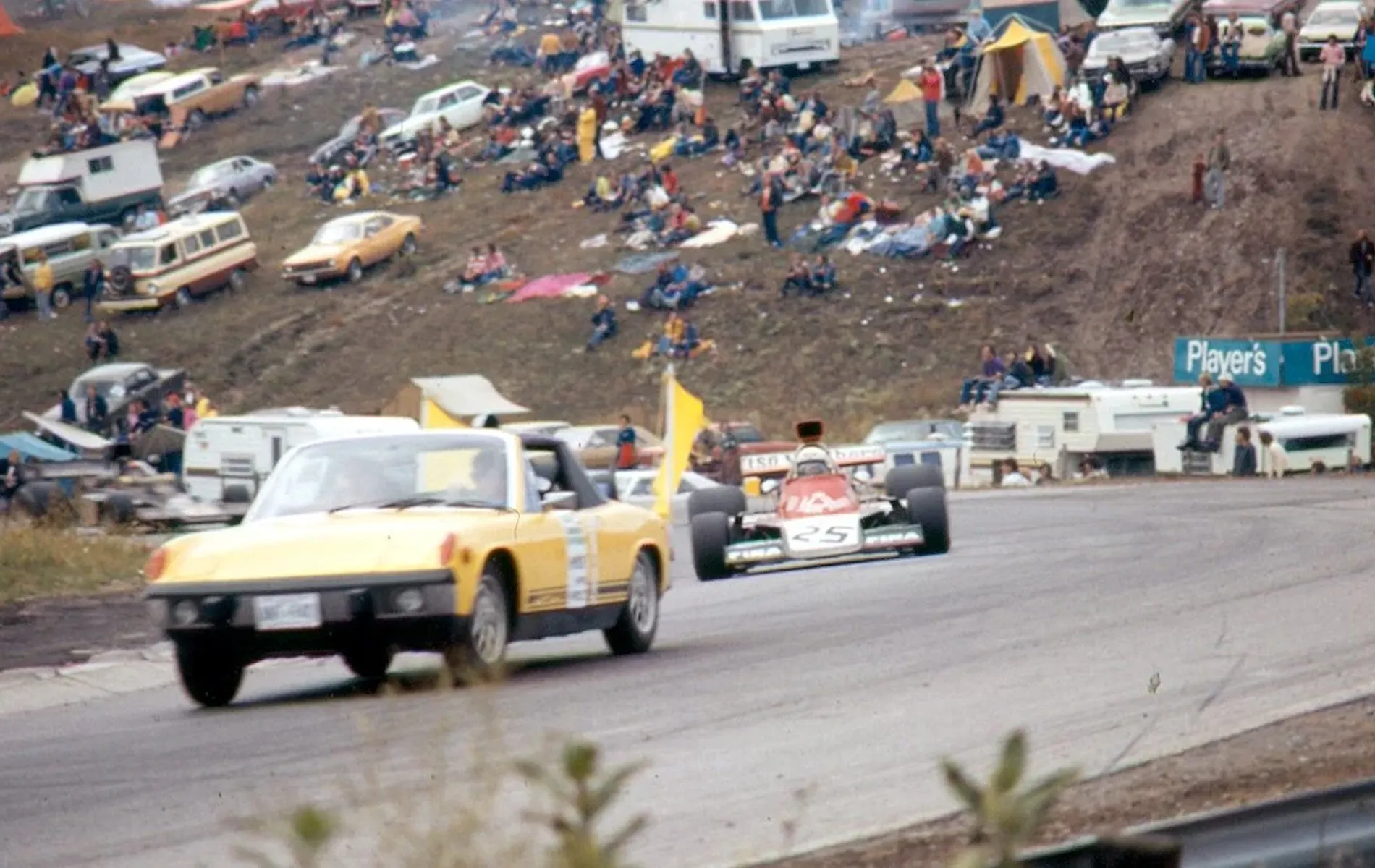
| 2 | Porsche 914 | 1973 Canadian Grand Prix | The car that started it all |
| 1 | Lamborghini Countach | 1981–1983 Monaco Grand Prix | Peak poster-car drama in Monte Carlo |
11. Honda Prelude – Japan, 1994
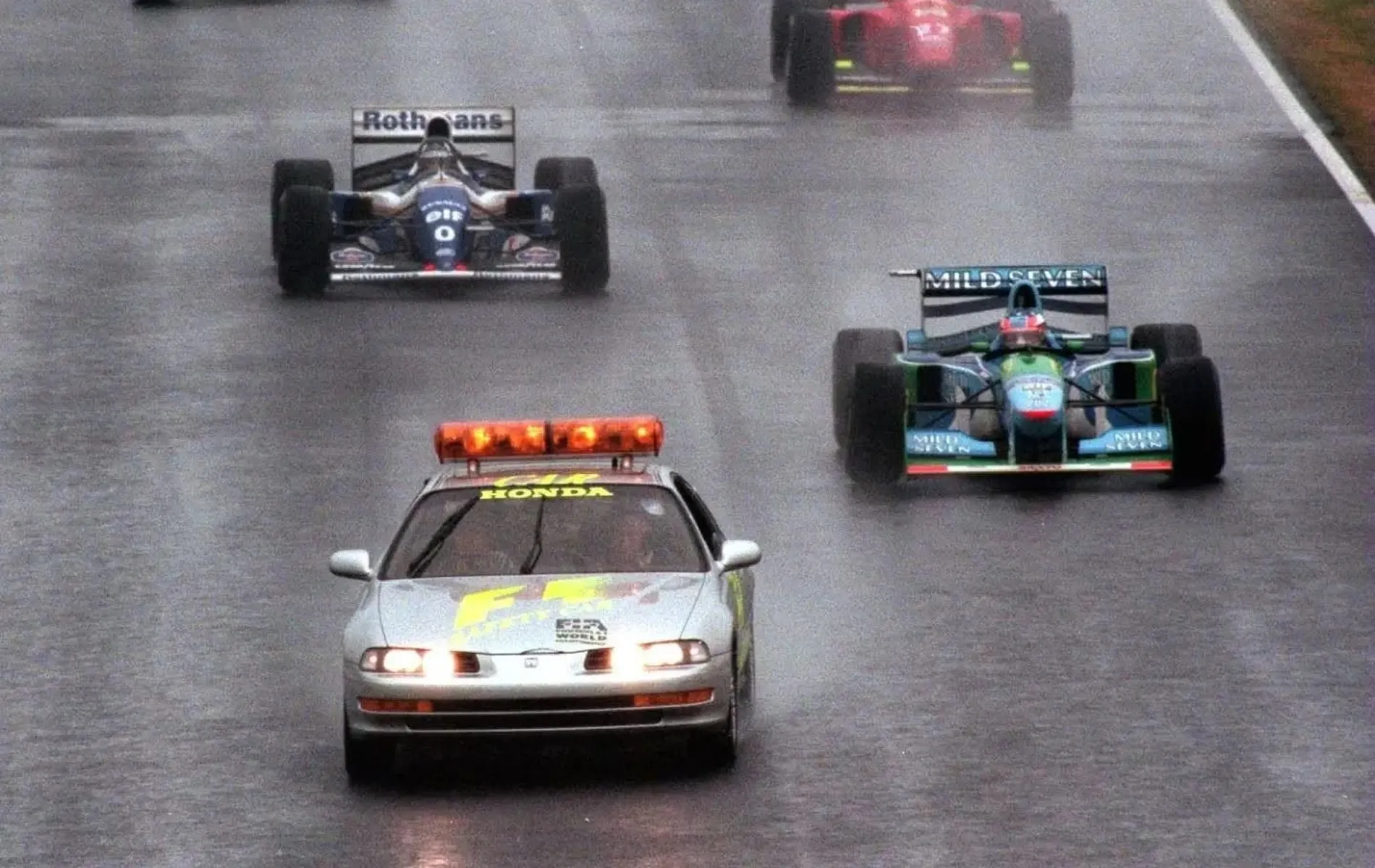
A Honda Prelude at Suzuka sounds improbable to fans raised on today’s dedicated AMG machinery. In 1994, however, the choice of Safety Car still depended on the event, and the Japanese Grand Prix put this familiar road coupe on one of F1’s most demanding circuits.
Suzuka’s torrential rain made the job especially demanding. The Prelude earns its place because it looks so ordinary beside 1990s F1 cars: a snapshot of the years before a global fleet.
10. Ford Escort RS Cosworth – Britain, 1992–93
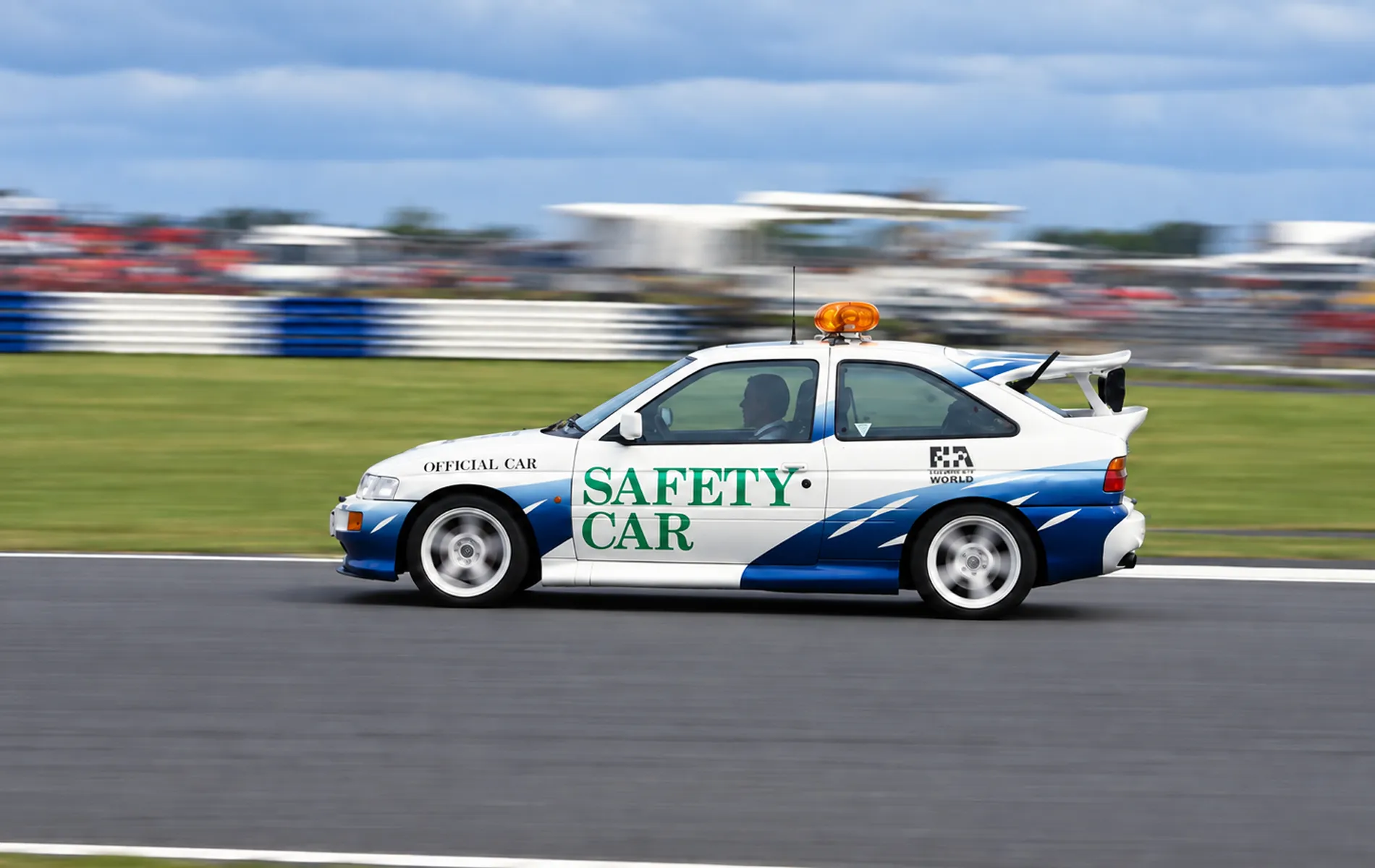
With its unmistakable rear wing and rally-car reputation, the Escort RS Cosworth looked ready to attack a stage rather than control an F1 race. It appeared at the British Grand Prix in 1992 and 1993, straddling an important change: F1 trialled Safety Car procedures in 1992 and made the car a regular race-weekend fixture in 1993.
At Silverstone, its aggressive silhouette brought a touch of rally culture to the F1 paddock.
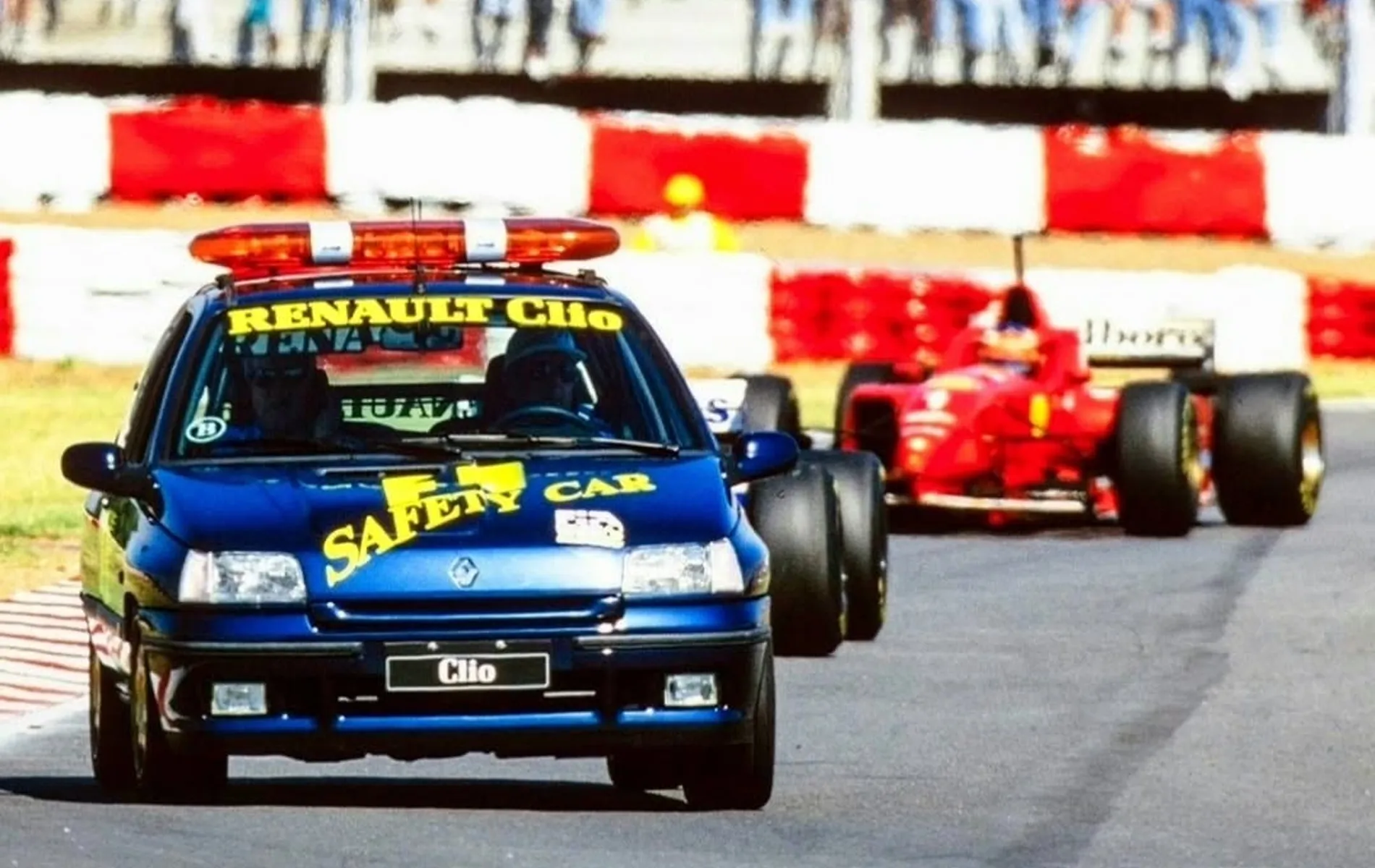
9. Renault Clio – 1995–96
The Clio may be the most startling size mismatch in this list. The little Renault was part of F1’s mid-1990s collection of locally supplied cars, and F1 records its use at the 1996 Argentine Grand Prix.
It is also associated with one of the strangest Safety Car images in F1: Taki Inoue‘s Footwork was struck by the car at Monaco in 1995. The incident led to improvements in Safety Car equipment and procedures.
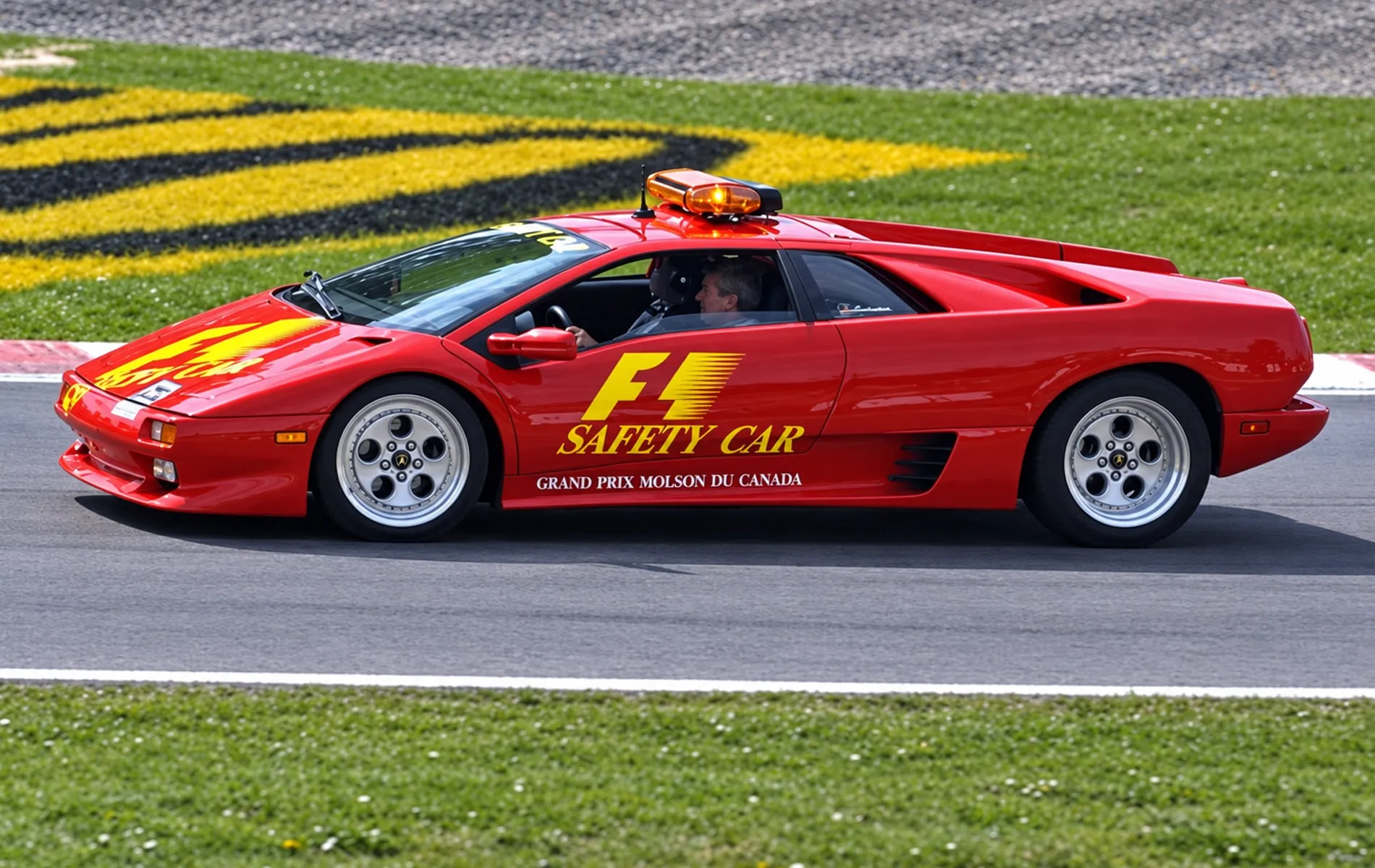
8. Lamborghini Diablo – Canada, 1995
The red Diablo supplied a suitably extravagant backdrop to the 1995 Canadian Grand Prix. The race itself is remembered for Jean Alesi and his only F1 victory, secured in a Ferrari on his 31st birthday. The Lamborghini’s link to that weekend makes it an irresistible entry, but photographs of a car at a Grand Prix should not be confused with evidence of a race deployment.
The Diablo was present at Montréal; Alesi’s win is the confirmed landmark. The wedge-shaped V12 remains spectacular.
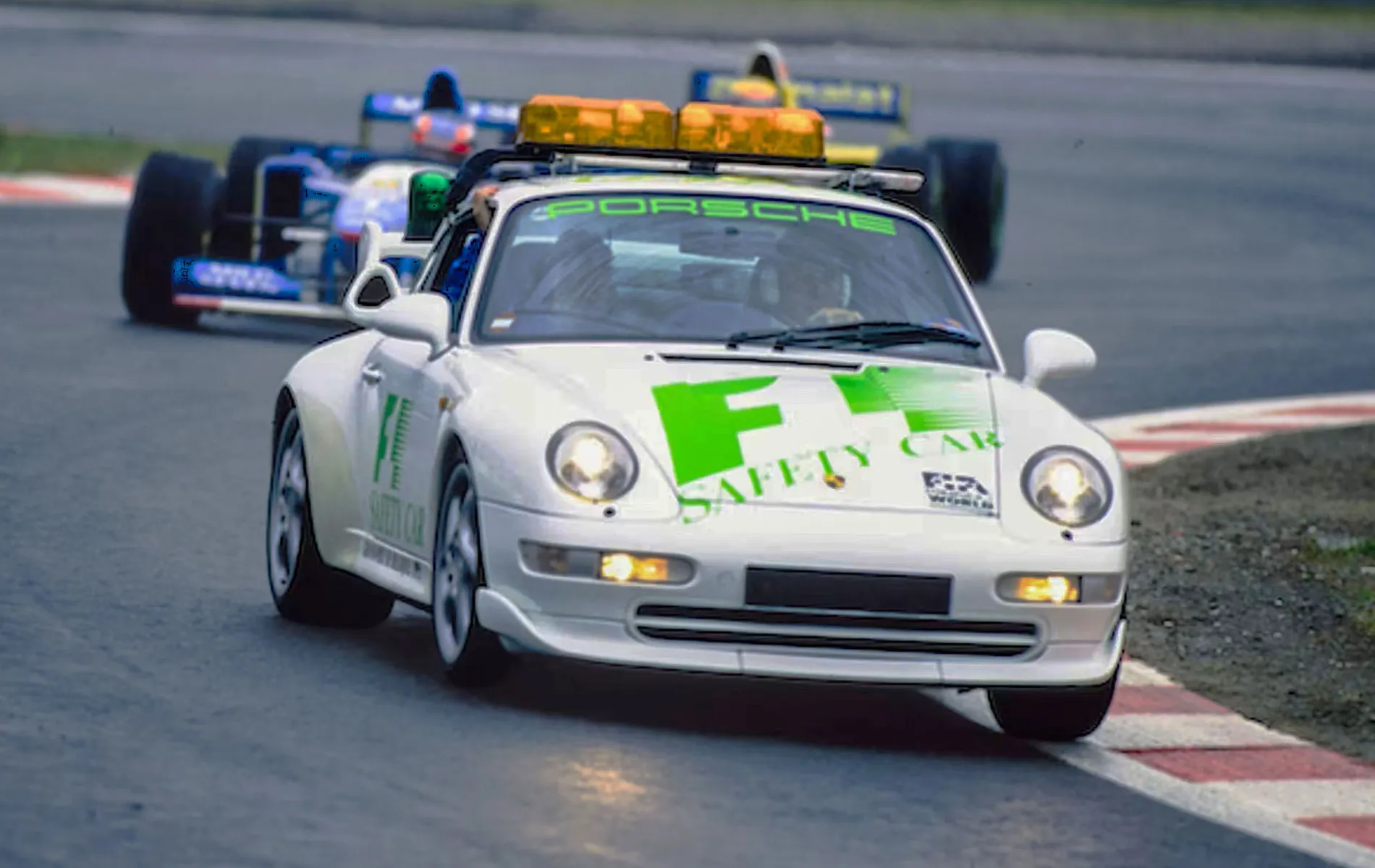
7. Porsche 993 GT2 – Belgium, 1995
Spa in 1995 brought a Porsche 993 GT2 into the Safety Car story. The wide-bodied, winged 911 was an inspired fit for a circuit famous for sudden weather changes, and the Grand Prix duly produced a wet, unpredictable contest.
Unlike the earlier Porsche 914, the GT2 showed the performance now available. Its pace mattered: following drivers needed heat in their tyres and brakes while officials neutralised the race.
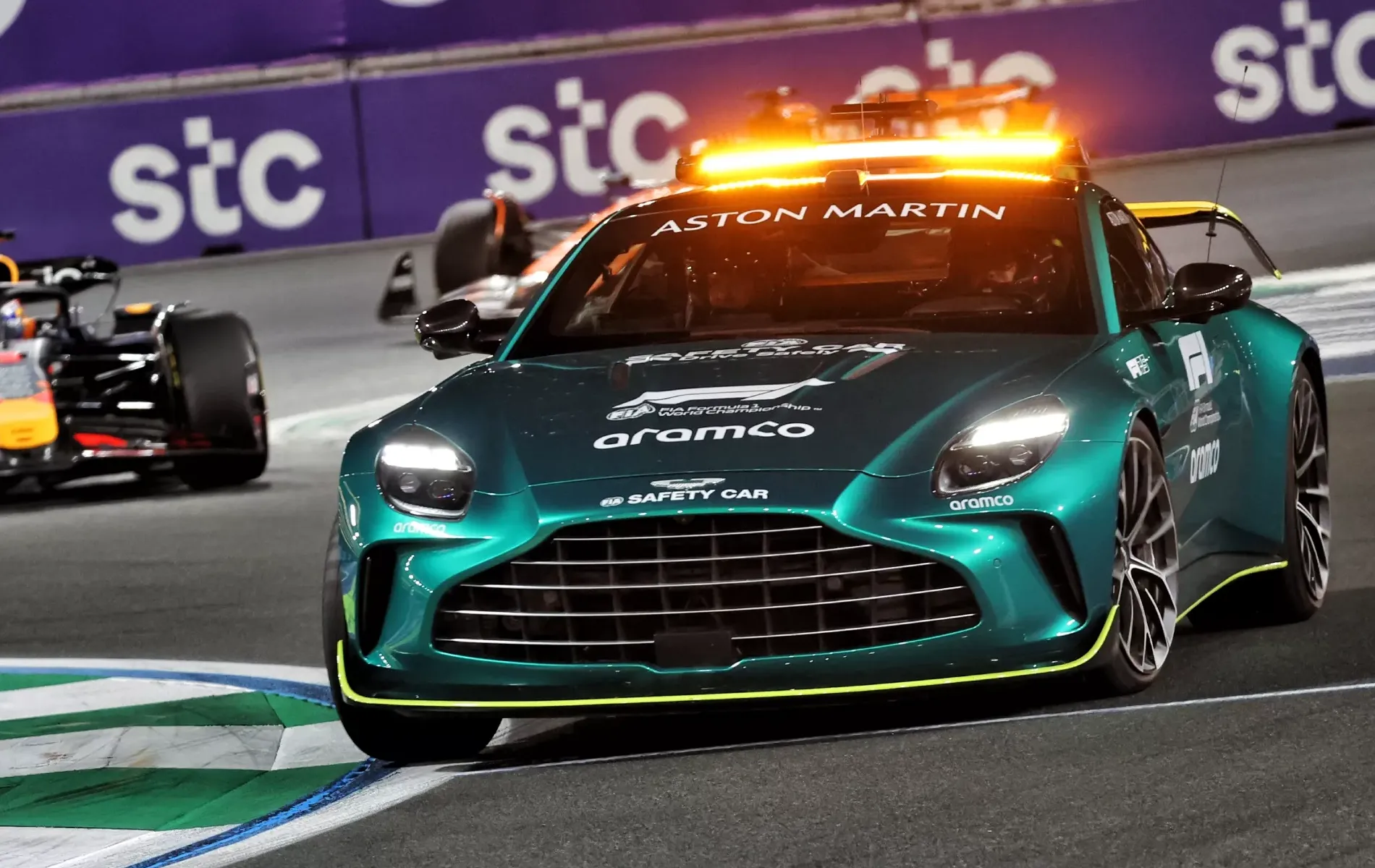
6. Aston Martin Vantage – 2021–25
British Racing Green returned to the front of the field when Aston Martin began sharing Safety Car duties with Mercedes in 2021. The Vantage was instantly recognisable, and its presence meant a modern race weekend could feature either of two manufacturers’ cars.
Max Verstappen‘s famous “turtle” description of the earlier Vantage captured a real tension: the car has to be fast enough for F1’s needs, even when the field is officially slowed. Aston Martin later introduced an updated Vantage. Its supply agreement ended after 2025; Mercedes took sole responsibility again in 2026. That five-year stint was a distinctive visual era.
5. Mercedes-Benz SLS AMG – 2010–14
The SLS AMG gave the modern Safety Car a set of gullwing doors and a silhouette that could hold its own against the grid. It served from 2010 to 2014, although the label needs a small qualification: the SLS AMG GT version took over from 2012.
The SLS embodied a consistent Mercedes programme: fans knew exactly what to expect at pit exit.
4. Fiat Tempra – Brazil, 1993
Few cars make the gulf between 1990s and modern F1 clearer than the Fiat Tempra. It led the field at the rain-hit 1993 Brazilian Grand Prix, the season in which the Safety Car became a regular fixture. A family saloon at the front of a grid containing Alain Prost, Ayrton Senna and Michael Schumacher is an image that scarcely needs embellishment.
Senna went on to win at Interlagos, one of the defining home victories of his career. For one remarkable afternoon, an everyday Fiat was part of the spectacle.
3. Mercedes-AMG GT 63 PRO 4MATIC+ – from Hungary, 2026
The latest entry shows just how far the role has evolved. Introduced at the 2026 Hungarian Grand Prix in black and red, the GT 63 PRO 4MATIC+ is Mercedes’ 14th F1 Safety Car model. F1 reported more than 600 horsepower, and it is the first official F1 Safety Car with fully variable all-wheel drive.
A Cars-inspired design appeared at Monza in September. Inside, video, timing, radio and GPS make the cockpit an extension of race control.
2. Porsche 914 – Canada, 1973
The first F1 Safety Car was a yellow Porsche 914 driven by Canadian and former F1 racer Eppie Wietzes at a wet Mosport. It was called out after multiple incidents, but the debut exposed a procedural flaw: the car picked up the wrong competitor, disrupting the race order. Officials took hours to establish that Peter Revson had won.
The awkward debut began decades of refinement. GPS-equipped 2026 machinery looks very different, but the purpose remains protecting people during danger.
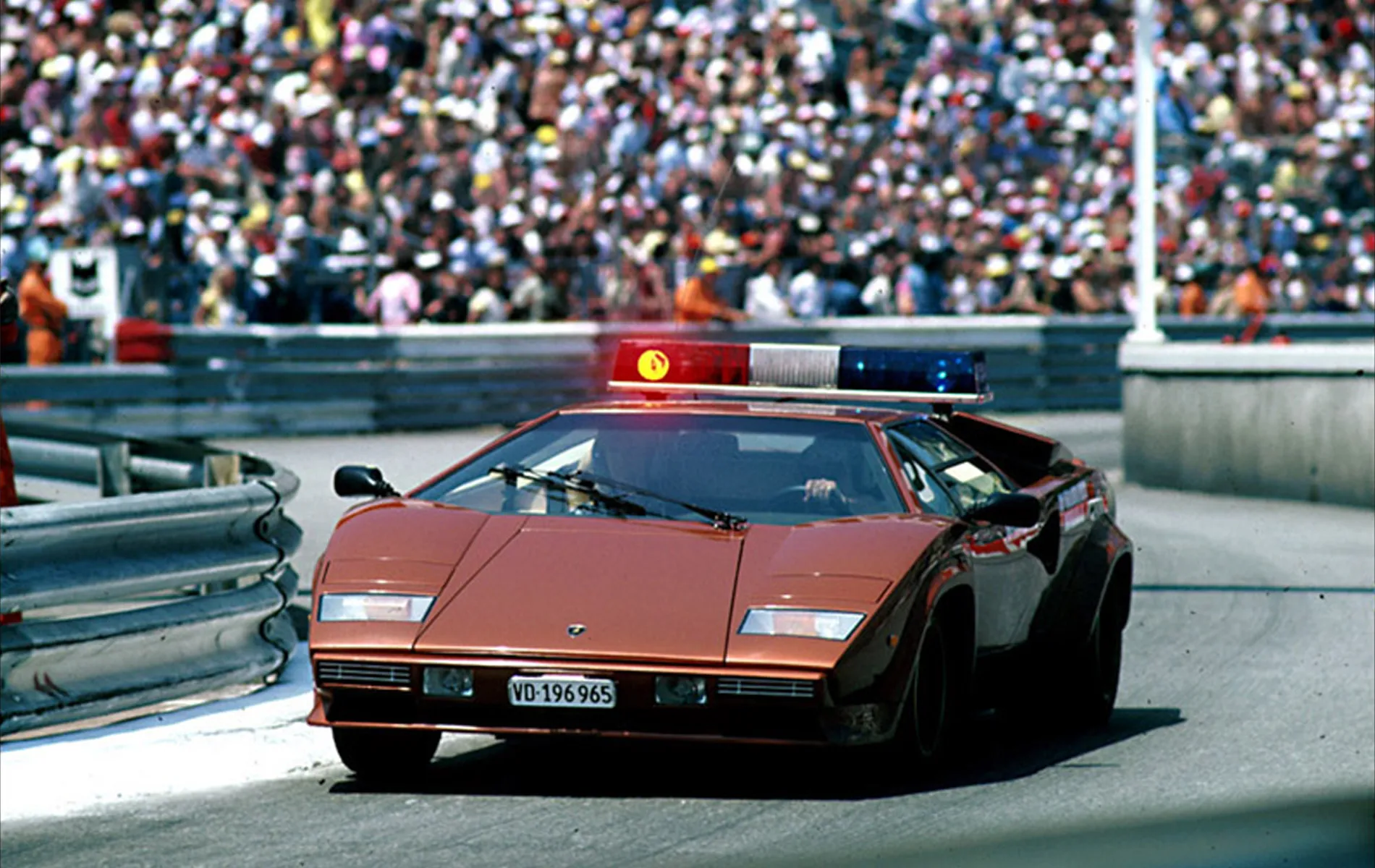
1. Lamborghini Countach – Monaco, 1981–83
There is no more theatrical pairing than a Countach and Monte Carlo. The Lamborghini appeared at the Monaco Grand Prix in 1981, 1982 and 1983, its low wedge and dramatic doors looking entirely at home lamborghiniamong the harbour’s supercars. It was an era when the Safety Car appeared intermittently, years before F1 established a regular programme.
The Countach captures outrageous road-car design and a sport still improvising its procedures. In early-1980s Monaco, the car at the front looked like a bedroom-wall poster.
Seen in: