






















Rial Racing was a German Formula One constructor that competed in the 1988 and 1989 Formula One World Championships. Backed by the German alloy wheel manufacturer Rial, the team was founded by former ATS owner Günter Schmid, who returned to Formula One with a similar strategy of promoting his wheel brand through Grand Prix racing.
| Nationality | German |
| Base | Fußgönheim, Rhineland-Palatinate, Germany |
| First entry | 1988 Brazilian Grand Prix |
|---|---|
| Races entered | 32 |
| Constructors’ Championships | 0 (best finish: 9th, 1988) |
| Drivers’ Championships | 0 |
| Race victories | 0 (best finish: 4th, 1988 Detroit Grand Prix and 1989 United States Grand Prix) |
| Pole positions | 0 |
| Fastest laps | 0 |
| Final entry | 1989 Australian Grand Prix |
During its two-season Formula One campaign, Rial entered 32 World Championship Grands Prix with a total of 48 cars, scoring six championship points and achieving a best finish of fourth place. The team placed ninth in the 1988 Constructors’ Championship before financial and competitive difficulties brought the project to an end after the 1989 season.
Based in Fußgönheim, Rial Racing was, alongside Zakspeed, one of the last Formula One teams to operate from Germany.
Origins
Rial was established during the 1970s as a manufacturer of alloy wheels before being acquired by Günter Schmid in 1987. Schmid had previously owned ATS, whose Formula One team competed between 1977 and 1984, and he sought to repeat the same marketing formula by creating another Grand Prix constructor to promote the Rial brand.
The new operation was based at Rial’s headquarters in Fußgönheim and recruited respected engineer Gustav Brunner, who had previously worked for ATS and Ferrari.
Brunner designed the team’s first Formula One car, the Rial ARC1, powered by the naturally aspirated Cosworth DFZ V8. Nicknamed the “Blue Ferrari” because of its resemblance to Brunner’s earlier Ferrari F1/87, the ARC1 featured several innovative design ideas, including pullrod suspension with horizontally mounted dampers.
Italian driver Andrea de Cesaris joined the team, bringing valuable Marlboro sponsorship, and early testing suggested the car possessed promising pace, although its small fuel tank would soon become a recurring weakness.
1988 Season
Rial made its Formula One debut at the 1988 Brazilian Grand Prix. De Cesaris qualified 14th and ran as high as sixth before running out of fuel with only seven laps remaining.
Fuel capacity continued to compromise the team’s early races. At the Canadian Grand Prix, de Cesaris again looked set to score points before the car ran dry while running fifth. Mechanical failures also plagued the team’s first campaign, while Rial twice fell foul of Formula One regulations—once for carrying out work on the car while it remained on the circuit and again after officials ruled that the driver’s helmet sat too high above the roll-over structure, forcing modifications to the chassis.
The breakthrough arrived at the Detroit Grand Prix. Benefiting from a race of high attrition, de Cesaris finished fourth to score three World Championship points, the best result in Rial Racing’s Formula One history.
However, momentum quickly faded. Following the French Grand Prix, Gustav Brunner left the team and a combination of mechanical failures and continuing fuel issues contributed to a run of six consecutive retirements. De Cesaris eventually reached the finish in Australia, classified eighth, as Rial completed its debut season in ninth place in the Constructors’ Championship, while de Cesaris finished 15th in the Drivers’ standings.
1989 Season
Encouraged by its debut year, Rial expanded to a two-car operation for 1989. With de Cesaris moving to Dallara, German drivers Christian Danner and Volker Weidler were recruited to drive the new Rial ARC2.
Designed by Stefan Fober, the ARC2 evolved the previous year’s chassis with revised aerodynamics developed by future McLaren technical director Bob Bell, while the more powerful Cosworth DFR engine replaced the earlier DFZ.
The abolition of turbocharged engines for 1989 attracted a record 39 entries, leading Formula One to reintroduce pre-qualifying for the slowest teams. Because Rial had scored points in 1988, Danner avoided pre-qualifying, while Weidler, driving the team’s second entry, was required to fight for a place in the main qualifying session.
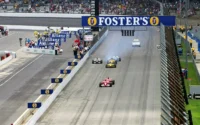
Danner began the season with 14th place in Brazil before the improving pace of rival teams left Rial increasingly uncompetitive. The highlight came at the United States Grand Prix in Phoenix, where another attritional race allowed Danner to finish fourth, matching the team’s best-ever Formula One result and recording the strongest finish of his career.
Weidler, meanwhile, failed to pre-qualify for every event he entered. Although Rial’s position in the pre-qualifying order improved after the British Grand Prix, allowing both cars direct access to qualifying, neither driver could consistently make the grid.
Internal instability further undermined the project. At the Hungarian Grand Prix, Weidler’s qualifying times were deleted after officials ruled the team’s rear wing illegal. The resulting fine led to the departures of both Weidler and chief designer Stefan Fober following criticism from Günter Schmid.
Pierre-Henri Raphanel replaced Weidler, while designer Christian van der Pleyn joined the technical department. Despite the changes, the ARC2 remained uncompetitive. Christian Danner left after the Portuguese Grand Prix, with Gregor Foitek briefly taking over for Spain before a rear wing failure caused a heavy qualifying accident that destroyed the car and ended his association with the team after just one event.
For the final two Grands Prix, Bertrand Gachot partnered Pierre-Henri Raphanel, but neither driver succeeded in qualifying as the outdated ARC2 had fallen several seconds behind its rivals.
Legacy
Rial Racing finished 13th in the 1989 Constructors’ Championship before withdrawing from Formula One at the end of the season. The racing division was subsequently closed, ending Günter Schmid’s second attempt at running a Formula One constructor.
Although the team competed for only two seasons, Rial demonstrated flashes of genuine competitiveness, particularly during the attrition-heavy street races of Detroit and Phoenix. Today, the constructor is remembered for its distinctive blue cars, Gustav Brunner’s innovative engineering and its place among the last Formula One teams to be designed, built and operated entirely from Germany.
Away from motorsport, Rial continues to manufacture alloy wheels and rims from its headquarters in Fußgönheim, preserving the name long after its brief Formula One adventure came to an end.
Rial Complete Formula One World Championship results
| Year | Chassis | Engine | Tyres | Drivers | 1 | 2 | 3 | 4 | 5 | 6 | 7 | 8 | 9 | 10 | 11 | 12 | 13 | 14 | 15 | 16 | Points | WCC |
|---|---|---|---|---|---|---|---|---|---|---|---|---|---|---|---|---|---|---|---|---|---|---|
| 1988 | ARC1 | Ford Cosworth DFZ 3.5 V8 | G | BRA | SMR | MON | MEX | CAN | DET | FRA | GBR | GER | HUN | BEL | ITA | POR | ESP | JPN | AUS | 3 | 9th | |
| Andrea de Cesaris | Ret | Ret | Ret | Ret | 9 | 4 | 10 | Ret | 13 | Ret | Ret | Ret | Ret | Ret | Ret | 8 | ||||||
| 1989 | ARC2 | Ford Cosworth DFR 3.5 V8 | G | BRA | SMR | MON | MEX | USA | CAN | FRA | GBR | GER | HUN | BEL | ITA | POR | ESP | JPN | AUS | 3 | 13th | |
| Christian Danner | 14 | DNQ | DNQ | 12 | 4 | 8 | DNQ | DNQ | DNQ | DNQ | DNQ | DNQ | DNQ | |||||||||
| Gregor Foitek | DNQ | |||||||||||||||||||||
| Bertrand Gachot | DNQ | DNQ | ||||||||||||||||||||
| Volker Weidler | DNPQ | DNPQ | DNPQ | DNPQ | DNPQ | DNPQ | DNPQ | DNPQ | EX | DNQ | ||||||||||||
| Pierre-Henri Raphanel | DNQ | DNQ | DNQ | DNQ | DNQ | DNQ |