

























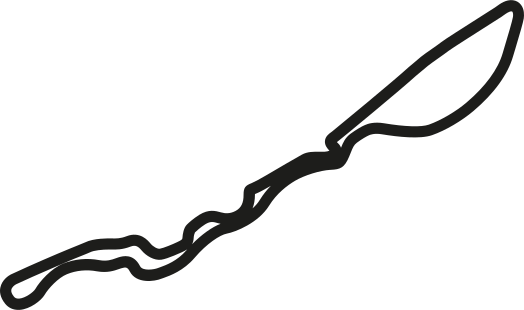

For seven seasons, from 1982 to 1988, the streets of downtown Detroit hosted one of the toughest races in Formula One. Officially titled the Detroit Grand Prix and also known as the United States Grand Prix East, the event wound its way around the Renaissance Centre and along the riverfront, delivering punishing heat, relentless bumps and walls that tolerated no mistakes.
The circuit was narrow, slow and unforgiving. Drivers wrestled their cars over broken asphalt, across a railroad track crossing and through tight hairpins that punished brakes and gearboxes. Races frequently ran close to two hours, and often fewer than half the starters saw the chequered flag.
What To Know?
- Seven races, six different winners:
From 1982 to 1988, the Detroit Grand Prix produced six different race winners in seven events. Only Ayrton Senna managed to win more than once, taking three consecutive victories from 1986 to 1988. - One of the lowest winning grid slots in F1 history: John Watson won the inaugural 1982 race from 17th on the grid for McLaren, one of the deepest starting positions ever converted into a Formula One victory.
- The final win for the Cosworth DFV era: The 1983 race saw Michele Alboreto triumph for Tyrrell, marking the last ever Grand Prix victory for the legendary Cosworth DFV V8 engine.
- Attrition was the norm: At least half the field failed to finish in every Detroit Grand Prix. The combination of concrete walls, extreme braking demands and a deteriorating surface made simply reaching the chequered flag a significant achievement.
List of Every Detroit Grand Prix Winner
| Year | Circuit | Driver | Constructor | Start Pos. | Win margin | Race time |
|---|---|---|---|---|---|---|
| 1988 | Detroit | Ayrton Senna | McLaren -Honda | 1 | 38.713s | 1hr 54m 56.035s |
| 1987 | Detroit | Ayrton Senna | Lotus -Honda | 2 | 33.819s | 1hr 50m 16.358s |
| 1986 | Detroit | Ayrton Senna | Lotus -Renault | 1 | 30.837s | 1hr 51m 12.847s |
| 1985 | Detroit | Keke Rosberg | Williams -Honda | 5 | 57.549s | 1hr 55m 39.851s |
| 1984 | Detroit | Nelson Piquet | Brabham -BMW | 1 | 0.837s | 1hr 55m 41.842s |
| 1983 | Detroit | Michele Alboreto | Tyrrell -Ford Cosworth | 6 | 7.702s | 1hr 50m 53.669s |
| 1982 | Detroit | John Watson | McLaren -Ford Cosworth | 17 | 15.726s | 1hr 58m 41.043s |
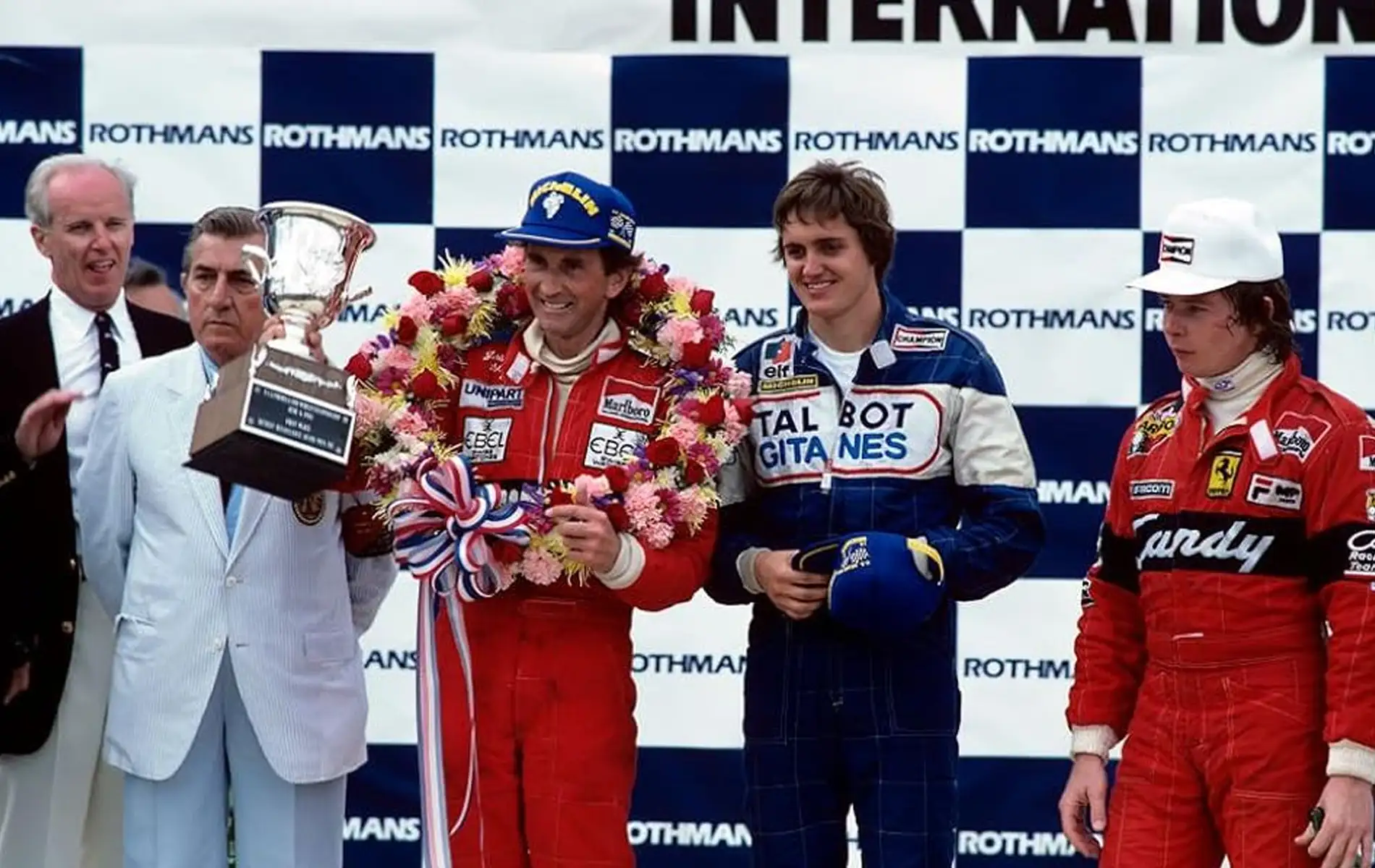
Detroit Grand Prix Winners: 1982 to 1985
The first four editions immediately established Detroit as a race of attrition and surprise.
In 1982, John Watson delivered one of the great recovery drives in Formula One history. Starting 17th for McLaren, he sliced through a chaotic field as rivals struck trouble with the walls and the demanding surface. His victory remains one of the lowest grid positions ever converted into a win.
The 1983 race produced a landmark result. Michele Alboreto triumphed for Tyrrell, securing what would be both the team’s final Grand Prix victory and the last win for the iconic Cosworth DFV engine. On a track that punished turbo power with relentless braking zones, experience and control proved decisive.
By 1984, the event had shifted to a later June slot, intensifying the heat and humidity. Nelson Piquet converted pole position into victory for Brabham, edging home by less than a second after managing tyres and machinery over nearly two hours of racing.
In 1985, Keke Rosberg mastered the chaos. Driving for Williams, he kept clear of the relentless attrition to take a commanding win. Once again, Detroit rewarded discipline as much as outright speed.
After four years, the Grand Prix had already earned a reputation as one of the most physically demanding and unpredictable events on the calendar.
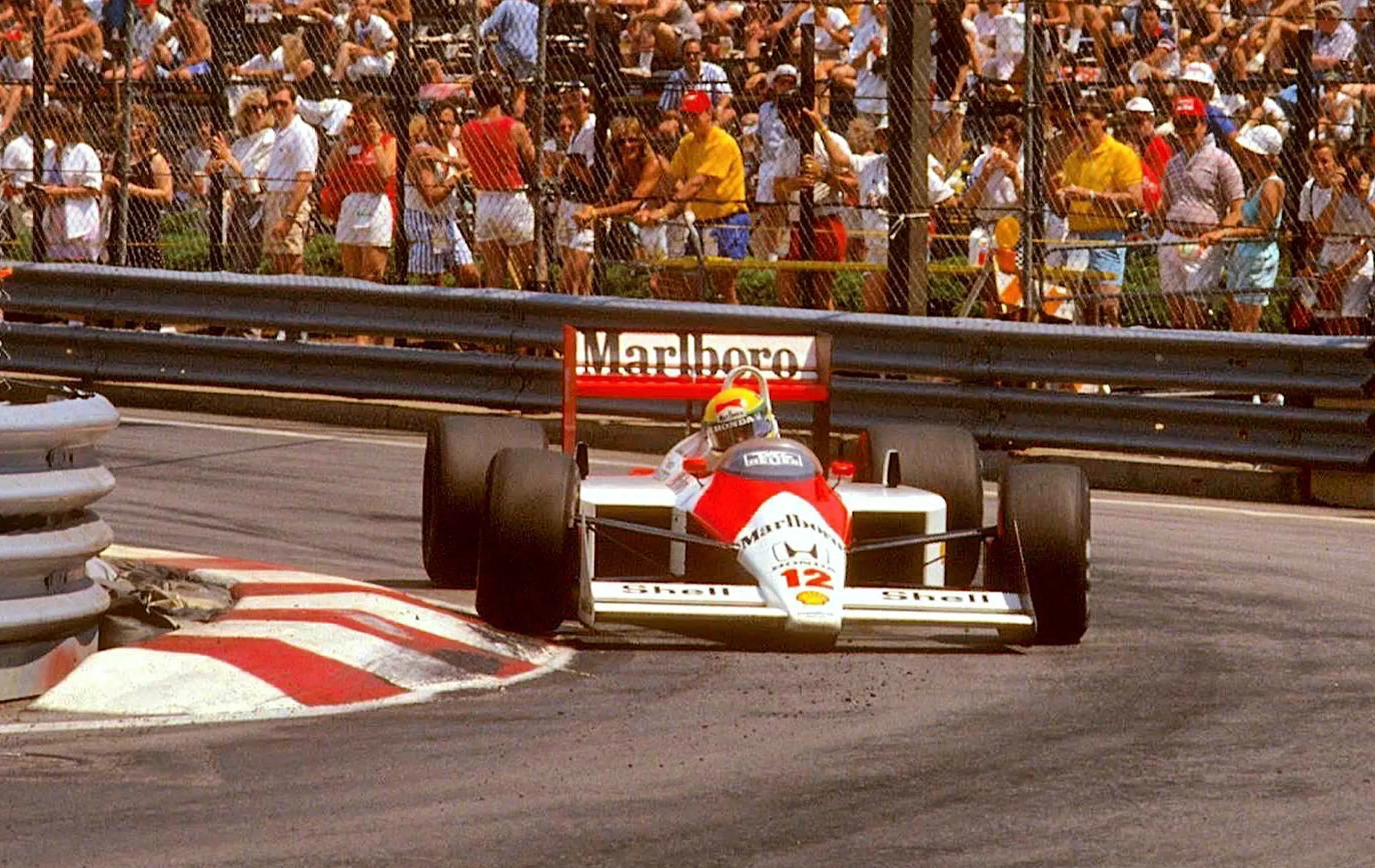
Detroit Grand Prix Winners: 1986 to 1988
The final three seasons belonged to one man.
In 1986, Ayrton Senna claimed his first Detroit victory with Lotus. Overcoming a puncture and the usual street circuit hazards, he demonstrated the precision that made him so formidable on tight, unforgiving layouts.
Senna returned in 1987 and did it again. Now armed with Honda power at Lotus, he controlled the race from the front as rivals fell away. The Brazilian’s smooth yet relentless style proved perfectly suited to a circuit where rhythm and concentration were everything.
The 1988 edition was both Senna’s third consecutive Detroit win and the final Formula One race on the city streets. Driving for McLaren in the dominant MP4 4, he converted pole position into a decisive victory on a surface that was breaking apart under intense heat. Criticism of the circuit’s facilities and condition had grown louder, and after the race, Detroit disappeared from the F1 calendar.
Across its final three years, Senna transformed Detroit from a test of survival into a showcase of mastery.
A Street Circuit That Tested Everything
Though its time in Formula One was brief, the Detroit Grand Prix produced comeback drives, historic final victories and a three-year winning streak from one of the sport’s greatest drivers.
The narrow layout punished mistakes instantly. The bumps and braking zones drained drivers physically. Races regularly approached the two-hour limit, and attrition was almost guaranteed.
Detroit may no longer feature on the Formula One calendar, but between 1982 and 1988 it stood as one of the ultimate examinations of car control, endurance and nerve.
More F1 Race Winners
From Adelaide to Silverstone to Monza and Spa, we chart the full story of every F1 winner from each event’s first race to the last.
Seen in: