



























For a brief and curious spell in the early 1980s, Formula One went racing in the shadow of neon lights and roulette wheels. The Caesars Palace Grand Prix was held in the parking lot of the famous Las Vegas resort, creating one of the most unusual venues on the world championship calendar.
The race only lasted two seasons in Formula One, 1981 and 1982, yet both editions played a role in shaping the title fight.
What To Know?
- Only two Formula One events: The Caesars Palace Grand Prix featured on the Formula One World Championship calendar for just 1981 and 1982, making it one of the shortest-lived F1 venues in modern history.
- A championship decider in 1981: In 1981, Nelson Piquet clinched his first world title at Caesars Palace, despite finishing only fifth, underlining the race’s importance in the championship narrative.
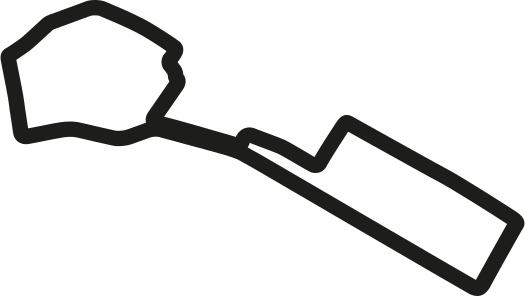
- Physically brutal layout: The 2.268-mile, 14-turn circuit ran counterclockwise, placing extreme strain on drivers’ necks and contributing to visible exhaustion in the desert heat.
- Tyrrell’s final F1 victory: The 1982 race was won by Michele Alboreto for Tyrrell Racing, marking the team’s last Formula One win before the event disappeared from the calendar.
List of Every Caesars Palace Grand Prix Winner
| Year | Circuit | Driver | Constructor | Start | Win margin | Race time |
|---|---|---|---|---|---|---|
| Caesars Palace | Alan Jones | Williams-Ford Cosworth | 2 | 20.048s | 1hr 44m 09.077s | |
| Caesars Palace | Michele Alboreto | Tyrrell-Ford Cosworth | 3 | 27.292s | 1hr 41m 56.888s |
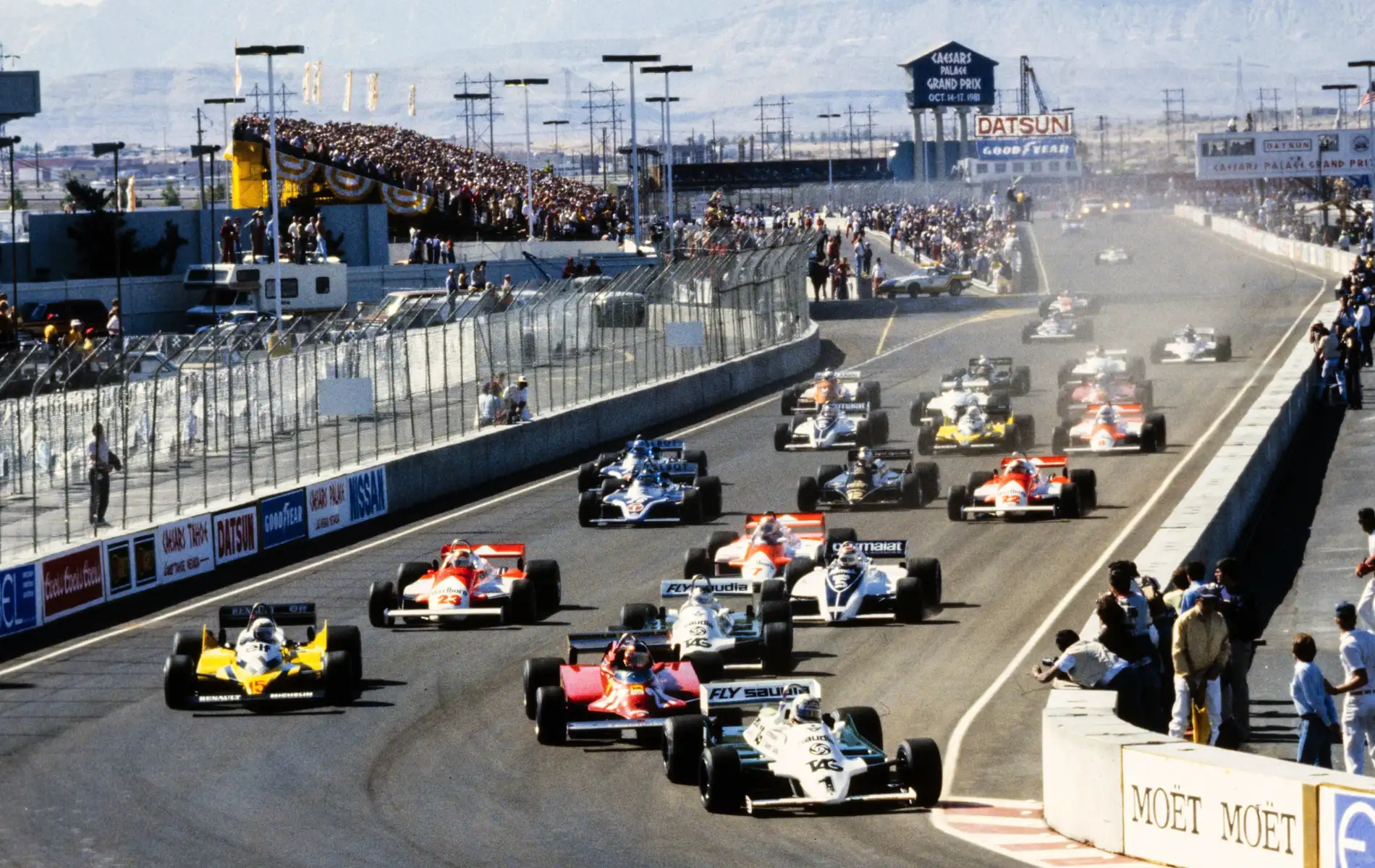
Caesars Palace Grand Prix Winner: 1981
The inaugural Caesars Palace Grand Prix took place in October 1981 on a tight, flat 14-turn circuit laid out in the hotel car park. Measuring 2.268 miles and running counterclockwise, it was physically punishing and visually repetitive, but it would prove decisive in the championship narrative.
Victory went to Alan Jones in a Williams powered by Ford Cosworth. By this stage, Jones was already the 1980 world champion, yet 1981 had been a more turbulent campaign. He started the Las Vegas race from second on the grid and drove a measured race in sweltering desert heat to secure his second and final win of the season.
See also…
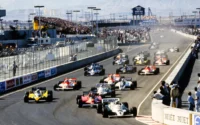
Although the spotlight ultimately fell on the title battle between Nelson Piquet and Carlos Reutemann, Jones’ victory underlined the enduring strength of Williams during this era. The rough, dusty surface and relentless left-hand corners demanded concentration and physical strength. Jones handled both better than anyone on the day.
Behind him, Piquet finished fifth, a result that was just enough to secure his first world championship. The image of the Brazilian collapsing with exhaustion after the race became one of the defining moments of the event’s short life.
Caesars Palace Grand Prix Winner: 1982
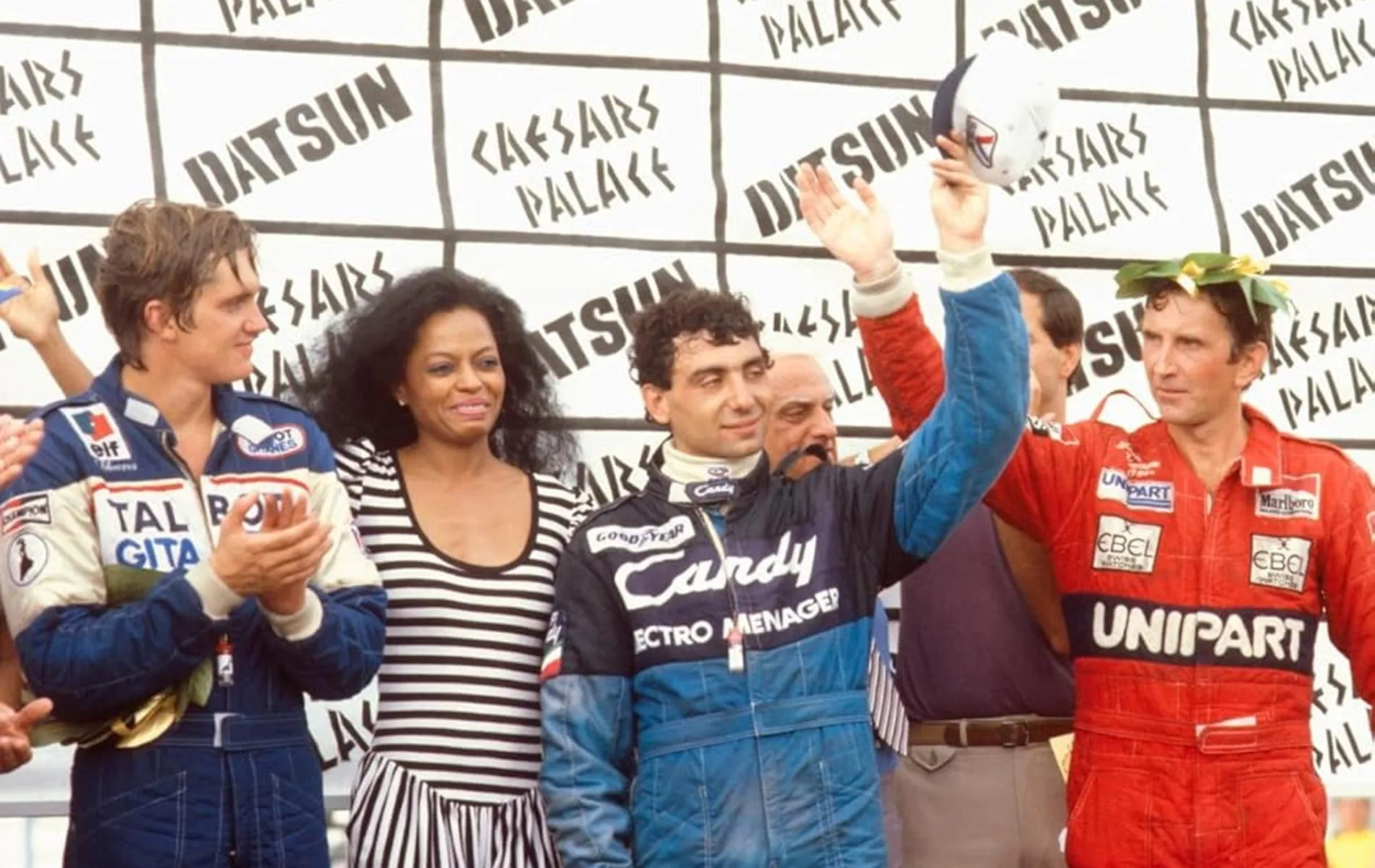
One year later, the final Formula One race at Caesars Palace produced a popular and somewhat unexpected winner. Michele Alboreto triumphed for Tyrrell Racing in what was only his second grand prix victory.
The 1982 season had been one of the most dramatic and unpredictable in F1 history. By the time the championship reached Las Vegas, the title fight was still open. Alboreto, however, was not in contention for the crown. Instead, he delivered a calm and controlled drive from third on the grid, mastering the oppressive heat and abrasive surface.
The Tyrrell 011, again powered by the ubiquitous Ford Cosworth DFV, proved well suited to the slow-speed layout. Alboreto managed his tyres carefully and kept clear of trouble while others faltered. He crossed the line with a comfortable margin, sealing Tyrrell’s final victory of the ground effect era.
Despite the on-track drama, the event struggled to attract spectators. The combination of extreme temperatures, a flat parking-lot setting, and a limited atmosphere meant the race failed to capture the imagination in the way that Long Beach had earlier in the season.
A Short-Lived Experiment in the Desert
The Caesars Palace Grand Prix remains one of Formula One’s most unusual experiments. The circuit was wide and offered room for overtaking, yet its flat profile and repetitive corners drew criticism from drivers. Counterclockwise rotation placed significant strain on the neck muscles, while desert heat added another layer of difficulty.
After 1982, Formula One departed Las Vegas. The event continued for two years as a CART IndyCar round before disappearing from the calendar entirely. Decades later, top-level single-seater racing would return to the city in a very different form, but the memory of racing in a hotel car park remains a unique chapter in F1 history.
With just two winners, the Caesars Palace Grand Prix may have been brief, but it delivered a world champion’s statement win and a breakthrough success for an Italian star. In its own unconventional way, it left a lasting mark on the sport.
More F1 Race Winners
From Adelaide to Silverstone to Monza and Spa, we chart the full story of every F1 winner from each event’s first race to the last.
Seen in: