




























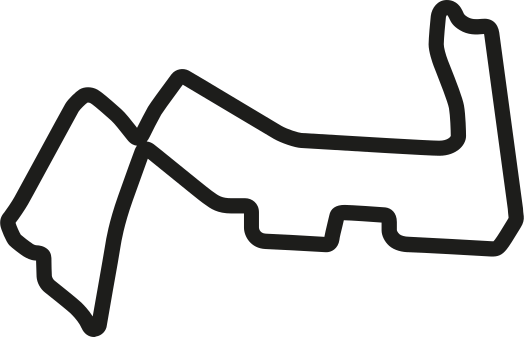

The European Grand Prix occupies a unique place in F1 history. At times it was a roaming event, at others a fixed part of the calendar, and in its earliest form it was simply an honorary title awarded to one of Europe’s most prestigious national races. From its roots in the 1920s to its final appearance in 2016, the race produced a roll call of world champions, surprise winners and unforgettable moments.
What To Know?
- Most successful driver: Michael Schumacher holds the record for the most European Grand Prix victories in the standalone era, underlining his dominance across the 1990s and early 2000s.
- A race of many homes: The European Grand Prix was held at venues including Donington Park, Circuito Permanente de Jerez, Nurburgring, Valencia Street Circuit and Baku City Circuit, making it one of the most geographically flexible events in F1 history.
- Senna’s legendary lap: The 1993 race at Donington is famous for Ayrton Senna’s astonishing opening lap in wet conditions, widely regarded as one of the greatest first laps ever seen in Formula One.
- From honour to headline act: Before becoming a permanent championship round, the European Grand Prix title was awarded to classic races such as those at Autodromo Nazionale Monza and Silverstone Circuit, meaning its winners list stretches back to the sport’s pre-World War II era.
Long before it became a standalone Formula One event, the European Grand Prix was an honorary distinction. The governing body of the time, the AIACR, awarded the title to one of Europe’s leading Grands Prix each season.
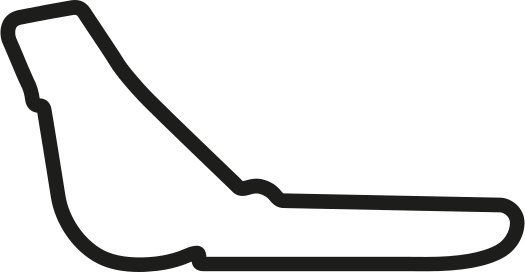
The first race to receive the honour was the 1923 Italian Grand Prix at Monza. In subsequent years, the French and Belgian Grands Prix were also selected. After World War II, the tradition returned under the FIA banner, with events such as the Belgian and Monaco Grands Prix occasionally carrying the European title.
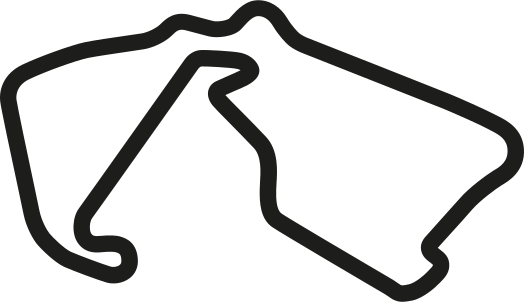
During this period, winners of the European Grand Prix were also winners of the Italian, French, Belgian or British Grand Prix in those respective seasons. Notably, the title was attached to the 1977 British Grand Prix at Silverstone, the final time it was used purely as an honorary designation.
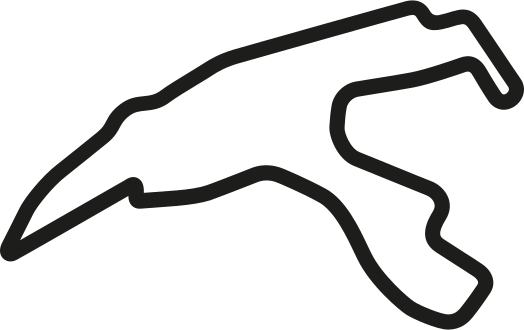
Among the circuits most frequently associated with the title were Autodromo Nazionale Monza, Circuit de Spa-Francorchamps, Silverstone Circuit, and Circuit de Monaco.
List of Every European Grand Prix Winner
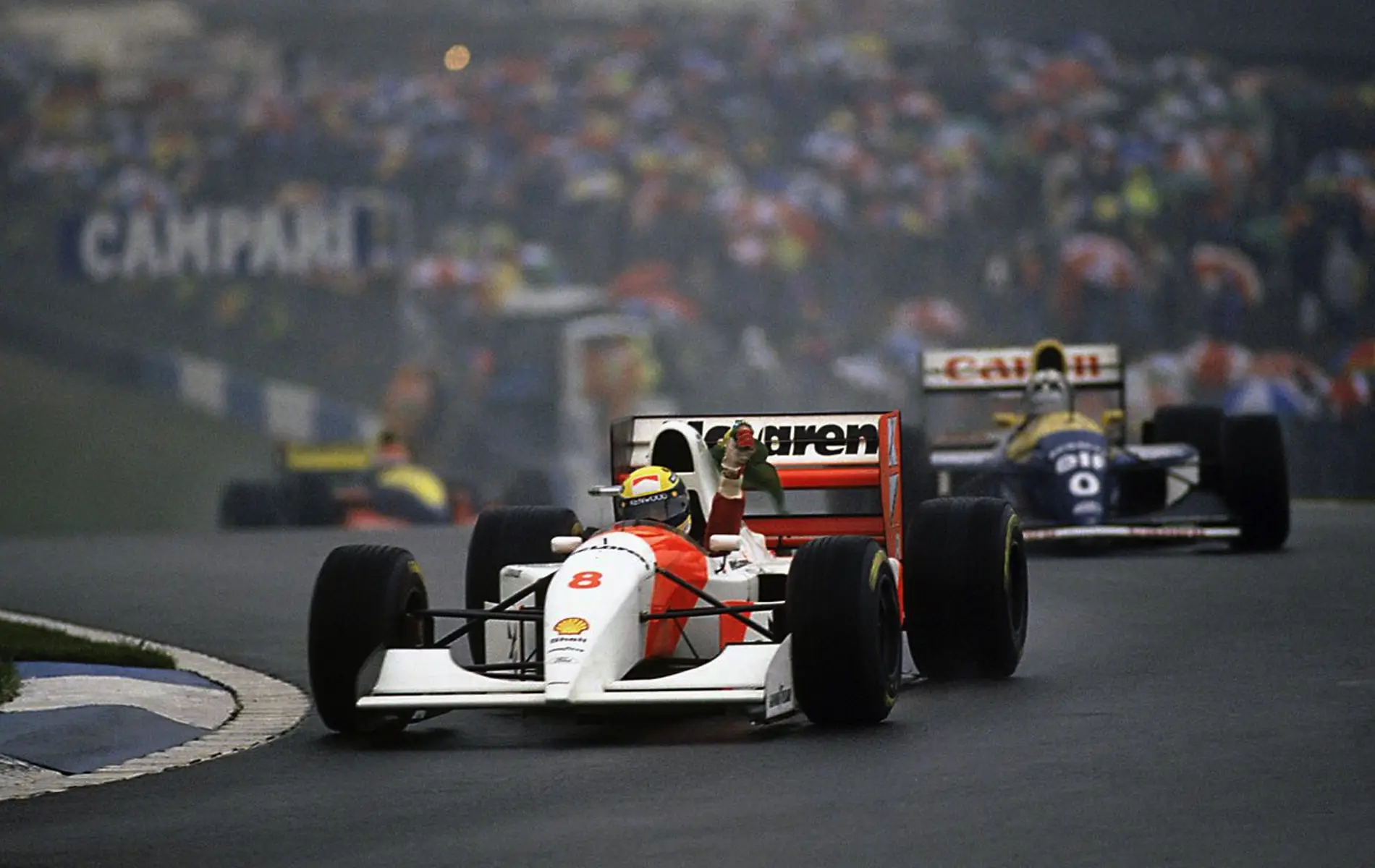
European Grand Prix Winners: 1983 to 1997
The European Grand Prix became a distinct championship round in 1983, but its modern identity truly took shape from 1993 onward. From that point on, it was regularly used to add a second race to countries that already hosted a national Grand Prix.
The 1993 race at Donington Park immediately became historic. Ayrton Senna delivered one of the greatest opening laps in Formula One history, slicing through the field in treacherous conditions to take victory.
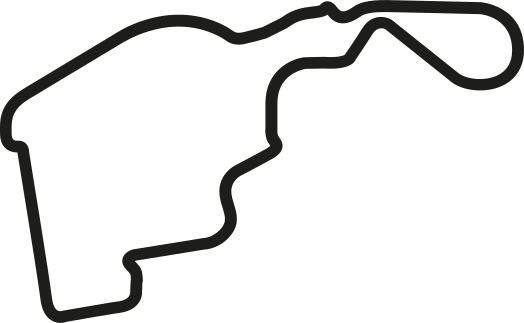
Throughout the mid to late 1990s, the event rotated between circuits such as the Nürburgring and Jerez. The 1997 finale at Jerez saw Mika Häkkinen claim his maiden Formula One victory after the dramatic collision between Michael Schumacher and Jacques Villeneuve decided the world championship.
During this period, Schumacher became the most successful driver in European Grand Prix history, with multiple wins across different venues.
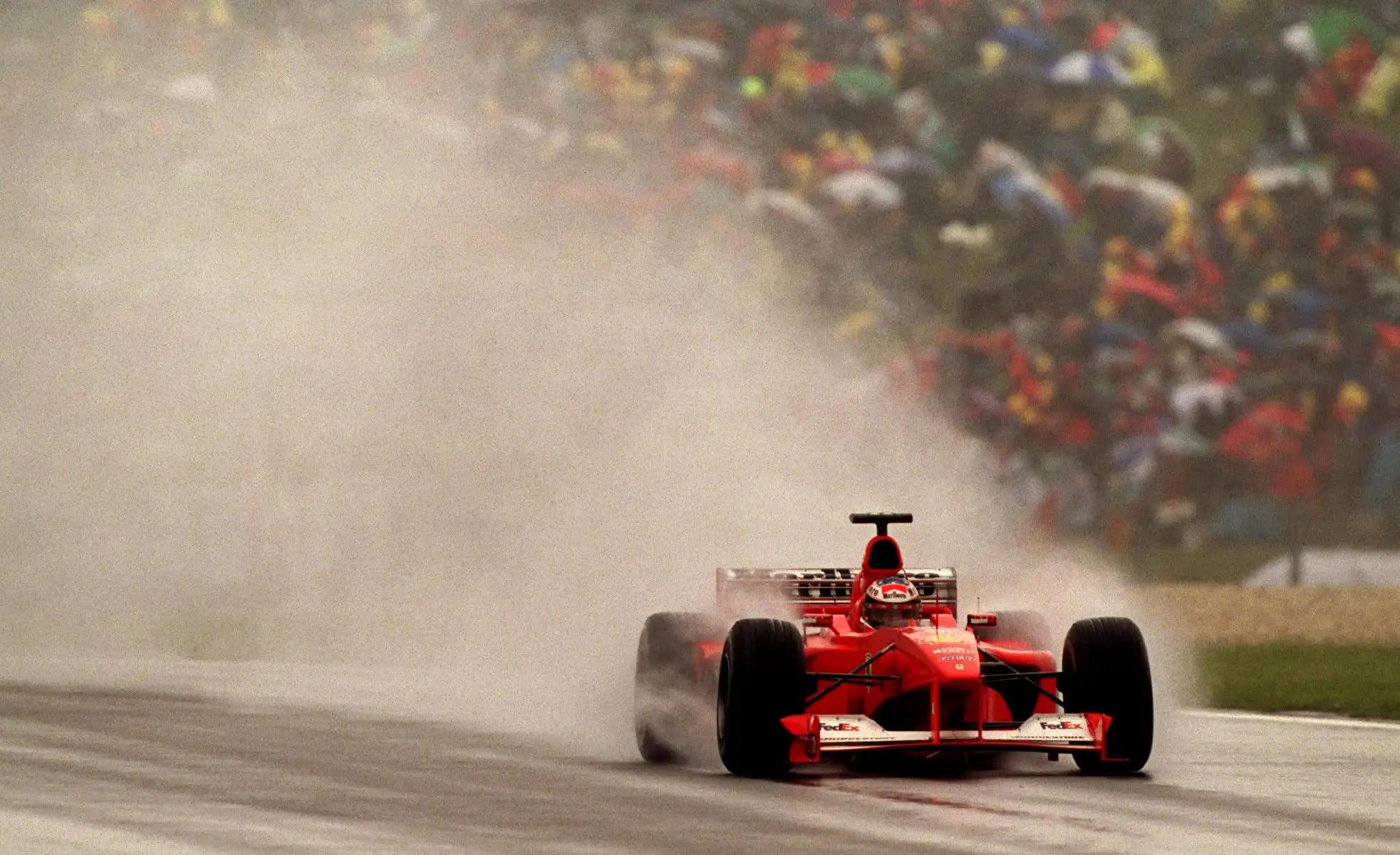
European Grand Prix Winners: 1999 to 2007
From 1999 onward, the European Grand Prix was most commonly associated with the Nürburgring in Germany. For many seasons, it effectively alternated branding with the German Grand Prix.
Winners during this era included multiple world champions. Fernando Alonso added the European Grand Prix to his title-winning campaigns, while drivers such as Rubens Barrichello and Ralf Schumacher also etched their names onto the trophy.
The Nürburgring races often produced strategic contests shaped by changing weather and tyre choices, reinforcing the circuit’s reputation as one of the most technical venues on the calendar.
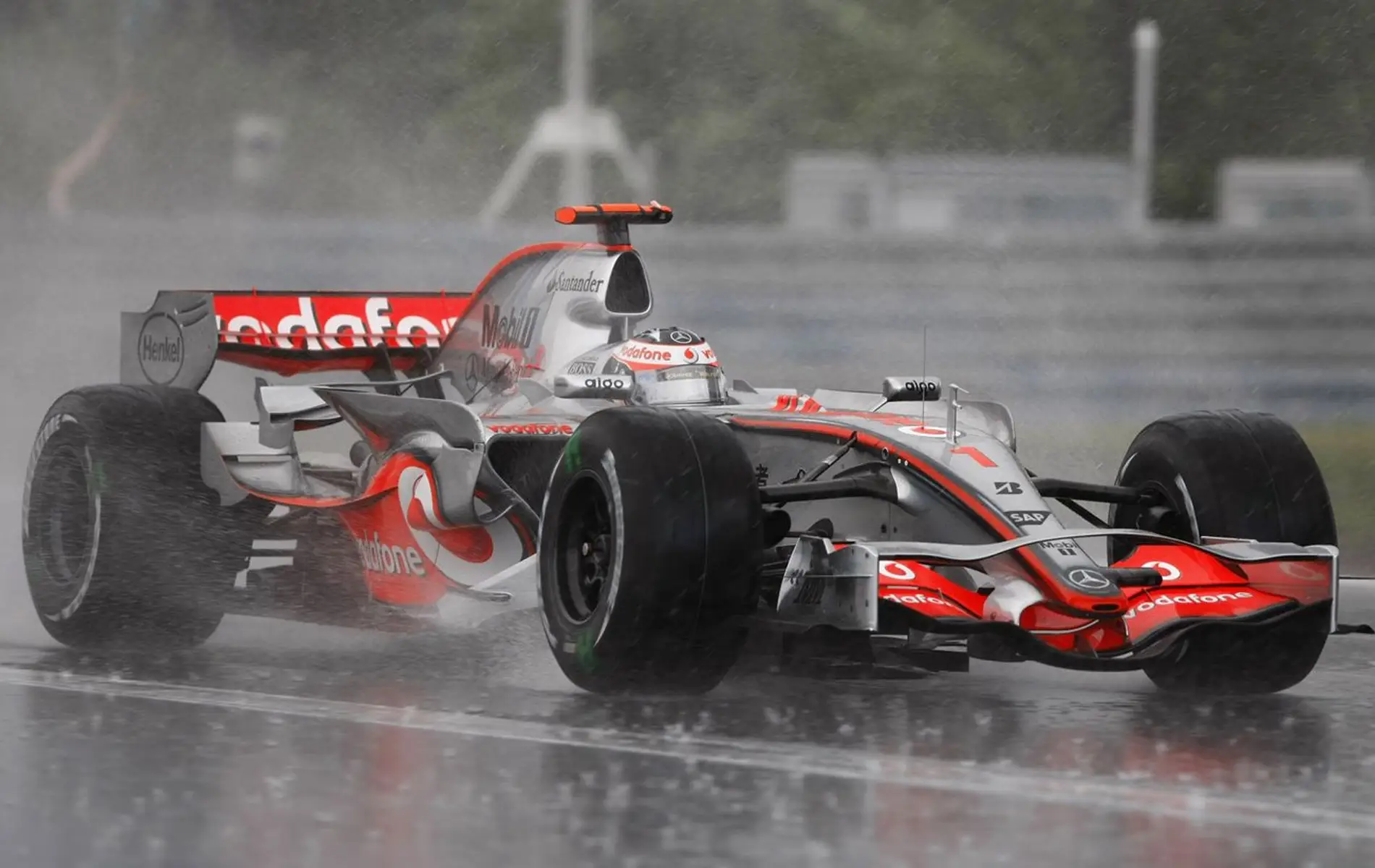
European Grand Prix Winners: 2008 to 2012
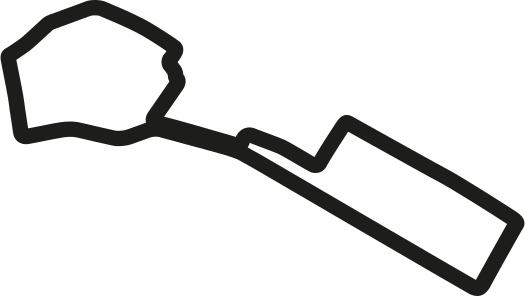
In 2008, the European Grand Prix found a new home on the Valencia Street Circuit in Spain. Set around the city’s harbour, it was designed to blend Monaco-style scenery with modern safety standards.
Felipe Massa won the inaugural Valencia race, although it was Sebastian Vettel who became most closely associated with the venue. Vettel dominated the 2011 edition as part of his march toward a second world title.
The Valencia years were visually striking, even if the racing was sometimes processional. The event remained on the calendar through 2012.
European Grand Prix Winners: 2016
After a three-year absence, the European Grand Prix returned for one final appearance in 2016, this time on the streets of Baku, Azerbaijan.
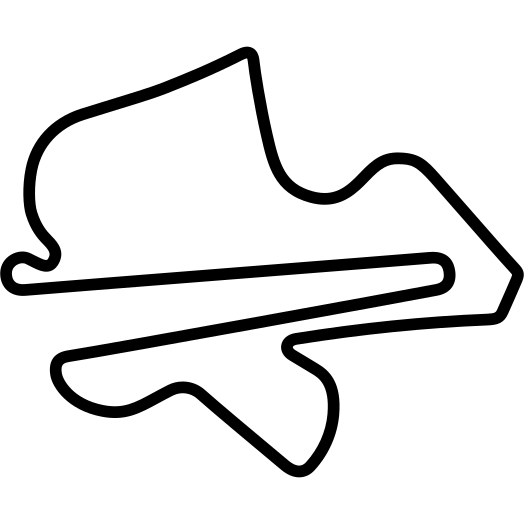
The tight castle section and ultra-long straight created one of the most distinctive layouts of the modern era. Nico Rosberg controlled the race from pole position, taking a dominant victory that proved crucial in his eventual championship-winning season.
From 2017 onward, the race was rebranded as the Azerbaijan Grand Prix, ending the European Grand Prix name.
A Race Without Borders
Unlike most Grand Prix, the European Grand Prix was never permanently tied to a single nation or circuit. It served different purposes in different eras: a badge of prestige in the 1920s, a flexible calendar solution in the 1990s, and a branding experiment in the 2000s.
More F1 Race Winners
From Adelaide to Silverstone to Monza and Spa, we chart the full story of every F1 winner from each event’s first race to the last.
Seen in: