





















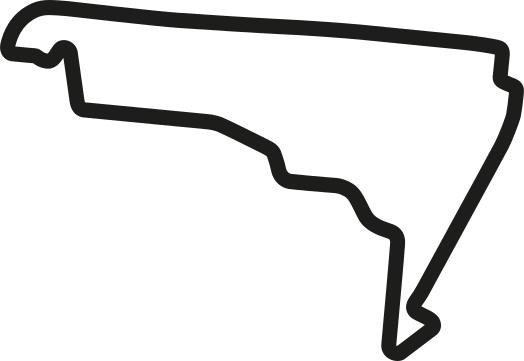















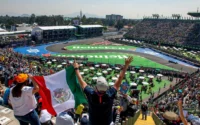
After its pandemic-enforced absence in 2020, the Mexico City Grand Prix roared back onto the Formula 1 calendar in 2021. Set more than 2,200 metres above sea level at the Autódromo Hermanos Rodríguez, the race presents one of the most unique technical challenges in the sport. Thin air affects aerodynamics, cooling and engine performance, while the stadium section delivers one of the most atmospheric scenes in modern Formula 1.
Since its return, the event has produced dominant drives, strategic masterclasses and landmark victories. Here is a closer look at every winner in the current era.
What To Know?
- Verstappen’s Mexico mastery
Max Verstappen won three consecutive Mexico City Grands Prix from 2021 to 2023, extending his already formidable record at the Autódromo Hermanos Rodríguez. - Altitude defines everything
At over 2,200 metres above sea level, the Autódromo Hermanos Rodríguez is the highest circuit on the Formula 1 calendar, dramatically affecting aerodynamics, engine performance and cooling. - 2022 record breaker
Verstappen’s 2022 Mexico victory was his 14th win of the season, setting a new single-season record at the time. - A new era of winners
Since 2024, the race has been won by two different teams, with Carlos Sainz for Scuderia Ferrari and Lando Norris for McLaren signalling a competitive shift at the front.
List of Every Mexico City Grand Prix Winner
| Year | Circuit | Driver | Constructor | Start Pos. | Win margin | Race time |
|---|---|---|---|---|---|---|
| 2026 | Mexico City | |||||
| 2025 | Mexico City | Lando Norris | McLaren-Mercedes | 1 | 30.324s | 1hr 37m 58.574s |
| 2024 | Mexico City | Carlos Sainz | Ferrari | 1 | 4.705s | 1hr 40m 55.800s |
| 2023 | Mexico City | Max Verstappen | Red Bull-Honda RBPT | 3 | 13.875s | 2hr 02m 30.814s |
| 2022 | Mexico City | Max Verstappen | Red Bull-RBPT | 1 | 15.186s | 1hr 38m 36.729s |
| 2021 | Mexico City | Max Verstappen | Red Bull-Honda | 3 | 16.555s | 1hr 38m 39.086s |
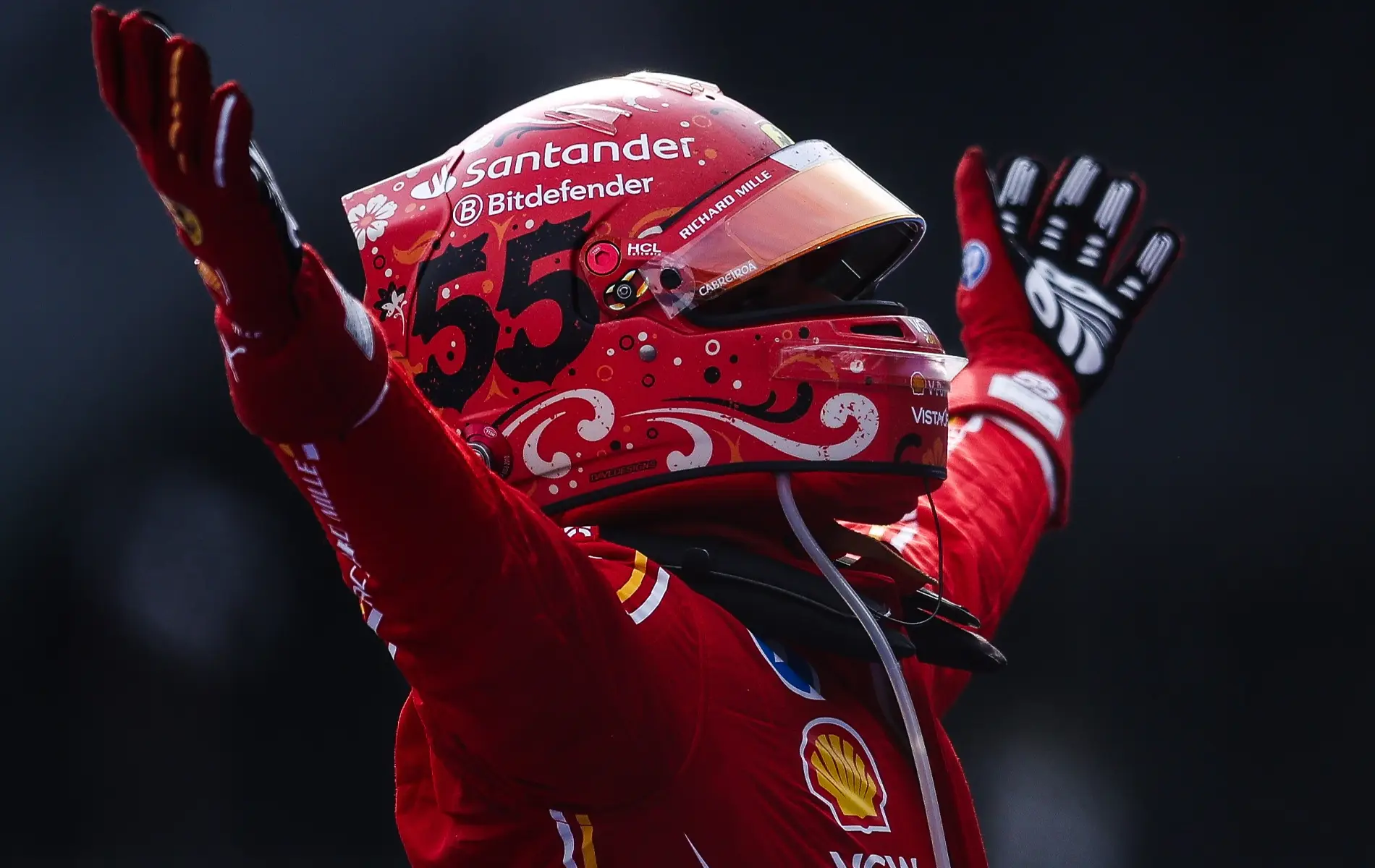
Mexico City Grand Prix Winner: 2021 to Today
The 2021 Mexico City Grand Prix was the first race in the country since the COVID-19 cancellation and proved pivotal in the title fight between Max Verstappen and Lewis Hamilton.
Starting third, Verstappen launched brilliantly and swept around the outside into Turn 1 to seize the lead. From there, the Red Bull driver controlled the race with authority, managing tyres and pace in the demanding high altitude conditions.
Verstappen’s victory strengthened his championship charge and reinforced his affinity with the Mexico City circuit, where Red Bull’s high downforce efficiency traditionally shines despite the thin air.
One year later, Verstappen returned even stronger. Having already secured the 2022 World Championship, he delivered a controlled performance from pole position.
The 2022 win was historically significant. It was his 14th victory of the season, setting a new benchmark for most wins in a single Formula 1 campaign at the time. The performance underlined the strength of the RB18 package and Verstappen’s consistency across varying circuit characteristics.
Mexico City once again proved to be fertile ground for Red Bull, whose car characteristics and cooling solutions were ideally suited to the unique environment.
In 2023, Verstappen completed a Mexico City hat trick. Although he started third, the Dutch driver wasted little time asserting himself at the front. Despite interruptions and race neutralisations extending the overall race time, Verstappen remained untroubled once in clear air.
By this stage, the RB19 had established itself as one of the most dominant cars in Formula 1 history. Mexico City became symbolic of the Verstappen era, combining clinical race execution with outright performance superiority.
Three consecutive wins at the same venue placed him among the most successful drivers in the event’s long history, which stretches back to the 1960s.
The 2024 edition saw a shift in momentum. Carlos Sainz claimed victory for Ferrari, converting pole position into a measured and precise win.
See also…
Ferrari’s performance at altitude had often fluctuated in previous seasons, but in 2024, the team arrived with a package capable of handling both the long straight and the technical stadium section. Sainz controlled proceedings from the front, managing pressure in the closing laps to secure a narrow but decisive win.
The result ended Verstappen’s Mexico streak and was one of Ferrari’s standout victories in the modern ground-effect era.
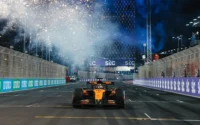
In 2025, Lando Norris added his name to the Mexico City roll of honour with a commanding performance for McLaren.
Starting from pole, Norris delivered one of the most emphatic Mexico victories of the modern era, winning by over thirty seconds. The McLaren proved exceptionally well-balanced through the slow and medium-speed sections, while maintaining strong straight-line efficiency.
Mexico City’s Modern Identity
Since its return, the Mexico City Grand Prix has developed a clear narrative arc. Verstappen established early dominance, Ferrari interrupted the pattern, and McLaren continued the competitive reshuffle.
The circuit itself remains a standout on the calendar. The charge down to Turn 1 regularly shapes the race, while the Foro Sol stadium section creates one of Formula 1’s most distinctive visual spectacles. At high altitude, teams must run Monaco levels of downforce while managing cooling demands closer to Monza levels of stress.
With the event contracted through 2028, the Mexico City Grand Prix looks set to remain a defining battleground of the modern era.
More F1 Race Winners
From Adelaide to Silverstone to Monza and Spa, we chart the full story of every F1 winner from each event’s first race to the last.
Seen in: