
























The 1960 United States Grand Prix took place on 20 November 1960 at Riverside International Raceway in Riverside. It marked the final round of the 1960 Formula One World Championship, bringing both the Drivers’ title fight and the manufacturers’ contest to a close.
Stirling Moss closed the 2.5-litre era with victory at Riverside. Innes Ireland finished second ahead of Bruce McLaren, while champion Jack Brabham recovered from early stops to take fourth. While the race itself was won in commanding fashion by Stirling Moss, the championship spotlight fell on Jack Brabham. By finishing fourth, the Australian secured his second consecutive World Drivers’ Championship, becoming only the third driver in history—after Alberto Ascari and Juan Manuel Fangio—to successfully defend the title.
Race Guide
Season: 1960 F1 World Championship
Race date: Sunday, 20 November 1960
Race start time: 14:00 local time (UTC-08:00)
Circuit: Riverside International Raceway
Laps: 75 laps
Circuit length: 5.271 km
1959 winner: Bruce McLaren
Previous race: 1960 Italian Grand Prix
Next race: 1961 Monaco Grand Prix
| Pole position | ||
|---|---|---|
| Driver | Stirling Moss | Lotus |
| Time | 1:54.4 | |
| Fastest lap | ||
| Driver | Jack Brabham | Cooper |
| Time | 1:56.300 on lap 71 | |
| Podium | ||
| First | Stirling Moss | Lotus |
| Second | Innes Ireland | Lotus |
| Third | Bruce McLaren | Cooper |
Weekend Schedule
| Date | Session | Local Time |
|---|---|---|
| 17 November 1960 | Thursday practice | Start time unconfirmed |
| 18 November 1960 | Friday practice | Start time unconfirmed |
| 19 November 1960 | Saturday final qualifying | Start time unconfirmed |
| 20 November 1960 | Race | 14:00 |
Championship background
Jack Brabham arrived at round 10 leading the 1960 F1 World Championship on 40 points, with Bruce McLaren on 33. Cooper – Climax headed the constructors’ standings after the preceding race with 48 points.
Despite Formula One’s growing prestige in Europe, its foothold in the United States remained uncertain. Promoter Alec Ulmann once again struggled to attract a large audience, echoing the disappointing turnout of the previous year’s race at Sebring.
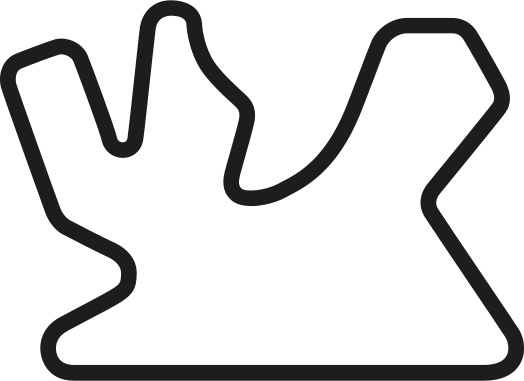
The Riverside circuit, set against the desert landscape near the Box Springs Mountains, offered a dramatic and technically demanding layout. Its most distinctive feature was a sweeping uphill esses section just after the start-finish line—an intimidating test for drivers and machinery alike.
Local interest centred on Californian driver Dan Gurney, who lined up as the crowd favourite. Yet, only around 25,000 spectators were present—far fewer than organisers had hoped for.
Adding to the event’s difficulties, Ulmann had inadvertently alienated the local press. After publicly downplaying the significance of a successful sports car race held earlier that year, he drew the ire of Los Angeles Times publisher Otis Chandler. The result was near-total media silence in the region—hardly ideal for a sport trying to establish itself in America.
Race entries
Ferrari stayed home to prepare for the new formula, releasing Phil Hill to Yeoman Credit and von Trips to Centro Sud. Jim Hall made his championship debut, Ron Flockhart joined the works Coopers, and Chuck Daigh returned with a lighter, improved Scarab.
Thursday practice
The three-day programme gave newcomers time to learn Riverside’s uphill esses and long straight. Local familiarity was valuable, but the meeting also brought gusts strong enough to blow sand across the circuit and reduce visibility. Teams had to prepare for those changing conditions as well as the unfamiliar layout.
Friday practice
Preparation involved several unusual car combinations. Phil Hill was learning a rear-engined Cooper after racing Ferrari’s front-engined machine, while Daigh assessed the developed Scarab against its European rivals. The works Lotus cars also differed in rear-brake layout. Contemporary reporting describes these comparisons across the meeting without a complete day-by-day timing record.
Saturday final qualifying
Moss broke a gearbox during the final day, making Walker’s spare car important to the preparations. Surtees also suffered a driveshaft failure, prompting replacement shafts for the works Lotus cars. Moss nevertheless secured pole ahead of Brabham and Gurney, although concerns about his own older driveshafts remained before the race.
Qualifying Classification
Three practice days preceded Sunday’s race, with the fastest eligible lap determining the grid. The surviving account does not allocate every development or weather change to a particular session, so no separate daily classification has been invented.
| Pos. | No. | Driver | Team | Best Time |
|---|---|---|---|---|
| 1 | 5 | Stirling Moss | Lotus | 1:54.4 |
| 2 | 2 | Jack Brabham | Cooper | 1:55.0 |
| 3 | 16 | Dan Gurney | BRM | 1:55.2 |
| 4 | 15 | Jo Bonnier | BRM | 1:55.6 |
| 5 | 12 | Jim Clark | Lotus | 1:55.6 |
| 6 | 11 | John Surtees | Lotus | 1:56.6 |
| 7 | 10 | Innes Ireland | Lotus | 1:57.0 |
| 8 | 7 | Olivier Gendebien | Cooper | 1:57.2 |
| 9 | 6 | Tony Brooks | Cooper | 1:57.2 |
| 10 | 3 | Bruce McLaren | Cooper | 1:57.4 |
| 11 | 17 | Graham Hill | BRM | 1:57.6 |
| 12 | 24 | Jim Hall | Lotus | 1:58.2 |
| 13 | 9 | Phil Hill | Cooper | 1:58.8 |
| 14 | 8 | Henry Taylor | Cooper | 1:59.0 |
| 15 | 14 | Roy Salvadori | Cooper | 1:59.6 |
| 16 | 26 | Wolfgang von Trips | Cooper | 2:01.4 |
| 17 | 21 | Brian Naylor | JBW | 2:02.2 |
| 18 | 23 | Chuck Daigh | Scarab | 2:02.6 |
| 19 | 18 | Maurice Trintignant | Cooper | 2:03.2 |
| 20 | 25 | Pete Lovely | Cooper | 2:03.4 |
| 21 | 4 | Ron Flockhart | Cooper | 2:04.4 |
| 22 | 20 | Robert Drake | Maserati | 2:05.4 |
| 23 | 19 | Ian Burgess | Cooper | 2:06.6 |
What happened in the 1960 United States Grand Prix?
Race day dawned under near-perfect conditions, but the modest crowd was about to witness a spectacular display of Formula One machinery.
Brabham made a strong start, leading into Turn 1 ahead of Gurney and Moss. Early drama struck when both Phil Hill and Olivier Gendebien stalled on the grid, though both eventually got underway. On lap 4, Surtees spun in front of Clark, retiring on the spot and forcing Clark to continue with a hastily repaired car using parts from his teammate’s damaged Lotus.
Brabham’s race soon took an unexpected turn. Determined not to repeat his fuel miscalculation from Sebring the previous year, he had overfilled his car. The excess fuel began spilling and igniting on the hot exhaust, creating alarming flames at the rear. Multiple pit stops failed to fully resolve the issue, and Brabham was forced into a recovery drive.
That misfortune handed control of the race to Moss, who quickly established a commanding lead. Gurney’s hopes of victory ended when his BRM suffered a mechanical failure, allowing Bonnier to move into second ahead of Ireland and Graham Hill.
Attrition continued to shape the race. Graham Hill retired with gearbox trouble, while Bonnier began to lose pace due to engine issues. Meanwhile, Brabham charged back through the field after his stops, demonstrating both determination and pace.
The Finish
Moss was untouchable. He cruised to victory in what would be the final race of the 2.5-litre Formula One era, securing his fourteenth win under those regulations—just one shy of Fangio’s tally.
Behind him, McLaren secured second place, with Ireland completing the podium. Brabham’s gritty recovery earned him fourth, more than enough to confirm his championship triumph.
Phil Hill, running strongly in unfamiliar machinery, eventually slipped back after a spin, while Bonnier managed to nurse his ailing BRM home to claim the final points position.
Post-race
Moss’s victory also secured him third place in the championship for the second consecutive year, reinforcing his status as one of the era’s finest drivers—even without a world title.
For Ulmann, however, the race was bittersweet. Having twice struggled to establish a successful Formula One event in the United States, he personally covered financial shortfalls to ensure teams and suppliers were paid. Moss received $7,500 in prize money, a significant sum at the time.
Despite the challenges, Formula One’s American story was far from over. The following year, the United States Grand Prix found a more permanent and enthusiastic home at Watkins Glen, while California would later rejoin the calendar with the United States Grand Prix West at Long Beach in 1976.
1960 United States Race Results
The 1960 United States Grand Prix was held on 20 November 1960, with a scheduled start of 14:00 local time.
| Pos. | No. | Driver | Team | Laps | Time / Retired | Pts. |
|---|---|---|---|---|---|---|
| 1 | 5 | Stirling Moss | Lotus | 75 | 2:28:52.2 | 8 |
| 2 | 10 | Innes Ireland | Lotus | 75 | + 38.0 | 6 |
| 3 | 3 | Bruce McLaren | Cooper | 75 | + 52.0 | 4 |
| 4 | 2 | Jack Brabham | Cooper | 74 | + 1 Lap | 3 |
| 5 | 15 | Jo Bonnier | BRM | 74 | + 1 Lap | 2 |
| 6 | 9 | Phil Hill | Cooper | 74 | + 1 Lap | 1 |
| 7 | 24 | Jim Hall | Lotus | 73 | + 1 Lap | 0 |
| 8 | 14 | Roy Salvadori | Cooper | 73 | + 2 Laps | 0 |
| 9 | 26 | Wolfgang von Trips | Cooper | 72 | + 3 Laps | 0 |
| 10 | 23 | Chuck Daigh | Scarab | 70 | + 5 Laps | 0 |
| 11 | 25 | Pete Lovely | Cooper | 69 | + 6 Laps | 0 |
| 12 | 7 | Olivier Gendebien | Cooper | 69 | + 6 Laps | 0 |
| 13 | 20 | Robert Drake | Maserati | 68 | + 7 Laps | 0 |
| 14 | 8 | Henry Taylor | Cooper | 68 | + 7 Laps | 0 |
| 15 | 18 | Maurice Trintignant | Cooper | 66 | + 9 Laps | 0 |
| 16 | 12 | Jim Clark | Lotus | 61 | + 14 Laps | 0 |
| Ret | 17 | Graham Hill | BRM | 34 | Gearbox | 0 |
| Ret | 19 | Ian Burgess | Cooper | 29 | Ignition | 0 |
| Ret | 21 | Brian Naylor | JBW | 20 | Engine | 0 |
| Ret | 16 | Dan Gurney | BRM | 18 | Blown core plug | 0 |
| Ret | 4 | Ron Flockhart | Cooper | 11 | Transmission | 0 |
| Ret | 6 | Tony Brooks | Cooper | 6 | Spun Off | 0 |
| Ret | 11 | John Surtees | Lotus | 3 | Accident | 0 |
1960 United States Grand Prix Fastest Laps
| Pos. | No. | Driver | Team | Lap | Time |
|---|---|---|---|---|---|
| 1 | 2 | Jack Brabham | Cooper | 71 | 1:56.300 |
Only drivers with a recorded lap time appear. No fastest-lap bonus point was awarded.
1960 Post-Race F1 Championship Standings
Championship standings after the 1960 United States Grand Prix.
1960 Post-Race F1 Drivers’ Championship Standings
| Pos | Driver | Nationality | Car | PTS |
|---|---|---|---|---|
| 1 | Jack Brabham | AUS | Cooper Climax | 43 |
| 2 | Bruce McLaren | NZL | Cooper Climax | 34 |
| 3 | Stirling Moss | GBR | Lotus Climax | 19 |
| 4 | Innes Ireland | GBR | Lotus Climax | 18 |
| 5 | Phil Hill | USA | Cooper Climax | 16 |
| 6 | Olivier Gendebien | BEL | Cooper Climax | 10 |
| 6 | Wolfgang von Trips | GER | Cooper Maserati | 10 |
| 8 | Jim Rathmann | USA | Watson Offenhauser | 8 |
| 8 | Richie Ginther | USA | Ferrari | 8 |
| 8 | Jim Clark | GBR | Lotus Climax | 8 |
| 11 | Tony Brooks | GBR | Cooper Climax | 7 |
| 12 | Cliff Allison | GBR | Ferrari | 6 |
| 12 | Rodger Ward | USA | Watson Offenhauser | 6 |
| 12 | John Surtees | GBR | Lotus Climax | 6 |
| 15 | Paul Goldsmith | USA | Epperly Offenhauser | 4 |
| 15 | Graham Hill | GBR | BRM | 4 |
| 15 | Willy Mairesse | BEL | Ferrari | 4 |
| 15 | Jo Bonnier | SWE | BRM | 4 |
| 19 | Carlos Menditeguy | ARG | Cooper Maserati | 3 |
| 19 | Don Branson | USA | Phillips Offenhauser | 3 |
| 19 | Henry Taylor | GBR | Cooper Climax | 3 |
| 19 | Giulio Cabianca | ITA | Cooper Castellotti | 3 |
| 23 | Johnny Thomson | USA | Lesovsky Offenhauser | 2 |
| 24 | Eddie Johnson | USA | Trevis Offenhauser | 1 |
| 24 | Lucien Bianchi | BEL | Cooper Climax | 1 |
| 24 | Ron Flockhart | GBR | Cooper Climax | 1 |
| 24 | Hans Herrmann | GER | Porsche | 1 |
1960 Post-Race F1 Constructors’ Championship Standings
| Pos | Team | PTS |
|---|---|---|
| 1 | Cooper Climax | 48 |
| 2 | Lotus Climax | 34 |
| 3 | Ferrari | 26 |
| 4 | BRM | 8 |
| 5 | Cooper Maserati | 3 |
| 6 | Cooper Castellotti | 3 |
Drivers and constructors counted their best 6 results. Only the highest-placed eligible car for each constructor could score constructor points. Indianapolis counted towards the drivers’ championship only. Race winners scored eight points, and there was no fastest-lap bonus.
1960 Formula 1 Race Calendar
Seen in: