The braking point moves. The painted line becomes a skid pan. A corner that was straightforward ten minutes ago suddenly offers several different ways to ruin an afternoon. Wet-weather Formula 1 demands speed—after all, it’s still a race—but it also demands another level of ability from the driver to keep things facing in the right direction.
That’s why the very best drives in rain gain notoriety. They make familiar circuits look unfamiliar and reveal differences that a dry race can hide. The quickest car doesn’t always matter (although it does help), as do tyre management, traffic, strategy and feeling the confidence to make moves others wouldn’t dare. Rain doesn’t always magically level the playing field. It does, however, ask a different set of questions from those in the cockpit.
What to know
- We explore ten drives that span from 1963 to 2024. Nine ended in victory, while Ayrton Senna’s second place at the rain-shortened 1984 Monaco Grand Prix is the exception.
- Jim Clark at Spa and Jackie Stewart at the Nürburgring each won by more than four minutes on long, unforgiving circuits.
- Senna appears three times: for his charge at Monaco, his first win in Portugal and his opening lap followed by a commanding victory at Donington Park.
- Jenson Button features after recovering from repeated setbacks to win on the final lap in Canada and Max Verstappen came from 17th in São Paulo, helped by a red flag before pulling clear.
10 of the Best Wet-Weather F1 Drives worth watching again
Our ten picks run from Jim Clark at the old Spa-Francorchamps to Max Verstappen at Interlagos. Nine ended in victory, while Ayrton Senna‘s second place at Monaco in 1984 was too good to leave out. In those races, we’ll explore flooded circuits, changing tyre choices and drivers finding speed while most of the field fought simply to stay within the track’s limits.
| Driver | Race | Result | What stands out |
|---|---|---|---|
| Jim Clark | 1963 Belgian Grand Prix | 1st | A huge margin at the original Spa |
| Jackie Stewart | 1968 German Grand Prix | 1st | Control in rain and fog at the Nürburgring |
| Jean-Pierre Beltoise | 1972 Monaco Grand Prix | 1st | His only championship win, delivered emphatically |
| Ayrton Senna | 1984 Monaco Grand Prix | 2nd | A rookie’s arrival among the elite |
| Ayrton Senna | 1985 Portuguese Grand Prix | 1st | A first victory that immediately looked historic |
| Ayrton Senna | 1993 European Grand Prix | 1st | An opening lap followed by sustained mastery |
| Michael Schumacher | 1996 Spanish Grand Prix | 1st | Ferrari‘s difficult car transformed in the wet |
| Lewis Hamilton | 2008 British Grand Prix | 1st | More than a minute clear at home |
| Jenson Button | 2011 Canadian Grand Prix | 1st | Recovery, changing conditions and a last-lap pass |
| Max Verstappen | 2024 São Paulo Grand Prix | 1st | From 17th to a decisive victory |
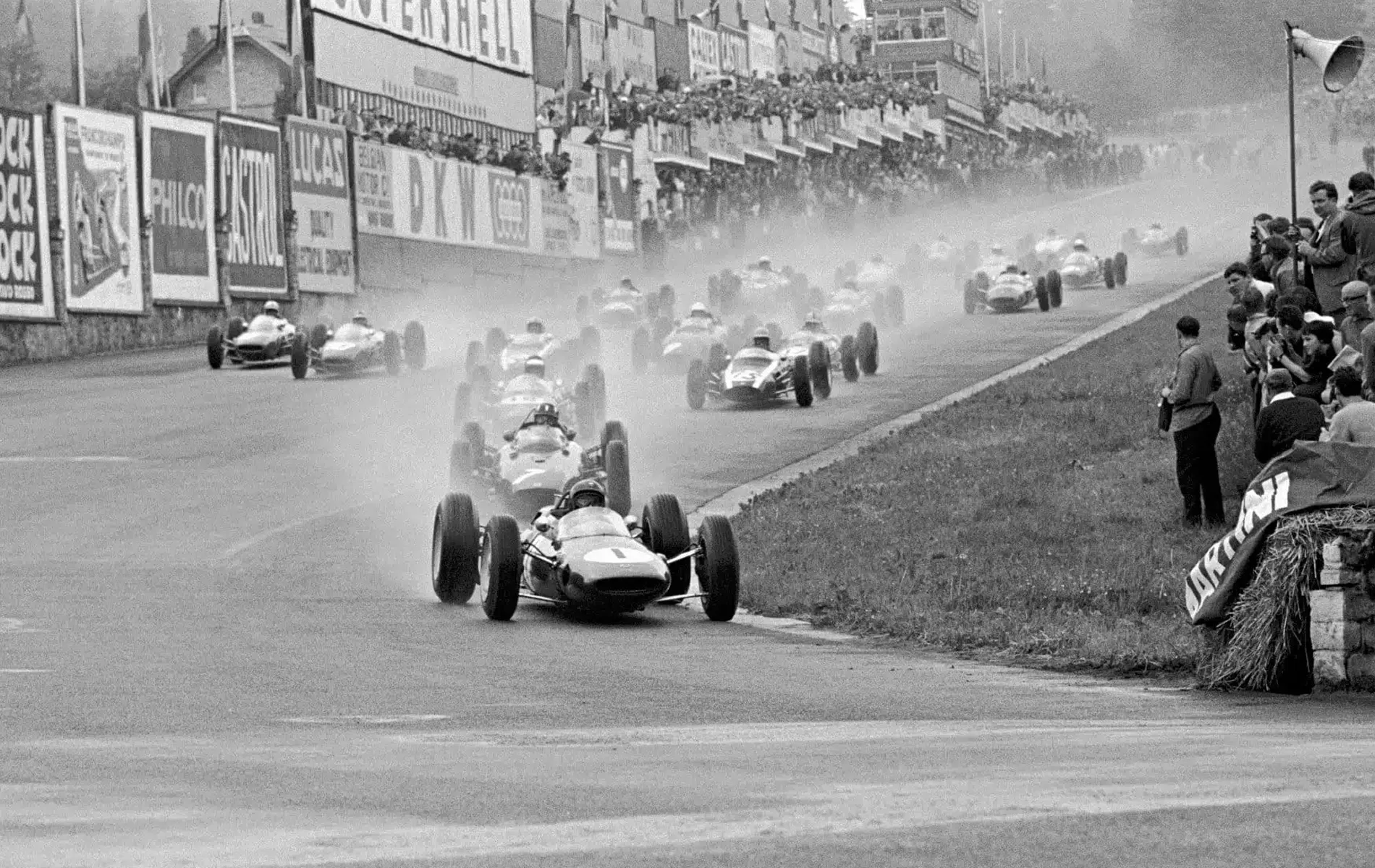
Jim Clark: Belgium, 1963
Jim Clark started eighth at the 1963 Belgian Grand Prix and won by almost five minutes. At the old Spa-Francorchamps, with its long public-road straights and unforgiving surroundings, that was an extraordinary difference to build in bad weather. Bruce McLaren finished second, with everyone else a lap or more behind.
Clark had to move forward from the fourth row before building that enormous lead. The old Spa gave him mile after mile of fast, exposed road to negotiate, with little protection if something went wrong. And little chance of ever being rescued in time if it had. By the finish, Bruce McLaren was the only other driver on the lead lap. By the time McLaren crossed the line, Clark had been finished for several minutes.
Further reading
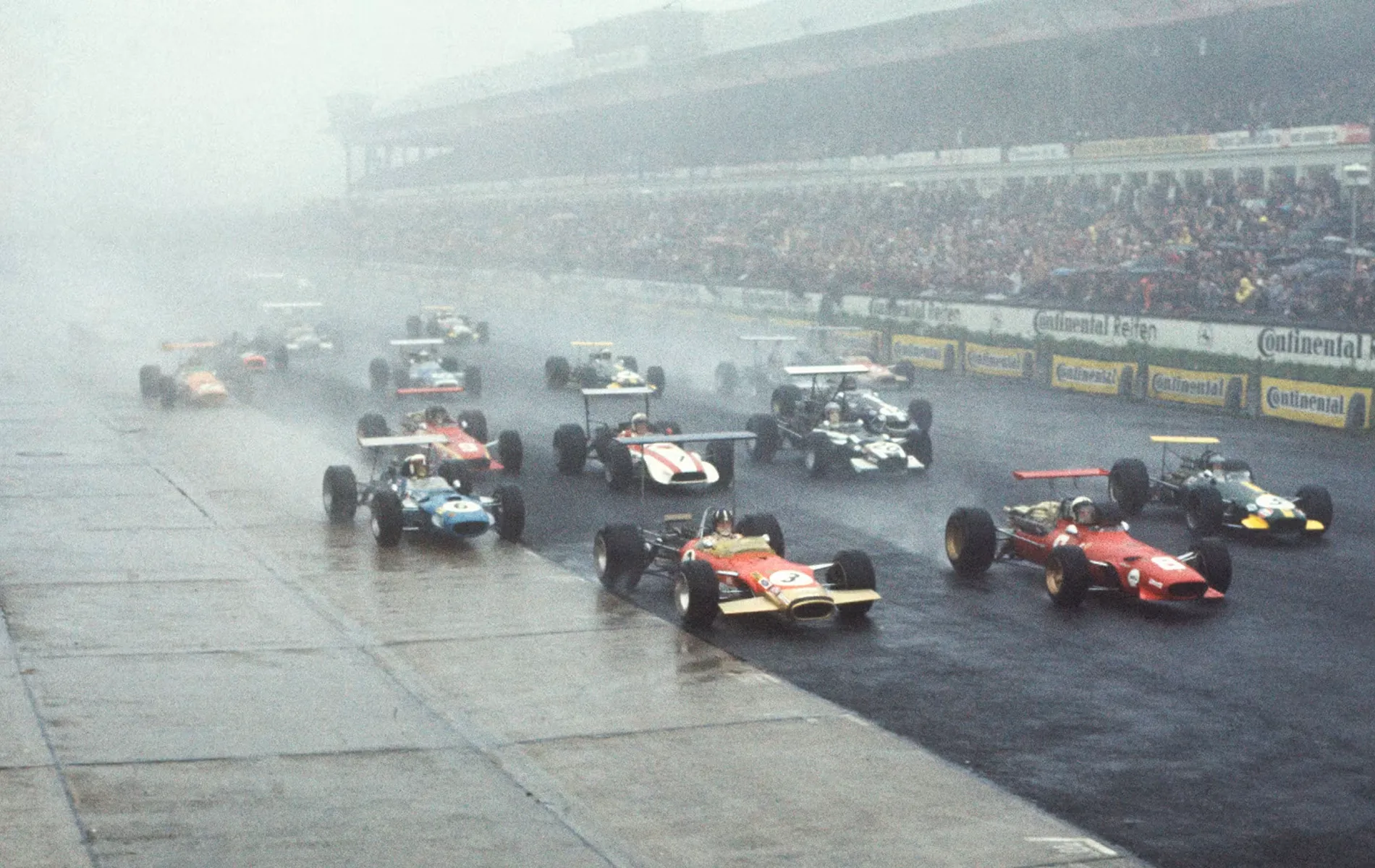
Jackie Stewart: Germany, 1968
Rain, fog and the Nürburgring‘s immense lap made the 1968 German Grand Prix a formidable challenge. Jackie Stewart, still nursing a wrist injury, won for Matra by more than four minutes over Graham Hill. The winning margin was astonishing, and the conditions made it even more remarkable.
At 22.835 kilometres long (14.2 miles) the Nürburgring Nordschleife in Germany was given the famous nickname of the “Green Hell”, by the very man who won. The track snaked through the dense, sprawling forests of the Eifel mountains and was feared by many.
Stewart’s safety concerns would become central to his career, but that day he somehow found the speed and control to leave the opposition a long way behind.
Further reading
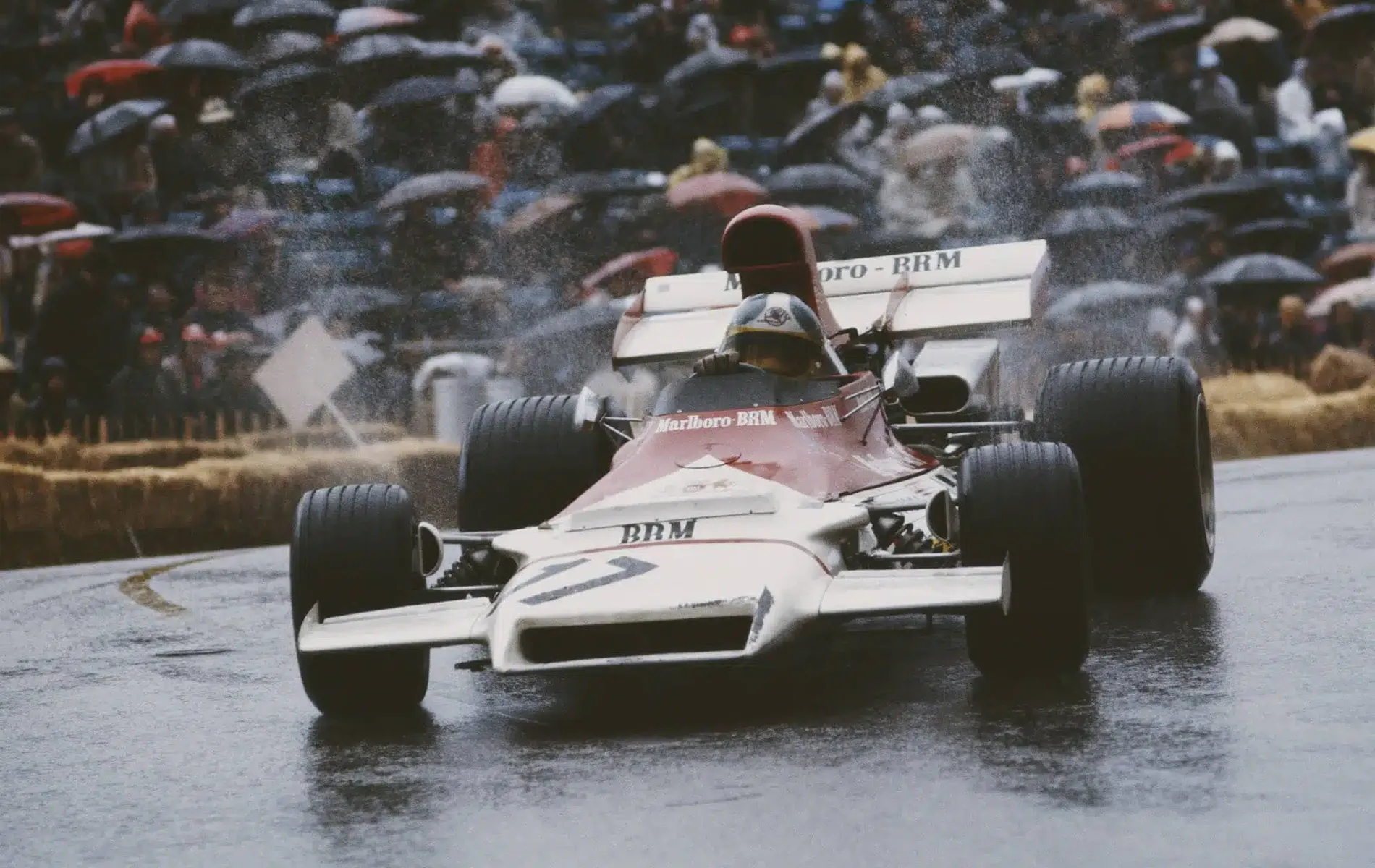
Jean-Pierre Beltoise: Monaco, 1972
Jean-Pierre Beltoise‘s only World Championship Grand Prix victory came at the 1972 Monaco Grand Prix. Driving for BRM, he beat Jacky Ickx by more than 38 seconds and lapped the rest of the field. On a street circuit with little room to recover, that was far more than simply avoiding trouble.
Ickx was the only driver Beltoise did not lap. Everyone else, including the rest of the podium contenders, had been caught and passed on a circuit where overtaking is difficult even in the dry. It was Beltoise’s only championship win and BRM’s last. Neither would return to the top step, but their final shared victory was a commanding one.
Further reading
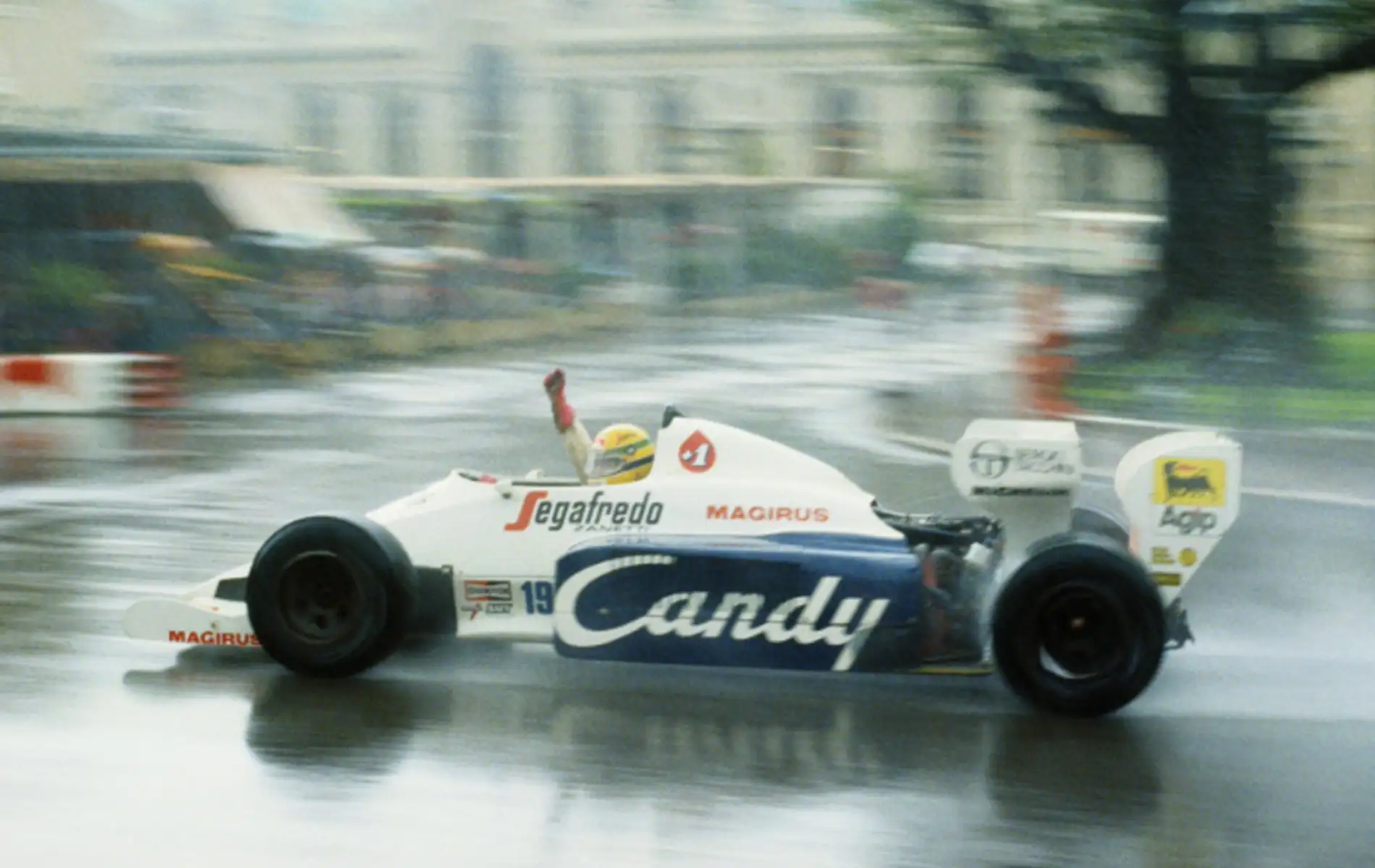
Ayrton Senna: Monaco, 1984
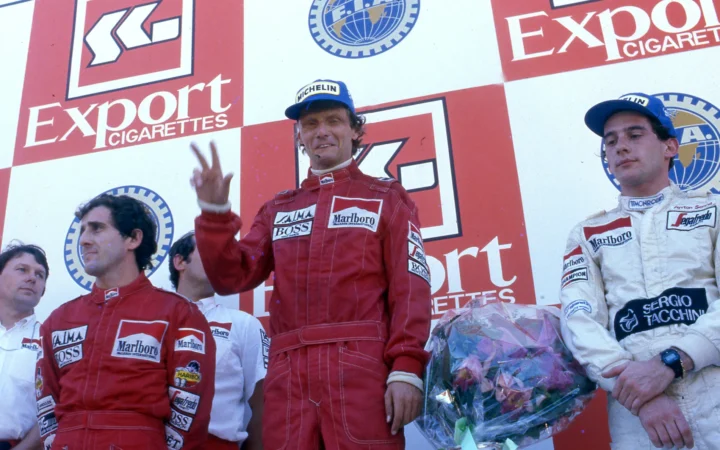
Second place rarely dominates the memory of a race, but Ayrton Senna‘s performance at the 1984 Monaco Grand Prix did exactly that. The rookie brought his Toleman through the field and was closing on Alain Prost when the race was stopped because of the weather.
Prost was declared the winner and Senna second. The stoppage left fans debating what might have happened over a full distance, but Senna had already done plenty to announce himself. A rookie in a Toleman was chasing the leading McLaren through the spray at Monaco. Bigger results would come, but this was the afternoon the wider F1 audience began watching him closely.
Further reading
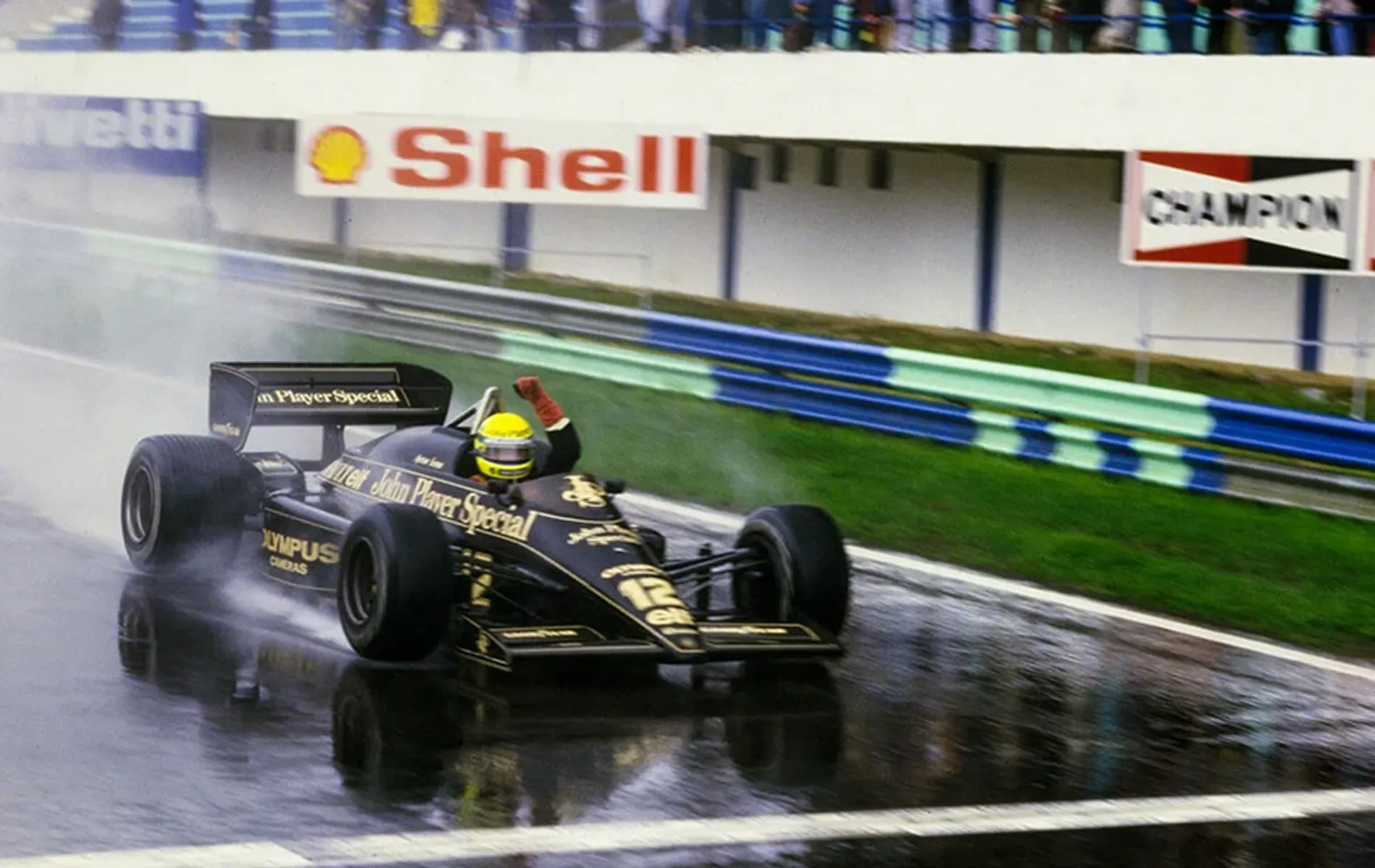
Ayrton Senna: Portugal, 1985
At the 1985 Portuguese Grand Prix, Senna delivered a wet-weather performance with an unambiguous finish. He took his first championship victory for Lotus, leading from pole and finishing more than a minute ahead of Michele Alboreto.
Only Alboreto’s Ferrari finished on the same lap while the rest of the field had been lapped as Senna dealt with the rain and the power delivery of his turbocharged Lotus. He had started at the front and stayed there, leaving none of the uncertainty that surrounded Monaco the year before. His first Grand Prix victory arrived with a winning margin of more than a minute.
Further reading
Ayrton Senna: Europe, 1993
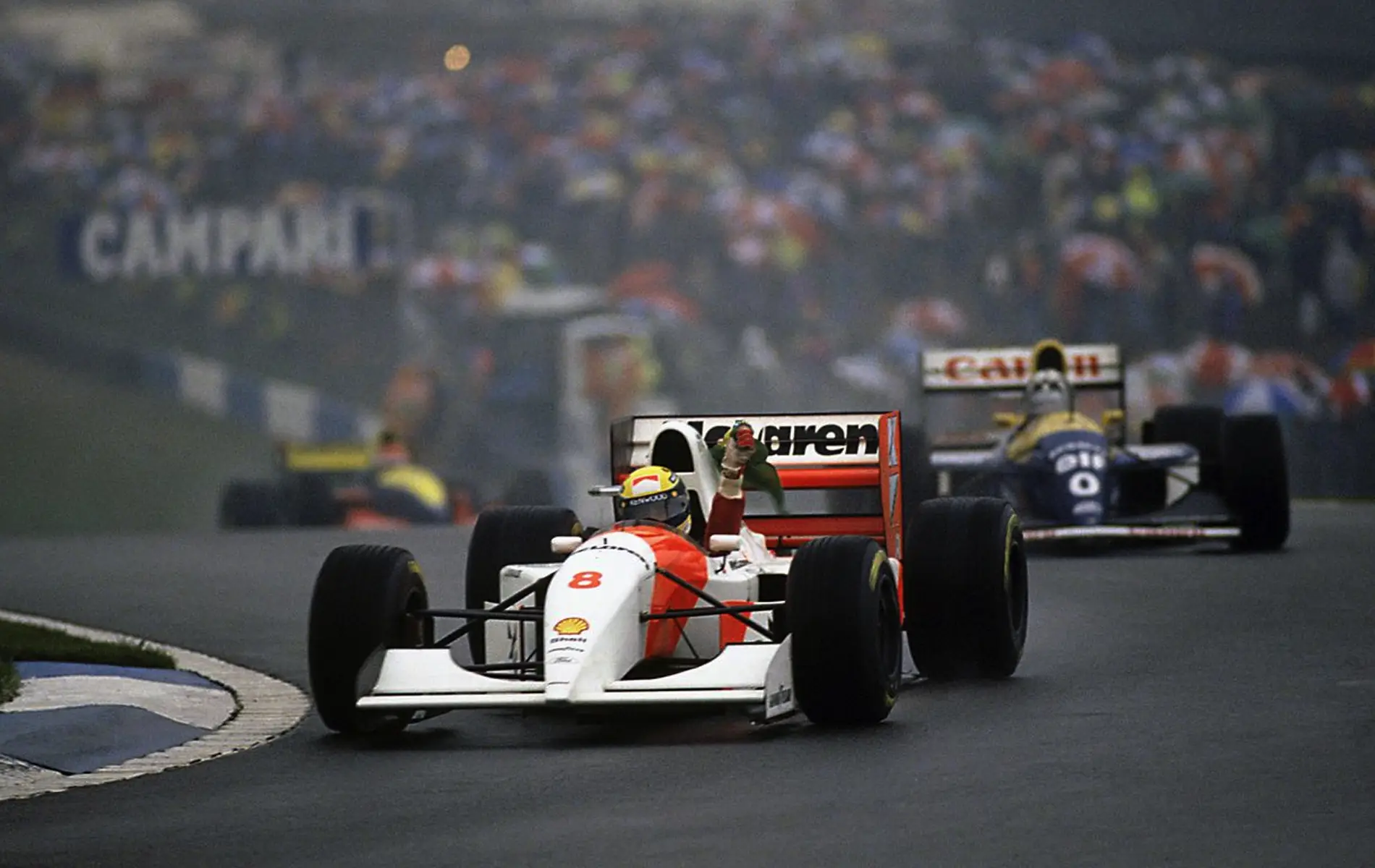
The first lap at the 1993 European Grand Prix is famous for good reason. After initially losing ground, Senna passed Michael Schumacher, Karl Wendlinger, Damon Hill and Alain Prost to lead at Donington Park. Yet the opening lap is only the trailer for the full performance.
The weather kept changing after that opening lap, giving the teams repeated decisions about tyres. Senna continued to pull away and won by more than 80 seconds from Hill. Prost finished a lap down. The opening sequence makes a wonderful highlights clip, but the lead Senna built over the rest of the afternoon was every bit as impressive.
Further reading

Michael Schumacher: Spain, 1996
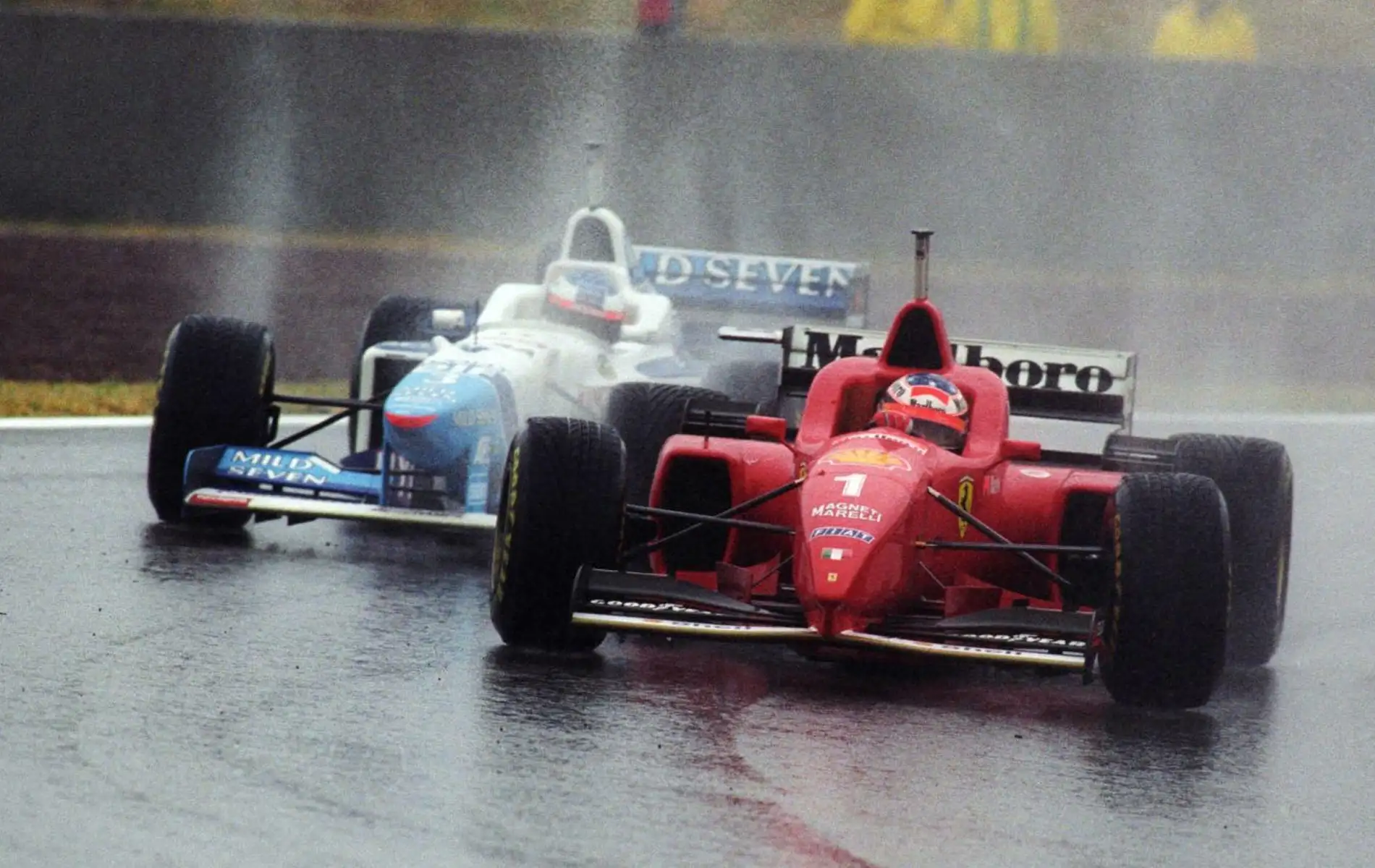
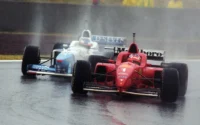
Ferrari‘s 1996 car was not the polished championship machines the team would later build around Michael Schumacher. At the 1996 Spanish Grand Prix, the then two-time champion, recovered from a poor start, took the lead from Jacques Villeneuve and disappeared into the rain.
Jean Alesi finished 45.302 seconds behind, with Villeneuve third. Only six cars reached the finish. Schumacher’s first Ferrari victory had come in the sort of weather that made getting around the circuit an achievement in itself, yet he was comfortably quicker than his pursuers. Ferrari still had a long way to go before its championship years, but here was a race its new driver had made his own.
Further reading
Lewis Hamilton: Britain, 2008
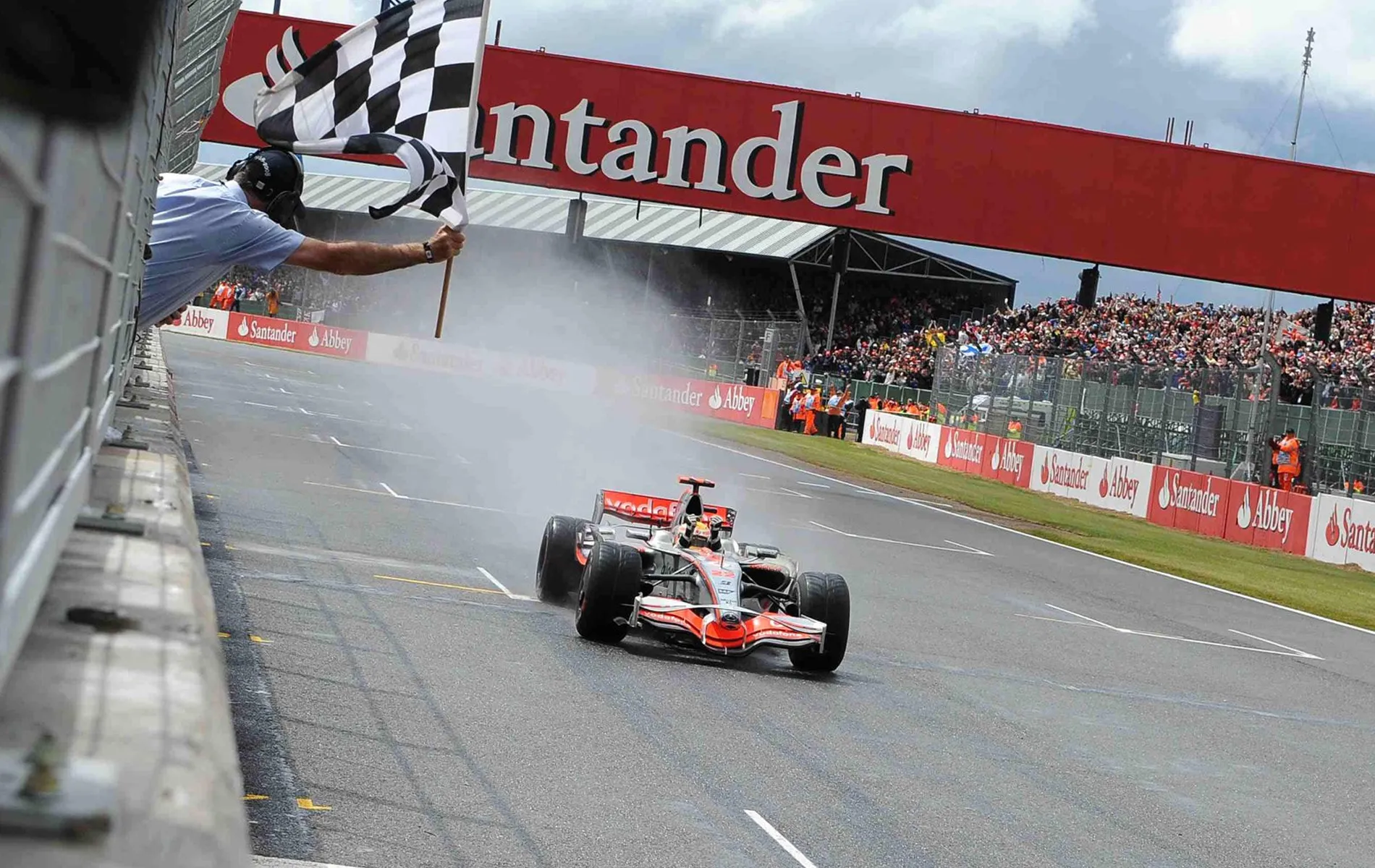
Lewis Hamilton won the 2008 British Grand Prix by 68.577 seconds from Nick Heidfeld. On a day when experienced drivers repeatedly spun, he combined pace with the right tyre decisions and produced a home victory that still defines his early career.
Barrichello took third for Honda after a switch to full wet tyres, showing how quickly the right rubber could transform a driver’s race. Hamilton kept his advantage through the changing conditions and finished more than a minute ahead of Heidfeld. In front of his home crowd, he had delivered one of the outstanding victories of his early career, while rivals spent much of the afternoon trying to stay pointing forwards.
Further reading

Jenson Button: Canada, 2011
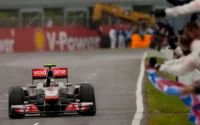
Jenson Button‘s 2011 Canadian Grand Prix was messy before it was magnificent. Contact, pit visits and a penalty repeatedly sent him back into recovery mode. A lengthy red-flag stoppage made an already difficult race feel even longer. By the time the circuit began drying, Button had endured enough setbacks for several ordinary Grands Prix—and still had a chance to salvage something.
On the drying circuit, Button worked his way back towards Sebastian Vettel. Then, on the final lap, Vettel ran wide, and the McLaren went through. After all the contact, stops, and lost ground, Button won. Vettel, the reigning champion, had led into the last lap, only to lose the race to a driver whose afternoon had seemed to be falling apart much earlier.
Further reading
Max Verstappen: São Paulo, 2024
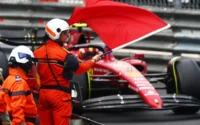
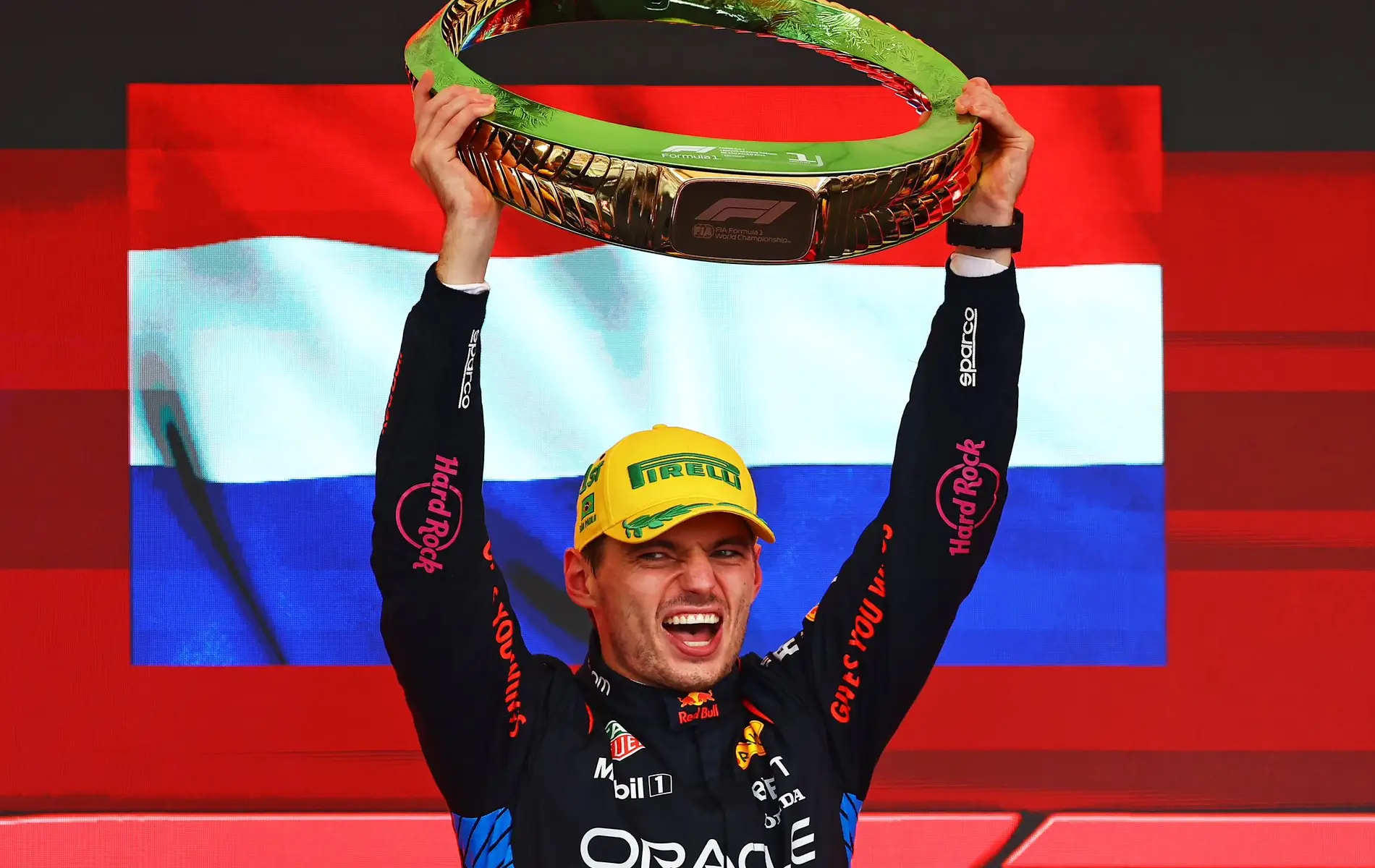
Max Verstappen started 17th at the 2024 São Paulo Grand Prix and won by 19.477 seconds. His progress through traffic was impressive before a red flag helped his strategy. After the restart, he passed Esteban Ocon and built a decisive lead.
The red flag had helped Verstappen, but he kept working, and once past Ocon, he steadily stretched the lead, finishing almost 20 seconds clear despite starting deep in the field. Ocon and Pierre Gasly completed a remarkable double podium for Alpine, but neither could match Verstappen’s pace once Red Bull had the open road ahead.
Further reading
Seen in: