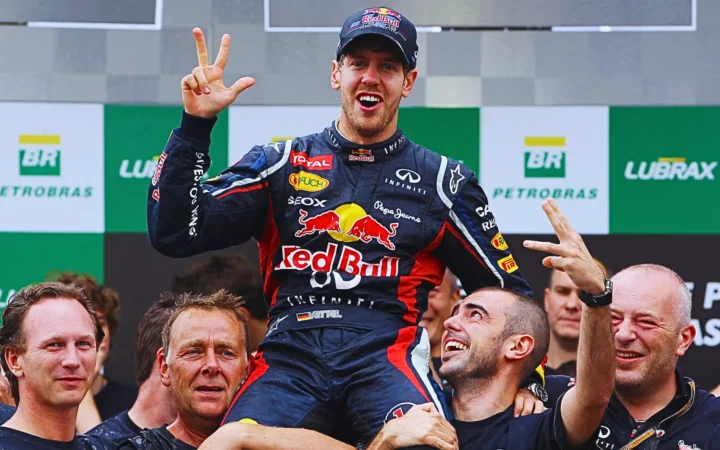
Half a point. After months of travelling, qualifying, overtaking and trying to keep a racing car in one piece, that was all that separated a world champion from his teammate in 1984. Formula 1 can produce seasons of crushing superiority, but its closest championships are wonderfully uncomfortable affairs where the trophy seems to change hands with every timing-screen refresh.
What to know
- Niki Lauda’s half-point victory in 1984 remains the smallest final championship margin.
- Eight championships were decided by one point; two more finished with a two-point gap.
- Dropped scores and changing points systems matter when comparing different eras.
- The two-point tie at the cutoff includes both 2003 and 2025, giving this list eleven seasons.
The closest championship finishes at a glance
Across decades of Formula 1, we dive into the closest Drivers’ Championships, ranked by the final official points margin. And as in any sport, rules evolve. A small margin doesn’t automatically mean the same competitive balance across eras. A win was worth eight points in 1958, nine in 1984 and 25 in 2025. Earlier championships also discarded drivers’ season race results (yes, another F1 rule oddity). We rank the closest numerical finishes under the rules that actually applied—not an attempt to rerun history with today’s scoring system.
| Rank | Season | Champion | Runner-up | Final points | Margin |
|---|---|---|---|---|---|
| 1 | 1984 | Niki Lauda | Alain Prost | 72–71.5 | 0.5 |
| =2 | 1958 | Mike Hawthorn | Stirling Moss | 42–41 | 1 |
| =2 | 1961 | Phil Hill | Wolfgang von Trips | 34–33 | 1 |
| =2 | 1964 | John Surtees | Graham Hill | 40–39 | 1 |
| =2 | 1976 | James Hunt | Niki Lauda | 69–68 | 1 |
| =2 | 1981 | Nelson Piquet | Carlos Reutemann | 50–49 | 1 |
| =2 | 1994 | Michael Schumacher | Damon Hill | 92–91 | 1 |
| =2 | 2007 | Kimi Räikkönen | Lewis Hamilton | 110–109 | 1 |
| =2 | 2008 | Lewis Hamilton | Felipe Massa | 98–97 | 1 |
| =10 | 2003 | Michael Schumacher | Kimi Räikkönen | 93–91 | 2 |
| =10 | 2025 | Lando Norris | Max Verstappen | 423–421 | 2 |
The two-point finishes in 2003 and 2025 bring the total to eleven, and both qualify for tenth place.
1984: Lauda makes half a point enough
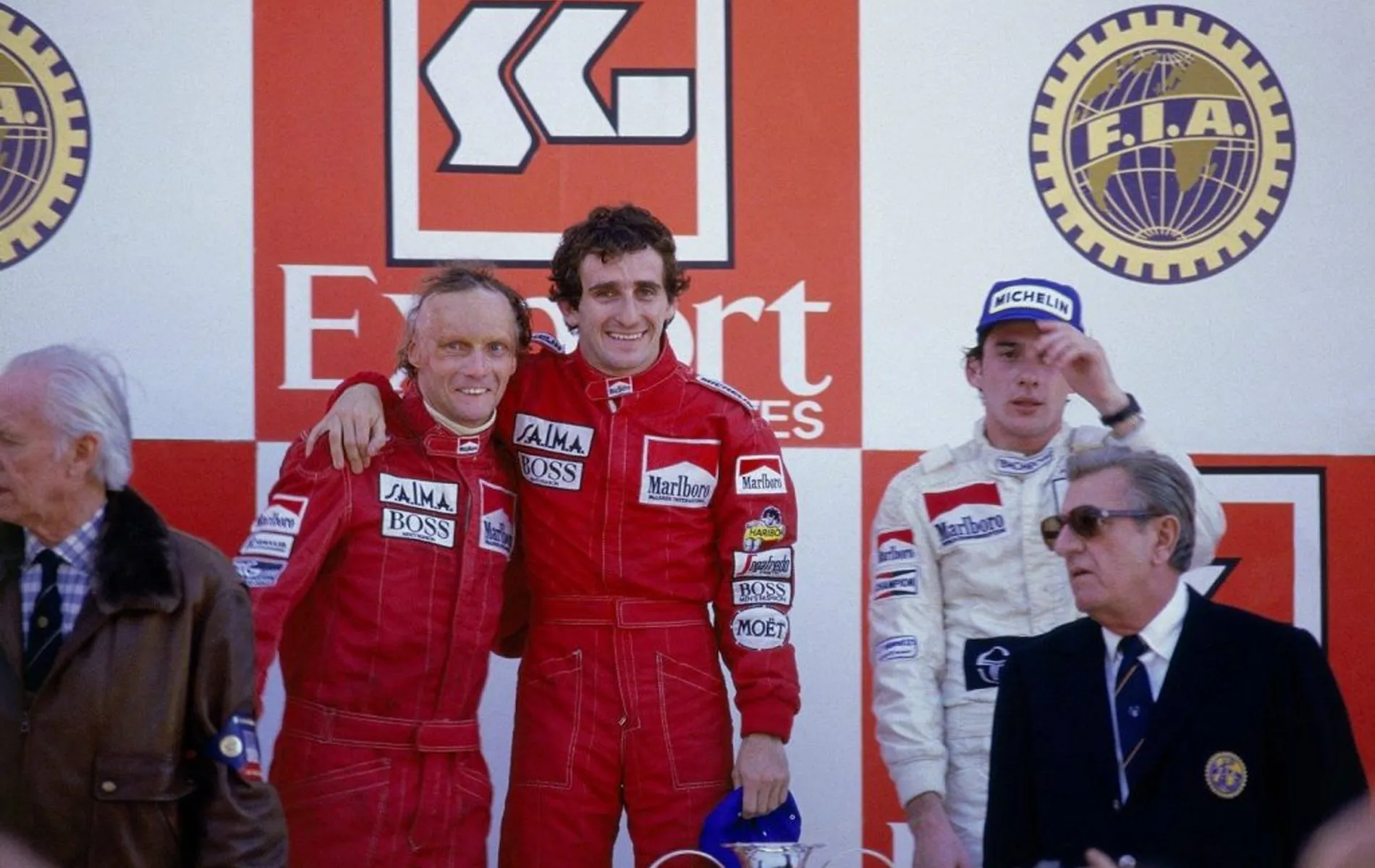
Niki Lauda won five races to Alain Prost‘s seven in 1984, yet left the 1984 Portuguese Grand Prix with the championship. Starting well down the grid, Lauda worked his way through the field to second while his McLaren teammate won. A single lost position would have cost him the title, yet he held on, finishing the season just half a point ahead of Prost.
Half points awarded at the shortened Monaco race left the championship with its unusual decimal place. By Portugal, Prost could only win the race and hope Lauda finished far enough behind. Lauda refused to oblige. Second place brought him a third world title, while Prost was left with seven victories and the narrowest championship defeat Formula 1 has ever produced.
Further reading

1958: Hawthorn, Moss and a very different calculation
Mike Hawthorn won once in 1958 whereas Stirling Moss won four times. Hawthorn nevertheless took the title by a point, helped by a succession of strong finishes under a system counting a driver’s best six results. At the 1958 Moroccan Grand Prix, Moss won but Hawthorn’s second place was enough.
Moss had earlier defended Hawthorn against a potential disqualification in Portugal, helping his rival keep valuable points. At the final round in Morocco, those points were still part of the calculation. Moss delivered another victory, but could do nothing about Hawthorn finishing second. Vanwall left the season with the first-ever Constructors’ Championship while Ferrari and Hawthorn took the drivers’ crown.
Further reading


1961: A title inseparable from tragedy
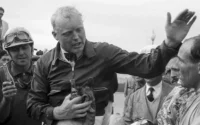
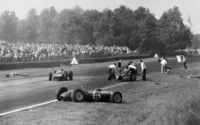
Phil Hill clinched the championship by winning the 1961 Italian Grand Prix. Tragically, his Ferrari teammate Wolfgang von Trips, who had led the standings, was killed in the race along with spectators. Hill finished the season one point ahead, becoming champion in circumstances that overwhelmed any celebration of the result.
Ferrari had made an excellent start to the new 1.5-litre formula, putting both drivers in contention for the title. Their championship fight ended at Monza with Hill’s victory and the loss of his teammate. Hill became the first American World Drivers’ Champion, but the race that secured his place in history was one of the sport’s darkest afternoons.
Further reading
1964: Surtees wins on counting scores
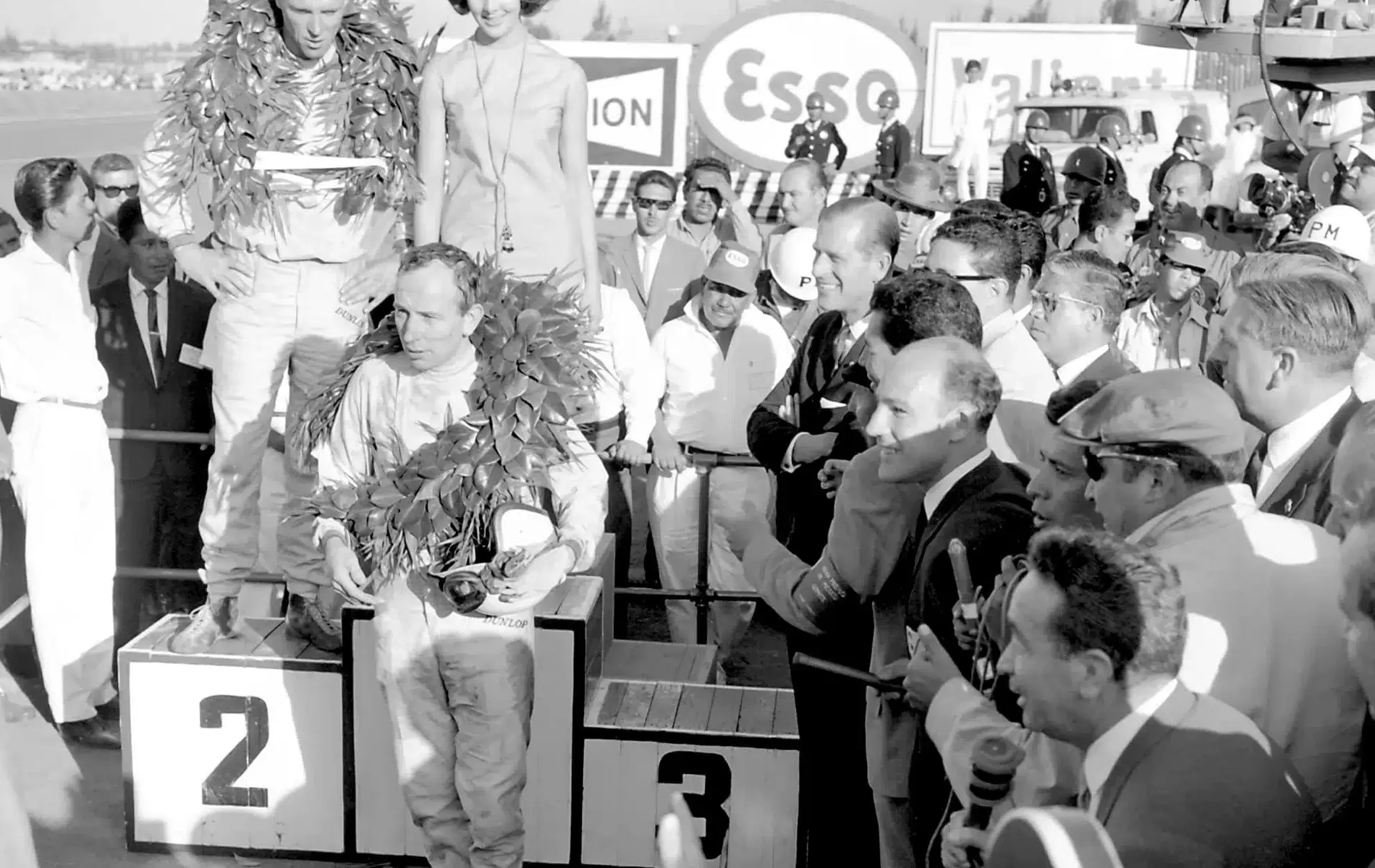
John Surtees finished second at the 1964 Mexican Grand Prix and became the only person in F1 history to win world championships in both motorcycle racing and Formula 1. The closing stages were chaotic. Jim Clark lost a likely victory to engine trouble, while Lorenzo Bandini allowed his Ferrari teammate through.
Graham Hill scored more points over the full season, but the championship counted only each driver’s best six results. Once those dropped scores were removed, Surtees led 40–39. At Mexico, second place had been vital, and Bandini’s decision to let him through gave the extra points he needed. Ferrari had turned a frantic finish into a world championship.
Further reading
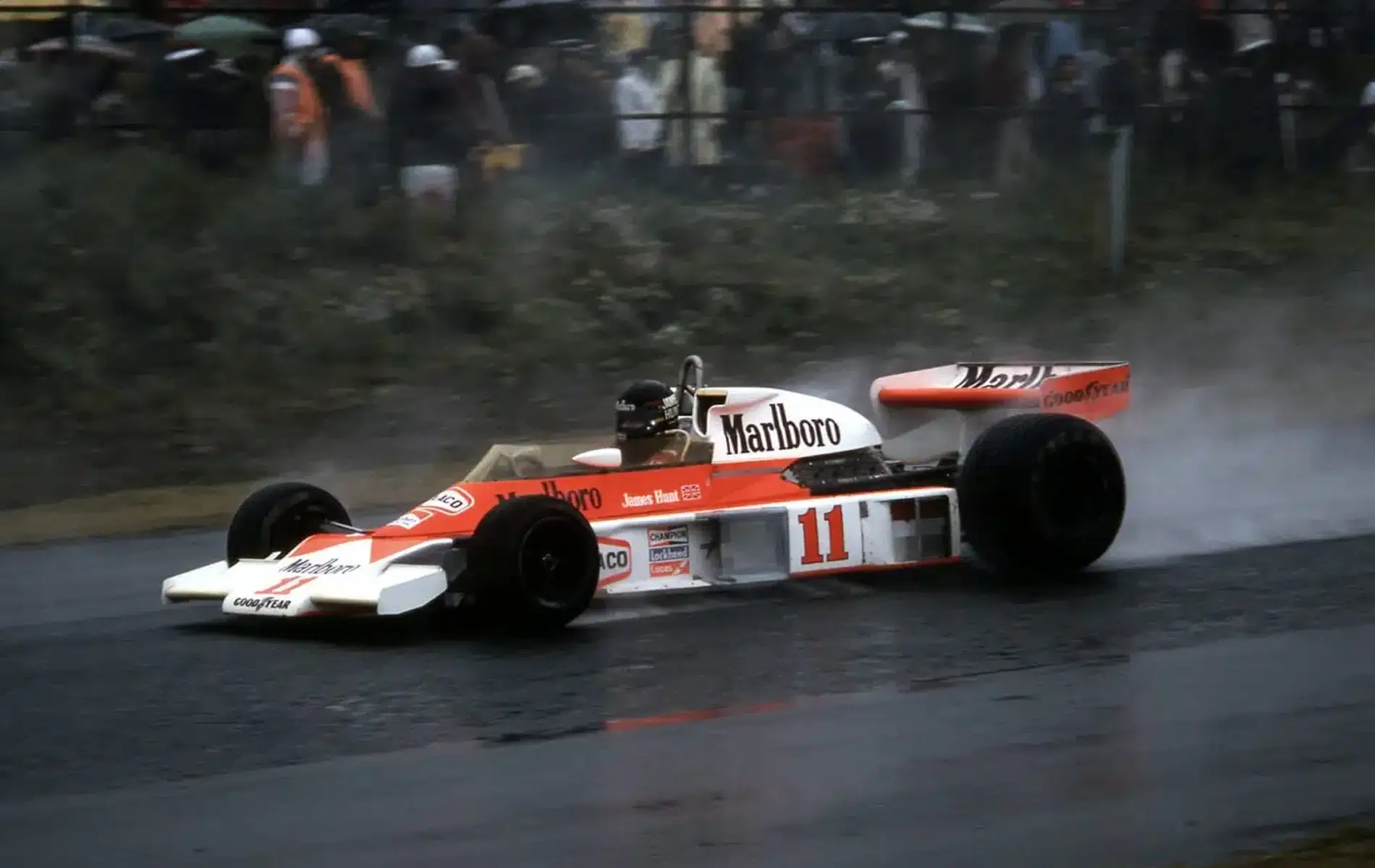
1976: Hunt finds the points in the spray
James Hunt needed third place at the 1976 Japanese Grand Prix and eventually secured it after a late tyre stop. Niki Lauda had withdrawn from the dangerously wet race, just months after surviving his Nürburgring accident, and Hunt emerged as champion by one point.
Lauda had fought his way back from his 1976 German Grand Prix injuries to defend the championship, only to face appalling conditions at Fuji. He decided the risks were too great and stopped, and who could blame him. Hunt continued, but a late tyre stop left him chasing the positions he needed. Third place finally settled an exhausting season in his favour, by the smallest possible whole-point margin.
Further reading
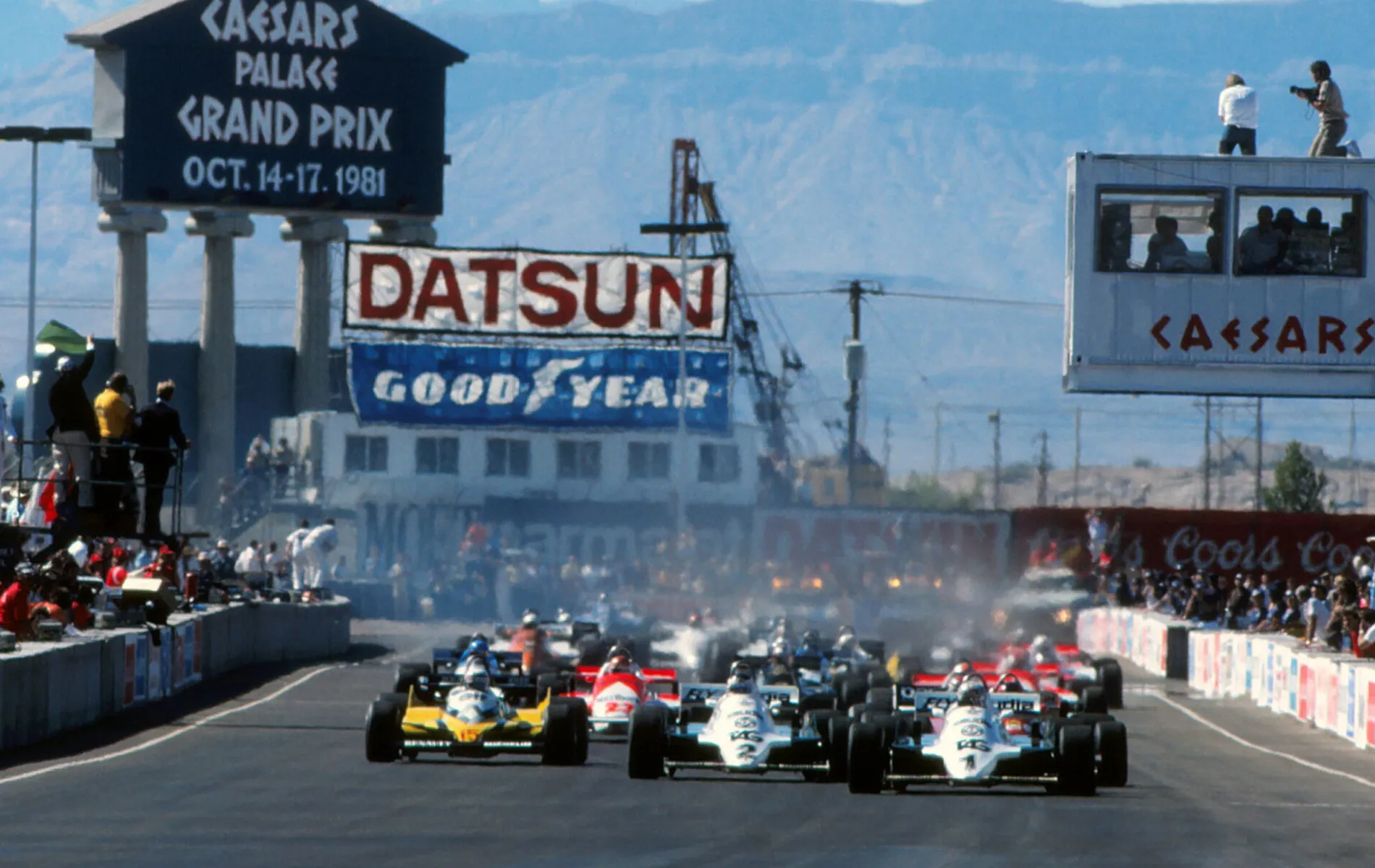
1981: Piquet survives Las Vegas
Carlos Reutemann arrived at the 1981 Caesars Palace Grand Prix with the championship lead and took pole. The race unravelled for him, however, and eighth place brought no points. Nelson Piquet finished fifth for Brabham, collecting the two points that converted a one-point deficit into a one-point title victory.
Alan Jones won the race for Williams while Reutemann struggled outside the points. Piquet had a punishing afternoon of his own, yet fifth was enough to take the crown. Williams retained the Constructors’ Championship, but there was little consolation in that for Reutemann. He had started the weekend leading the standings and lined up on pole leaving without the title.
Further reading
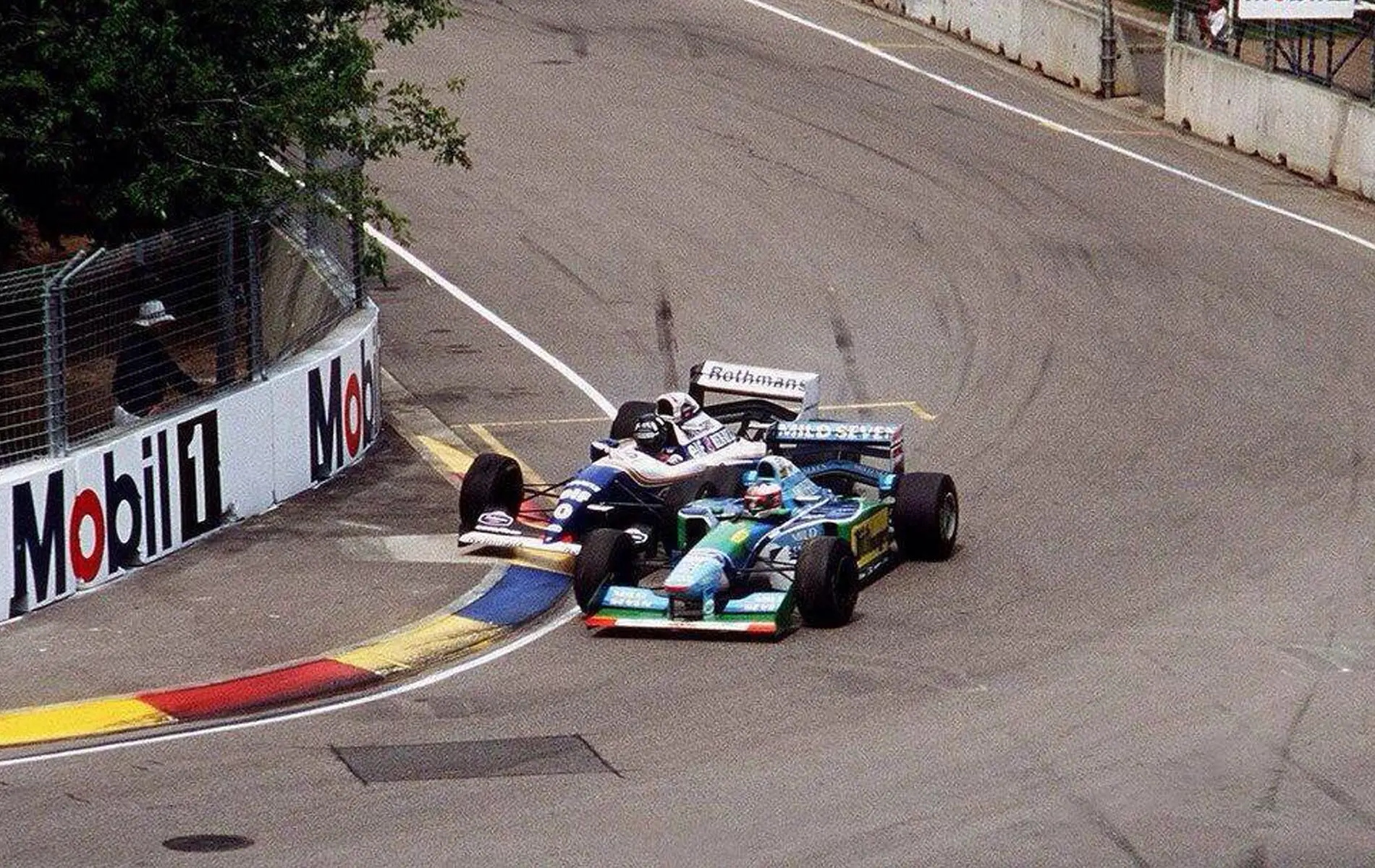
1994: Adelaide leaves the argument open
Michael Schumacher led Damon Hill by one point before the 1994 Australian Grand Prix. Contact between them ended both drivers’ races, leaving that margin unchanged and making Schumacher world champion for the first time.
Schumacher went off, returned to the circuit and collided with Hill as the Williams driver tried to pass. Both were out, so neither added to his points tally and Schumacher’s one-point lead survived intact. The controversy over the collision never disappeared, but the championship was over then, and Hill had no chance to make up the deficit.
Further reading


2007: Räikkönen turns third into first
Kimi Räikkönen entered the 2007 Brazilian Grand Prix behind both McLaren drivers. He won for Ferrari, with teammate Felipe Massa second, while Fernando Alonso finished third and Lewis Hamilton recovered to seventh after a troubled race.
Räikkönen finished on 110 points, with Hamilton and Alonso both on 109. Hamilton took second on countback, leaving the McLaren teammates to reflect on how close they had come. Ferrari’s 1-2 in Brazil had given Räikkönen everything he needed. He arrived at the finale third in the standings and left with the championship, one point ahead of two rivals.
Further reading



2008: A championship changes hands after the winner finishes
Felipe Massa won the 2008 Brazilian Grand Prix. For a few moments, that looked like enough. Behind him, Lewis Hamilton needed fifth place and recovered it by passing Timo Glock late on the final lap as rain intensified and Glock struggled on dry tyres.
Glock had stayed on dry tyres while Hamilton stopped for intermediates. As the rain worsened, the Toyota lost pace, and Hamilton caught it late on the final lap. Fifth place was enough. Massa had already crossed the line as the race winner, thinking he had won the title, but moments later, Hamilton took the championship. The final score was 98–97 after a finish neither driver’s supporters will forget.
Further reading


2003: A point at Suzuka protects Schumacher’s lead
Michael Schumacher arrived at the 2003 Japanese Grand Prix with a nine-point advantage over Kimi Räikkönen. Räikkönen needed to win and hope Schumacher failed to score. Instead, Rubens Barrichello won for Ferrari, Räikkönen finished second, and Schumacher salvaged eighth.
Räikkönen finished just two points behind Schumacher despite winning only once. The new scoring system helped keep him in the fight as points now went to the first eight finishers, and second place earned eight to the winner’s ten. At Suzuka, Schumacher had to settle for eighth while Barrichello won. It was hardly a vintage Schumacher title celebration, but he had secured championship number six and moved ahead of Juan Manuel Fangio in the all-time rankings.
Further reading


2025: Norris brings the two-point finish into the modern era
Lando Norris finished third at the 2025 Abu Dhabi Grand Prix, behind Max Verstappen and Oscar Piastri, to become world champion. Verstappen won the race and ended the season on 421 points. Norris finished with 423.
Norris’s two-point advantage was the smallest since F1 introduced 25 points for a win in 2010. Verstappen won the finale, but third place was all Norris needed to take the title from Verstappen, who had won it for four consecutive years; with Piastri also ahead of him, there was no room to lose a position. Norris brought the McLaren home on the podium and left Abu Dhabi with his first world championship.
Further reading

Seen in: