Some Formula 1 championships keep us guessing until the final lap of the final race. Others leave the rest of the grid fighting over second place with several countries still to visit.
What to know
- Michael Schumacher’s 2002 championship remains the earliest by proportion of the season completed: he clinched at round 11 of 17, with six races remaining.
- Max Verstappen also had six Grands Prix remaining when he clinched in 2023, because his title was secured during Saturday’s Qatar Sprint, before Sunday’s Grand Prix.
- Nigel Mansell settled the 1992 championship with five races remaining, after winning eight of the opening ten rounds.
- Kimi Antonelli joined the four-races-remaining group in 2026, securing his first championship with third place at the Mexico City Grand Prix.
The earliest championship wins in F1 history come from seasons when a driver and team built an advantage their rivals simply couldn’t recover. Michael Schumacher’s extraordinary 2002 campaign remains the benchmark for how early in a season a championship can be settled. Max Verstappen’s Saturday coronation in Qatar adds a modern entry to the record, while Kimi Antonelli’s 2026 success brings another name into the conversation.
Calendars have grown, points systems have changed, and Sprint races can now settle a title before the Grand Prix even begins. Here are the 15 drivers’ championship campaigns decided with at least three Grands Prix still to run.
How are the earliest F1 championship wins ranked?
This list ranks championships by the number of full-length Grands Prix still to start when the drivers’ title became mathematically secure. Sprint races are not counted as additional Grands Prix.
That matters when we talk about Verstappen. When he became champion during the 2023 Qatar Sprint, six Grand Prix remained, including the following day’s Qatar race. Once that Grand Prix finished, five remained.
Drivers with the same number of Grands Prix remaining share a rank. Within those groups, entries appear chronologically.
Earliest F1 drivers’ championship wins: the complete table
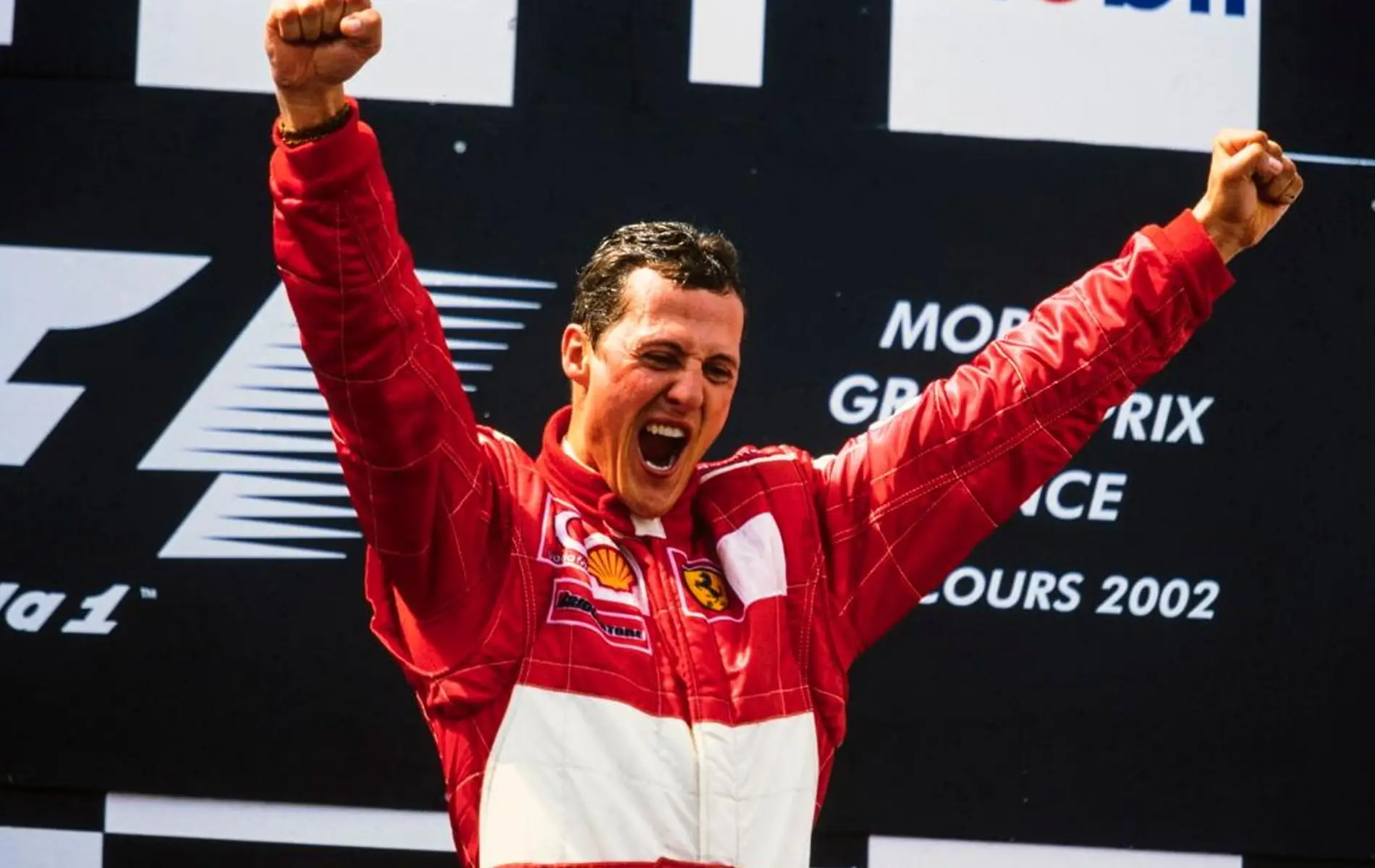
=1. Michael Schumacher — 2002: A world champion in July
There is wrapping up a championship early, and then there is having it settled before August.
Schumacher secured his fifth world title at the French Grand Prix on 21 July 2002, winning the 11th round of a 17-race championship. Six races remained, and Juan Manuel Fangio’s long-standing total of five championships had finally been matched.
The decisive race still contained a late twist. Kimi Räikkönen was heading towards his first Grand Prix victory when he slid wide on oil from Allan McNish’s Toyota. Schumacher seized the opportunity and took the win that completed his championship.
With only 64.7% of the season’s Grands Prix completed, this remains the clearest benchmark for an early championship victory.
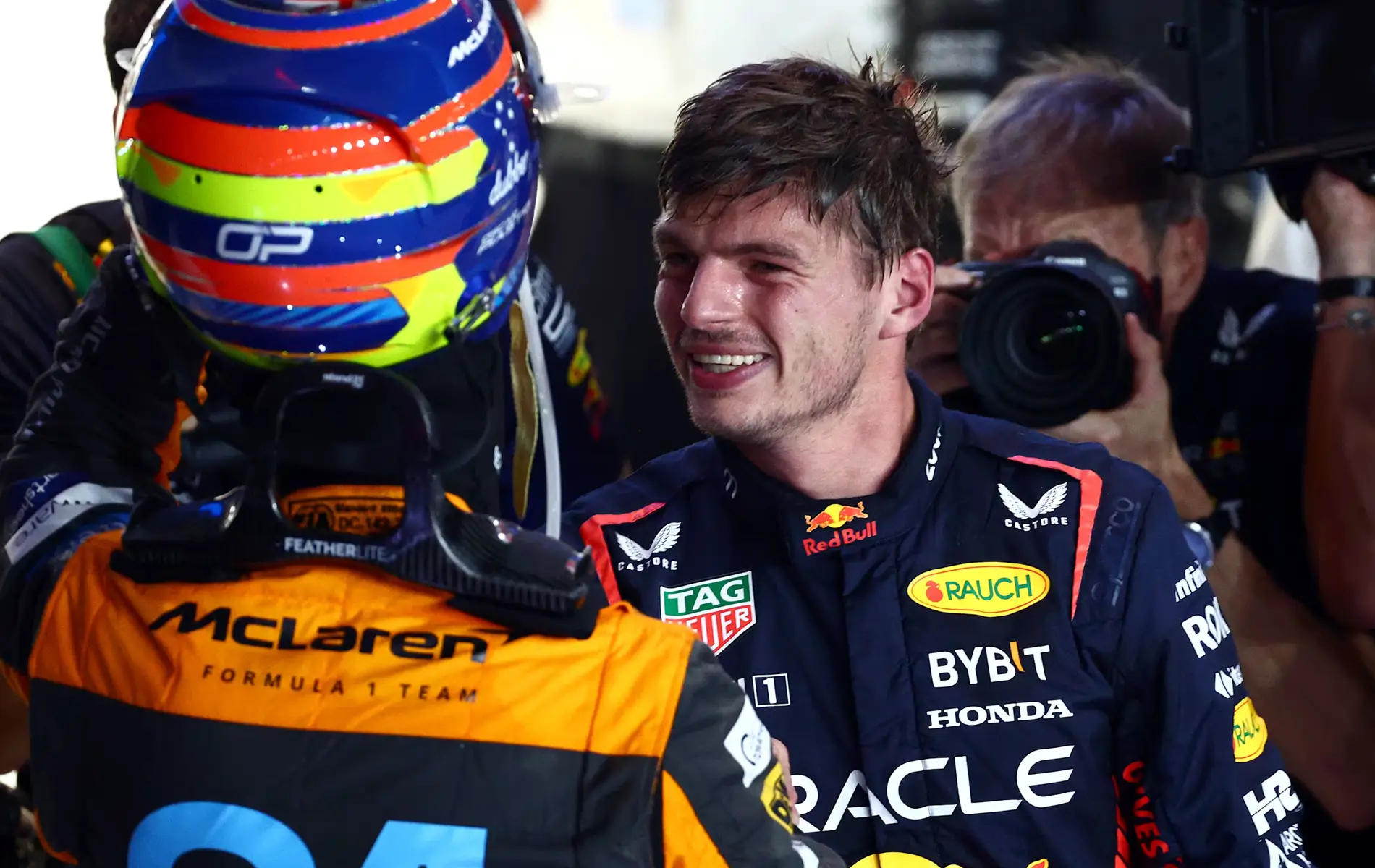
=1. Max Verstappen — 2023: The Saturday champion
Verstappen’s third championship arrived with an unusual finishing order, with Oscar Piastri winning the race (a Sprint), while Verstappen took the biggest prize.
Second place in the Qatar Sprint confirmed another title for the Red Bull driver, although Sergio Pérez’s retirement had already removed his remaining mathematical challenge. It was a suitably modern ending to an overwhelming campaign, a championship celebration on Saturday evening, with the Grand Prix still to come.
This is why Verstappen belongs alongside Schumacher on six remaining Grands Prix under our definition.
The comparison also shows the limits of a single statistic. Verstappen had already completed 16 of the season’s 22 Grands Prix before Qatar’s Sprint. Schumacher had completed 11 of 17 when he clinched in France.
Both had six Grands Prix ahead of them. Schumacher had left a substantially larger share of his championship unfinished.
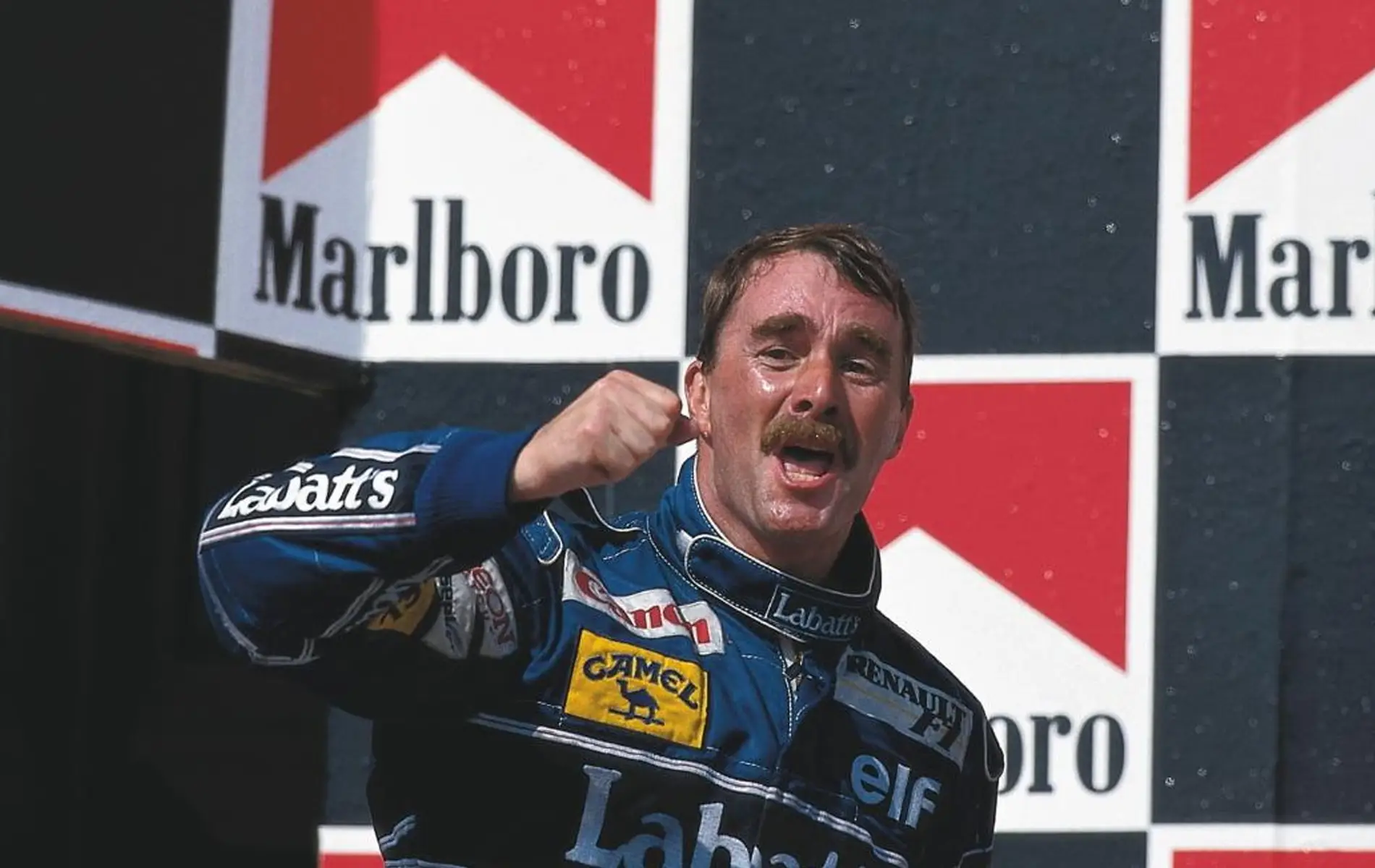
3. Nigel Mansell — 1992: Years of waiting, months of domination
For Mansell, the championship that finally arrived early had taken years to secure.
After earlier title disappointments, his 1992 partnership with the Williams FW14B produced a campaign of extraordinary authority. Eight victories from the opening ten races put him within reach of the championship before the field arrived in Hungary.
He did not need another win to finish the job.
Ayrton Senna won the Hungarian Grand Prix, but Mansell’s second place secured his first and only F1 drivers’ championship with five rounds remaining.
There is something particularly satisfying about that contrast. A driver associated with dramatic setbacks finally reached his defining achievement with enough of the season left to enjoy being champion.
For fans who know Mansell mainly through his moustache and spectacular overtaking, 1992 was another essential part of his journey to the top.
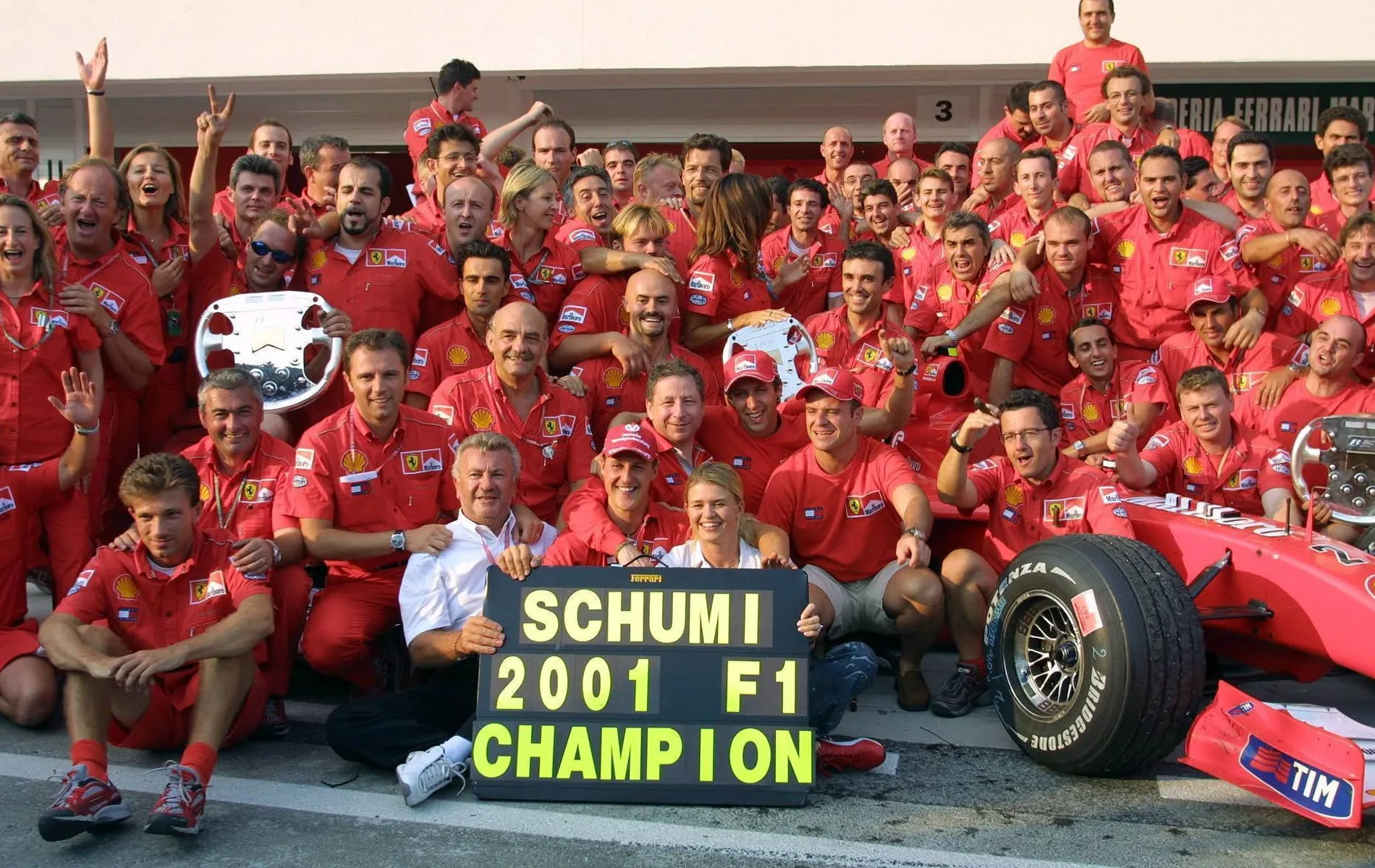
=4. Michael Schumacher — 2001: Ferrari makes winning a habit
Schumacher’s 2000 championship had ended Ferrari’s long wait for a drivers’ title. The following year showed how firmly the team intended to hold its position.
Victory in Hungary secured his fourth championship with four races remaining. It also brought his 51st Grand Prix win, matching Alain Prost’s then-record career total.
Rubens Barrichello completed a Ferrari one-two, giving the occasion the feel of a team operating with complete assurance.
Ferrari had moved from finally achieving its ambition to repeating it with time to spare. Schumacher was now matching the records of the generation before him while establishing the dominance that would define his own.
Hungary 2001 was a championship celebration and a warning about what was still to come.

=4. Michael Schumacher — 2004: Second place, seventh heaven
Schumacher’s seventh and final championship was secured at Spa-Francorchamps, although the race victory belonged to Räikkönen.
Second place was enough for the Ferrari driver, who finished ahead of team-mate Barrichello and put the title beyond reach with four rounds remaining.
An eventful Belgian Grand Prix provided a lively setting for the conclusion of a championship Ferrari had controlled. Räikkönen gave McLaren a memorable victory, but Schumacher left with the achievement that would define the season.
Schumacher’s 2002 title came earlier, while 2004 delivered the seventh crown that became one of the sport’s most recognisable records.

=4. Sebastian Vettel — 2011: A title defence without the final-round nerves
Vettel’s first championship had required a dramatic finish to the 2010 season. His second arrived under much calmer circumstances.
Third place at the 2011 Japanese Grand Prix secured the title with four races remaining. Jenson Button won at Suzuka, Fernando Alonso finished second, and Vettel completed the podium.
His first title had established him as a world champion. The second demonstrated the strength of the partnership he had built with Red Bull.
For a driver whose championship story is often remembered through the tension of 2010 and 2012, Suzuka 2011 deserves its own space. An early coronation earned through relentless performance.
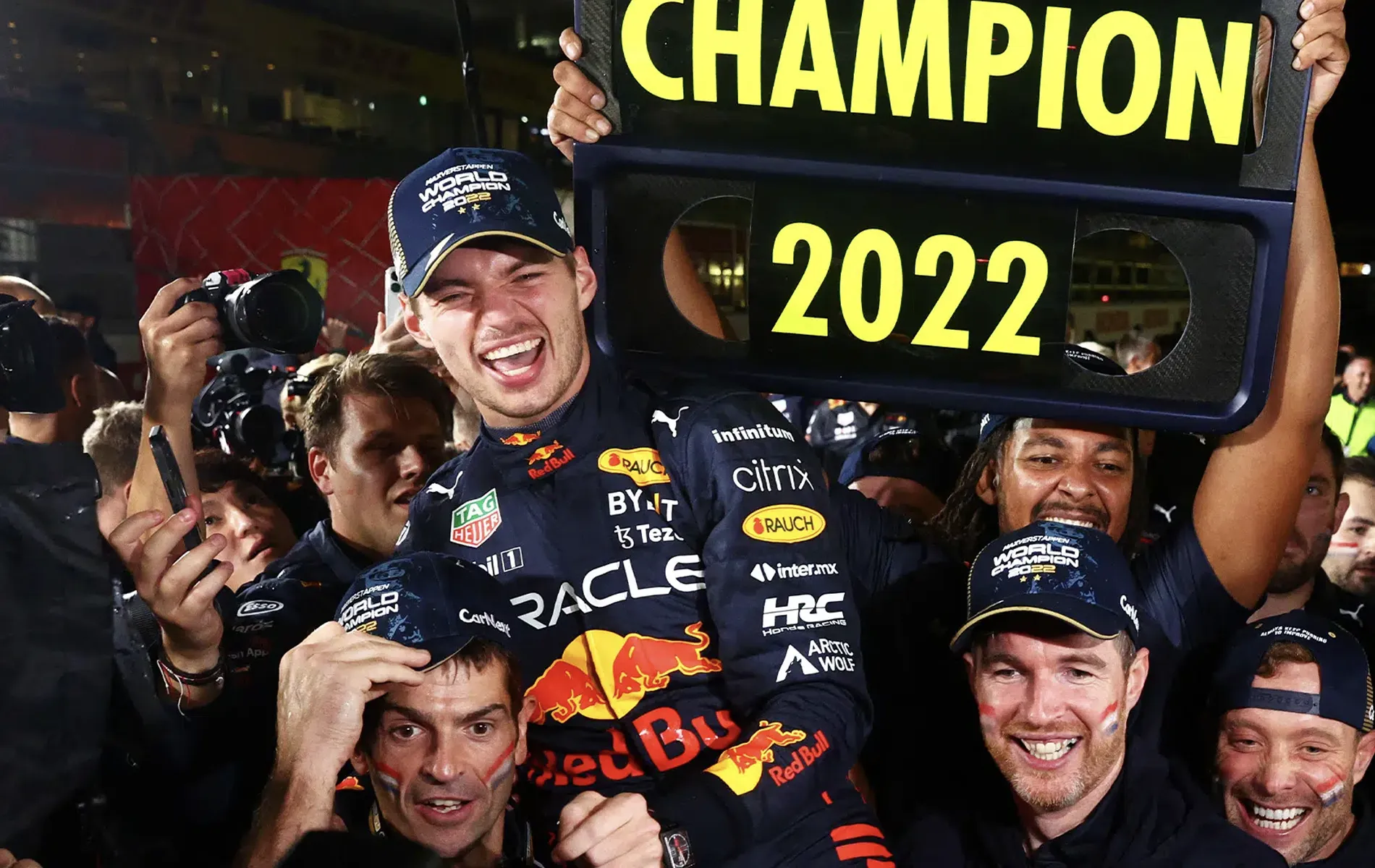
=4. Max Verstappen — 2022: Dominance meets confusion at Suzuka
Verstappen’s second championship was settled in a race whose conclusion needed explaining almost as much as celebrating.
He won the rain-shortened 2022 Japanese Grand Prix, but the title initially appeared unresolved. Charles Leclerc then received a five-second penalty for cutting the final chicane while defending against Pérez, dropping the Ferrari driver to third.
Full championship points were awarded, making Verstappen champion with four races remaining.
The result produced an unusual television moment of a driver being told during the post-race interviews that he had won the world championship.
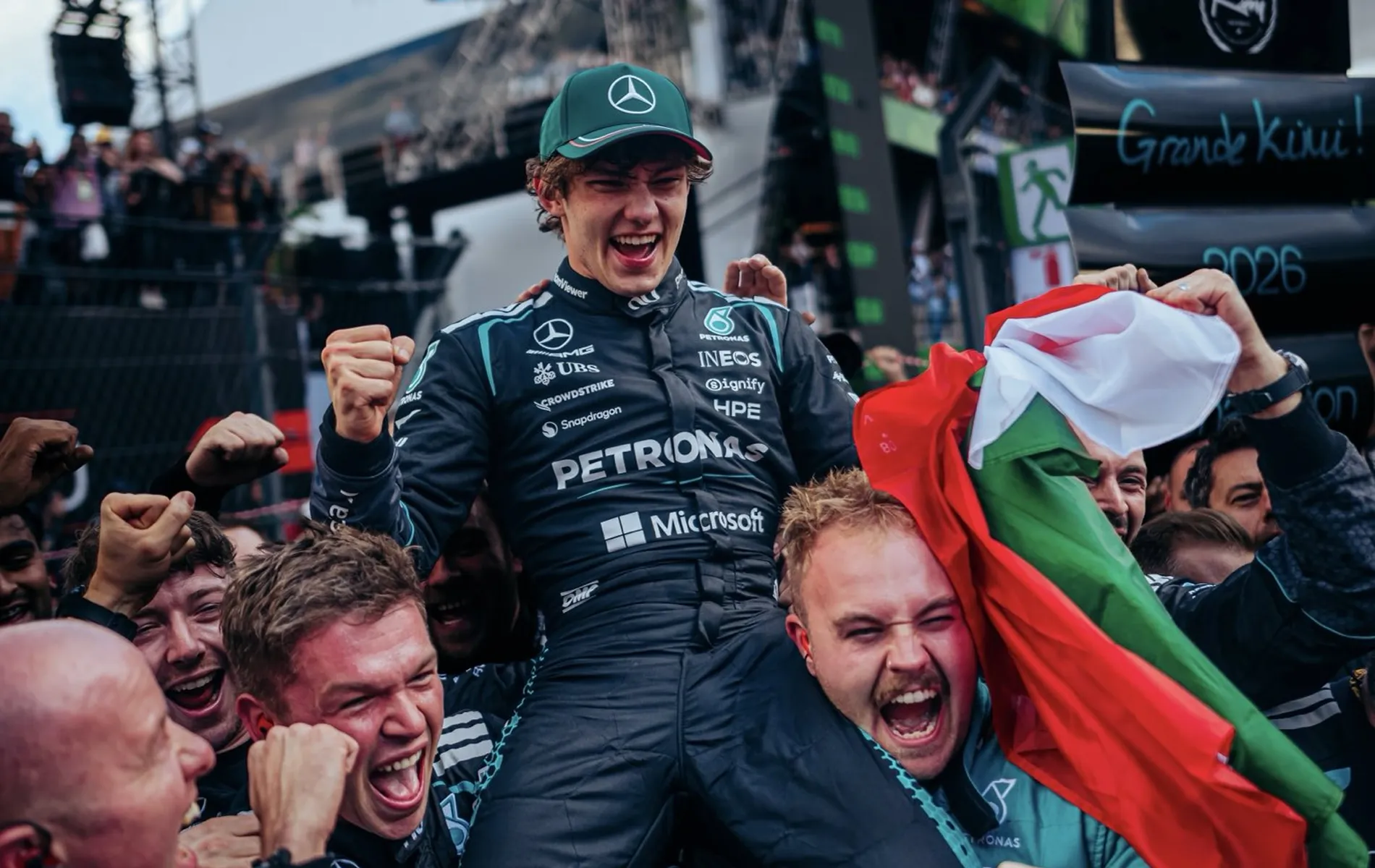
=4. Kimi Antonelli — 2026: The newest name on the list
Antonelli brought this record into a new era at the 2026 Mexico City Grand Prix.
The Mercedes driver arrived needing ninth place to guarantee his first championship regardless of his rivals’ results. He finished third, behind Verstappen and Lewis Hamilton, securing the title with four Grand Prix remaining in the 23-race season.
At 20 years and 68 days old, he also became the youngest world champion in F1 history.
Mexico City supplied both a new champion and another example of a title settled comfortably before the final round.
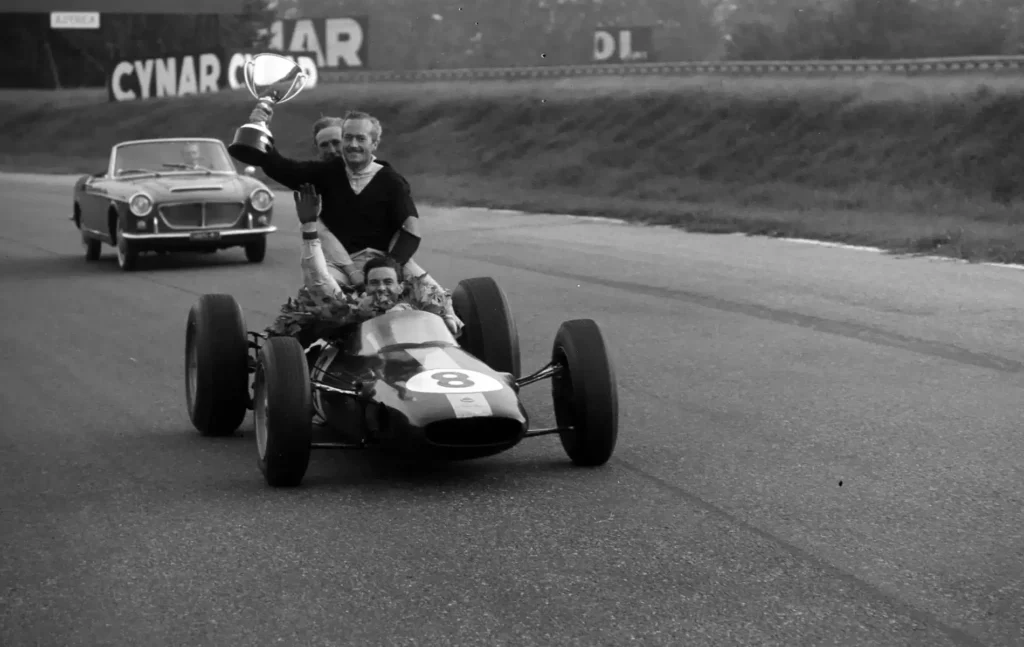
=9. Jim Clark — 1963: Three races meant almost a third of the season
Clark’s first championship deserves more attention than its position in a races-remaining table might suggest.
He secured the 1963 title by winning the Italian Grand Prix, the seventh round of a ten-race season. Three rounds remained—30% of the championship calendar.
Driving the Lotus 25, Clark went on to win seven championship races that year. After mechanical failure had denied him the 1962 title at the final round, 1963 demonstrated what he could achieve when speed and reliability came together.
Clark’s first championship therefore belongs near the heart of any discussion about early dominance, even when the raw count places it below later achievements.
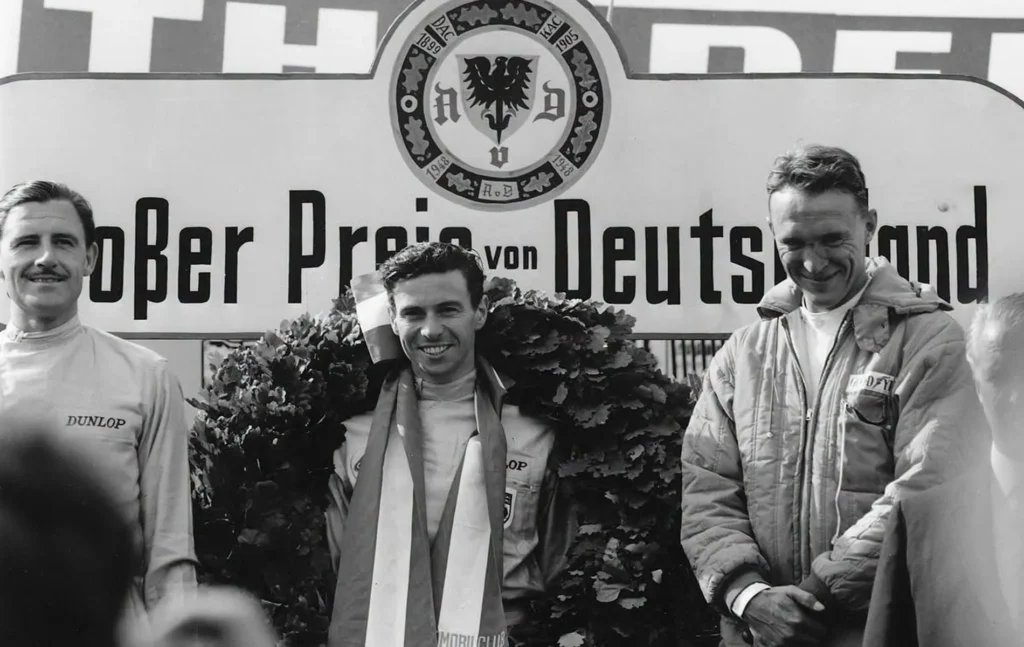
=9. Jim Clark — 1965: Six starts, six victories
Clark’s second championship was secured at the Nürburgring on 1 August 1965, after he won every one of his first six championship appearances that season.
He had missed Monaco to contest—and win—the Indianapolis 500.
The championship rules help explain the early conclusion. Only a driver’s six best results counted, and Clark’s German Grand Prix victory gave him six wins. He had assembled the maximum counting score.
Three championship races remained, but his rivals could no longer deny him the title. Winning Indianapolis alongside it makes the season even more extraordinary.
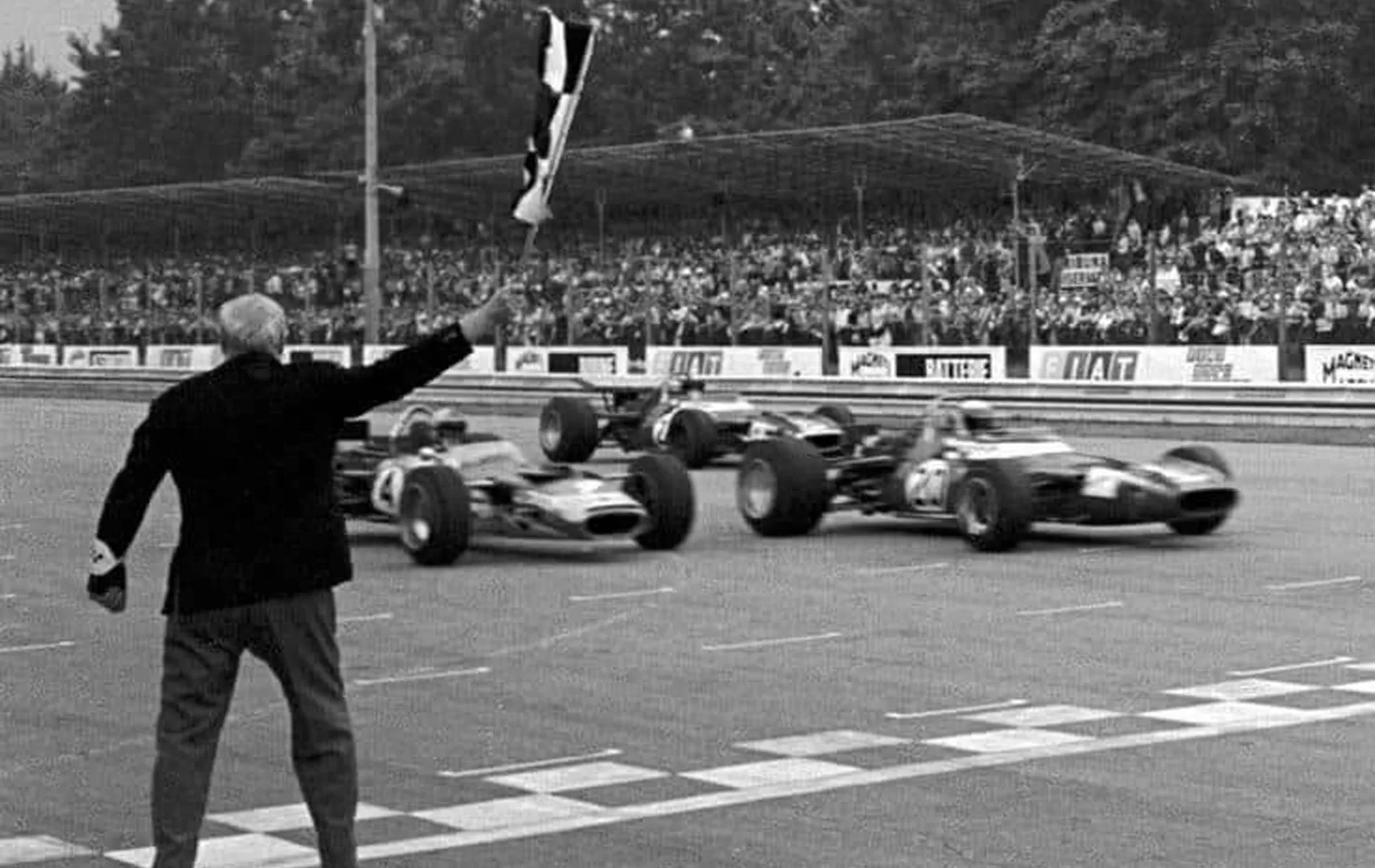
=9. Jackie Stewart — 1969: A championship won by eight hundredths
An early championship does not guarantee a comfortable title-clinching race.
Stewart secured his first world championship at Monza in 1969 after one of Formula 1’s great finishes. His Matra crossed the line just 0.08 seconds ahead of Jochen Rindt, with Jean-Pierre Beltoise and Bruce McLaren also within two-tenths of the winner.
It was Stewart’s sixth victory of the season and left three races remaining.
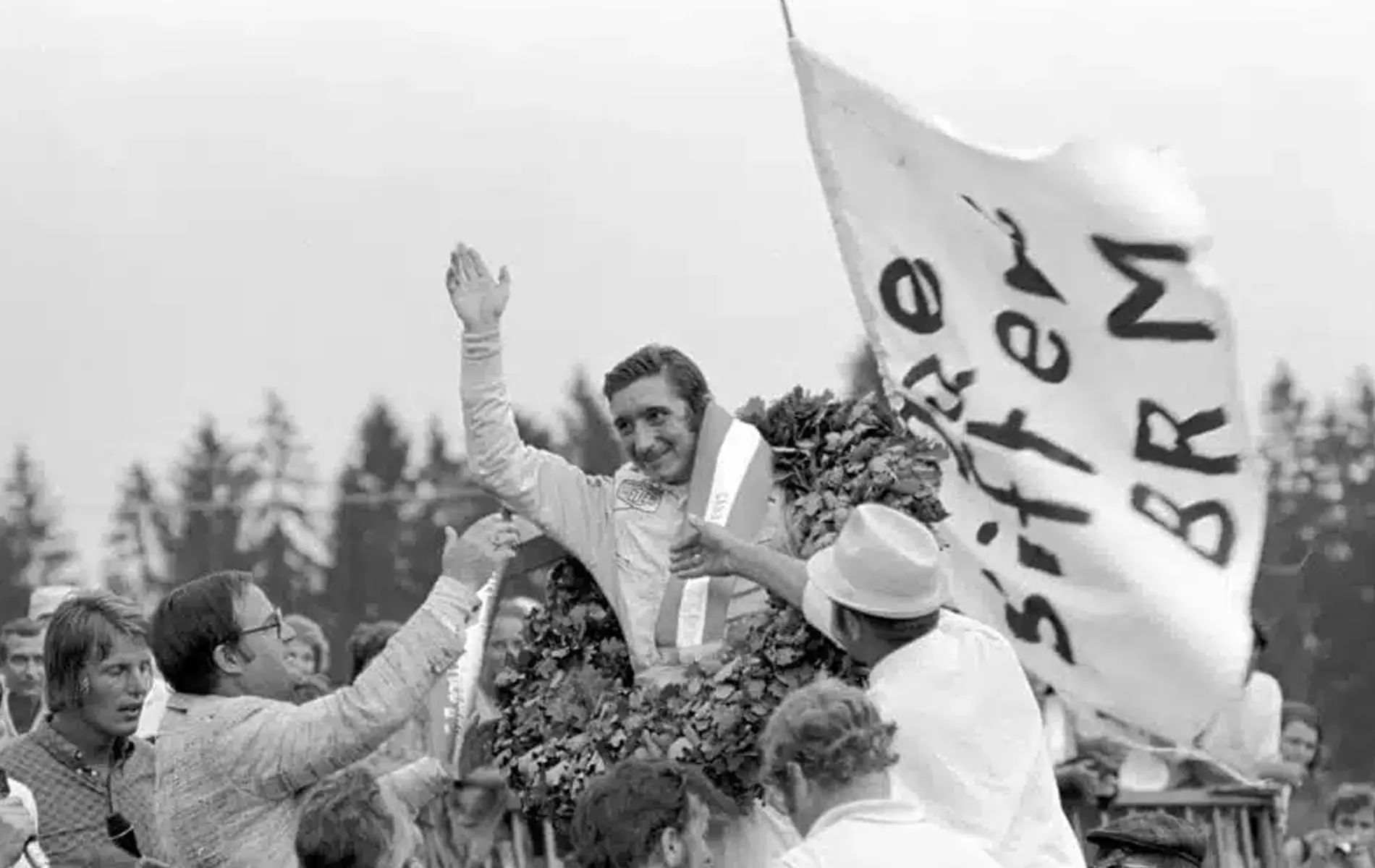
=9. Jackie Stewart — 1971: Champion without reaching the finish
Stewart’s second title arrived in circumstances very different from his first.
He had won five of the opening seven races before the championship reached Austria. That advantage proved enough even when his Tyrrell retired from the Grand Prix.
Jacky Ickx also retired, while Ronnie Peterson finished outside the points. Stewart’s remaining challengers had failed to keep the championship alive.
Jo Siffert took the race victory, but Stewart became world champion with three rounds still to run.

=9. Sebastian Vettel — 2013: The celebration before the winning stopped
Vettel secured his fourth consecutive championship by winning the 2013 Indian Grand Prix, with three rounds remaining.
His victory at the Buddh International Circuit produced one of the defining images of his Red Bull years, with Vettel bowing before his car after the job was done.
The season’s winning run continued afterwards. He won the remaining three Grands Prix, completing nine consecutive victories to finish the championship.
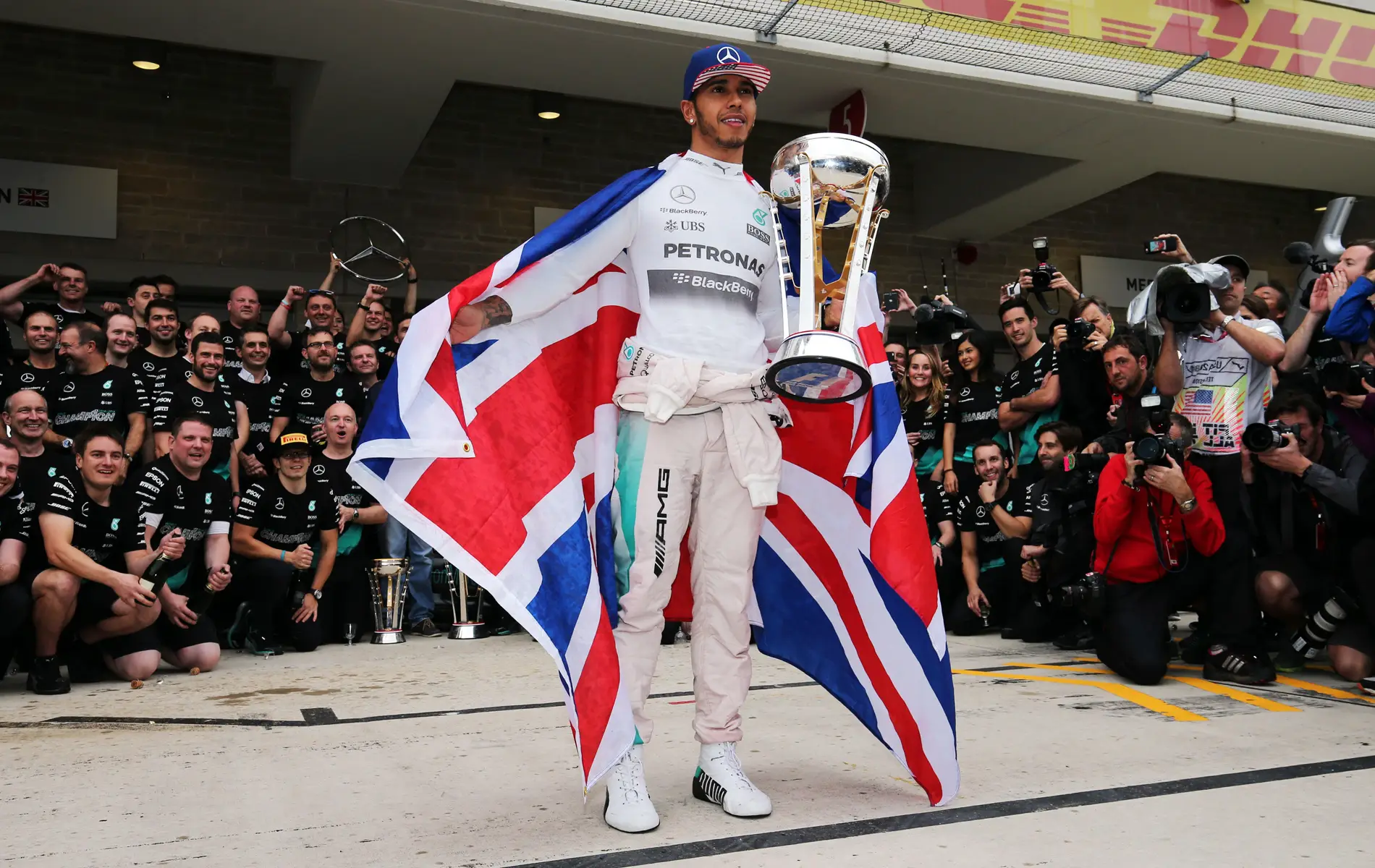
=9. Lewis Hamilton — 2015: Austin delivers the decisive mistake
Hamilton’s third championship was secured in a United States Grand Prix that packed plenty of uncertainty into the title-clinching afternoon.
Changing conditions brought Red Bull into contention early on, before the Mercedes drivers emerged at the centre of the fight. Nico Rosberg led late in the race, only to run wide and allow Hamilton through.
Hamilton took the victory and the championship with three races remaining.
The result matched Ayrton Senna’s total of three drivers’ titles, giving the achievement particular personal significance for Hamilton.

=9. Lewis Hamilton — 2020: A seventh title on a slippery afternoon
Hamilton’s seventh championship came with a victory that demanded patience as much as outright speed.
The wet 2020 Turkish Grand Prix offered little grip and plenty of opportunities for mistakes. Hamilton managed his intermediate tyres over a long stint and won by more than 25 seconds from Pérez.
Three races remained in the shortened, 17-round season.
The result brought him level with Schumacher on seven world championships, giving an already memorable drive a much larger historical significance.
It also makes Turkey an especially strong ending to this list. The championship advantage was substantial, but Hamilton still produced a performance worth remembering on its own merits. An early title can be settled through careful accumulation, but this one was completed with a race-winning demonstration of judgement and control.
Why the calendar changes the conversation
The remaining-races statistic is useful, but it becomes more revealing when paired with the season’s length.
Schumacher clinched in 2002 after 11 of 17 Grands Prix, or 64.7% of the schedule. Mansell’s 1992 title came after 11 of 16, or 68.8%. Clark secured both his championships after seven of ten, or 70%.
Verstappen became champion during the 2023 Qatar Sprint after 16 of 22 Grands Prix had been completed—72.7%—with the 17th Grand Prix still ahead.
These percentages are calculated from the Grand Prix counts, treating the Sprint as a separate session rather than a fraction of a Grand Prix.
Longer calendars create more opportunities to build an advantage, while historical dropped-score rules and modern Sprint points affect when a rival finally becomes mathematically unable to catch the leader.
That is what makes these campaigns worth revisiting. Behind each early championship sits a different combination of driver, machinery, regulations and circumstance. The table obviously shows when the contest ended, but the races explain how it actually happened.
Seen in: