At some point in almost every close Formula 1 season, somebody declares the championship over. The gap is too big. The car is too quick. There simply aren’t enough races left. Then the next Grand Prix happens.
An engine fails, a rival finds another gear, or a driver who seemed destined for second place starts collecting wins. Suddenly, the championship table looks rather different.
From John Surtees rescuing Ferrari’s 1964 campaign to Lando Norris overturning a difficult summer in 2025, F1 has produced some extraordinary title recoveries. But the numbers need context. Seventeen points meant something very different when a win was ten points in seasons gone by, and older dropped-score rules (yes, that was a thing) could make the final arithmetic look positively strange.
Here are 13 of the sport’s most memorable title-winning comebacks, in chronological order. Some stand out for the size of the deficit; others for how little time remained to recover and claim the title.
What to know
- Kimi Räikkönen overturned a 17-point deficit with two races remaining in 2007, when only 20 points were still available to him.
- Sebastian Vettel recovered from 44 points behind Fernando Alonso in 2012; Max Verstappen erased a 46-point deficit to Charles Leclerc in 2022.
- Lando Norris recovered from 34 points behind Oscar Piastri in 2025 and ultimately beat Max Verstappen to the championship by two points.
- F1’s points system has changed over time, so a 20-point gap didn’t always mean what it does today. In some older seasons, only a driver’s best results counted towards the title, with their lowest scores left out. Comparing comebacks fairly means considering those rules and how many races remained.
F1 title comebacks at a glance
This table shows how far each eventual champion trailed after a particular Grand Prix, how many races they had left to recover, and how much they ultimately won the title by. These snapshots show comebacks, with some drivers facing bigger gaps earlier in the season.
The seasons run from oldest to newest. All figures use the points system in place that year, including any rules that required drivers to leave out their lowest scores. The races remaining column counts Grands Prix only; any remaining Sprints offered additional chances to score.
[2] 2014 — double points: The Abu Dhabi finale awarded double points, giving Hamilton 50 for victory and helping extend his final winning margin to 67 points.
[3] 2010 and 2025 — different rivals: Vettel initially trailed Hamilton but ultimately beat Alonso to the title. Norris initially trailed Piastri but finished the season with Verstappen as his closest challenger.

1. John Surtees 1964: Ferrari’s unlikely route to history
At the halfway point of the 1964 season, John Surtees had ten points, and Jim Clark had 30. With only five races remaining and nine points available for a win, Ferrari’s two-wheel champion-turned-open-wheel racer had a long way to go.
Victories at the Nürburgring and Monza brought him back into contention. Second place in the United States helped, too. Mexico then provided the sort of finale that makes a championship impossible to reduce to a single statistic. The closing races also brought an unusual visual twist: Ferrari’s cars appeared in blue and white under the NART banner, part of the story behind Ferrari’s colourful American protest.
Graham Hill’s chances suffered after contact with Lorenzo Bandini, while Clark’s late mechanical trouble transformed the contest. Bandini allowed Surtees through into second, enough to secure the championship by one counted point over Hill.
Only the best six results counted that year. Surtees finished with 40 championship points to Hill’s 39, becoming the only racer to win world championships on both motorcycles and in Formula 1. A difficult Ferrari season had become motorsport history.
2. James Hunt 1976: the championship beyond the film
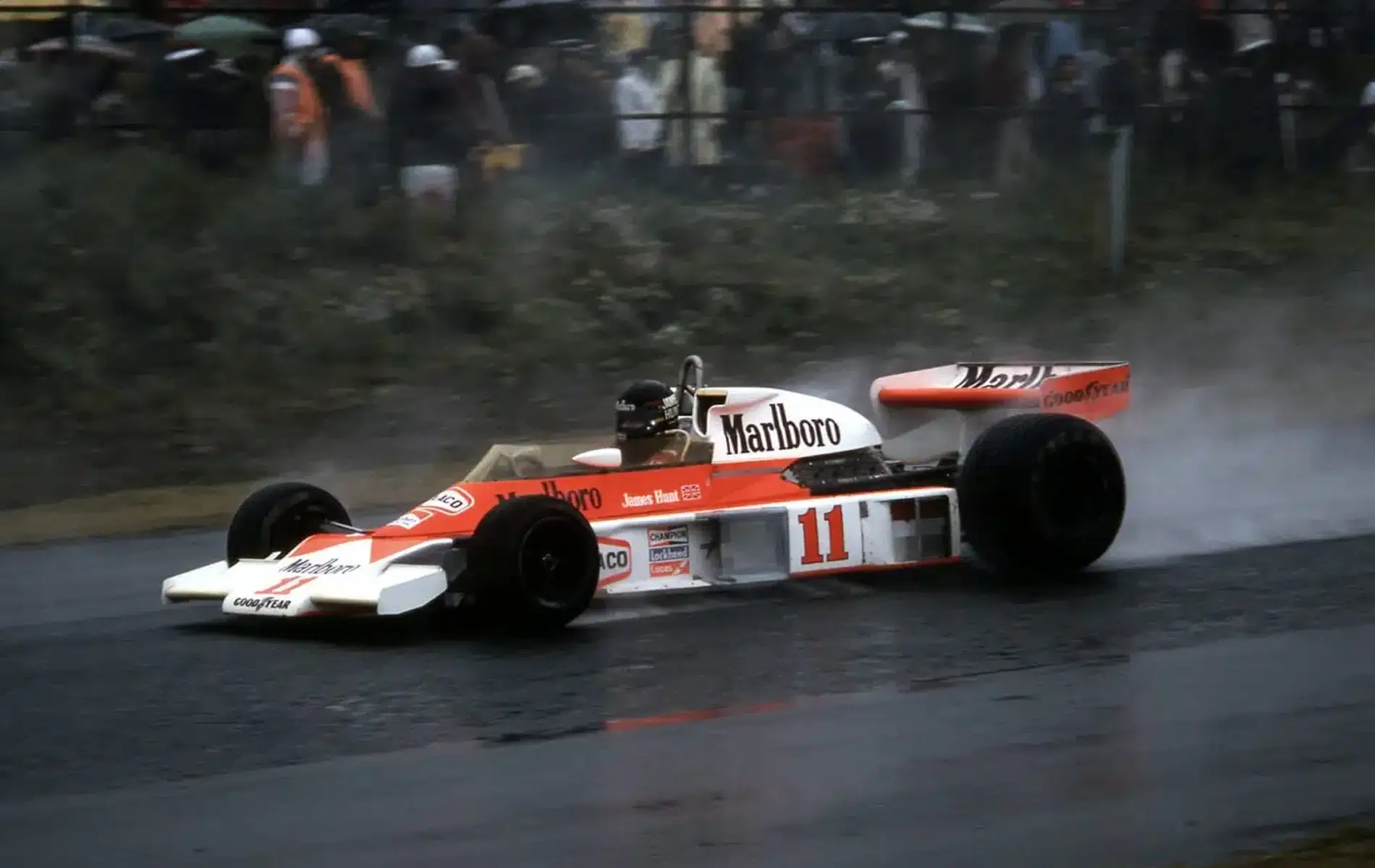
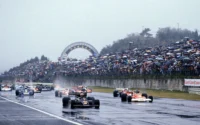
Even fans who have never watched a complete 1976 Grand Prix probably know the outlines of this story. James Hunt, Niki Lauda, a terrifying Nürburgring accident and a rain-soaked decider at Fuji.
The late-season arithmetic needs explanation. After Lauda returned to finish fourth at Monza, Hunt was still 17 points behind with three races remaining. Back-to-back victories in Canada and the United States reduced that deficit to three.
Fuji brought conditions Lauda judged far too dangerous to continue, after his near-death experience earlier in the season; who could blame him? His withdrawal was a survival decision, made by a driver whose return to racing had already been extraordinary.
Hunt still had to finish the job. A late tyre stop threatened everything before he recovered to third and took the title 69–68. The comeback is famous for good reason, but Lauda’s courage belongs at the centre of the story alongside Hunt’s recovery.
3. Keke Rosberg 1982: one win was enough
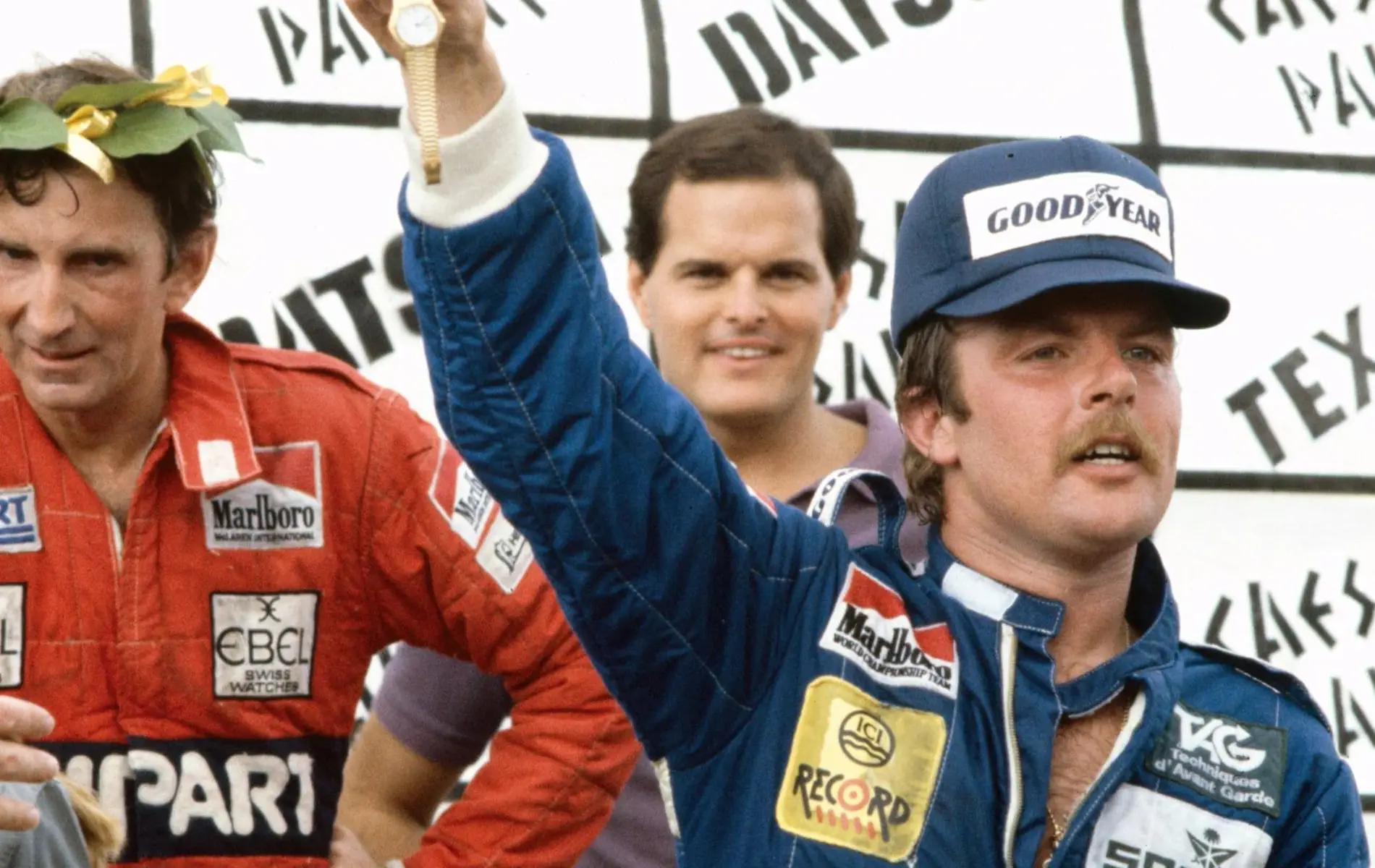
Modern fans accustomed to champions winning half the calendar might need a moment with Keke Rosberg’s 1982 season. He won just a single Grand Prix that year. It was enough.
With five rounds remaining, Rosberg had 23 points, while Didier Pironi had 39. Pironi’s devastating practice accident at Hockenheim ended his F1 career, changing a championship already marked by tragedy.
Rosberg responded by continuing to accumulate results. A second in Austria was followed by a victory in the Swiss Grand Prix, held at Dijon in France, putting the Williams driver at the top of the standings. The venue also places Rosberg’s breakthrough among F1 races held outside the countries they were named after — the Swiss Grand Prix took place on French soil.
Fifth in the Las Vegas finale secured the championship, with Pironi and John Watson five points behind. Reliability, consistency and taking an opportunity mattered as much as outright winning pace.

4. Nelson Piquet 1983: three races to overturn Renault
Alain Prost appeared to have the advantage as the 1983 season entered its closing stages. After the Dutch Grand Prix, he led Nelson Piquet by 14 points. Only three races remained.
Piquet won at Monza, then won again at Brands Hatch. Brabham had found form precisely when Renault could least afford it, and the championship travelled to Kyalami with Prost’s lead reduced to two.
Another turbo-related retirement for Prost opened the door. Piquet finished third and took the title by two points, completing a closing sequence of first, first and third.
That is what makes this comeback so satisfying to revisit. The challenger delivered a decisive run while the favourite’s campaign unravelled; it was a lead worth more than a race win, gone in just three weekends.

5. Alain Prost 1986: the Professor stays in the argument
With two rounds remaining in 1986, Prost trailed Nigel Mansell by 11 points. In an era of nine-point victories, that was an uncomfortable position against the powerful Williams-Honda pairing of Mansell and Piquet.
Second in Mexico brought Prost closer. Adelaide then produced one of F1’s great afternoons of shifting possibilities.
Mansell’s spectacular tyre failure removed the championship favourite, and off the back of that Williams called his teammate Piquet in for a precautionary stop, while Prost came through to win the race and retain his crown.
The final championship margin was merely two points over Mansell. Prost kept himself close enough to benefit when events turned, a skill in itself.

6. Ayrton Senna 1988: winning under a different set of rules
After four rounds of the 1988 season, Senna trailed Prost 33–15. Eighteen points represented two race victories, although 12 Grands Prix still remained.
Senna’s recovery included four consecutive wins in Britain, Germany, Hungary and Belgium. His title-clinching victory at Suzuka then completed the comeback, after a dreadful start left him fighting through the field.
But this championship comes with an important footnote. Only each driver’s best 11 results counted.
Prost accumulated 105 points across the races, compared with Senna’s 94. Once the mandated scores were dropped, Senna won 90–87, his eight victories proving decisive in the calculation.
While the math is far simpler today, in seasons past you couldn’t simply add up every result; it was a strange oddity in F1 history.

7. Michael Schumacher 2000: six points, 21 years of expectation
Schumacher’s 2000 season earns its place for the weight of the recovery, not the size of the deficit.
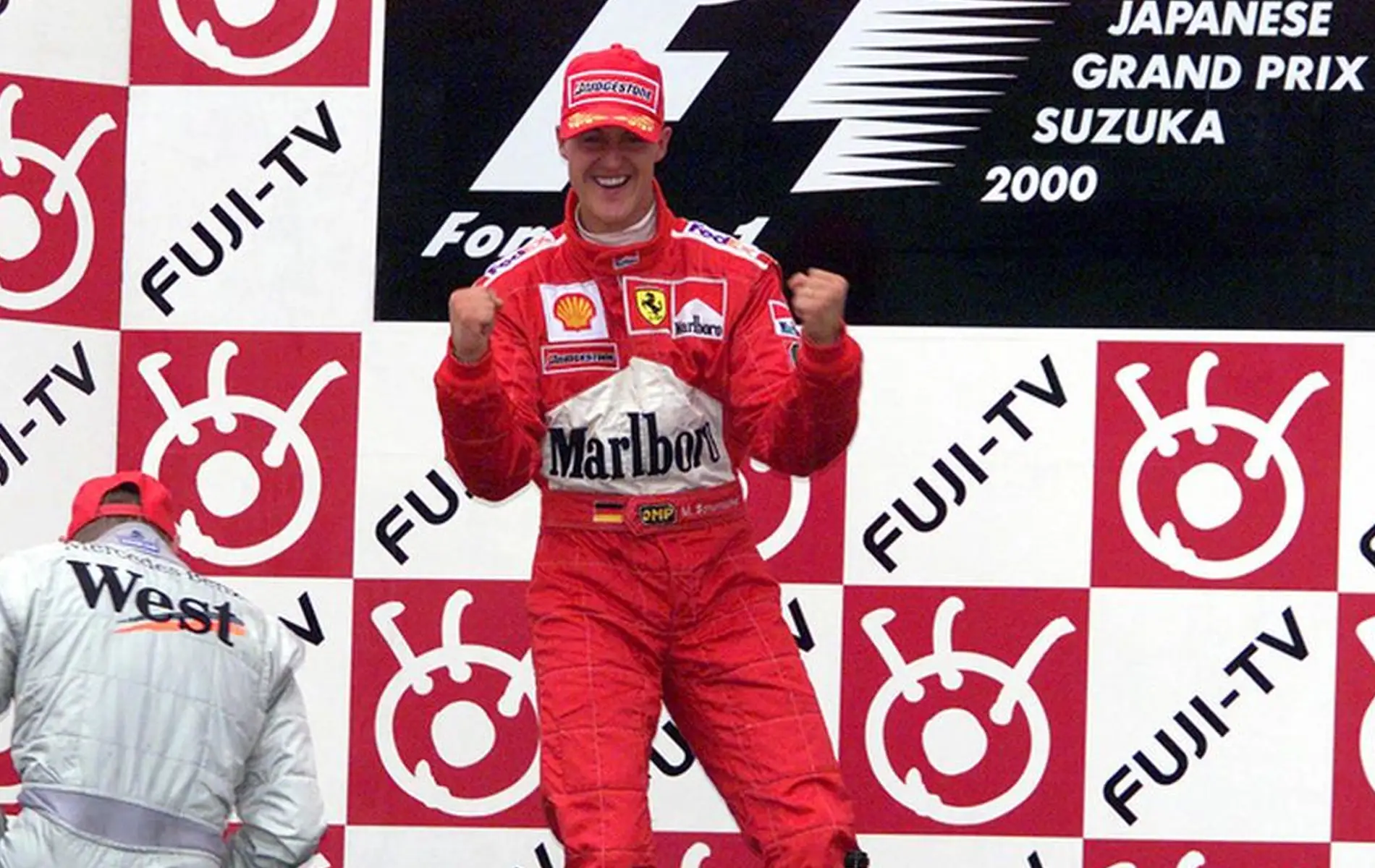
After Mika Häkkinen’s famous victory at Spa, the McLaren driver led 74–68 with four races remaining. Ferrari’s long wait for another Drivers’ Champion was threatening to continue. But Schumacher had other plans and answered them by winning all four remaining races: Italy, the United States, Japan and Malaysia.
Suzuka settled the championship. Häkkinen led early, but Schumacher’s pace around the second pit-stop sequence put the Ferrari ahead. He won by less than two seconds, delivering the team’s first drivers’ title since Jody Scheckter in 1979.
8. Kimi Räikkönen 2007: 17 points, two races, one title
The 2007 season is the one for the history books when a championship looked almost settled.
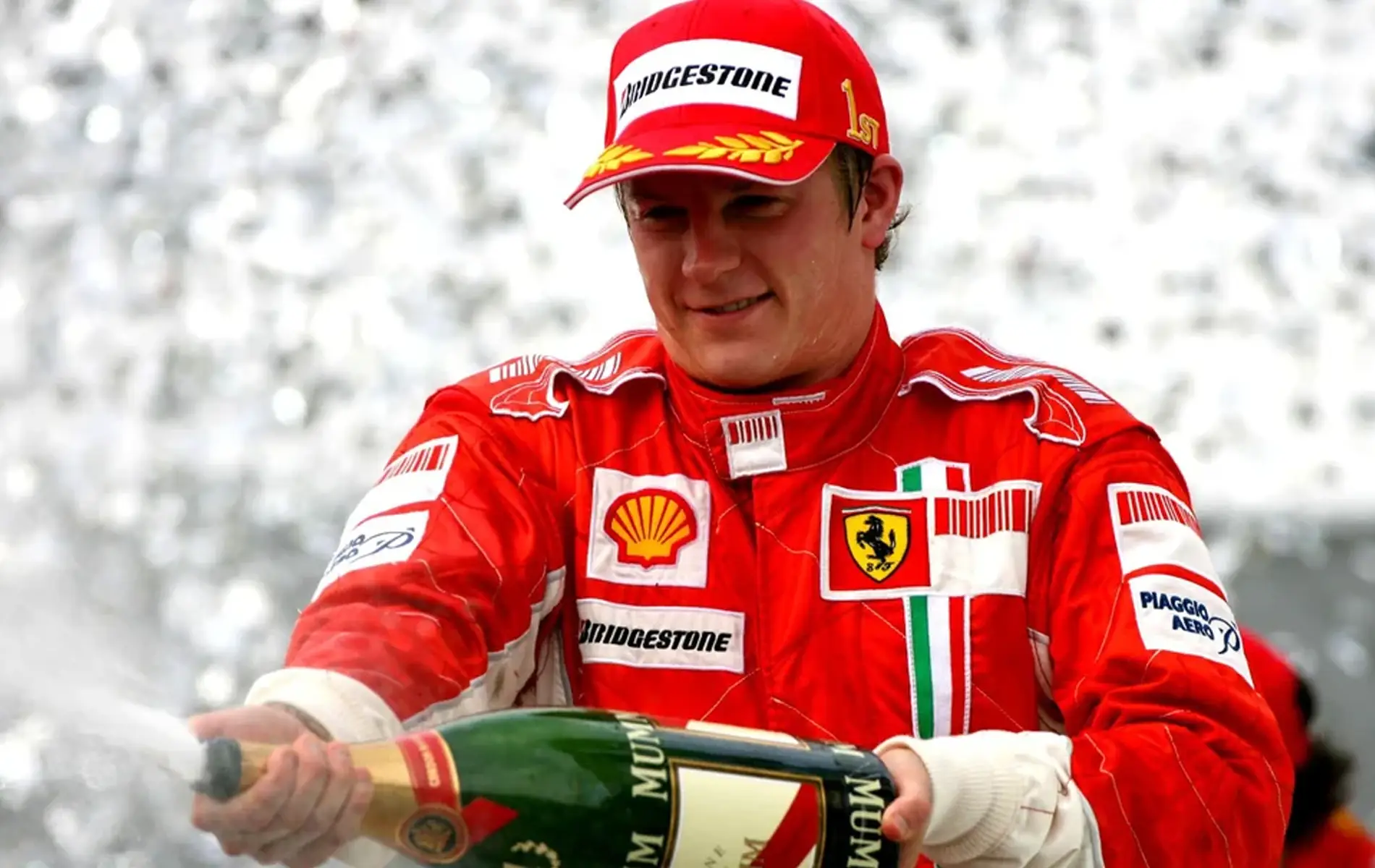
After the Japanese Grand Prix, Räikkönen trailed Lewis Hamilton by 17 points. Only 20 remained available to him. Alonso was also ahead, leaving Ferrari’s new arrival dependent on both his own perfection and McLaren losing ground.
China changed everything. Hamilton became stranded in the gravel at the pit-lane entrance, while Räikkönen won. The gap was now down to just seven.
In Brazil, Hamilton’s difficult opening laps and temporary gearbox problem left him recovering to seventh. Räikkönen won again, with Felipe Massa second and Alonso third.
The championship finished 110 points to Räikkönen and 109 apiece for Hamilton and Alonso. Ferrari’s driver had taken the maximum from the final two races and led the standings when it mattered.
Few championship recoveries have left so little room for error.
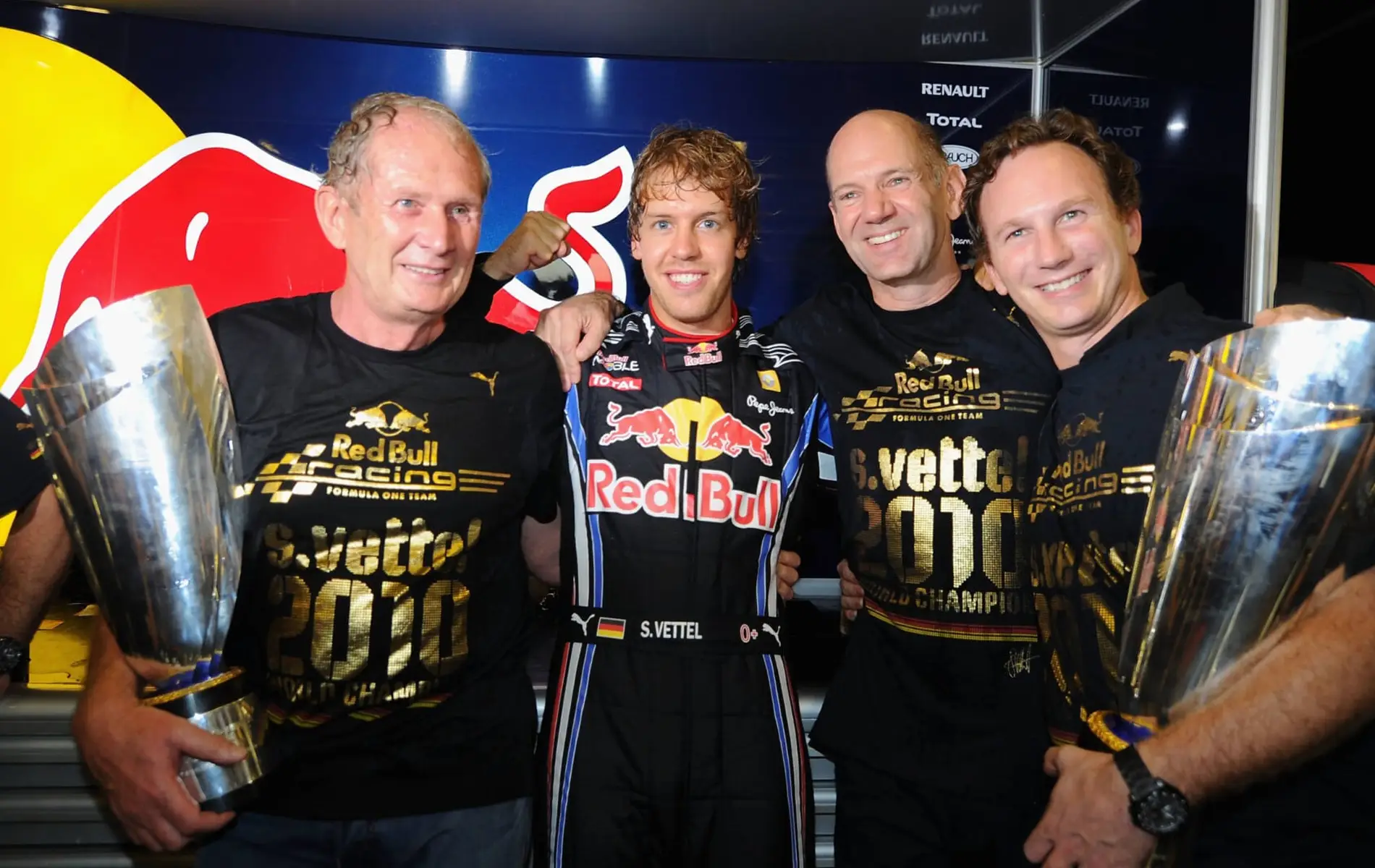
9. Sebastian Vettel 2010: the leader at the last possible moment
In 2010, Vettel was 31 points behind Hamilton after Belgium, with six rounds remaining. Even on the final weekend, the Red Bull driver was an outsider: Alonso led him by 15 points, and Mark Webber (his own teammate) was also ahead.
Vettel took pole and won in Abu Dhabi. Behind him, Ferrari’s attempt to cover Webber’s early stop left Alonso trapped behind Vitaly Petrov.
Alonso’s frustrating seventh place fell short of the points he needed, and Vettel became champion by four points, having never led the standings before the season’s final classification. He became the youngest-ever world champion at the time.
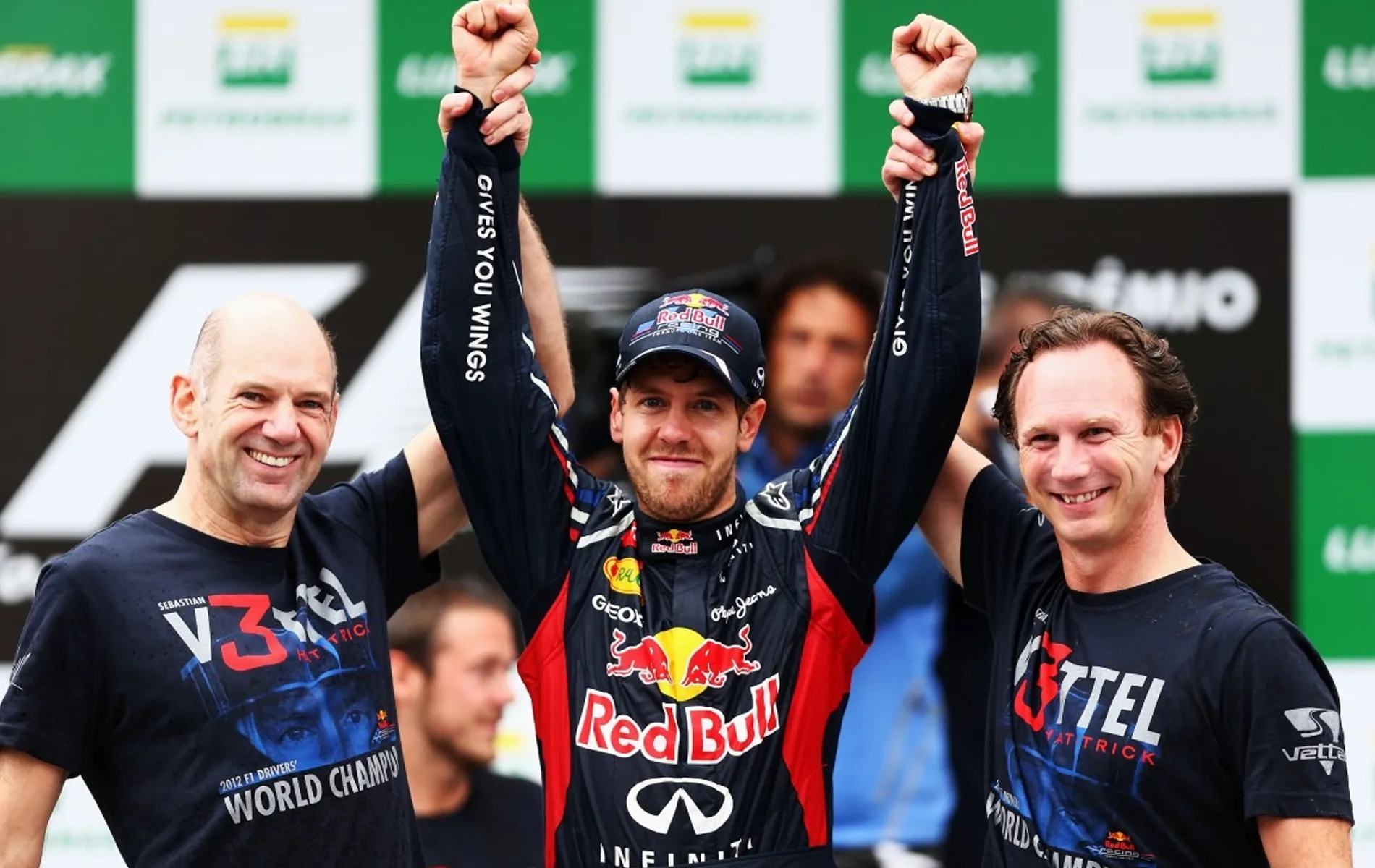
10. Sebastian Vettel 2012: 44 points and a very long afternoon in Brazil
Four consecutive championships can make Vettel’s Red Bull years sound straightforward. The 2012 season was anything but.
After Germany, he trailed Alonso by 44 points with ten races remaining. Later, four consecutive victories in Singapore, Japan, Korea and India transformed the championship.
Vettel arrived in Brazil with a 13-point advantage, then saw his title defence almost end on the opening lap. Contact with Bruno Senna spun the Red Bull around and left it damaged at the back.
What followed was a recovery within a recovery. Vettel climbed through the field in changeable conditions and finished sixth. Alonso’s second place brought him agonisingly close, but Vettel retained the championship by just three points.
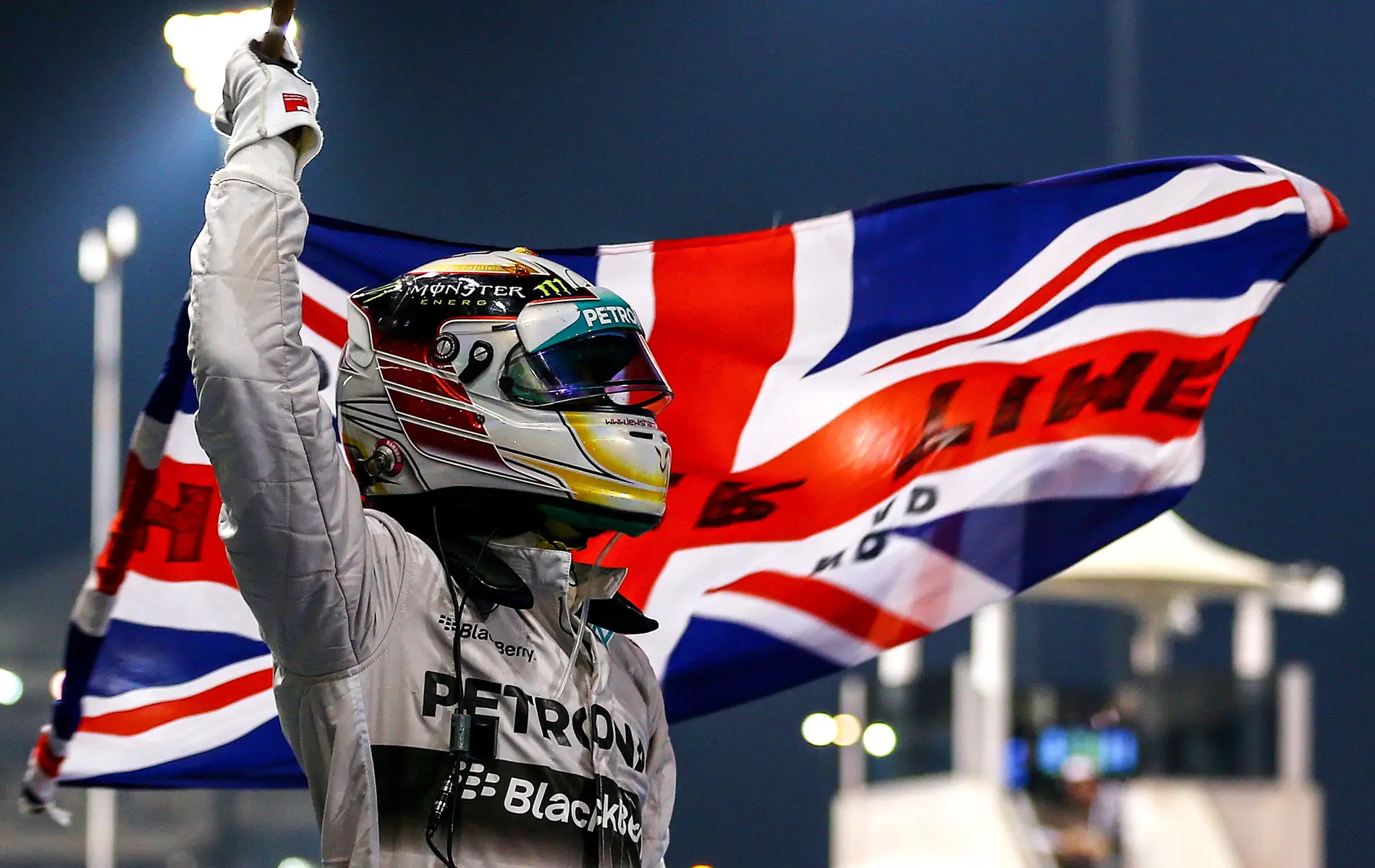
11. Lewis Hamilton 2014: the response after Spa
In 2014, contact between the Mercedes drivers at Spa left Hamilton retiring and Nico Rosberg finishing second. The championship gap became 29 points with seven rounds remaining.
Hamilton’s response was sustained and decisive. He won five consecutive races from Monza to Austin, finished second in Brazil, then won the Abu Dhabi finale.
Six victories from the final seven races delivered his second World Championship. Rosberg’s mechanical trouble in Abu Dhabi helped stretch the final margin to 67 points.
In another F1 oddity, the finale awarded double points, giving Hamilton 50 for victory. The eventual gap therefore exaggerates how comfortable the title fight had been.
12. Max Verstappen 2022: the deficit hidden by the domination
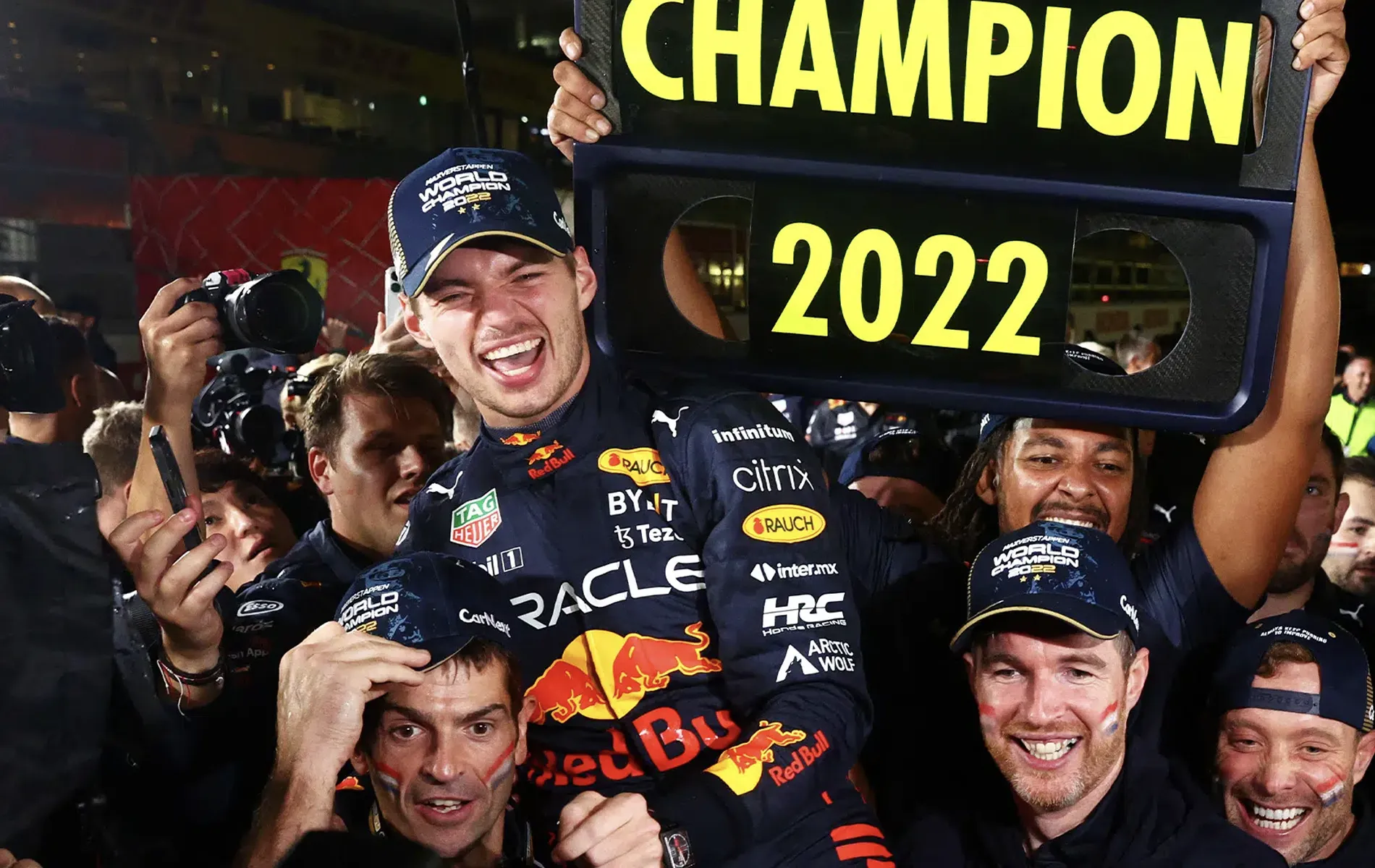
The final standings in 2022 make this look like an unusual inclusion. Verstappen won 15 races and beat Charles Leclerc by 146 points, so where was the comeback, you might ask?
Right at the beginning.
Retirements in Bahrain and Australia left the reigning champion 46 points behind Leclerc after three rounds. Nineteen Grands Prix remained, so the situation was recoverable, but Red Bull urgently needed reliability as well as speed.
Imola supplied the response: Verstappen won the Sprint and Grand Prix, taking fastest lap as well. Red Bull developed strongly, while Ferrari’s challenge suffered from mechanical failures, strategic mistakes and driver errors.
This was a big ‘numerical’ recovery, with plenty of the season left to complete it. Forty-six points in April and 17 points with two races remaining are very different championship problems.

13. Lando Norris 2025: the modern addition to the comeback club
In 2025, Norris’s retirement at Zandvoort handed Oscar Piastri a 34-point advantage with nine Grands Prix remaining. A championship that had been separated by nine points before the weekend suddenly looked considerably harder for the Briton.
Norris recovered to take control before the finale, but another challenger guaranteed there would be no easygoing finish. Verstappen’s late-season charge brought the Red Bull driver back into contention alongside the McLaren pair.
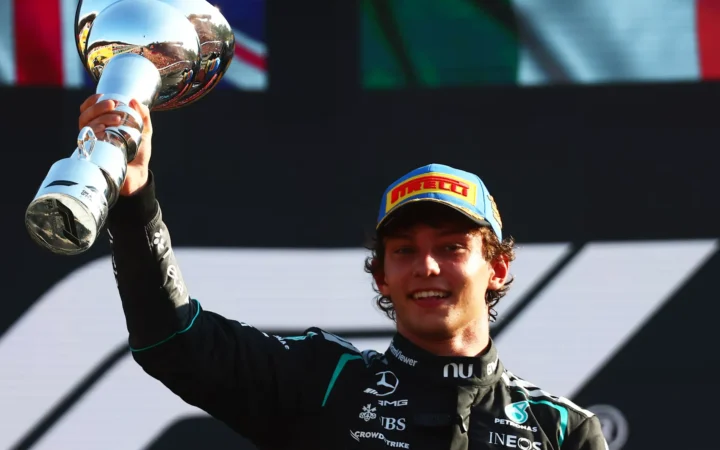
In Abu Dhabi, Norris finished third behind Verstappen and Piastri. It was exactly the podium result he needed: the title ended 423–421 in his favour, with Piastri third overall on 410.
The season belongs in this discussion twice, although only one recovery ended with the trophy. Norris overturned 34 points and became champion. Verstappen recovered from 104 points behind the lead to finish just two short. If Verstappen had claimed the title, it would have been an extraordinary comeback; in the end, it was a near miss for the four-time champion and a celebration for F1’s newest title winner.

Which F1 title comeback was the greatest?
Räikkönen’s 2007 recovery is our pick for the sheer difficulty of the closing task. He was 17 points behind, with only 20 points available. Had Verstappen sealed the deal in 2025, he would stand head and shoulders above all.
Surtees’s 1964 turnaround has a different claim, overcoming a deficit worth more than two victories at the halfway stage. Vettel’s 2012 finale might be the most nerve-racking way to finish one.
Choosing between them requires more than sorting a spreadsheet. A meaningful comparison has to consider how many races remained, how many points a win delivered, whether scores were dropped, and how strong the opposition was.
The next time a championship gap looks imposing, check the calendar as carefully as the standings. F1 history has plenty of examples of drivers who were behind. The memorable ones found a way to win.
Seen in: