


























The 2026 FIA Formula One World Championship, which the Fédération Internationale de l’Automobile (FIA) recognises as the pinnacle of open-wheel racing, would see drivers and teams compete in a planned 24-race schedule, reduced to 22 races in March due to rising tensions in the Middle East.
The 2026 season introduced significant regulatory changes, including a new power unit formula and the introduction of active aerodynamics. Audi officially entered Formula One as a factory team following its acquisition of Sauber in 2024, developing and running its proprietary power units. Cadillac made its debut in Formula One, powered by Ferrari engines, becoming the series’ eleventh team—the first expansion since Haas in 2016.
Honda, via its Honda Racing Corporation subsidiary, would partner exclusively with Aston Martin, supplying bespoke power units as their previous collaboration with Red Bull Racing concluded at the end of 2025. Meanwhile, Ford returned to Formula One after a 22-year absence, partnering with Red Bull Powertrains to supply engine assistance to both Red Bull Racing and Racing Bulls teams.
Renault exited Formula One engine supply for the first time since 1988 at the end of 2025. Alpine, previously powered by Renault engines, moved to Mercedes customer power units for the upcoming season.
Season
In the biggest shakeup in F1 History, there were widespread regulatory changes affecting the size of the cars, aerodynamics, and power units.
McLaren, the 2025 Constructors’ Champions, would hope to earn a third consecutive title, and their first in the new 2026 regulations era.
Qualifying Changes
With the grid going from 20 to 22 drivers, qualifying changed slightly in 2026.
- Q1 (18 minutes): With 22 drivers heading out to set lap times, only 16 drivers would advance to Q2, the rest from positions 17 to 22 – that was 16 to 20 in 2025.
- Q2 (15 minutes): The remaining 16 drivers go again. This round is about getting into the top 10. If they fell short, those drivers started from 11th to 16th.
- Q3 (13 minutes): The top 10 fight for the front row. The fastest lap earns P1, while P2 secured a spot on the front row. The FIA also announced the final part of qualifying would increase from 12 minutes to 13 minutes from this season.
Qualifying was still scheduled for one hour to compensate for the minor change; the interval between Q2 and Q3 was reduced from eight to seven minutes.
Power Units
New regulations governing power units came into effect for the 2026 Formula One season. The revised power units would maintain an output of over 1,000 bhp (750 kW), though the composition of this power would shift significantly. The existing turbocharged 1.6-litre V6 internal combustion engines, used since 2014, would continue; however, the Motor Generator Unit-Heat (MGU-H) would be eliminated. In place, the output of the Motor Generator Unit-Kinetic (MGU-K) would increase from 160 bhp (120 kW) to 470 bhp (350 kW). As a result, the combustion engine’s output would decrease from 850 bhp (630 kW) to 540 bhp (400 kW). Additionally, fuel flow rates would now be regulated based on energy content instead of fuel mass, and all power units would use fully sustainable fuels.
Car Size and Aerodynamics
On 6 June 2024, the initial concept for the 2026 cars was unveiled, highlighting notable aerodynamic and dimensional changes. Active aerodynamics were introduced on both the front and rear wings, while the existing Drag Reduction System (DRS) was abandoned. The car’s wheelbase was shortened from 360 cm (140 in) to 340 cm (130 in), the width reduced from 200 cm (79 in) to 190 cm (75 in), and the minimum vehicle mass lowered by 30 kg (66 lb). Tyre widths were reduced by 2.5 cm (0.98 in) at the front and 3.0 cm (1.2 in) at the rear.
In October 2024, the FIA revised its initial aerodynamic plans, reducing the targeted downforce decrease for the 2026 cars from over 40% to approximately 15% compared to the 2022–2025 vehicles. Consequently, the projected lap-time differential was revised, making the 2026 generation about two seconds slower per lap instead of the originally anticipated four seconds.
With F1 ditching the Drag Reduction System (DRS) in favour of active aerodynamics—movable front and rear wings designed to boost overtaking and on-track excitement- drivers would have two aerodynamic modes at their disposal:
- Corner Mode: Adjusts wing angles for higher downforce and improved grip through corners.
- Straight Mode: Flattens the wings to reduce drag, maximising speed on straights.
While drivers could control when to switch modes, usage would be restricted to FIA-approved safe zones, typically long straights lasting over three seconds. This shift placed a greater emphasis on driver skill and strategy, ushering in a new era in which overtaking becomes a more tactical, calculated art.
Summary of new terminology
OVERTAKE MODE
Available to drivers running within one second of the car ahead, Overtake Mode allowed the deployment of additional power to initiate a pass. Replacing DRS, it supported wheel-to-wheel racing and could be used either in a single burst or strategically across a lap.
BOOST MODE
A driver-activated energy deployment function from the Energy Recovery System (ERS), usable in both offensive and defensive situations. Boost Mode delivered maximum combined engine and battery power at the press of a button, regardless of position on the track.
ACTIVE AERO
Adjustable front and rear wing elements that changed angle dynamically in designated high-speed sections, switching between Corner and Straight modes. This allowed strategic adaptability and ensured the car’s full power potential was translated into usable on-track performance through improved grip.
RECHARGE
Drivers could replenish battery energy through recovery under braking, throttle lift at the end of straights, and even through partial-throttle application in certain corners.
Safety Features
Significant safety enhancements were also planned for 2026. The Front Impact Structure (FIS) would adopt a new two-stage design intended to remain attached to the survival cell even after primary collisions, providing enhanced protection against subsequent impacts. Additionally, side-intrusion protection around the cockpit and fuel cell area was improved to better safeguard critical regions without increasing overall vehicle weight.
The strength of the roll hoop was increased, able to withstand loads up from 16G to 20G, aligning Formula One with other single-seater racing standards. Correspondingly, load-testing requirements for the roll hoop rose from 141 kN to 167 kN.
New lateral safety lights were mandated to indicate the status of the Energy Recovery System (ERS) when a car stops on track, offering crucial visual warnings about potential electrical hazards to drivers, marshals, and emergency responders.
Tyres
Following a Pirelli tyre test in Mexico City during late 2025, the Italian manufacturer – operating under the FIA’s watchful eye – announced which compounds would be homologated on 15 December 2025.
Meanwhile, the tyre construction for the 2026 season had already been wrapped up on 1 September 2025, signed off only after what insiders described as a forensic balancing act front-to-rear, particularly with active aerodynamics set to make their competitive debut.
Development work was based on projected data supplied by the teams themselves, with simulations focused on the loads and speeds expected toward the end of the 2026 season. Validation came courtesy of mule cars tuned to emulate the next generation of machinery, hammering through track tests to put every candidate compound through its paces.
That, however, added a level of difficulty: the tyres could not yet be tested on genuine 2026 cars, and those would be running 18-inch tyres that are marginally narrower than the 2025 versions.
For dry conditions, Pirelli confirmed a five-strong lineup running from the hardest C1 to the softest C5. Each compound had been positioned in line with the late 2025 range, with thermal degradation targets designed to encourage varied strategic thinking across an exceptionally diverse global calendar.
Pirelli also revealed that the decision not to homologate a sixth dry compound, the famously soft C6 used in 2025, was purely from a performance standpoint. In its words, the C6 was dropped “because it was impossible to meet a delta requirement.” The test laps in Mexico demonstrated that the speed deficit between the C5 and C6 prototypes was simply too small and delivered no substantial performance upside.
Intermediates and Full Wets would join the lineup.
Mid-season Rule Changes
On the 20th April, the FIA revealed tweaks to the regulations after the opening three rounds of the 2026 season, focusing on improving performance and safety in the hope of more “flat-out driving”. They included:
Qualifying
- Adjustments to energy management parameters, including a reduction in maximum permitted recharge from 8MJ to 7MJ, aimed at reducing excessive harvesting and encouraging more consistent flat-out driving. This change targeted a maximum superclip duration reduced to approximately 2-4 seconds per lap.
- Peak superclip power increased to 350kW, previously being 250kW, further reducing the time spent recharging, and reducing driver workload on energy management. This would also be applied in Race conditions.
- The number of events where alternative lower energy limits may apply was increased from 8 to 12 races, allowing greater adaptation to circuit characteristics.
Race
- The maximum power available through the Boost in race conditions was now capped at +150kW (or the car’s current power level at activation if higher) limiting sudden performance differentials.
- MGU-K deployment was maintained at 350kW in key acceleration zones (from corner exit to braking point, including overtaking zones) but would be limited to 250kW in other parts of the lap.
- These measures were designed to reduce excessive closing speeds while maintaining overtaking opportunities and overall performance characteristics.
Race starts
- A new “low power start detection” system was developed, capable of identifying cars with abnormally low acceleration shortly after clutch release.
- In such cases, an automatic MGU-K deployment would be triggered to ensure a minimum level of acceleration and mitigate start-related risks without introducing any sporting advantage.
- An associated visual warning system was introduced, activating flashing lights (rear and lateral) on affected cars to alert following drivers.
- A reset of the energy counter at the start of the formation lap was implemented to correct a previously identified system inconsistency.
Wet conditions
- Tyre blanket temperatures for intermediate tyres were increased following driver feedback in order to improve initial grip and tyre performance in wet conditions.
- Maximum ERS deployment was reduced, limiting torque and improving car control in low-grip conditions.
- The rear light systems were simplified, with clearer and more consistent visual cues to improve visibility and reaction time for following drivers in poor conditions.
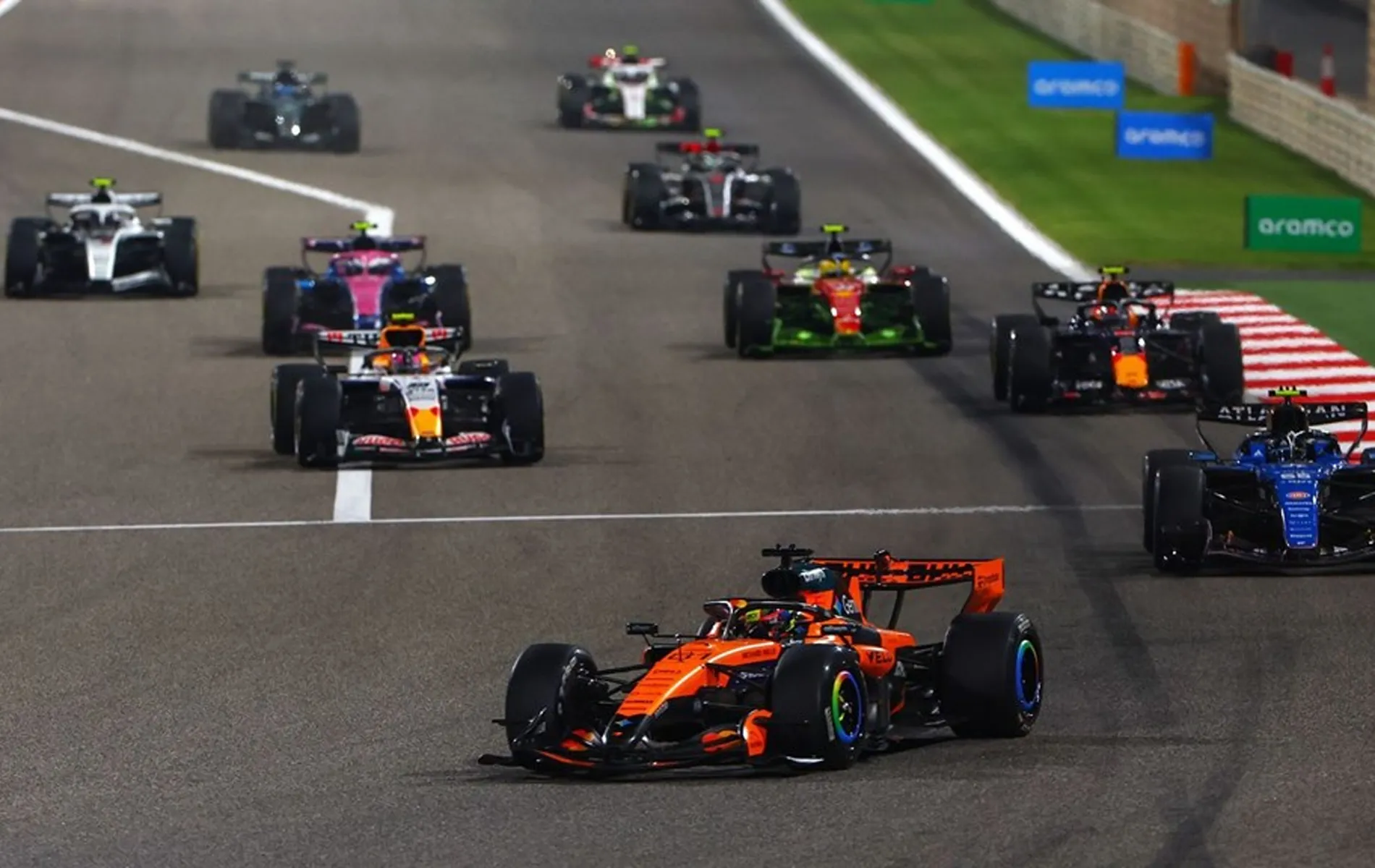
2026 F1 Entries drivers and teams
Teams
Cadillac entered Formula One as the series’ eleventh team, marking both Cadillac’s debut in the championship and the first new team on the grid since Haas joined in 2016. Cadillac would use Ferrari-supplied power units and gearboxes. Previously, Cadillac attempted to enter Formula One in partnership with Andretti Global.
Coinciding with new engine regulations, three new engine manufacturers would join Formula One:
Audi entered the sport by acquiring the existing Sauber team. Sauber had competed as Kick Sauber with Ferrari engines in the 2024 and 2025 seasons before transitioning into the official Audi factory team in 2026. This change positioned Haas and the new entrant Cadillac as Ferrari’s two customer teams.
Ford returned to Formula One for the first time since 2004, partnering with Red Bull Powertrains. They would help supply engine knowledge and technologies to Red Bull Racing and its sister team, Racing Bulls, via Red Bull Powertrains. Honda, previously aligned with Red Bull Powertrains since their partial exit in 2021, would fully separate and re-enter Formula One independently under its Honda Racing Corporation brand, supplying engines exclusively to Aston Martin. Aston Martin had been powered by Mercedes since rejoining Formula One. Honda previously collaborated with Jordan, Aston Martin’s predecessor, from 1998 to 2002.
Renault ceased engine supply to Alpine starting from 2026 due to underwhelming performance throughout the hybrid power unit era since 2014. This was the first season without Renault or French-licensed engines since 1988. Alpine transitioned from a full works team to a customer team, using Mercedes-supplied engines and gearboxes from the 2026 season onward.
Drivers
Various drivers had running contracts into 2026, but in 2025 many teams were yet to announce their 2026 and beyond driver lineups.
One of the most exciting aspects of Cadillac’s F1 journey was the speculation surrounding driver choices. Early rumours pointed towards experienced racers and promising young talent from IndyCar and Formula 2. Drivers like Colton Herta, a star in Andretti’s IndyCar program, and Felipe Drugovich, the 2022 Formula 2 champion, were among the top contenders rumoured for a seat. Cadillac has stressed that driver selection would prioritise performance, potential, and global marketability.
Alongside drivers from the existing Andretti stable, experienced Formula 1 race winners Sergio Perez and Valtteri Bottas had been linked to the new entry after losing their seats with Red Bull and Sauber at the end of the 2024 season. The team had also expressed a strong interest in including at least one American driver in its debut lineup.
Then, on 25 August 2025, Cadillac made headlines by confirming Pérez and Bottas as its first-ever driver lineup for its much-anticipated Formula 1 debut in 2026. Both brought a wealth of experience back to the grid after a year away. With Cadillac’s bold entrance into the sport and two proven race-winners behind the wheel, excitement was sky-high.
The final three seats of the 2026 season were decided on 2 December 2025, two days after a dramatic Abu Dhabi Grand Prix. Sadly for Yuki Tsunoda and his fans, he was dropped as a full-time driver for Red Bull Racing, assuming a reserve and simulator role with both teams. In his place, 2025 rookie Isack Hadjar stepped up to replace him from the sister Racing Bulls team. Liam Lawson was retained at Racing Bulls, joined by F2 star, Red Bull Racing Junior and British driver, Arvid Lindblad. The only rookie driver on the grid.
2026 F1 Pre-Season Testing
Teams enjoyed an expanded testing schedule, comprising three separate sessions, each lasting three days. This increase in testing time was designed to accommodate the significant changes resulting from new chassis and engine regulations.
The first was a private test at the Circuit de Barcelona-Catalunya on 26–30 January. The second and third were held at the Bahrain International Circuit on 11–13 February and on 18–20 February.
Barcelona Shakedown
Day 1
Isack Hadjar set the early pace as F1’s 2026 pre-season testing began in Barcelona, topping both the morning session and the overall timesheets with a 1:18.159 for Red Bull. George Russell finished second after taking over the Mercedes in the afternoon, with Alpine’s Franco Colapinto third, on a day where lap times were largely unrepresentative due to the early stage of running.
The behind-closed-doors shakedown featured only seven teams, with McLaren, Ferrari, Aston Martin and Williams absent, and was disrupted by red flags and technical issues. Haas’ Esteban Ocon led the way on mileage with 154 laps, while Cadillac endured a cautious day as Sergio Perez focused on installation running, and Hadjar ultimately held on to P1 after a late exchange of fastest laps with Russell.
Day 2
Day 2 of F1 2026 testing in Barcelona was heavily shaped by rain, with Red Bull and Ferrari the only teams running. Max Verstappen briefly triggered a red flag early on after running through the gravel, before sharing wet and dry running with Charles Leclerc, who logged the bulk of Ferrari’s mileage and set an unofficial best of around 1:20.8 in damp conditions. As rain arrived earlier than expected, both drivers continued on wet tyres, with Leclerc completing 66 laps and Verstappen 27.
Red Bull’s day ended prematurely in the afternoon when Isack Hadjar crashed the RB22 at the final corner, damaging the rear wing and bringing running to a halt with around 30 minutes remaining. Hadjar, who topped Day 1, had taken over from Verstappen to gain wet-weather experience, while Ferrari later handed their car to Lewis Hamilton. With Red Bull the only team to run across both days so far, the incident left them weighing repair time against their remaining permitted test days.
Day 3
Mercedes continued their strong start to Formula 1’s 2026 era on the third day of the Barcelona shakedown, with Kimi Antonelli setting the fastest time so far and George Russell close behind after extensive running in cold conditions. The team completed the most mileage of the day, focusing on reliability and long runs rather than outright pace, and expressed optimism about the feel of the new, lighter cars ahead of competitive testing later in the year.
Attention also centred on McLaren as reigning world champion Lando Norris completed the first on-track running of the new MCL40, sporting the No 1 for the first time. Norris described the debut as productive and focused on understanding systems rather than performance. Elsewhere, Alpine logged solid mileage, Racing Bulls exceeded 100 laps, while Haas and Audi both faced reliability interruptions.
Day 4
The penultimate day of Formula 1’s first 2026 pre-season test in Barcelona was marked by a clear split between reliability and disruption. McLaren’s running was limited when a fuel system issue hampered Oscar Piastri’s afternoon, restricting the team to just 48 laps. Aston Martin also endured a frustrating return to the track, with Lance Stroll completing only a handful of laps before his Adrian Newey-inspired AMR26 stopped on circuit, bringing out the only red flag of the day during the team’s long-awaited first appearance of the test.
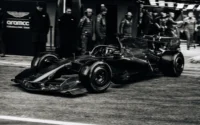
In contrast, Mercedes and Ferrari enjoyed productive and confidence-boosting outings. Mercedes completed the final day of its permitted running in strong form, with George Russell setting the fastest time of the week as the team amassed significant mileage. Ferrari also logged heavy running, with Lewis Hamilton and Charles Leclerc combining for more than 170 laps, reinforcing the sense that the Scuderia had made a solid start to Formula 1’s new 2026 regulations.
Day 5
Lewis Hamilton finished Formula 1’s first pre-season test of the 2026 era on top after setting the fastest lap of the five-day Barcelona running for Ferrari. His late-session time of 1:16.348 on Friday edged Mercedes driver George Russell’s Thursday benchmark and underlined a promising start for Ferrari under the new regulations, with Hamilton noting the team is in a stronger position than at the same stage in 2024.
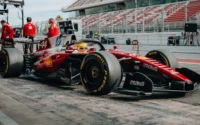
McLaren emerged as Ferrari’s closest challenger, with world champion Lando Norris second fastest ahead of Charles Leclerc, while Max Verstappen logged 118 laps for Red Bull on its return to action. Fernando Alonso completed a clean first outing in the Aston Martin AMR26, as teams concluded a tightly regulated test that offered early clues — but no firm answers — about the competitive order for 2026.
Bahrain Pre-Season Test
test 1: Day 1
Lando Norris set the benchmark on the opening day of 2026 pre-season testing in Bahrain, edging out Max Verstappen by just 0.129s. Charles Leclerc followed in third, as teams began unlocking performance from radically redesigned cars.
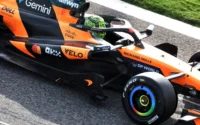
Beyond outright pace, reliability and mileage were central themes. Verstappen led the lap charts with over 130 laps, while Esteban Ocon also surpassed 100 laps. A brief red flag for Nico Hulkenberg provided minor disruption, but overall it was a productive first day as teams gathered crucial data ahead of the remaining sessions.
test 1: Day 2
Charles Leclerc led the way on Thursday in Bahrain, setting a morning time of 1m 34.273s that remained unbeaten through to the evening session. He finished comfortably ahead of Lando Norris and Oliver Bearman, with all three drivers surpassing 100 laps despite intermittent stoppages. Mercedes split duties between Kimi Antonelli and George Russell, though Antonelli’s morning was severely limited by a power unit issue, leaving Russell to secure fourth overall.
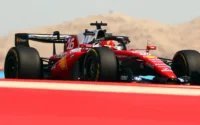
Elsewhere, Isack Hadjar rebounded from early technical issues to finish fifth, while Audi’s Gabriel Bortoleto and Nico Hulkenberg continued preparations for their debut season. Several drivers encountered minor disruptions, including Sergio Perez and Valtteri Bottas, as Race Control also conducted systems checks late in the day. Teams would now analyse their findings before returning for the final day of testing on Friday.
test 1: Day 3
Mercedes concluded the opening 2026 Bahrain pre-season test in emphatic fashion, with Kimi Antonelli leading George Russell to secure a 1-2 finish on the final day. Antonelli’s 1m 33.669s lap edged out Russell’s morning benchmark, while Lewis Hamilton placed third for Ferrari after a full day of long-run work that ended with a late stoppage. Oscar Piastri impressed with extensive mileage for McLaren, finishing fourth ahead of Red Bull’s Max Verstappen and Isack Hadjar.
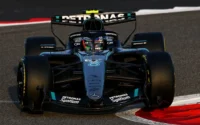
Elsewhere, Haas, Alpine and Audi filled out the midfield positions, with several drivers experiencing lock-ups as teams continued to understand their new-generation cars. Lance Stroll admitted Aston Martin are currently “around four-and-a-half seconds off the pace”, while Cadillac overcame an early red flag to log significant mileage. With one Bahrain test complete, teams now turned their focus to analysing data before returning to Sakhir on February 18–20 for the final pre-season session.
test 2: Day 1
George Russell led the way on Day 1 of the second 2026 pre-season test in Bahrain, setting a 1m 33.459s to edge Oscar Piastri by just 0.010s under the floodlights at the Bahrain International Circuit. Charles Leclerc’s morning benchmark secured third, while improving track conditions in the cooler evening air played a decisive role in the late reshuffle at the top. Russell also completed the most laps of any driver, underlining Mercedes’ productive start.
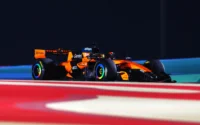
The afternoon featured a brief red flag after Lance Stroll beached his Aston Martin in the gravel at Turn 11, while teams focused on gathering data, race simulations, and start procedures. With only two days of testing remaining before the season opener in Australia, every run carried added weight — and with Verstappen set to return to action on Thursday, the competitive picture was expected to evolve further.
test 2: Day 2
Kimi Antonelli led the way on Day 2 of the second 2026 pre-season test in Bahrain, clocking a 1m 32.803s lap to head Oscar Piastri by 0.058s and Max Verstappen by just over three-tenths. The afternoon session saw fluctuating conditions and changing leaders, with Verstappen and Piastri both enjoying spells at the top before Antonelli secured the fastest time in the final hour. Verstappen also completed the most laps of the day with 139.
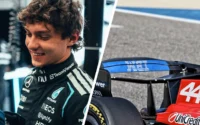
Fernando Alonso caused a red flag after stopping on track, limiting his running to 68 laps, while Lewis Hamilton worked to recover mileage after a quiet morning. Several teams conducted soft-tyre runs as dusk fell, and the session concluded with a practice race-start procedure, one Ferrari dominated.
test 2: Day 3
Charles Leclerc concluded Formula 1’s final pre-season test in Bahrain with an emphatic fastest lap, finishing 0.879 seconds clear of Lando Norris and reinforcing Ferrari’s status as genuine contenders heading into the Australian Grand Prix. Beyond the headline time, Leclerc’s full race simulation in the heat of the afternoon further underlined Ferrari’s competitiveness, while Mercedes — despite strong long-run pace across the test — appeared to keep some performance in hand. Max Verstappen and George Russell were closest in pursuit but unable to match Ferrari’s outright speed on Friday.
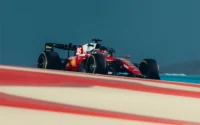
Elsewhere, Mercedes rookie Kimi Antonelli lost significant track time due to an engine issue, while Aston Martin endured a troubled test, with Lance Stroll completing just six laps amid ongoing reliability concerns. Alpine and Haas look poised to head the midfield battle, with Racing Bulls, Audi and Williams close behind. As teams headed to Melbourne, the early signs pointed to a compelling Ferrari-versus-Mercedes contest at the front.
2026 Formula 1 Race Calendar
In 2026, Formula 1 introduced the Madrid circuit to hold the Spanish Grand Prix as the closing event of the sport’s uninterrupted European leg. Set for 11–13 September, the new race marked Madrid’s debut on the calendar and took over from the Emilia-Romagna Grand Prix at Imola, while the total number of races remained unchanged at 24.
The addition of Madrid was part of a wider effort to optimise logistics and lower carbon emissions across the season. Among the reshuffled dates, the Canadian Grand Prix moved from its usual early June slot to 22–24 May. This shift moved it directly after the Miami Grand Prix, scheduled for 1–3 May, allowing teams to streamline freight movement between the two North American events.
- Meanwhile, the Monaco Grand Prix was pushed back and would now take place on 5–7 June, filling the space left vacant by Canada’s rescheduling. These calendar adjustments were aimed at improving transport efficiency throughout the season.
- Following the Monaco Grand Prix during the first weekend of June, the Formula 1 calendar stayed within Europe until the Madrid round, before shifting continents once more for the Azerbaijan Grand Prix, scheduled for 25–27 September, which began the final international leg of the season.
These scheduling adjustments aligned with F1’s updated regulations, which now require the use of fully sustainable, 100% renewable fuels in the new generation of engines.
- The campaign kicked off in Melbourne, Australia, from 6–8 March. Bahrain, traditionally the season opener in recent years, would instead be staged in April to accommodate the timing of Ramadan. It was closely followed by the Saudi Arabian Grand Prix just one week later.
However, Formula 1 had to cancel the Bahrain and Saudi Arabian Grands Prix scheduled for April due to the escalating conflict in the Middle East. The races had originally been planned as the fourth and fifth rounds of the 2026 season, with Bahrain set for April 10-12 and the Saudi Arabian Grand Prix in Jeddah on April 17-19. However, rising regional tensions and security concerns led the sport and the FIA to prioritise safety, with both events called off by the end of the Chinese Grand Prix weekend. The cancellations reduced the 2026 championship calendar to 22 races.
With little time available to organise replacements, potential alternative venues such as Portimao in Portugal and Imola in Italy were considered unlikely to step in. As a result, the season continued without the two Middle East rounds, creating a five-week gap between the Japanese Grand Prix (March 27-29) and the Miami Grand Prix (May 1-3).
- Notably, there was a change in the early part of the calendar: after Australia and China, there would now be a two-week gap to the Japanese Grands Prix in March, offering more breathing room compared to the tighter one-week turnaround seen in the 2025 season.
- The British Grand Prix at Silverstone was confirmed for 3–5 July. Meanwhile, the Dutch Grand Prix would make its final appearance on the calendar, taking place at Zandvoort from 21–23 August.
- Barcelona continued to host a race, now called the Barcelona-Catalunya Grand Prix, holding its usual mid-June spot on 12–14 June as it completed the final year of its current contract, that was extended to 2032, and to feature in a yearly rotation with the Belgian Grand Prix, in 2028, 2030 and 2032 alongside the Madrid street race, which was now a permanent fixture on the calendar.
The season concluded with two sets of back-to-back triple headers. The first trio began with the US Grand Prix in Austin from 23–25 October, followed by stops in Mexico and Brazil. The final stretch began with the Las Vegas Grand Prix from 19–21 November, then moved to Qatar and culminated in Abu Dhabi from 4–6 December, which wrapped up the championship.
| Grand Prix | Circuit | Race date | Race report |
|---|---|---|---|
| 2026 Australian Grand Prix | Albert Park Circuit | 6-8 March | Report |
| 2026 Chinese Grand Prix | Shanghai International Circuit | 13-15 March | Report |
| 2026 Japanese Grand Prix | Suzuka International Racing Course | 27-29 March | Report |
| 2026 Bahrain Grand Prix | Bahrain International Circuit | 10-12 April | Cancelled |
| 2026 Saudi Arabian Grand Prix | Jeddah Corniche Circuit | 17-19 April | Cancelled |
| 2026 Miami Grand Prix | Miami International Autodrome | 1-3 May | Report |
| 2026 Canadian Grand Prix | Circuit Gilles-Villeneuve | 22-24 May | TBC |
| 2026 Monaco Grand Prix | Circuit de Monaco | 5-7 June | TBC |
| 2026 Barcelona-Catalunya Grand Prix | Circuit de Barcelona-Catalunya | 12-14 June | TBC |
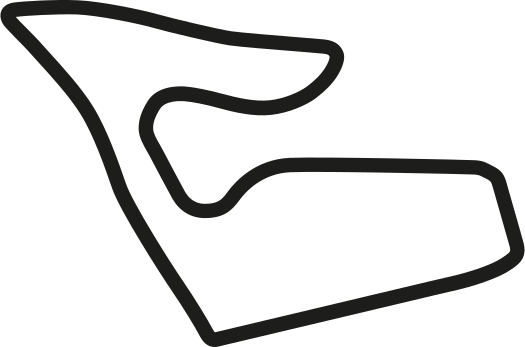
| 2026 Austrian Grand Prix | Red Bull Ring | 26-28 June | TBC |
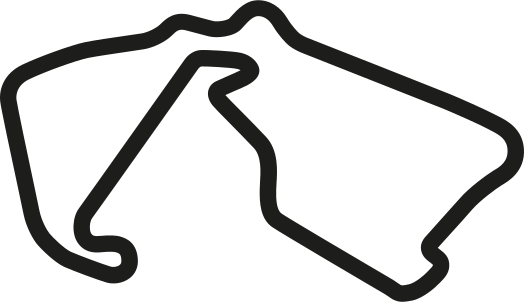
| 2026 British Grand Prix | Silverstone Circuit | 3-5 July | TBC |
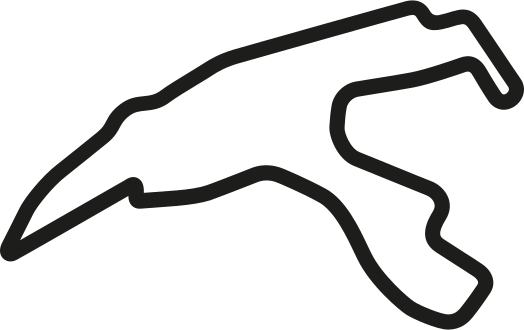
| 2026 Belgian Grand Prix | Circuit de Spa-Francorchamps | 17-19 July | TBC |
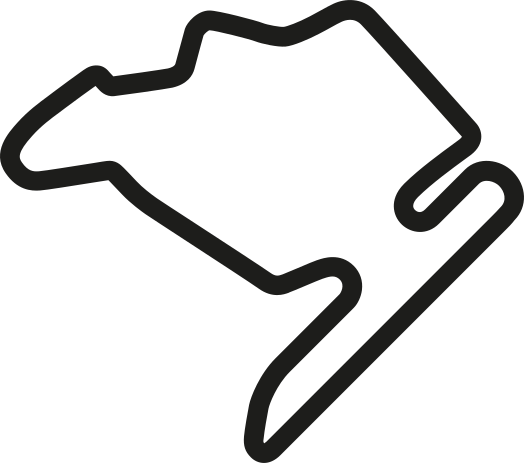
| 2026 Hungarian Grand Prix | Hungaroring | 24-26 July | TBC |
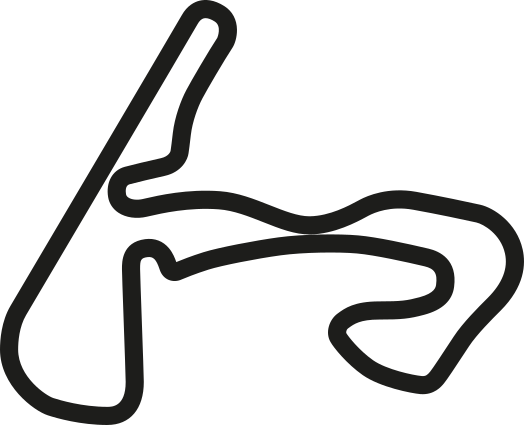
| 2026 Dutch Grand Prix | Circuit Zandvoort | 21-23 August | TBC |
| 2026 Italian Grand Prix | Autodromo Internazionale Enzo e Dino Ferrari | 4-6 September | TBC |
| 2026 Spanish Grand Prix | Circuito IFEMA Madrid “Madring” | 11-13 September | TBC |
| 2026 Azerbaijan Grand Prix | Baku City Circuit | 25-27 September | TBC |
| 2026 Singapore Grand Prix | Marina Bay Street Circuit | 9-11 October | TBC |
| 2026 United States Grand Prix | Circuit of The Americas | 23-25 October | TBC |
| 2026 Mexico City Grand Prix | Autódromo Hermanos Rodríguez | 30 October-1 November | TBC |
| 2026 São Paulo Grand Prix | Autodromo José Carlos Pace | 6-8 November | TBC |
| 2026 Las Vegas Grand Prix | Las Vegas Strip Circuit | 19-21 November | TBC |
| 2026 Qatar Grand Prix | Lusail International Circuit | 27-29 November | TBC |
| 2026 Abu Dhabi Grand Prix | Yas Marina Circuit | 4-6 December | TBC |
2026 F1 Sprint Race Calendar
| Round | Sprint Race | Circuit | Sprint Race Date | Sprint Race Report |
|---|---|---|---|---|
| 1 | 2026 Chinese Sprint Race | Shanghai International Circuit | 14 March | Report |
| 2 | 2026 Miami Sprint Race | Miami International Autodrome | 2 May | Report |
| 3 | 2026 Canadian Sprint Race | Circuit Gilles-Villeneuve | 23 May | TBC |
| 4 | 2026 British Sprint Race | Silverstone Circuit | 4 July | TBC |
| 5 | 2026 Dutch Sprint Race | Circuit Zandvoort | 22 August | TBC |
| 6 | 2026 Singapore Sprint Race | Marina Bay Street Circuit | 10 October | TBC |
2026 Formula 1 Race Reports
Round 1: Australian Grand Prix
Race date: Sunday, 8 March 2026
Race start time: 15:00 local time
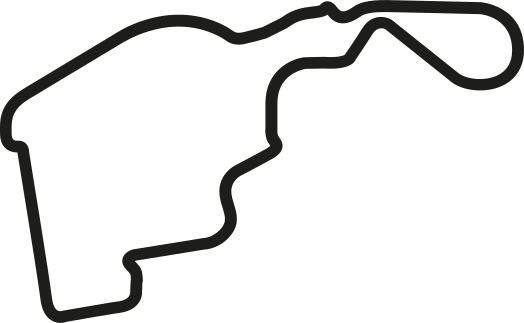
Circuit: Albert Park
Laps: 58
Circuit length: 5.278km
2025 winner: Lando Norris
George Russell converted pole into victory in the season-opening 2026 Australian Grand Prix, leading home Mercedes teammate Kimi Antonelli to seal a commanding 1-2 finish for the Silver Arrows. Charles Leclerc completed the podium for Ferrari, holding off Lewis Hamilton, who finished fourth after failing to find a way past his teammate in the closing stages. Lando Norris and Max Verstappen followed in fifth and sixth, respectively, while Oliver Bearman led the midfield for Haas’ charge in seventh, ahead of rookie Arvid Lindblad, Audi’s Gabriel Bortoleto, and the Alpine of Pierre Gasly, who rounded out the top ten.
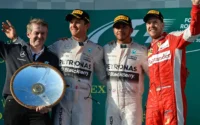
Esteban Ocon finished just outside the points in 11th, followed by Alexander Albon, Liam Lawson, Franco Colapinto, Carlos Sainz and Sergio Perez completing the classification. After taking the chequered flag, Russell guided his Mercedes towards the pit wall to celebrate with the team, declaring over the radio: “Very nice, very nice. I like this car. I like this engine!”—a fitting reaction as the Brit secured both his and Mercedes’ first win of the new season.
Full Race Report
Round 2: Chinese Grand Prix
Race date: Sunday, 15 March 2026
Race start time: 15:00 local time
Circuit: Shanghai International Circuit
Laps: 56
Circuit length: 5.451km
2025 winner: Oscar Piastri
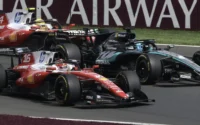
Kimi Antonelli converted his youngest-ever Formula 1 pole position into victory at the 2026 Chinese Grand Prix, delivering a commanding performance to finish ahead of Mercedes team-mate George Russell. At 19 years, 6 months and 18 days, Antonelli became the second-youngest race winner in F1 history, behind only Max Verstappen. The race began dramatically when Lewis Hamilton, starting third for Ferrari, made an excellent launch and swept past both Mercedes cars into the lead. Hamilton briefly controlled the race, but Antonelli reclaimed the lead before the end of Lap 2 and quickly established control of the Grand Prix. Despite a brief scare when he ran slightly deep at the Turn 14 hairpin with four laps remaining, the Italian maintained his advantage to take the chequered flag 5.515 seconds ahead of Russell after 1:33:15.607. Russell, who had won Saturday’s Sprint race, recovered from losing ground behind the Ferraris after the Safety Car restart to secure second place and maintain his lead in the Drivers’ Championship after two rounds. Hamilton completed the podium in third, his first Grand Prix podium for Ferrari, after defending against team-mate Charles Leclerc, who finished fourth.
Behind the leading quartet, Ollie Bearman produced an impressive drive to finish fifth for Haas.
Antonelli’s landmark win secured Mercedes another dominant 1-2 finish and confirmed the young Italian as an early contender in the 2026 championship battle.
Full Race Report
Round 3: Japanese Grand Prix
Race date: Sunday, 29 March 2026
Race start time: 14:00 local time
Circuit: Suzuka International Racing Course
Laps: 53
Circuit length: 5.807km
2025 winner: Max Verstappen
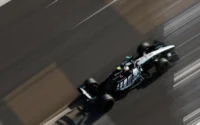
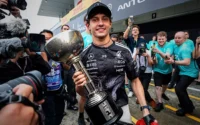
Kimi Antonelli produced a defining drive at Suzuka to claim victory in the 2026 Japanese Grand Prix and move into the lead of the championship, the Mercedes driver converting opportunity into dominance to secure his second consecutive win. In doing so, the Italian also became the youngest championship leader in F1 history, at 19 years, 7 months, and 4 days, underlining both his rapid rise and Mercedes’ early-season authority. He took the chequered flag 13.722 seconds clear of McLaren’s Oscar Piastri, with Ferrari’s Charles Leclerc completing the podium after a race shaped by strategy and a pivotal Safety Car.
Full race report…
Bahrain Grand Prix
Race date: Sunday, 12 April 2026
Race start time: Cancelled
Circuit: Bahrain International Circuit
Laps: 57
Circuit length: 5.412km
2025 winner: Oscar Piastri
Saudi Arabian Grand Prix
Race date: Sunday, 19 April 2026
Race start time: Cancelled
Circuit: Jeddah Corniche Circuit
Laps: 50
Circuit length: 6.174km
2025 winner: Oscar Piastri
The Bahrain and Saudi Arabian Grand Prix were cancelled due to the Middle East conflict.
Round 4: Miami Grand Prix
Race date: Sunday, 3 May 2026
Race start time: 16:00 local time (started at 13:00 due to incoming weather reports)
Circuit: Miami International Autodrome
Laps: 57
Circuit length: 5.412km
2025 winner: Oscar Piastri
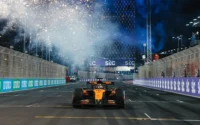
After an unusually long five-week pause due to the war in the Middle East and Bahrain, and Saudi Arabia being cancelled from the calendar for safety reasons, Formula 1 returned to Florida for the 2026 Miami Grand Prix. Orginally round six, now round four of the season.
After the forced break, it was Kimi Antonelli who claimed a dramatic victory at the Miami International Autodrome, securing his third consecutive win of the season after holding off sustained pressure from Lando Norris. The race began in chaotic fashion as Antonelli, Max Verstappen and Charles Leclerc went three-wide into Turn 1, with contact sending Verstappen into a spin and shuffling the early order. Multiple lead changes followed, with several frontrunners taking turns at the front while early incidents triggered a Safety Car.
As the race settled, it evolved into a direct fight between Antonelli and Norris, with the McLaren driver staying within range throughout the closing stages. Despite the pressure, Antonelli remained composed to take the win — becoming the first driver in F1 history to convert his first three pole positions into victories. Norris finished 3.264 seconds behind in second, while Oscar Piastri secured third after a late overtake on Leclerc during a chaotic final two laps.
Behind them, Leclerc dropped to sixth after a spin and being passed by George Russell and a recovering Verstappen, who climbed back to fifth. Lewis Hamilton finished seventh, while points were also scored by Franco Colapinto and both Williams drivers. Several retirements — including Pierre Gasly and Isack Hadjar — added to the drama, rounding off a chaotic and pivotal race in the 2026 season.
Round 5: Canadian Grand Prix
Race date: Sunday, 24 May 2026
Race start time: 16:00 local time
Circuit: Circuit Gilles-Villeneuve
Laps: 70
Circuit length: 4.361km
2025 winner: George Russell
Round 6: Monaco Grand Prix
Race date: Sunday, 7 June 2026
Race start time: 15:00 local time
Circuit: Circuit de Monaco
Laps: 78
Circuit length: 3.337km
2025 winner: Lando Norris
Round 7: Barcelona-Catalunya Grand Prix
Race date: Sunday, 14 June 2026
Race start time: 15:00 local time
Circuit: Circuit de Barcelona-Catalunya
Laps: 66
Circuit length: 4.675km
2025 winner: Oscar Piastri (was the Spanish Grand Prix in 2025)
Round 8: Austrian Grand Prix
Race date: Sunday, 28 June 2026
Race start time: 15:00 local time
Circuit: Red Bull Ring
Laps: 71
Circuit length: 4.318km
2025 winner: Lando Norris
Round 9: British Grand Prix
Race date: Sunday, 5 July 2026
Race start time: 15:00 local time
Circuit: Silverstone Circuit
Laps: 52
Circuit length: 5.891km
2025 winner: Lando Norris
Round 10: Belgian Grand Prix
Race date: Sunday, 19 July 2026
Race start time: 15:00 local time
Circuit: Circuit de Spa-Francorchamps
Laps: 44
Circuit length: 7.004km
2025 winner: Oscar Piastri
Round 11: Hungarian Grand Prix
Race date: Sunday, 26 July 2026
Race start time: 15:00 local time
Circuit: Hungaroring
Laps: 70
Circuit length: 4.381km
2025 winner: Lando Norris
Round 12: Dutch Grand Prix
Race date: Sunday, 23 August 2026
Race start time: 15:00 local time
Circuit: Circuit Zandvoort
Laps: 72
Circuit length: 4.259km
2025 winner: Oscar Piastri
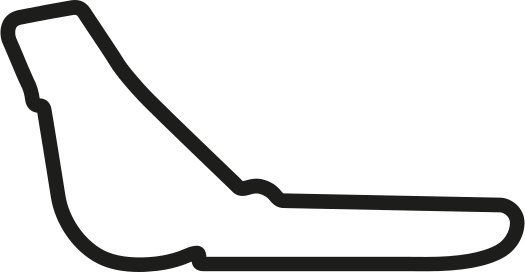
Round 13: Italian Grand Prix
Race date: Sunday, 6 September 2026
Race start time: 15:00 local time
Circuit: Autodromo Nazionale di Monza
Laps: 53
Circuit length: 5.793km
2025 winner:Max Verstappen
Round 14: Spanish Grand Prix
Race date: Sunday, 13 September 2026
Race start time: 15:00 local time
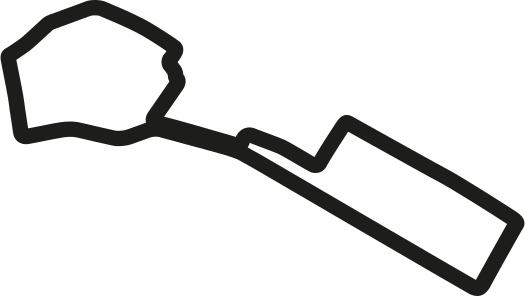
Circuit: Circuito IFEMA Madrid “Madring”
Laps: 57
Circuit length: 5.474km
2025 winner: n/a (Madrid did not feature on the 2025 calendar)
Round 15: Azerbaijan Grand Prix
Race date: Sunday, 27 September 2026
Race start time: 15:00 local time
Circuit: Baku City Circuit
Laps: 51
Circuit length: 6.003km
2025 winner:Max Verstappen
Round 16: Singapore Grand Prix
Race date: Sunday, 11 October 2026
Race start time: 20:00 local time
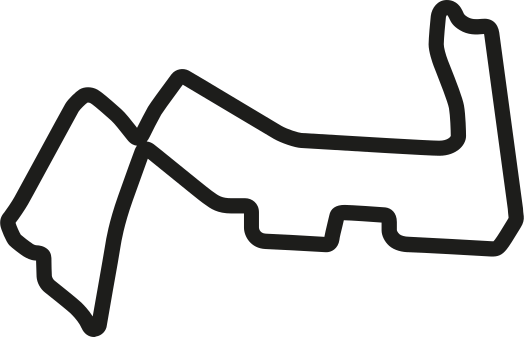
Circuit: Marina Bay Street Circuit
Laps: 62
Circuit length: 4.94km
2025 winner: George Russell
Round 17: United States Grand Prix
Race date: Sunday, 25 October 2026
Race start time: 15:00 local time
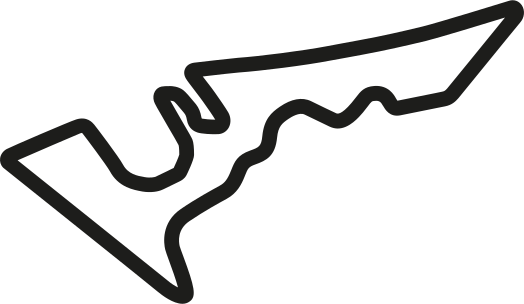
Circuit: Circuit of the Americas (COTA)
Laps: 56
Circuit length: 5.513km
2025 winner: Max Verstappen
Round 18: Mexico City Grand Prix
Race date: Sunday, 1 November 2026
Race start time: 14:00 local time
Circuit: Autodromo Hermanos Rodriguez
Laps: 71
Circuit length: 4.304km
2025 winner: Lando Norris
Round 19: Sao Paulo Grand Prix
Race date: Sunday, 8 November 2026
Race start time: 14:00 local time
Circuit: Interlagos – Autodromo Jose Carlo Pace
Laps: 71
Circuit length: 4.309km
2025 winner: Lando Norris
Round 20: Las Vegas Grand Prix
Race date: Saturday, 21 November 2026
Race start time: 20:00 local time
Circuit: Las Vegas Strip Circuit
Laps: 50
Circuit length: 6.201km
2025 winner: Max Verstappen
Round 21: Qatar Grand Prix
Race date: Sunday, 29 November 2026
Race start time: 19:00 local time
Circuit: Lusail International Circuit
Laps: 57
Circuit length: 5.38km
2025 winner: Max Verstappen
Round 22: Abu Dhabi Grand Prix
Race date: Sunday, 6 December 2026
Race start time: 17:00 local time
Circuit: Yas Marina Circuit
Laps: 58
Circuit length: 5.281km
2025 winner: Max Verstappen
2026 Formula 1 Race Results
| Round | Grand Prix | Circuit | Pole Position | Fastest Lap | Winning Driver | Winning Constructor |
|---|---|---|---|---|---|---|
| 1 | 2026 Australian Grand Prix | Albert Park Circuit | George Russell | Max VerstappenTBC | George Russell | Mercedes |
| 2 | 2026 Chinese Grand Prix | Shanghai International Circuit | Kimi Antonelli | Kimi Antonelli | Kimi Antonelli | Mercedes |
| 3 | 2026 Japanese Grand Prix | Suzuka International Racing Course | Kimi Antonelli | Kimi Antonelli | Kimi Antonelli | Mercedes |
| CAN | 2026 Bahrain Grand Prix | Bahrain International Circuit | Cancelled | Cancelled | Cancelled | Cancelled |
| CAN | 2026 Saudi Arabian Grand Prix | Jeddah Corniche Circuit | Cancelled | Cancelled | Cancelled | Cancelled |
| 4 | 2026 Miami Grand Prix | Miami International Autodrome | Kimi Antonelli | Lando Norris | Kimi Antonelli | Mercedes |
| 5 | 2026 Canadian Grand Prix | Circuit Gilles-Villeneuve | TBC | TBC | TBC | TBC |
| 6 | 2026 Monaco Grand Prix | Circuit de Monaco | TBC | TBC | TBC | TBC |
| 7 | 2026 Barcelona-Catalunya Grand Prix | Circuit de Barcelona-Catalunya | TBC | TBC | TBC | TBC |
| 8 | 2026 Austrian Grand Prix | Red Bull Ring | TBC | TBC | TBC | TBC |
| 9 | 2026 British Grand Prix | Silverstone Circuit | TBC | TBC | TBC | TBC |
| 10 | 2026 Belgian Grand Prix | Circuit de Spa-Francorchamps | TBC | TBC | TBC | TBC |
| 11 | 2026 Hungarian Grand Prix | Hungaroring | TBC | TBC | TBC | TBC |
| 12 | 2026 Dutch Grand Prix | Circuit Zandvoort | TBC | TBC | TBC | TBC |
| 13 | 2026 Italian Grand Prix | Autodromo Internazionale Enzo e Dino Ferrari | TBC | TBC | TBC | TBC |
| 14 | 2026 Spanish Grand Prix | Circuito IFEMA Madrid “Madring” | TBC | TBC | TBC | TBC |
| 15 | 2026 Azerbaijan Grand Prix | Baku City Circuit | TBC | TBC | TBC | TBC |
| 16 | 2026 Singapore Grand Prix | Marina Bay Street Circuit | TBC | TBC | TBC | TBC |
| 17 | 2026 United States Grand Prix | Circuit of The Americas | TBC | TBC | TBC | TBC |
| 18 | 2026 Mexico City Grand Prix | Autódromo Hermanos Rodríguez | TBC | TBC | TBC | TBC |
| 19 | 2026 São Paulo Grand Prix | Autodromo José Carlos Pace | TBC | TBC | TBC | TBC |
| 20 | 2026 Las Vegas Grand Prix | Las Vegas Strip Circuit | TBC | TBC | TBC | TBC |
| 21 | 2026 Qatar Grand Prix | Lusail International Circuit | TBC | TBC | TBC | TBC |
| 22 | 2026 Abu Dhabi Grand Prix | Yas Marina Circuit | TBC | TBC | TBC | TBC |
2026 F1 Sprint Race Results
| Round | Sprint Race | Circuit | Pole position | Winning driver | Winning constructor |
|---|---|---|---|---|---|
| 1 | 2026 Chinese Sprint Race | Shanghai International Circuit | George Russell | George Russell | Mercedes |
| 2 | 2026 Miami Sprint Race | Miami International Autodrome | Lando Norris | Lando Norris | McLaren |
| 3 | 2026 Canadian Sprint Race | Circuit Gilles-Villeneuve | TBC | TBC | TBC |
| 4 | 2026 British Sprint Race | Silverstone Circuit | TBC | TBC | TBC |
| 5 | 2026 Dutch Sprint Race | Circuit Zandvoort | TBC | TBC | TBC |
| 6 | 2026 Singapore Sprint Race | Marina Bay Street Circuit | TBC | TBC | TBC |
2026 Formula 1 Standings
2026 Driver standings
| POS | Driver | Nationality | Car | PTS |
|---|---|---|---|---|
| 1 | Kimi Antonelli | ITA | Mercedes | 100 |
| 2 | George Russell | GBR | Mercedes | 80 |
| 3 | Charles Leclerc | MON | Ferrari | 59 |
| 4 | Lando Norris | GBR | McLaren | 51 |
| 5 | Lewis Hamilton | GBR | Ferrari | 51 |
| 6 | Oscar Piastri | AUS | McLaren | 43 |
| 7 | Max Verstappen | NED | Red Bull Racing | 26 |
| 8 | Oliver Bearman | GBR | Haas F1 Team | 17 |
| 9 | Pierre Gasly | FRA | Alpine | 16 |
| 10 | Liam Lawson | NZL | Racing Bulls | 10 |
| 11 | Franco Colapinto | ARG | Alpine | 7 |
| 12 | Arvid Lindblad | GBR | Racing Bulls | 4 |
| 13 | Isack Hadjar | FRA | Red Bull Racing | 4 |
| 14 | Carlos Sainz | ESP | Williams | 4 |
| 15 | Gabriel Bortoleto | BRA | Audi | 2 |
| 16 | Esteban Ocon | FRA | Haas F1 Team | 1 |
| 17 | Alexander Albon | THA | Williams | 1 |
| 18 | Nico Hulkenberg | GER | Audi | 0 |
| 19 | Valtteri Bottas | FIN | Cadillac | 0 |
| 20 | Sergio Perez | MEX | Cadillac | 0 |
| 21 | Fernando Alonso | ESP | Aston Martin | 0 |
| 22 | Lance Stroll | CAN | Aston Martin | 0 |
2026 Team standings
| POS | Car | PTS |
|---|---|---|
| 1 | Mercedes | 180 |
| 2 | Ferrari | 110 |
| 3 | McLaren | 94 |
| 4 | Red Bull Racing | 30 |
| 5 | Alpine | 23 |
| 6 | Haas F1 Team | 18 |
| 7 | Racing Bulls | 14 |
| 8 | Williams | 5 |
| 9 | Audi | 2 |
| 10 | Cadillac | 0 |
| 11 | Aston Martin | 0 |