What happened on this day, January 10 in Formula 1 history? Find out interesting facts and stories about Formula 1 on this day.
1918
German driver Harry Merkel was born in Leipzig. He drove a BMW in the 1952 German Grand Prix but failed to qualify. It was his only race with the car, and he declined an offer to purchase it afterwards. The individual who eventually bought the car crashed it on its first outing. Outside of motorsport, Merkel was also a champion shot putter.
1921
American driver Rodger Ward was born in Beloit, Kansas. Ward raced in Formula 1 from 1951 to 1963, taking part in 12 World Championship races, all held in the United States. He claimed victory at the 1959 Indianapolis 500, starting from sixth on the grid in a Watson.
Rodger Ward
F1 Debut 1951 Indianapolis 500
Current/Last Team Privateer
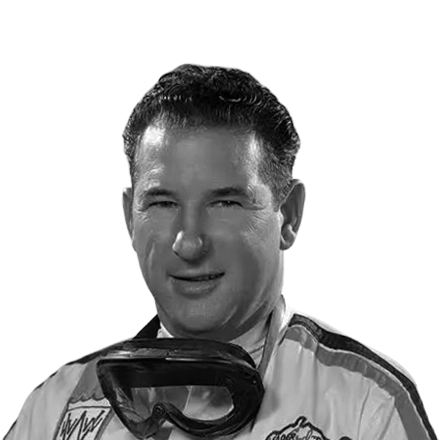
He repeated this three years later in 1962, though by then, the race no longer counted toward the FIA World Championship of Drivers. Over his career, Ward recorded 26 wins in 150 starts from 1950 to 1964, finishing in the top ten more than half the time.
1944
On January 10th, 1944, Rory Byrne was born in Pretoria, South Africa. South African by birth and Irish by origin, Byrne would go on to become one of the most influential designers in the history of Formula 1. Trained as a chemist, he developed an early passion for aerodynamics through model aircraft without engines, a discipline in which he became a world champion. That early fascination laid the foundation for a career defined by technical brilliance and innovation at the highest level of motorsport.
Byrne first made his mark at Toleman, where he designed the TG280, a car that dominated the 1980 Formula 2 championship and remains one of his most personally satisfying projects. Toleman’s move into Formula 1 brought the TG184, the car with which Ayrton Senna made his F1 debut, and the TG185, which famously carried Teo Fabi to pole position at the Nürburgring in 1985. When Toleman was taken over by Benetton, Byrne’s influence grew further, despite a brief dismissal and recall following a short stint with Reynard. Alongside Ross Brawn and Michael Schumacher, he became part of the legendary trio that would dominate Formula 1 for a decade, delivering Benetton the 1994 Drivers’ Championship and the following years the 1995 Drivers’ Championship and the Constructors’ title in 1995.
After Schumacher’s move to Ferrari at the end of 1995, Byrne initially planned an early retirement, settling in Thailand. However, a call from Maranello proved irresistible, offering both a compelling challenge and the chance to succeed where John Barnard had struggled. Byrne joined Ferrari and played a crucial role in the team’s golden era, serving as chief designer until the end of 2004. Rather than moving to another manufacturer, he remained connected to Ferrari as an external consultant, a role that continued well into later life and was renewed when he reached the age of 80, underlining his lasting importance to the Scuderia and to F1 history.
1958
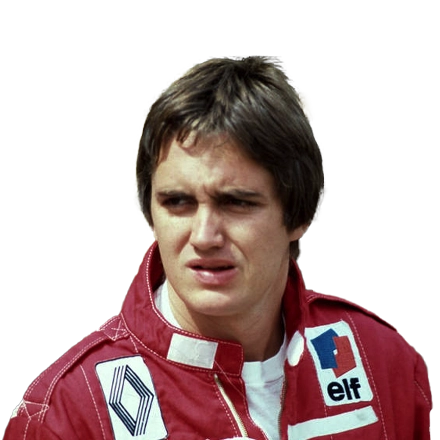
Eddie Cheever was born in Phoenix, Arizona. Cheever competed in Formula 1 from 1978 to 1989, driving for nine teams and participating in 132 Grand Prix races—more than any other American driver.
Despite a solid F1 career, he is best remembered for his success in the Indy Racing League (IRL). In 1997, he established his own IRL team and, as owner and driver, achieved a memorable victory in the 1998 Indianapolis 500.
Eddie Cheever
F1 Debut 1978 Argentine Grand Prix
Current/Last Team Arrows
1971
Italian driver Ignazio Giunti tragically lost his life during the Buenos Aires 1000km race. Giunti’s Ferrari collided with the Matra of Jean-Pierre Beltoise, who was attempting to push his car back to the pits after it had stalled. The incident happened because Giunti’s view was obstructed by another car. Following the collision, Giunti’s Ferrari was launched into the air, landed approximately 200 yards down the track, and erupted into flames.
His teammate, Arturo Merzario, heroically sprinted 500 yards from the pits to pull him from the fiery wreckage—mirroring a similar act of bravery at the Nürburgring in 1976. Tragically, Giunti was already dead, though some reports suggest he may have succumbed to his injuries shortly after being pulled from the car.
Remarkably, Beltoise escaped injury as the impact struck the opposite side of his stationary car. Later that year, the practice of pushing cars on the track was officially banned.
In Formula 1, Giunti raced in 4 Grand Prix for Ferrari in 1970. His best result was fourth place at the 1970 Belgian Grand Prix, his debut race.
F1 Driver Birthdays 10 January
| Birthday | F1 Driver |
|---|---|
| 10 January 1913 | Franco Bordoni (d. 1975) |
| 10 January 1918 | Harry Merkel (d. 1995) |
| 10 January 1921 | Rodger Ward (d. 2004) |
| 10 January 1953 | Bobby Rahal |
| 10 January 1958 | Eddie Cheever |
| Birthday | F1 Mentions |
|---|---|
| 10 January 1944 | Rory Byrne |
F1 Driver Deaths 10 January
| Death | F1 Driver |
|---|---|
| 10 January 1971 | Ignazio Giunti (b. 1941) |
| 10 January 1992 | Roberto Bonomi (b. 1919) |
Seen in: