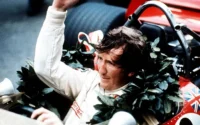























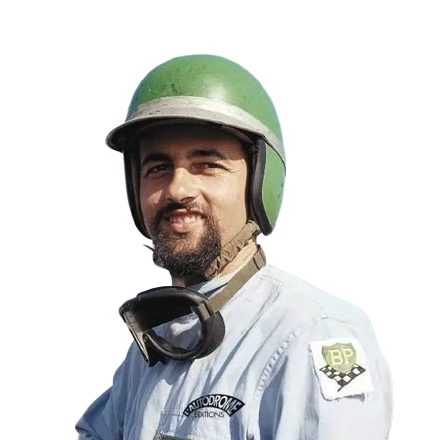
Henri Jacques William Pescarolo (born 25 September 1942) is a French former racing driver and team owner whose career stretched from Formula One to Dakar and, most famously, the 24 Hours of Le Mans. A four-time Le Mans winner and record 33-time starter, Pescarolo became one of endurance racing’s defining figures, while also contesting 64 Formula One Grands Prix between 1968 and 1976.
Driver Bio
| Born | Henri Jacques William Pescarolo 25 September 1942 Montfermeil, Seine-Saint-Denis, France |
|---|---|
| Nationality | French |
| Active years | 1968–1974, 1976 |
| Teams | Matra, Frank Williams, March, BRM, privateer Surtees |
| Entries | 64 (57 starts) |
| Championships | 0 |
| Wins | 0 |
| Podiums | 1 |
| Career points | 12 |
| Pole positions | 0 |
| Fastest laps | 1 |
| First entry | 1968 Canadian Grand Prix |
| Last entry | 1976 United States Grand Prix |
Born in Montfermeil near Paris, Pescarolo began racing relatively late, making his competition debut at the age of 22 in a Lotus Seven in 1965. His speed quickly caught the attention of Matra, who offered him a third Formula 3 car for 1966. The machine was delayed until mid-season, but Pescarolo’s progress was rapid. In 1967 he won the European Formula 3 Championship and earned promotion to Formula 2 for the following year.
Racing alongside Jean-Pierre Beltoise in 1968, Pescarolo collected a string of second places and won at Albi. His performances were enough to earn a Formula One opportunity with Matra for the final three Grands Prix of the season, beginning a World Championship career that would ultimately produce one podium, one fastest lap and 12 championship points.
His momentum was interrupted dramatically in April 1969 during testing at Le Mans. Pescarolo’s Matra sports car became airborne on the Mulsanne Straight and crashed heavily, leaving him badly burned. The injuries kept him out until the middle of the season and contributed to the full-face beard that would later become as recognisable as his trademark green helmet.
Pescarolo returned to competition in August for the 1969 German Grand Prix, driving a Formula 2 Matra to fifth overall and winning the small-capacity class. It was his only World Championship appearance of the season and a remarkable comeback from an accident that could easily have ended his career.
Matra brought him back as a full-time Formula One driver in 1970, again alongside Beltoise. Pescarolo enjoyed his strongest Grand Prix season, the highlight coming with third place at Monaco. At the same time, he was building an increasingly formidable reputation in sports cars, winning the Paris 1000km and Buenos Aires 1000km with Beltoise.
When Matra did not retain him for 1971, Pescarolo joined the young Frank Williams operation with backing from Motul. He remained with Williams-run machinery through 1973, but competitive results were scarce. A switch to BRM followed for 1974, although the once-great team was by then in decline. Ninth in Argentina proved his best result during a season littered with retirements.
Pescarolo sat out Formula One in 1975 before returning for one final campaign in 1976. He drove a privately entered Surtees run by BS Fabrications and failed to qualify for two of the nine Grands Prix he entered. Even so, his pace improved as the year progressed, with ninth place in Austria his best result. It proved to be the final season of a Formula One career spanning 64 Grands Prix.
If Formula One showed only flashes of Pescarolo’s ability, endurance racing revealed the full picture. He made his Le Mans debut in 1966 and would keep coming back for more than three decades. Between 1966 and 1999 he started the race an extraordinary 33 times, setting a record and taking four overall victories plus six class wins.
The first three Le Mans triumphs came in consecutive years. Pescarolo won in 1972, 1973 and 1974, establishing himself as one of the outstanding long-distance drivers of the era. A fourth victory followed in 1984, twelve years after his first. That same year he also won the Porsche Cup, awarded to the world’s leading privateer driver competing in Porsche machinery.
Le Mans was only part of the story. Pescarolo won many of endurance racing’s major events, including the 1000km of Monza, 1000km of Spa-Francorchamps, 6 Hours of Nürburgring and 1000km of Buenos Aires. In 1991, at the age of 48, he added another major classic to his résumé by winning the 24 Hours of Daytona with Joest Racing.
His versatility extended well beyond prototypes. Pescarolo travelled to Australia for the Bathurst 1000 in 1977, 1978 and 1979, sharing John Goss-built Ford XC Falcon GS500 Hardtops with 1974 Bathurst winner John Goss. None of the three attempts reached the finish, but they added another famous event to an already remarkably varied career.
By the 1990s, Pescarolo was still looking for fresh challenges. He competed in the Dakar Rally, swapping smooth circuits and high-speed prototypes for desert stages, and continued racing until 1999. He finally retired at the age of 57, ending a professional driving career that had lasted more than three decades.
Retirement from the cockpit did not mean retirement from motorsport. Pescarolo founded Pescarolo Sport, turning the family name into a constructor and endurance racing team. The operation became a regular Le Mans contender and developed the Courage C60 prototype so extensively that Courage permitted the modified version to carry the Pescarolo name.
Pescarolo Sport came agonisingly close to giving its founder a fifth Le Mans victory, this time as a team owner. The Pescarolo C60H finished second in 2005, while the team also captured the Le Mans Endurance Series championship that year. Another second place at Le Mans followed in 2006 and third in 2007, behind the new generation of diesel-powered prototypes.
The team also became familiar to a wider audience through sponsorship from PlayStation 2 and Gran Turismo 4, its distinctive prototypes becoming favourites with fans both at the circuit and in racing games. Pescarolo’s operation remained associated with Le Mans into the 2010s.
Few drivers have built a career with quite the same breadth. Pescarolo raced Formula One cars, conquered Le Mans four times, won Daytona, competed at Bathurst, tackled the Dakar Rally and then built a front-running endurance team of his own. Away from the track he was also a keen helicopter pilot.
Yet Le Mans remained the thread running through it all. Thirty-three starts, four victories and decades spent returning first as a driver and then a team owner made Henri Pescarolo inseparable from the great French race. With his green helmet, unmistakable beard and relentless appetite for competition, he became not simply a successful endurance racer, but one of the sport’s enduring characters.
Complete Formula One World Championship results
| Year | Entrant | Chassis | Engine | 1 | 2 | 3 | 4 | 5 | 6 | 7 | 8 | 9 | 10 | 11 | 12 | 13 | 14 | 15 | 16 | WDC | Pts |
|---|---|---|---|---|---|---|---|---|---|---|---|---|---|---|---|---|---|---|---|---|---|
| 1968 | Matra Sports | Matra MS11 | Matra MS9 3.0 V12 | RSA | ESP | MON | BEL | NED | FRA | GBR | GER | ITA | CAN Ret | USA DNS | MEX 9 | NC | 0 | ||||
| 1969 | Matra Sports | Matra MS7 (F2) | Ford Cosworth FVA 1.6 L4 | RSA | ESP | MON | NED | FRA | GBR | GER 5 | ITA | CAN | USA | MEX | NC | 0 | |||||
| 1970 | Équipe Matra Elf | Matra-Simca MS120 | Matra MS12 3.0 V12 | RSA 7 | ESP Ret | MON 3 | BEL 6 | NED 8 | FRA 5 | GBR Ret | GER 6 | AUT 14 | ITA Ret | CAN 7 | USA 8 | MEX 9 | 12th | 8 | |||
| 1971 | Frank Williams Racing Cars | March 701 | Ford Cosworth DFV 3.0 V8 | RSA 11 | 17th | 4 | |||||||||||||||
| March 711 | ESP Ret | MON 8 | NED 13 | FRA Ret | GBR 4 | GER Ret | AUT 6 | ITA Ret | CAN DNS | USA Ret | |||||||||||
| 1972 | Team Williams Motul | March 721 | Ford Cosworth DFV 3.0 V8 | ARG 8 | RSA 11 | ESP 11 | MON Ret | BEL NC | FRA DNS | GER Ret | AUT DNS | ITA DNQ | CAN 13 | USA 14 | NC | 0 | |||||
| Politoys FX3 | GBR Ret | ||||||||||||||||||||
| 1973 | STP March Racing Team | March 721G/731 | Ford Cosworth DFV 3.0 V8 | ARG | BRA | RSA | ESP 8 | BEL | MON | SWE | NC | 0 | |||||||||
| Frank Williams Racing Cars | Iso-Marlboro IR | FRA Ret | GBR | NED | GER 10 | AUT | ITA | CAN | USA | ||||||||||||
| 1974 | Team BRM | BRM P160E | BRM P142 3.0 V12 | ARG 9 | BRA 14 | RSA 18 | ESP 12 | BEL Ret | MON Ret | NED Ret | NC | 0 | |||||||||
| BRM P201 | BRM P200 3.0 V12 | SWE Ret | FRA Ret | GBR Ret | GER 10 | AUT | ITA Ret | CAN | USA | ||||||||||||
| 1976 | Team Norev Racing with BS Fabrications | Surtees TS19 | Ford Cosworth DFV 3.0 V8 | BRA | RSA | USW | ESP | BEL | MON DNQ | SWE | FRA Ret | GBR Ret | GER DNQ | AUT 9 | NED 11 | ITA 17 | CAN 19 | USA NC | JPN | NC | 0 |
Non-championship Formula One results
| Year | Entrant | Chassis | Engine | 1 | 2 | 3 | 4 | 5 | 6 | 7 | 8 |
|---|---|---|---|---|---|---|---|---|---|---|---|
| 1967 | Matra Sports | Matra MS5 (F2) | Ford Cosworth FVA 1.6 L4 | ROC | SPC | INT | SYR | OUL 8 | |||
| Matra MS7 (F2) | ESP 7 | ||||||||||
| 1971 | Frank Williams Racing Cars | March 701 | Ford Cosworth DFV 3.0 V8 | ARG 2 | ROC | ||||||
| March 711 | QUE Ret | SPR | INT 6 | RIN | OUL Ret | VIC Ret | |||||
| 1972 | Team Williams Motul | March 721 | Ford Cosworth DFV 3.0 V8 | ROC | BRA Ret | INT Ret | OUL | VIC Ret | |||
| March 711 | REP Ret | ||||||||||
| 1974 | Team BRM | BRM P160E | BRM P142 3.0 V12 | PRE 7 | ROC 7 | INT 4 |
Teammates & Qualifying Head-to-Head
| Teammate | Years | Races | Qualifying H2H |
|---|---|---|---|
| Jean-Pierre Beltoise | 1968, 1970, 1974 | 28 | – |
| Max Jean | 1971 | 1 | – |
| Carlos Pace | 1972 | 11 | – |
| Howden Ganley | 1973 | 2 | – |